

Kawasaki's Z H2 Is Naked, Supercharged Mayhem On Two Wheels
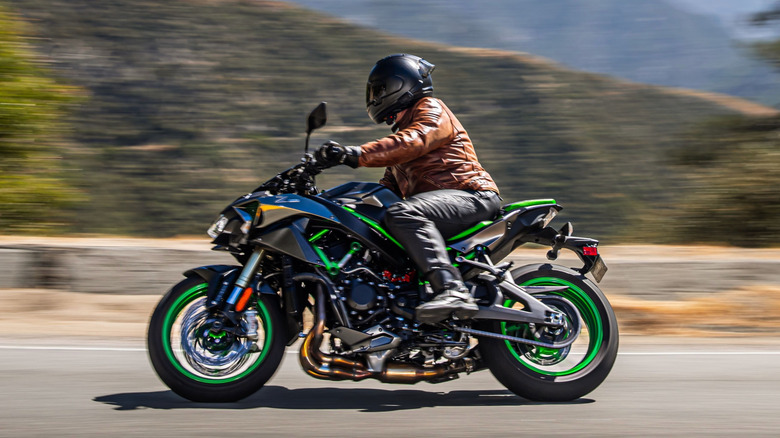
The Kawasaki H2 lineup of motorcycles is a class all its own. In the motorcycle world, there's typically a lot of overlap. Motorcycles often have competition from all sides, with many similarly-priced bikes offering all sorts of different vibes. If your road-going budget is $10,000 to $15,000, for example, you've got dozens of models to choose from, from excellent middleweight touring bikes and track-ready sports bikes, to retro-modern cafe bikes and top-notch cruisers.
The H2-powered Kawasaki motorcycles buck that trend, though. The H2 bikes are preposterously powerful, expensive, and unlike anything else on two wheels, all by virtue of offering supercharged horsepower.
 Travis Langness/SlashGear
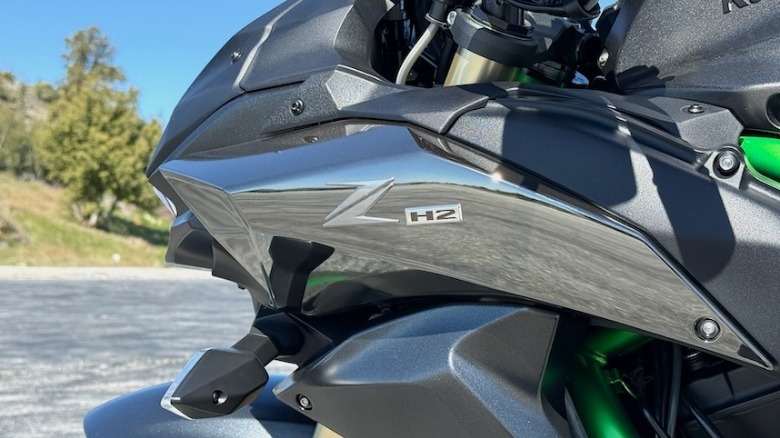
There's nobody else out there offering supercharged motorcycles (or forced-induction of any kind) right now, so no matter what sort of H2 you go with, there's no pound-for-pound competition available. And that's the high bar set by even the least-expensive version of the H2 — the one that I just tested — the hypernaked Z H2. On open highways, on crowded city streets, on winding mountain roads, and on everything in between, I rode the 2026 Z H2 like it was my own bike. And while it wasn't as versatile or road-trip-ready as the H2 SX I tested a few months back, the hypernaked Z H2 was seriously impressive, and a tough act for any other motorcycle to follow.
Proof of the power is in the pudding
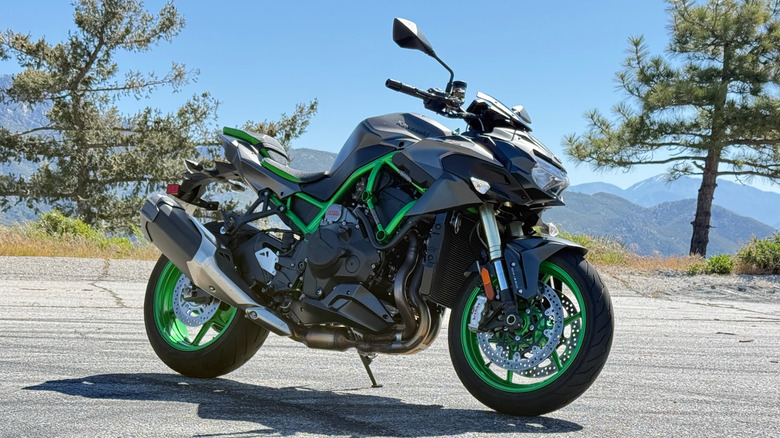
Like the other H2 bikes in Kawasaki's lineup, the Z H2 is powered by a supercharged 998cc inline four-cylinder engine. It's the least-powerful of the H2 series, but don't let that distinction fool you. The Z H2 makes 197 horsepower and 101 lb-ft of torque (compared to 207, 240, and 322 hp with the other versions of the H2).
If you're coming from the car world, the Z H2's numbers may not sound very large, but it's a pretty shocking amount for a motorcycle — especially for something without a windshield, fairings, or slick tires.
 Travis Langness/SlashGear
I've made this sort of comparison before, as it relates to big-power bikes, but the Z H2 makes almost the same amount of power as the Honda Civic Si: a pretty sporty car that puts out 200 hp from a turbocharged four-cylinder engine. The Civic, however, weighs 2,952 lbs, which is 5.5 times more than the 531-pound Z H2. And with that sort of power on tap for a relatively small vehicle, caution is a prerequisite.
Go light on the throttle
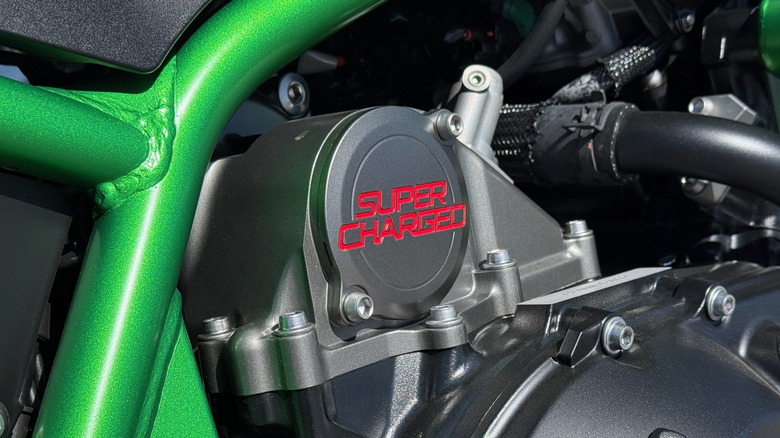
The application of the Z H2's hulking horsepower is something you have to be very careful with. In every gear, at almost any speed, the bike can transform from a docile ride into a speed demon. More than once, I found myself cruising in sixth gear on the highway, going between 50 and 60 mph. I'd twist to about half throttle, and in what seemed like no time at all, I'd suddenly be passing everyone around me at an aggressive rate.
 Travis Langness/SlashGear
Wind off the throttle, though, and the supercharger whirrs and whistles and spins. It can be heard far away around corners (a few friends confirmed this to me) and it's one of the most entertaining parts of riding the Z H2. I'm certain that some of my poor fuel economy over the test was due to me winding the bike up, then letting off the throttle and giggling as it whooshed its way back to idle.
A transmission that doesn't miss
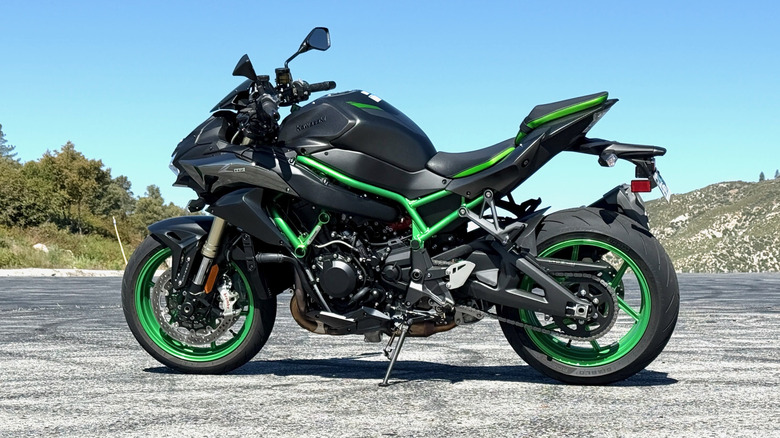
The Z H2's powerband is wide, with torque available in every gear, but that doesn't make shifting any less rewarding. The six-speed dog-ring transmission is a joy. The quick up and down shifter moves through gears with just the slightest tap of your left foot, and the clutch lever is light.
If you get the opportunity to ride the Z H2 on an open, unrestricted stretch of road, you can also use launch control to fire off the line as quickly as possible and dart through the gears as you hold on for dear life. A superbike without wind protection, it turns out, is pretty tough to cling to as the speedo climbs deep into the triple digits (theoretically, of course).
 Travis Langness/SlashGear
During a lot of my riding on the Z H2, especially when I wanted a calmer demeanor from the bike, I found myself upshifting early. Sure, I could wind it out to the near-11,000-rpm redline to hear a bit of liter-bike music, but it wasn't necessary, even if I wanted to have some fun. And, when I was navigating tight spaces or making my way through traffic on the highway, I'd want to stay out of boost to make the throttle application smoother. The Z H2 wasn't much of a hooligan — it didn't feel like it was trying to constantly pop wheelies — but it did have to be ridden with intentional restraint.
More than just a missile
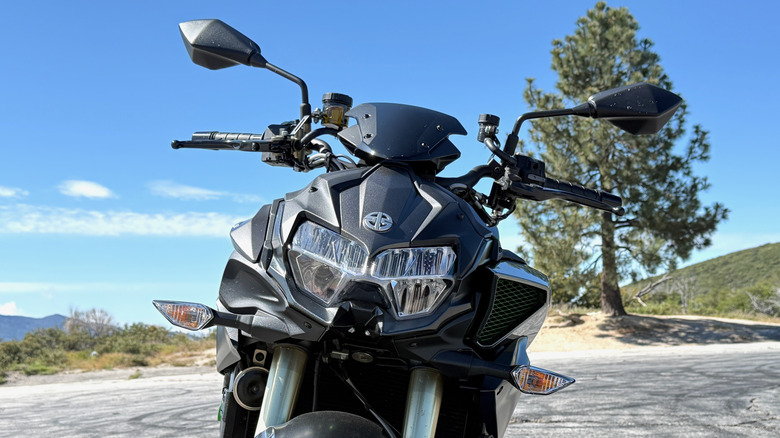
At this point, you might be wondering how the Z H2 handles corners. After my open-highway experiences on the bike, I was wondering the same thing. As mentioned, it has a curb weight just over 530 pounds, so it's possible that it could disappoint when winding roads present themselves. That wasn't the case, though. It took some time for me to build confidence with such a big bike, but the electronically-controlled suspension did a great job at soaking up bumps mid corner.
 Travis Langness/SlashGear
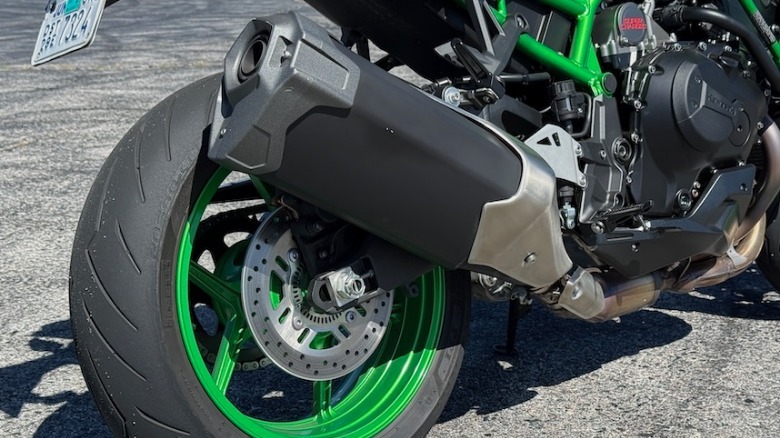
Riding the Z H2 in Sport mode in the mountains, it left me virtually unbothered if I was carrying some pace and hit an imperfection in the road. I could glide over some of the roughest terrain without feeling like I would get jostled out of my body position or kicked out of the seat entirely. While I wouldn't call it nimble, the Z H2 was surprisingly agile for a bike its size, even if it did take a bit of extra effort to get it initially leaned over compared to other Z-bikes I've ridden lately.
 Travis Langness/SlashGear
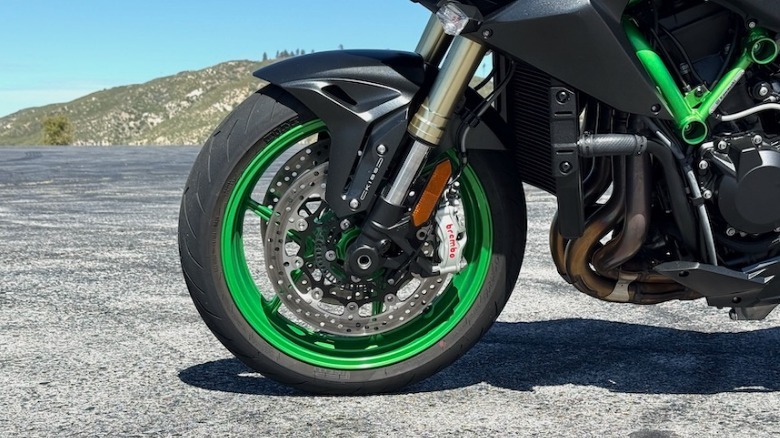
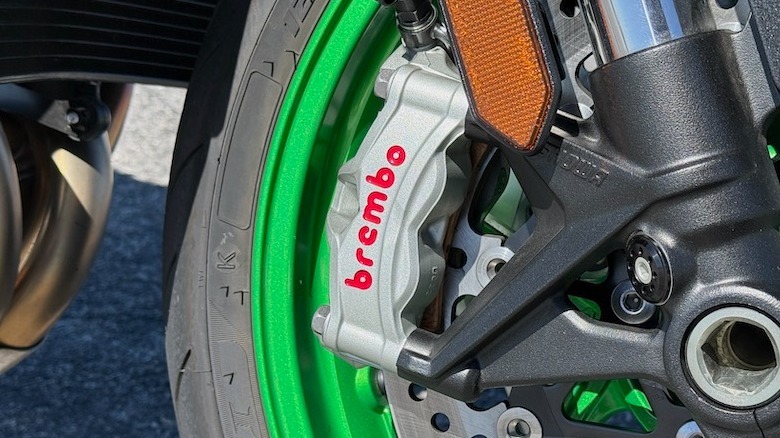
On the highway, when I was in a less sporting mood, it was easy to switch the Z H2 back into Road mode and take advantage of the excellent damping. The Showa forks feel pretty magical in that sense. The big Brembo brakes did their job well, too, stopping the big heat-seeking motorcycle before each corner, and the feedback from both the front lever and rear pedal was good.
Stay in the saddle for a while
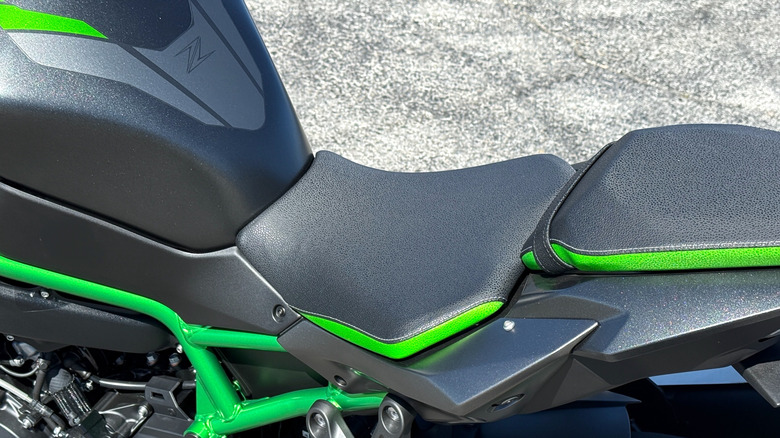
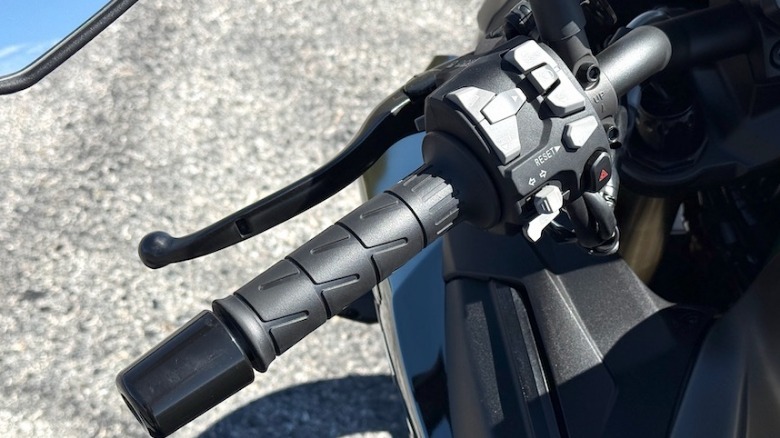
With a relatively tall handlebar height, the Z H2 is easy to ride for long distances, whether you're on the highway or in the twisties. Even after several hours, my wrists weren't tired: I could sit relatively upright without needing to lean over and put my weight forward. Such is the benefit of a naked sport bike.
The drawback, another fact of life with naked bikes, is the wind. Unlike the full-fairing, big-windscreen H2 SX, which kept me protected from a lot of the elements, the Z H2 isn't the kind of bike I'd want to take on multi-day road trips. Even with a small bug deflector above the headlight, I was still splattered with all sorts of airborne insects on my helmet and my jacket, every time I rode.
 Travis Langness/SlashGear
The Z H2's has a seat height of 32.7 inches, and the seat itself is pretty wide to accommodate a comfortable ride, but that also means shorter riders will have a tough time touching the ground. At 5-foot-9, the gear I wore (whether it was riding jeans or full leather), determined whether I could flat-foot it at a stoplight or not. And a final note on the seat: the seat material looks a bit funky at first glance (a bit like the weathered skin of a lizard), but there were no issues with comfort. It's just something I might get re-wrapped for style if I owned the bike.
Some modern tech to go with all that speed
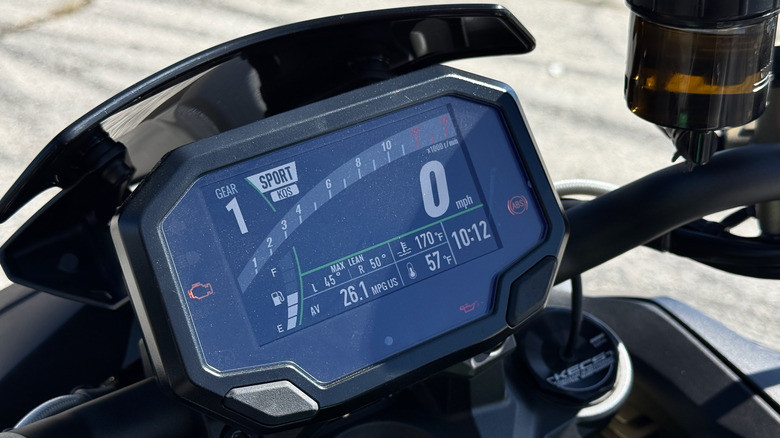
The Z H2 has an impressive, albeit somewhat minimalist, TFT display. You get a relatively small screen that provides basic data, and a few indicator buttons that light up along either side of the screen. Figuring out which handlebar buttons corresponded with which of the screen functions took a bit of time, but I was used to it all after about a week of riding.
Cruise control is a part of the package with the Z H2, so I spent a lot of time on the highway moving at a set rate, and generally being relaxed. The speed machine has a pretty docile character when you let it settle down.
 Travis Langness/SlashGear
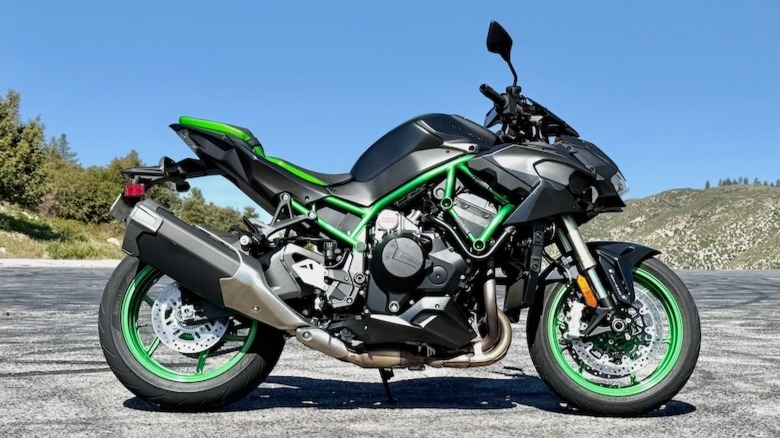
Kawasaki's Rideology app is part of the package with the Z H2, as are some other features like the five-axis Bosch IMU, Kawasaki's corner management system, wheelie control, traction control, and an intelligent braking system. There aren't many extra creature comforts like a heated seat or heated grips, which would be nice inclusions at this price point, but the Z H2 has all the other riding tech pretty well covered.
At this price, do rivals really exist?
While there aren't any other forced-induction bikes out there to compete with the Z H2 (at least not until Honda's electric-compressor-assisted V3 engine makes it into production), there are several high-horsepower sport bikes and sport nakeds that are worth considering. And a few of them can even keep up with, or exceed, the Z H2's MSRP of $21,999.
The Ducati Streetfighter V4 is probably the closest competition for the Z H2. The Streetfighter's 1,103cc V4 engine makes 205 hp, which is more than enough to keep up with the Z H2, especially with the Ducati's svelte 417-pound curb weight — that makes it over 100 pounds lighter than the Kawi, but the Ducati starts at $24,595, and it only goes up from there.
The Yamaha MT-10 is available in a couple of different configurations, including the top-performing SP. The MT-10 SP is significantly less expensive at $18,274, but it's also less powerful, only offering 163 hp from its 998cc inline four-cylinder engine. With full fairings and an attitude that'll be more suited to high-speed highway cruising, the Suzuki Hayabusa is also worth considering. The latest model is priced at $20,829, so it undercuts the Z H2 a bit, and the legendary Busa puts down big horsepower from its large 1,340cc inline-four powerplant – about 187 hp.
Honda also makes a few bikes worth a closer look, like the CBR1000RR at $17,774, which provides somewhere in the neighborhood of 188 hp. It doesn't have the same personality as the Z H2, however, and nor does the significantly less-expensive and less-powerful CB1000 Hornet SP.
2026 Kawasaki Z H2 verdict
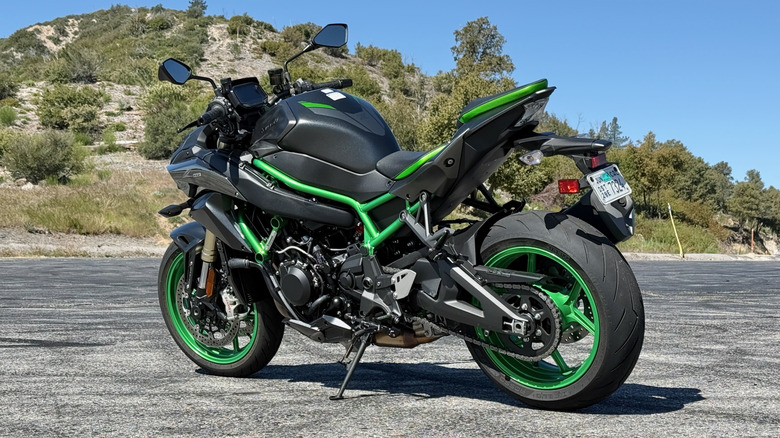
The 2026 Kawasaki Z H2 is an incredible motorcycle with few natural rivals. Sure, some other bikes are as powerful, but none of them provides the special kind of experience you get from forced induction. At bike nights, local car meets, and even in grocery-store parking lots, the Z H2 gets lots of attention, and it often sits at or near the top of any performance list you can come up with. It's bulky, but it makes all sorts of fantastic noises, and it's attractive and special even to the untrained eye.
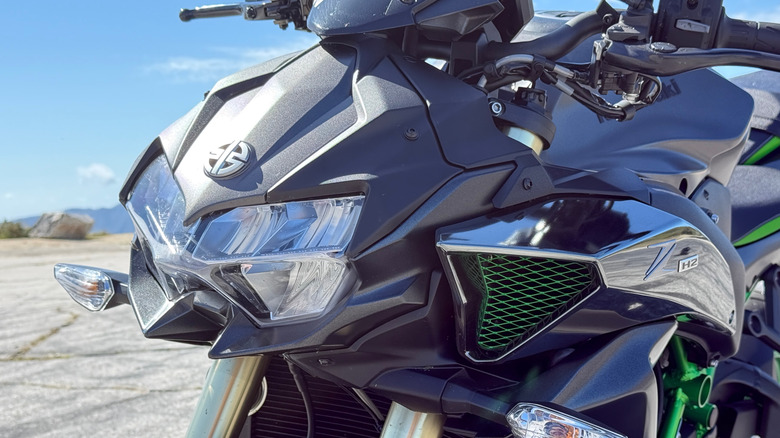
The Metallic Matte Carbon paint scheme, paired with the bright green accents, is an excellent look, with bits of flake in the paint to make the bike's limited fairing real estate really pop in the sun. Even without riding it, the Z H2 feels premium at a moment's glance, and keeps on impressing the closer you look. The upscale, supercharged experience, however, comes with a mighty price tag.
At about $22k, the normal, affordable bikes have been left far behind. You pay for that special riding feeling, that extra attention, and the attention to detail of a high-end bike.