

4 Car Colors That Are All But Gone In 2026 (And 2 We Want To See More Of)
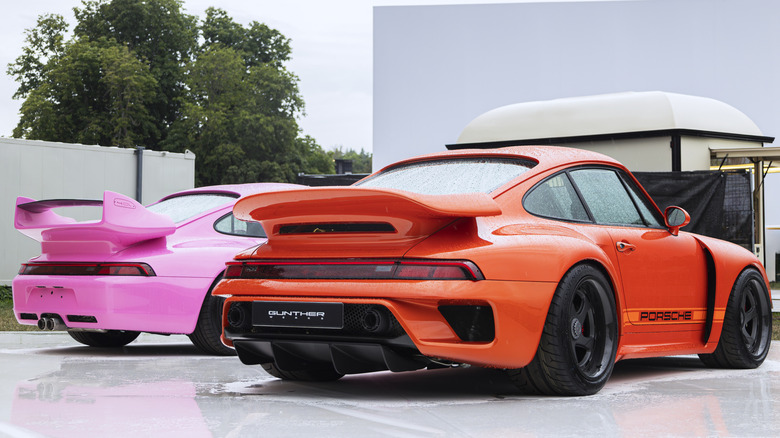
We've all felt it — the trend towards greyscale. Yesterday's highways were like blurred rainbows with cars of every shade flashing by with brilliance and variety. Today, our highways have become dull and corporate. The lively colors that once gave our cars personality seems to have slowly seeped away, leaving the modern day automotive color palette quite literally a shadow of its former self. Every parking lot, city block, highway, and drive-thru lane shows a hodgepodge of whites, blacks, greys, silvers, and any other descriptor for shades that aren't actually colors. These greyscale shades aren't just the norm for the U.S., but for the rest of the globe too, so how did we get here?
It all comes back to the money. For the consumer, when it comes time to sell their car, one of the factors that can affect resale value is color. A particularly bright green that was all the rage one year might be seen as blasé the next. The only safe bets become neutral, or bland, depending on who you ask. To respond to this demand, car companies increased their production of black and white cars, leaving consumers with fewer options for a more individual look. It's a perpetuating cycle of blandness. Here are four car colors that are all but gone in 2026, and two we want to see more of.
Green
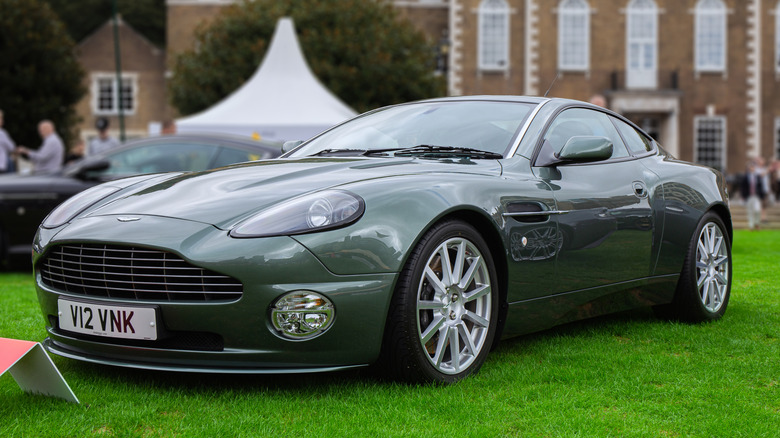
A forest canopy, a glimmering emerald, the sunny glow on the wing of a hummingbird — green is one of the most beautiful colors on the spectrum. In the car world and the wider context of industrial production the term green has come to symbolize a harmonious relationship between resources and producers. Many of today's most peace-loving cars boast about their ever-complicated yet efficient turbocharged engines, their false plasti-leather seats made from recycled ocean trash, or their lithium-ion battery capacity all in the name of a green identity, yet somehow, the cars themselves are almost never green.
Despite this, the color green has deep ties in motorsports, namely in British Racing Green. In the late 19th century, an American motorsport enthusiast and journalist by the name of James Gordon Bennett Jr. took it upon himself to organize a racing series he called the Bennett Cup. In 1902, an Englishman named Selwyn Francis Edge won it. Usually, the home country of the winner would host the next Bennett Cup, but due to regulatory issues in mainland Britain, the event was moved to Ireland. The lush landscapes clearly left a mark on the participants, because it was here that many of them decided to paint their cars various shades of dark, verdant greens in homage to the Irish host land.
Despite the beauty of green in color and history, however, Axalta — the global leader of automotive paint manufacturing — had green covering just 3% of cars at the end of 2025 according to their Global Color Popularity Report.
Yellow/Gold
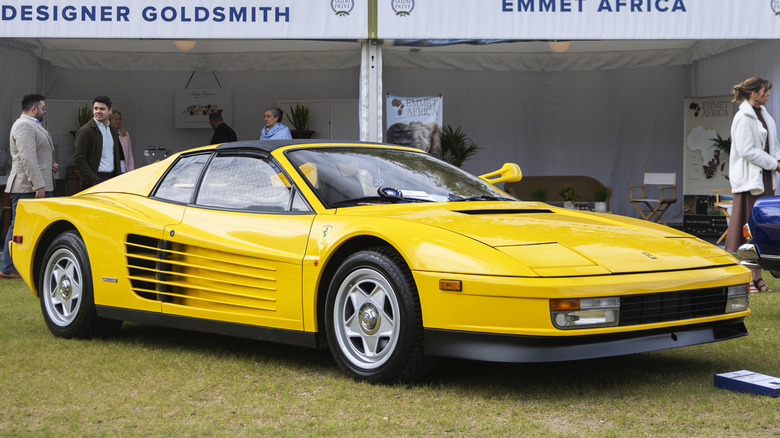
The image of a yellow car is an exciting one. You may imagine a Lamborghini, black and yellow all over, suggestive of some sort of venomous insect resurrected in metal instead of flesh. A primary color, yellow is often associated with warmth and happiness. It brings a unique blend of excitement and energy without the wilder undertones you might feel from warmer colors like orange or red. Despite the animated character yellow brings, it still falls far behind in the modern automotive landscape, conquered by the commonplace and pedestrian metallics and neutrals.
Speaking of metallics, gold is another color that is all but gone from the showrooms. While its silver sibling continues to dominate spec sheets, gold has all but disappeared from the painter's palette. Granted, gold is perhaps a harder color to make work than those like red or green. On the one hand, you have the brilliant golds of which nearly all scream "look at me" in a way that could only be appetizing to those with more money than taste. On the other hand, you have the paler and quieter golds, which often only conjure images of ugly duckling early 2000s models from long-gone brands like Saturn, or shades that seem more like the accidental byproduct of a poorly cared for silver finish rather than a purposeful light gold. This anti-warmth sentiment has left yellow and gold taking up only 3% of the car spectrum's real estate according to the Axalta report.
Brown/Beige
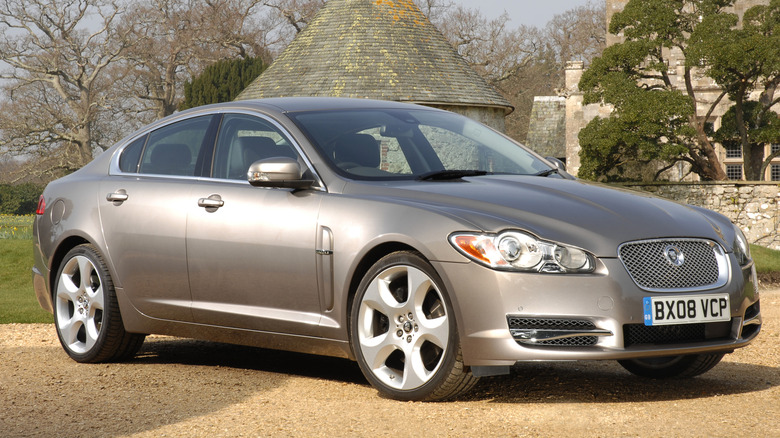
Brown and beige are perhaps the most similar colors to the reigning champions of black, white, gray, and silver on this list. They are similarly frictionless and could seemingly work on almost any model and for any buyer. Yet somehow, brown and beige rank close to last on Axalta's report. While beige is technically a neutral color—lacking any high saturation or prominent undertones—its fleshcolored base brings to mind organic concepts that are more in line with moving, breathing creatures rather than the earth itself that colors like green might indicate. Perhaps this brings discomfort, but even the name itself has negative connotations. Even if one wants a car color that is widely digestible and acceptable, nobody wants to be beige.
Brown on the other hand brings a bit more decisive character, but it carries its own organic negative connotation of dirt. Brown can work on occasion though. With the right undertones and finishes, it can become a hyper-luxurious hue reminiscent of fine leather luggage or ancient bronze armaments if done right. The keyword though is "if." Unfortunately for brown, much of its success comes from the canvas it's painted on, which is why it can look special on a special car but distasteful on anything less. This predicament leaves brown and its lighter sibling beige in danger of extinction, with the duo claiming only 2% of Axalta's color survey.
Purple
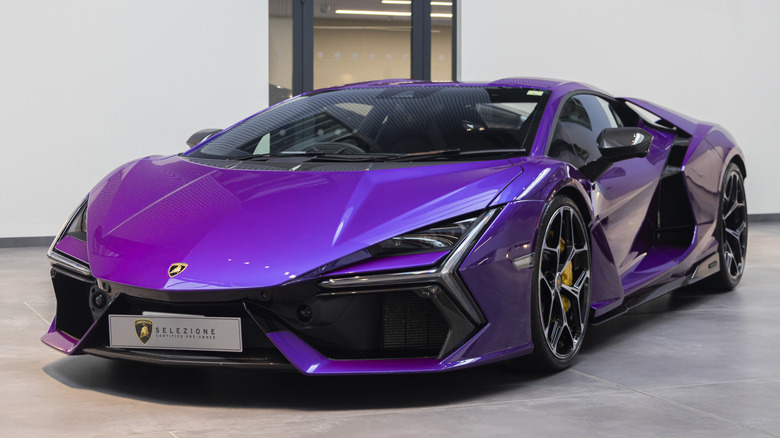
Speaking of "hard to pull-off," enter purple. Throughout history, purple has been the color of royalty. In ancient times, the harvesting process to make purple dye was a true headache, thus adding to its allure. Craftsmen had to find and collect a rare mollusk called Bolinus brandus, and extract a purple mucus from the creature by breaking its shell. Each animal only yielded a tiny amount of coloring, meaning it took thousands of them — therefore a painstaking amount of time — to create even the smallest amounts of usable dye. In the motoring world, purple has nosed its way into iconic status as well.
Lamborghini's Viola Parsifae bestows a bright and radical form of royalty's favorite color to its already eccentric cars. Dodge's Plum Crazy became one of the muscle car era's most iconic hues, and Nissan's Midnight Purple is almost as famous as the GT-R family it was born with. Despite Purple's relatively strong connection to the wider world of cars, it remains on the fringes of popularity for the everyday buyer. A purple car is certainly a statement, and while its royal connotations do well to highlight the presence of the world's finest automobiles, perhaps its heavy handed personality feels more gauche than charming on anything less. For that reason or another, purple ranked very low on Axalta's Global Color Popularity Report, taking up a meager 2% of the survey sample.
(We Want To See More) Orange
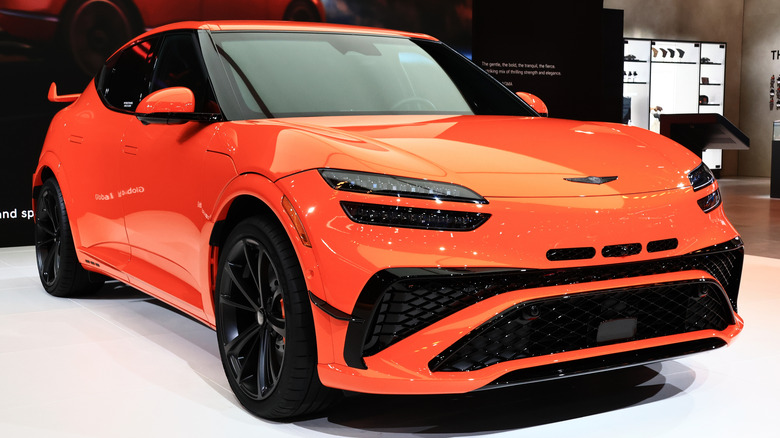
Now for the fun part. To revitalize your spirits after seeing the apathetic direction the automotive rainbow is headed in, let's talk about what colors we want to see more of on configurator sites and showroom floors. Beyond the greyscale horizon, red is one of the more common and appreciated colors in the car world. Its brighter brother orange however, is less so for some reason. That's not to say that orange is absent. In fact, orange has its own small set of roots in enthusiast and motorsport history. Orange is one half of the iconic Gulf livery. The McLaren F1 LM launched in a shade of orange McLaren called, "Papaya," and HEMI Orange has graced some of the world's greatest cars and engine parts built by the hands of Dodge and Ram.
Today, orange is rarely seen on new cars, but in some places, it seems to be making a comeback. Take Genesis for instance. The luxury offshoot of Hyundai is a relatively new brand in the upper market space that is still finding its identity. Part of finding your identity as one of the world's top-of-the-line automakers is to establish an in-house performance division, which in the case of Genesis, is called Magma. The Magma program's focus on performance also comes with a signature color. Genesis says the color "symbolizes the self-confident and passionate attitude of Korea," but all that needs to be said is that it's a beautiful orange.
(We Want To See More) Magenta
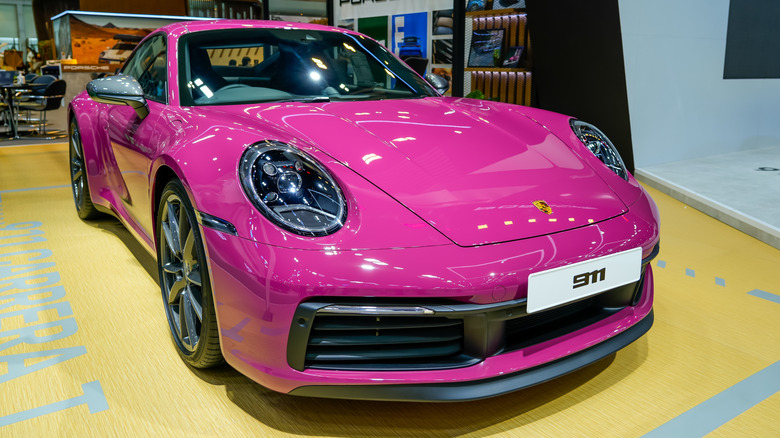
One of the most expressive colors on the spectrum is also nearly never seen on new cars. Magenta is a color rarely seen on cars in general, but when done correctly, it can be one of the most striking. Magenta is flamboyant, nearing kitsch status in some cases but in a charming way. It's the color of neon signs and over-the-top candy bars. Think the Miami Vice logo or obscure vaporwave music videos. You can say a lot of things about magenta, but one thing is for certain — it's not a boring color.
Unlike orange, magenta doesn't have much of anything in terms of motorsport roots. It's always been a rare color even on consumer cars. There are, however, some famous examples of magenta, and ones that remind us why we want to see more of it. Take Porsche for instance. Its Paint To Sample (PTS) program has come up with some of the finest colors the motoring world has ever seen, and it continues to impress us with innovations around car paint and color technology. One of its most mouth-watering colors is a wonderful shade of magenta, which Porsche calls, Rubystone red. This bright color is a fantastic example of what makes magenta such an appealing car color. It's unapologetic and unconventional — perfect for the driver that wants to stand out.