

5 Garage Gadgets You Should Unplug To Help Prevent A Fire
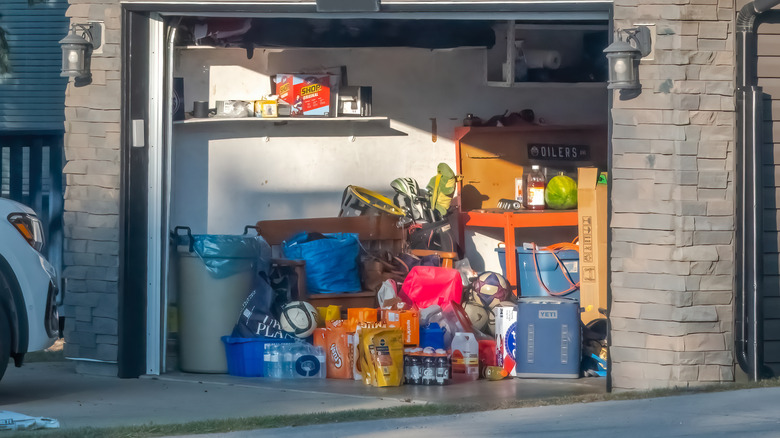
The garage is where most people set up their home workshops or dump items that they don't regularly use. While it may seem like a great place for all that, keeping some gadgets or devices in the garage — especially plugged in — can result in catastrophic damage. Due to the nature of the space, gadgets plugged into a power outlet inside a garage can quickly turn into a fire hazard. Most garages don't have proper ventilation, which can be extremely dangerous in case of a fire. There's no room for heat to escape, and any flammable gas remains inside the garage.
To add to it, garages are often dusty places, and fine sawdust is highly flammable. You may have also stored wood, carboard, paper, and other such flammable materials in your garage. So while it's totally okay to store a bunch of gadgets and machinery inside your garage, it's always best to turn them off when not in use. In fact, we would recommend completely unplugging the devices you don't use, just to be on the safer side. Specifically, there are certain garage gadgets that are more likely to cause a fire due to an accident if they remain plugged in for long durations. To help you mitigate any such mishap, we've put together a list of five garage gadgets you absolutely must unplug to prevent a fire.
Power tool chargers
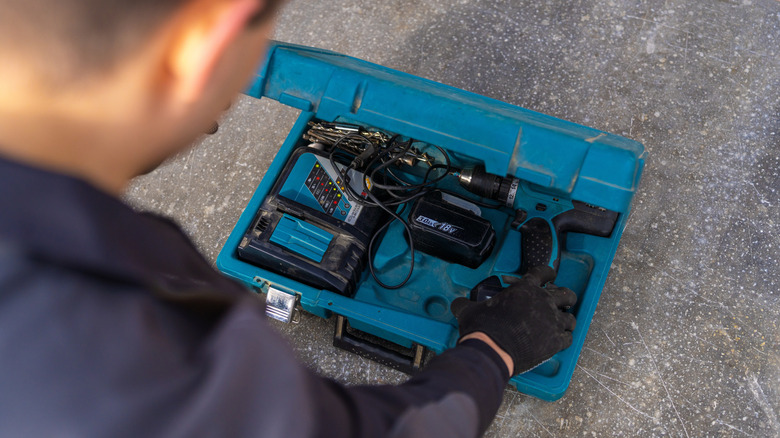
It is common practice to leave the batteries for your drills, saws, and sanders on their chargers so they are ready for the next project. You don't want to end up with a drill that's out of charge just when you need to put a hole in a wooden plank. However, leaving these chargers plugged in indefinitely is an open invitation to fire. Most modern tools use lithium-ion batteries, which are sensitive to heat and internal degradation. If a charger's internal circuitry fails to detect that a battery is full, it can continue to supply current into the cells, leading to a state called thermal runaway. This chemical chain reaction will cause the battery to overheat rapidly, eventually emitting toxic gases or bursting into flames.
Chargers also generate a small amount of heat during operation, which can cause static electricity to attract dust into the cooling vents of the charging brick. Over time, this buildup can act as insulation, causing the internal components to fry. If a component shorts out, the accumulated dust acts as fodder for even a small internal spark to grow into a fire. By unplugging your chargers once the charging cycle is complete, you ensure that there is no active current to cause a malfunction while you're away. If you're not always around your garage, it's probably a good idea to invest in one of the best smart plugs. Set the plug to automatically turn on after the however long it takes you batteries to charge, and then you won't have to manually monitor each charger.
Soldering irons
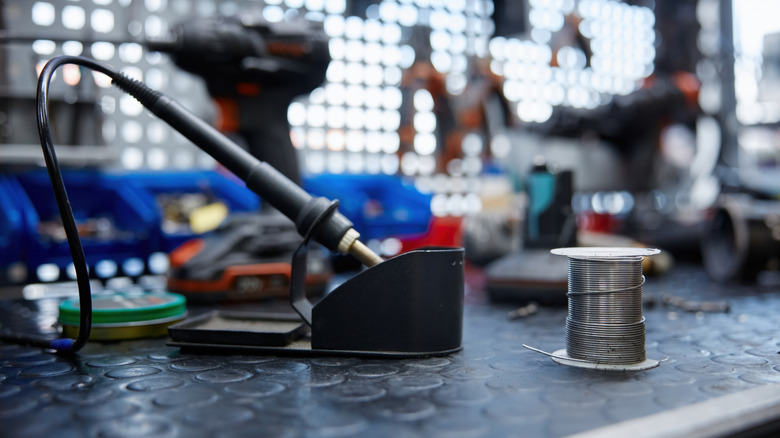
If you like tinkering with your gadgets and fixing electrical issues yourself, a soldering iron is a must-have. It's essentially a controlled heating element that can reach temperatures of up to 800 degrees Fahrenheit. However, a lot of basic soldering irons do not feature an automatic shut-off timer. If you forget to unplug it after a project, it will remain at peak temperature, which has obvious potential for creating an ignition zone if you leave it in your garage. Even if the iron is placed in a metal safety stand, that sustained heat can radiate downward, leading to the surface underneath it becoming flammable over time due to repeated heat exposure.
Another issue with soldering irons is that they often come with short power cords, which makes it easy to accidentally snag and knock the iron off the bench. And because soldering irons are light, and most soldering stands are also rather flimsy, they can easily roll or slide off a table and land on flammable materials you may have in your garage, like rags and cardboard boxes. Furthermore, the heating elements in cheaper irons can eventually fail and short to ground, causing the outer metal sleeve to become electrically live or red-hot. Unplugging the iron is the only way to guarantee that your workspace remains cool and safe. Alternatively, you can also build an auto cut-off system for your soldering iron.
Halogen lights
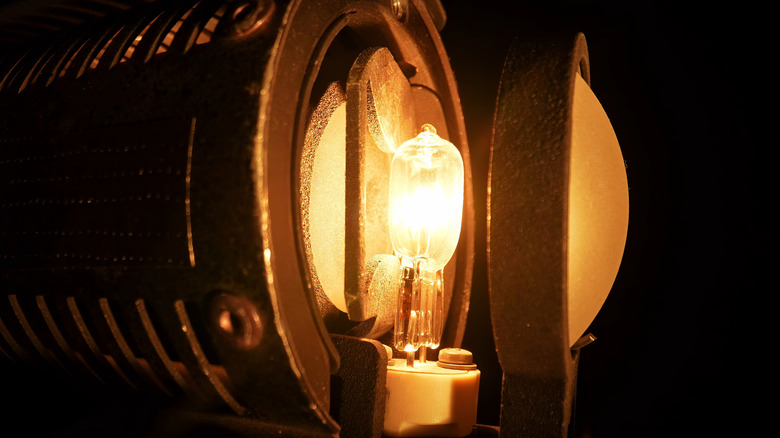
Halogen work lights are great for visibility, especially inside a garage where the lights are generally dim. However, if you've ever accidentally brushed against the glass or the metal frame of a halogen lamp after it's been on for a few minutes, you probably know that the surface gets pretty hot to the touch. That's the exact point of concern in this case. If a halogen light gets knocked over or if you happen to drape a piece of cloth around it, the sheer intensity of the bulb can create smoke or potentially ignite. Halogens also stay hot for a long time even after being turned off, so the risk doesn't vanish the second you turn off the switch.
The other thing to think about is the amount of power these lights consume. They are energy-heavy gadgets, and if your house has older wiring, that constant heavy draw can put a lot of stress on your outlets and the wires behind the walls. Since the garage is often where we store flammable items like paint or fuel cans, having a high-heat light source plugged in nearby adds an extra layer of risk. Unplugging them not only removes a massive heat source from a room that is usually full of flammable items but also reduces your electricity bill. It also ensures that a mechanical failure in the light's switch doesn't cause it to stay on while the garage is empty.
Electric vehicle chargers
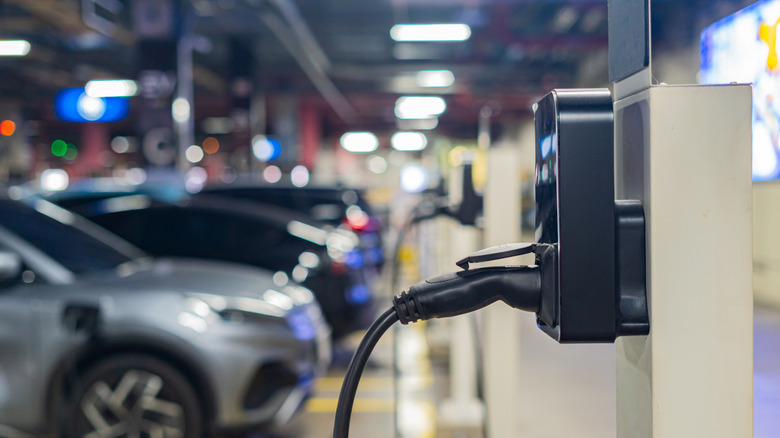
Electric vehicles help save on gas money, and charging an EV at home can also be a more economical solution, especially if you drive a lot. However, domestic EV chargers can take up to 8 hours to charge your car fully — that's a long time spent pulling a lot of current through your home's wiring. This creates a sustained level of warmth in the cables and the outlet, and if there's a tiny bit of wear on the plug or if the outlet is a little loose, it can cause damage over time. This is especially true for portable chargers that are frequently plugged and unplugged, as the physical connection can loosen.
It's also worth considering what happens during a storm or a power surge. While many chargers have protection built-in, a sudden spike in the grid can still stress the electronics inside the unit. If you're going away for a few days and the car is already charged, there isn't much benefit to keeping the system energized. Unplugging it (if it's a plug-in model) or simply giving the cord a quick check for any signs of warmth can help you catch potential electrical issues before they become a bigger headache. The thick charging cable can also become a tripping hazard or get caught under heavy items. Keeping the unit disconnected when it isn't needed helps maintain a cleaner and more controlled environment from a safety standpoint.
Space heaters
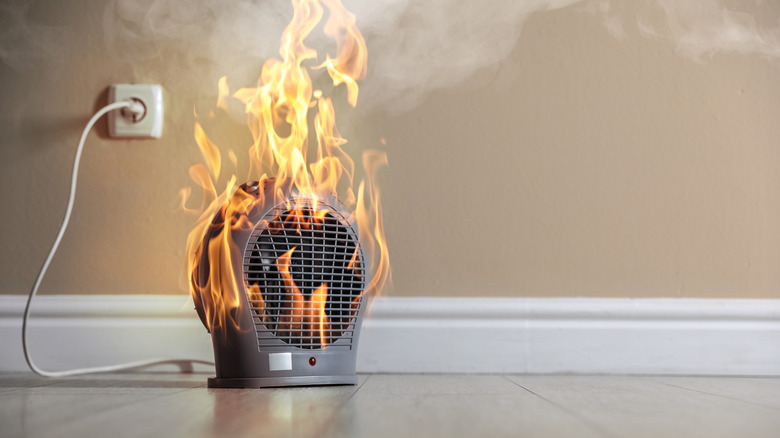
Space heaters are a lifesaver in a cold garage, especially if you don't have a centralized thermostat, but they are also a very common cause for household electrical issues. The main challenge in a garage is maintaining a clear area around the heater. In a workspace, it's easy for a cardboard box to slide or a shop rag to blow up against the heating element. Because these devices are designed to push out as much heat as possible, anything that touches the front grill is going to get hot quickly. Dust and debris can also be sucked into the back of the heater, where they might come into contact with the glowing internal coils.
The electrical side is just as tricky, too. People often use extension cords to get the heater to their prefer spot, but most standard kinds of extension cords aren't rated to handle the power a heater needs. This can cause the extension cord itself to get hot enough to melt its own insulation. Even if a heater has a safety switch, that's a mechanical part that can get stuck or fail in a dusty or humid garage environment. Physically pulling the plug whenever you leave the room ensures that there is no chance of the heater turning on due to a glitch or overheating while you're away. Since garages are rarely as well insulated as the rest of the house, heaters tend to run at full power for longer periods, making the need to disconnect them even more important for the health of your garage's electrical circuits.