

5 Android Phones That Outshine The iPhone 17e In Price And Features
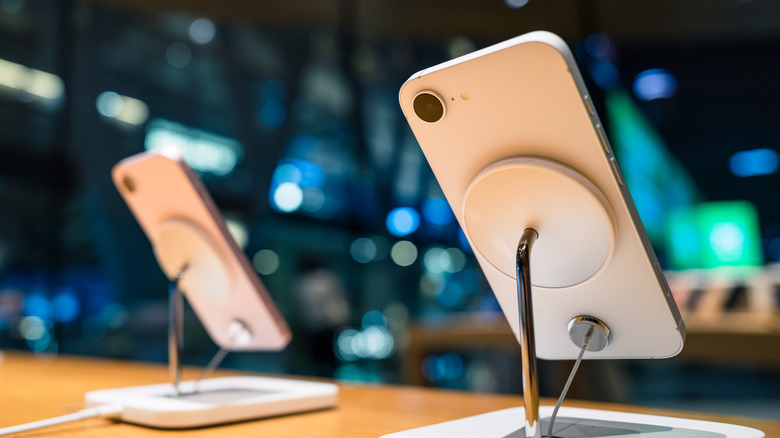
In 2025, Apple revitalized its cheapest smartphone model with a new design, bigger display, better camera, and a faster chip. The iPhone 16e retailed at a much higher price point, though, and still lacked features that many consider essential to the iPhone experience. The iPhone 17e addressed a lot of these issues, debuting at the same $600 price but now with support for MagSafe and twice the storage capacity for the base model. For those looking for a way into Apple's ecosystem, the iPhone 17e checks a lot of the right boxes and comes with the same excellent software update policy as the more expensive iPhones.
That said, it still cuts quite a few corners compared to the base iPhone 17 that we recommend instead. For starters, you only get a single 48-megapixel wide camera, a binned-down A19 chip with one less GPU core, and the dated notch design. Even worse is the fact that it still sports a 60Hz display, which, at this price point, should be unforgivable. Apple still sells the iPhone 16 for $100 more, and that gets you a better camera system and the Dynamic Island, but if you're open to options outside iOS, there is a wide range of smartphones that offer greater things for fewer bucks.
Google Pixel 10a
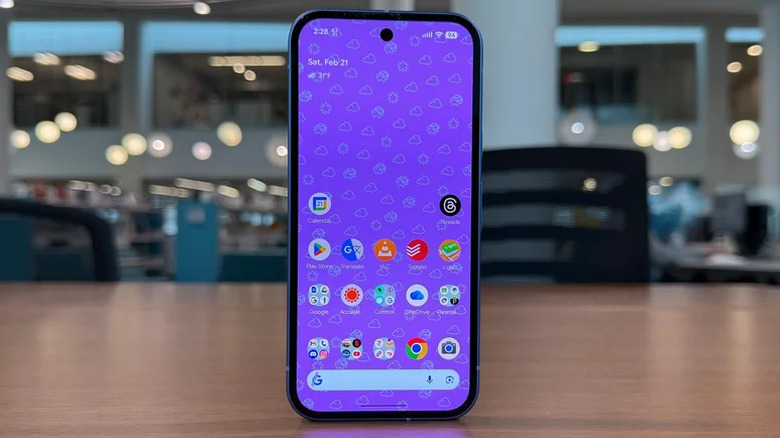
If the iPhone is the face of iOS, then Google's Pixel lineup is the purest expression of what Android is supposed to be. Despite being competitors, you will find similarities between the two. Modern Pixel smartphones have flat edges, great cameras, and clean software — much like the iPhone. The Pixel 10a is Google's latest budget offering, and it gives tough competition to the iPhone 17e. It retails for $500 and comes in a few fun colors, including bright red. Unfortunately, storage starts at 128GB. You can bump it up to 256GB, which will match its price to the iPhone 17e.
It does have a brighter 6.3-inch display that refreshes at 120Hz. The Pixel 10a also one-ups the iPhone 17e with a dual camera system, featuring a 48-megapixel wide and a 13-megapixel ultrawide sensor. In our review of the Pixel 10a, we reported excellent battery life, with the phone lasting a day and a half on a single charge. Pixel devices also receive up to seven years of software updates.
Performance wasn't an issue despite Google's in-house Tensor G4 chip being slower on paper. That said, if you're going to be playing graphically demanding titles all day, the iPhone 17e's A19 chip does take the lead. Inside the Pixel 10a, you get a 5,100 mAh battery with support for 30W wired charging. It can also be charged wirelessly, though you don't get Pixelsnap with the budget offering this year.
Samsung Galaxy S25 FE
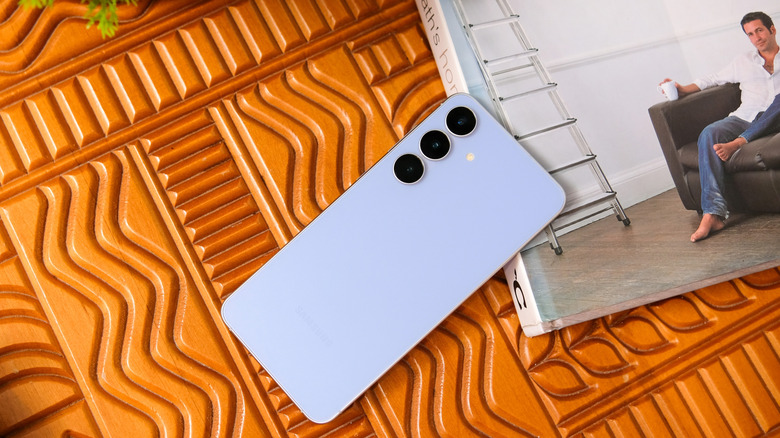
Despite Google being the maker of Android, it is Samsung that enjoys the largest share of the Android smartphone market globally, and for good reason. Samsung seems to have found a distinct visual identity for its smartphones. There's also a Samsung phone available at every price point you can shop for. The Samsung Galaxy S25 FE represents the upper mid-range of the company's offerings. It's powered by Samsung's in-house Exynos 2400 SoC, 8GB of RAM, and UFS 4.0 storage.
The phone also features an excellent FHD+ dynamic AMOLED 120Hz display. There's a triple camera setup on the rear consisting of a primary 50-megapixel sensor, a 12-megapixel ultrawide, and an 8-megapixel 3x telephoto lens. Like the iPhone and Pixel, the Galaxy S25 FE ships with the latest software and is promised to receive seven years of OS updates. Despite being comparatively cheaper than the rest of the S25 lineup, it features a glass back and an aluminum frame that contribute to a premium feel.
The 128GB storage variant of the Galaxy S25 FE retails at $650, while the 256GB model costs $750. This technically makes it costlier than the iPhone 17e, but the Galaxy S25 FE is often on sale, with the higher capacity variant averaging around $650, which does make it a better value offering. In a lot of ways, the Galaxy S25 FE is the iPhone 17e of Samsung's current lineup, just with a better display and a more flexible camera system.
OnePlus 15R
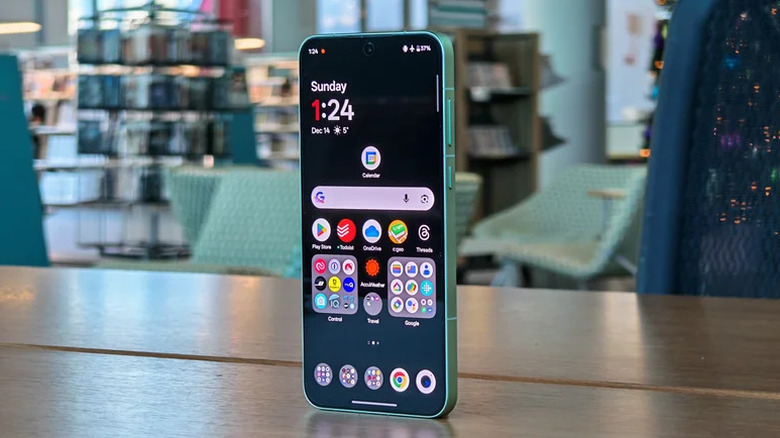
OnePlus doesn't have a presence as large as Google or Samsung in the U.S., but it has a decently long history of making high-octane phones that don't break the bank. The OnePlus 15R, priced at $700, costs as much as the 512GB variant of the iPhone 17e. Though it has half the storage capacity, nearly everything else about the phone is a massive upgrade. It's powered by the Snapdragon 8 Gen 5 chip, which sits a notch below the Snapdragon 8 Elite Gen 5, which is in use by flagships like the OnePlus 15 and the Samsung Galaxy S26 Ultra. You get 12GB of RAM and fast UFS 4.1 storage.
The OnePlus 15R also has an inarguably better display. It's a 6.83-inch AMOLED panel with a staggering 165Hz refresh rate. Though it only hits this number in supported games, it still refreshes at 120Hz in normal mode. In our review of the OnePlus 15R, we talk about its mammoth 7,400 mAh silicon-carbon battery. With light to medium use, it is easily a two-day phone. When you do need to charge it, the bundled 80W SuperVooc charger comes in clutch.
Camera performance is decent, too, with a 50-megapixel wide and 8-megapixel ultrawide setup. OxygenOS powers the software experience and is packed to the brim with useful features, all the while being extremely snappy. OnePlus offers around four years of major Android updates and six years of security patches for its flagships.
Nothing Phone 4(a) Pro
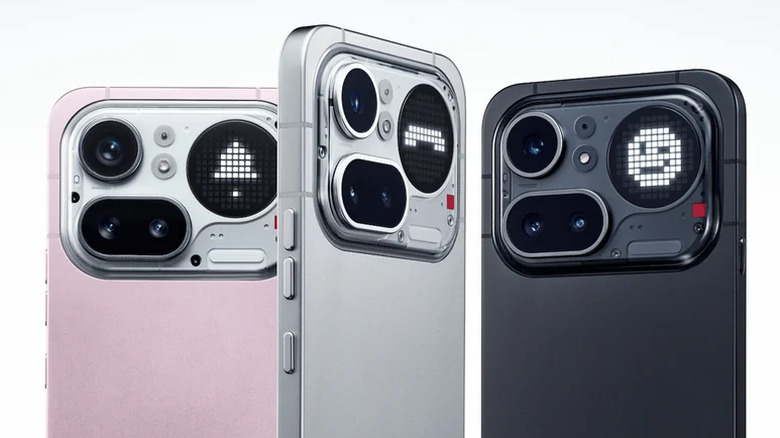
In a world full of smartphones that were all ramping up to feature the same design aesthetics and software feel, Nothing set out to break the monotony with a bolder take on smartphone design. Though its recent flagship received mixed reviews, the company seems to operate well in the budget and mid-range segments. The Nothing Phone 4(a) Pro starts at $500 for the 8GB RAM and 128GB storage model, but you can bump it up to 12GB of RAM and 256GB of storage for $100 more. It's one of the very few phones out there with a unibody aluminum construction, akin to the flagship iPhone 17 Pro.
It features Nothing's Glyph Matrix at the back, which is a collection of small LEDs that provide information at a glance. Despite focusing heavily on its industrial design, the phone does well in other regards. It's powered by the Snapdragon 7 Gen 4 SoC and features a 144Hz AMOLED display that soars up to 5,000 nits of peak brightness. The triple camera setup includes a 50-megapixel wide-angle lens, a 3.5x telephoto lens, and another 8-megapixel ultrawide sensor.
9to5Google called the Phone 4(a) Pro a "really enticing option." Another reason to get a Nothing phone is the software experience. It's devoid of bloatware and over-the-top design language. The phone comes with Android 16 out of the box, though Nothing promises only up to three years of OS updates.
Moto G Stylus
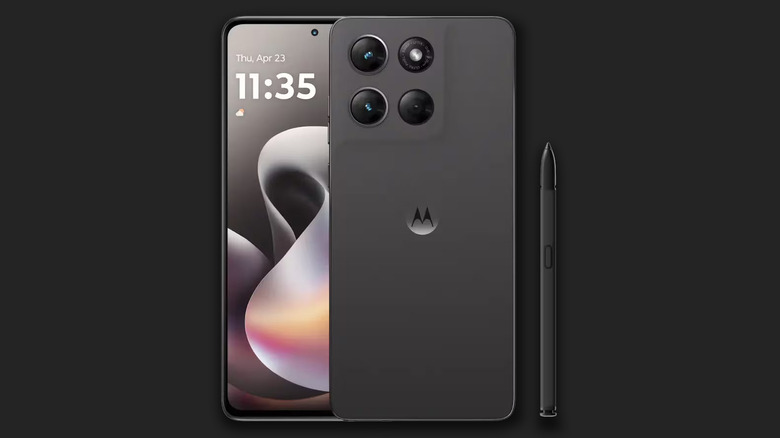
Priced at $500, the Moto G Stylus is a fair bit more affordable than the iPhone 17e. Plus, if you're shopping straight from Motorola, you get a pair of Moto Buds+ and four Moto Tags included. The 256GB variant throws in an entire Moto Watch. The 2026 model comes with a spacious 6.7-inch AMOLED display with a peak brightness of 5,000 nits. Once again, it beats the iPhone 17e with its 120Hz refresh rate that's noticeable when scrolling or playing supported games.
It's a proper budget pick, being powered by the Snapdragon 6 Gen 3 SoC and 8GB of RAM. The key feature here is support for stylus input. Apart from the Galaxy S26 Ultra, the Moto G Stylus is currently the only mainstream smartphone that comes with a stylus built-in. If you take a lot of notes or like to doodle on the go, it offers a way to do so that's much easier than it is on other phones. In our review of the Moto G Stylus (2025), we go over how the camera system is just average and gets the job done.
The phone's hardware is decent for its price, but Motorola's lackluster commitment to software updates makes it a tough recommendation if you're looking for a smartphone that can last you a couple of years. The Moto G Stylus comes with Android 16 out of the box, but is only guaranteed to receive two years of OS updates.