

6 New Features That Could Put Google's Pixel 11 Line Ahead Of Samsung
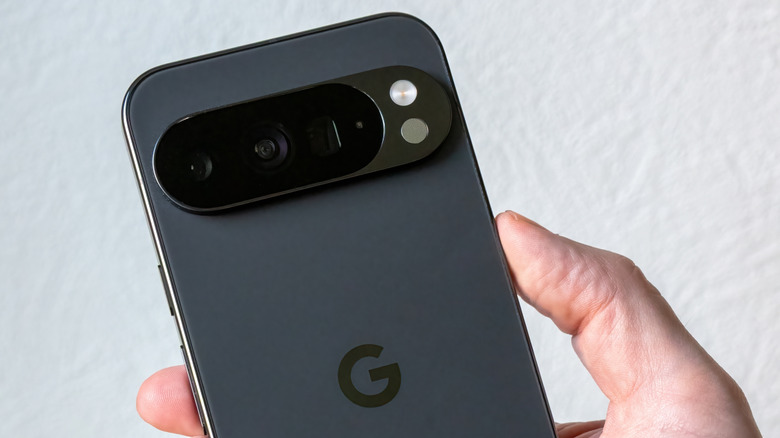
If you're in the market for a flagship Android smartphone, chances are you're considering options primarily from Samsung and Google. After all, they're among the best smartphone brands for both solid hardware and refined software. In fact, Samsung even ranked first in our survey asking users to pick the most reliable phone brand. Owing to this, you may be leaning towards the Samsung Galaxy S26 Ultra for your next purchase. It does come with a host of camera upgrades and a new privacy display that's extremely cool. That said, it might be worth waiting for Google's upcoming flagship lineup — the Pixel 11 series — set to be unveiled in a few months. While we don't have concrete information about the specs and features, rumor mills have given us a glimpse into what the next Google flagship may look like, and it's definitely exciting.
From a chipset that's supposedly going to be manufactured on an industry-leading node to AI features that will not only make your life easier but also reimagine how you capture photos and videos, the Google Pixel 11 line could be a promising upgrade over its predecessor. So, if you're not particularly in a hurry, and you want the best of modern technology in terms of both hardware and software, it might be worth waiting. Here are some of the expected features of the upcoming Pixel 11 series that might make it worth the wait.
Tensor G6 manufactured on a 2nm manufacturing node

Right from the first Tensor chip on the Pixel 6 to the Tensor G5 on the latest Pixel 10, Google's SoCs have been underpowered compared to the performance and efficiency of their Qualcomm, MediaTek, and Apple counterparts. It looks like that's going to change with the Tensor G6 on the Pixel 11 series. Reports indicate that the Tensor G6 — set to be manufactured by TSMC — is going to adopt the new 2nm node, currently only used by Samsung's Exynos 2600 chip found on the Galaxy S26 in certain regions. In North America, India, and several other regions, though, Samsung uses Qualcomm's 8 Elite Gen 5 chip on its flagship devices, which is manufactured on the 3nm node.
If Google decides to use the 2nm node, the Pixel 11 series will get a technically superior chipset compared to Qualcomm's and Apple's processors — at least in terms of the process node. For the uninitiated, the process node determines the density of transistors on a chip. The lower the process node, the higher the number of transistors. A higher transistor density directly results in faster processing speeds and better efficiency — two areas where the Tensor chip has traditionally fallen behind when compared to the competition. With the Tensor G6 expected to be manufactured using cutting-edge processes, we're optimistic about the performance and efficiency gains on the Pixel 11.
M3 security chip

A highlight of Google Pixel smartphones has been the dedicated security chip used by the brand to store your biometrics and ensure all your on-device data stays secure. Dubbed "Titan M", it was first introduced with the Pixel 3 way back in 2018. Then, in 2021, Google updated its security chip alongside the launch of the Tensor SoC on the Pixel 6. The Titan M2 coprocessor provides an extra layer of security compared to other smartphones that only rely on the default security options provided by the Android operating system. Right from checking for potential issues or compromises when booting into the phone to storing decryption keys, the Titan M2 security chip takes some load off the main CPU while providing additional security.
The first Titan M chip was updated after three years, and it seems like its successor will get a replacement after five. While we don't have clarity on what the improvements would look like, it seems safe to say that the updated chip will help with more secure payments, data processing for AI, and more.
The Pixel 11 series is also rumored to be getting sophisticated facial recognition technology, so it would only make sense for Google to update the chips to handle the new biometric data. Since Pixel devices also sport under-display fingerprint scanners, the new Titan M3 processor might be more powerful to handle multiple biometric unlock methods efficiently. Think of it like Samsung's Knox security, only with more of a hardware basis.
Under-display facial recognition

The Pixel 4 may have ditched the fingerprint reader for a Soli-based radar face scanner, but that only lasted a year — otherwise, Google's smartphones have relied on fingerprint scanners for biometric unlocking. While a fingerprint scanner — especially the ultrasonic one used on the Pixel 10 series — is extremely fast and accurate, face scanning can be even more convenient. Ask anyone who has used an iPhone since the X generation, and they'll tell you how nice it is.
Google took a cue from iPhone users a couple of years back and reintroduced face unlock with the Pixel 7. However, that was a completely software-based implementation, and not as secure as Apple's FaceID. Now, that's supposedly about to change with the upcoming Pixel 11 series.
Google is rumored to be reintroducing dedicated hardware for facial recognition — now with sensors hidden under the display, unlike Apple's implementation in the notch or dynamic island. This seems like some pretty futurist tech, and it could make unlocking the phone a lot easier and more seamless. Moreover, it gives users the choice to pick between scanning their fingerprint or face to unlock the phone, which is always welcome. Samsung tried iris scanning a few years back with the Galaxy S8 series, but it has gone back to good 'ol fingerprint scanning and software-based face unlock with the latest S26 series.
Video Relight
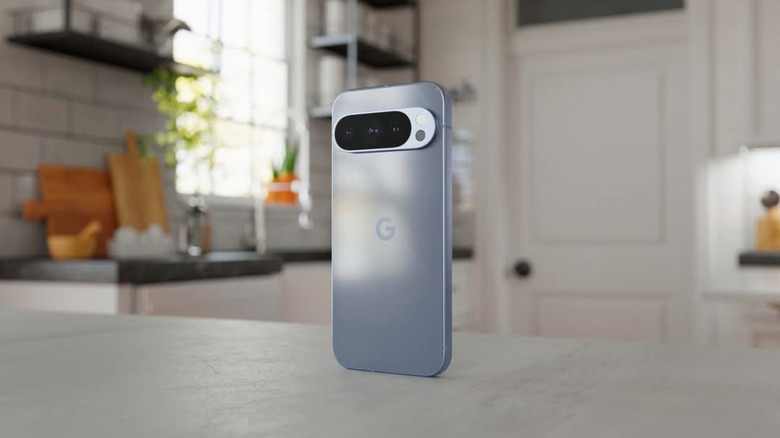
Smartphone cameras have improved drastically in the past few years, with some of the best camera phones out there featuring massive 1-inch sensors, variable apertures, and extra clip-on lenses and attachments. Google isn't playing the hardware game in the camera department — it never has — but the brand is doubling down on the magic it can pull off with software. Video Relight is a new feature rumored to launch alongside the Pixel 11 series of phones.
As the name suggests, this feature is expected to provide a lighting boost to your videos. Shooting videos at night or in low-light situations is challenging, and footage can often end up dark and grainy. It sounds like Google is trying to change that using its computational algorithms and AI prowess.
The Video Relight feature will apparently let you vary the light intensity in a video after it's been recording. You can make the video appear brighter without using any complex video editing tools, which is impressive. Google is expected to make use of the new computational capabilities of the Tensor G6 to perform these activities. Notably, we're not sure if the Video Relight feature will work on-device or if the recorded videos will need to be uploaded to Google Photos for it to be processed on the cloud, similar to the Video Boost feature on current Pixel devices.
Qi 2 magnets
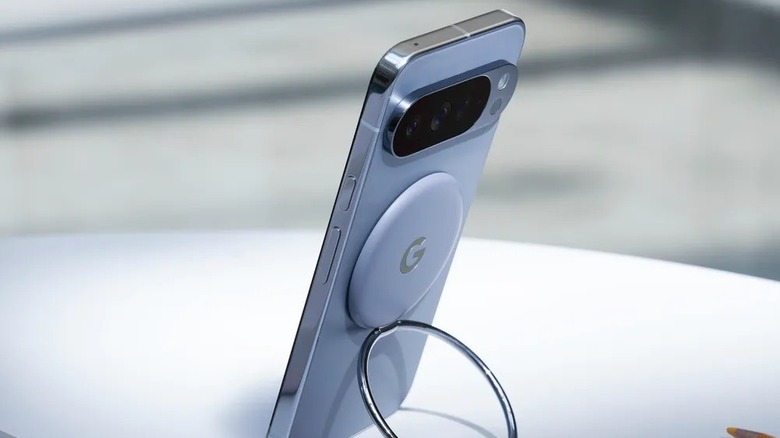
While this isn't entirely a new feature, it's absent on Samsung's current generation of flagships, making it a standout aspect of the upcoming Pixel 11 series. For the uninitiated, PixelSnap is Google's version of MagSafe, a standard introduced by Apple with the iPhone 12 series back in 2020. For a feature that was introduced six years ago, it's a shame that more brands haven't adopted it on their devices, since MagSafe is extremely useful. Being able to magnetically attach your phone onto car mounts, stands, tripods, wireless chargers, and whatnot is convenient and seamless. Thankfully, Google took inspiration from Apple and added magnets to the back of the Pixel 10 line-up. It's safe to say that the magnets are going to remain on the Pixel 11 series, too.
Having used both MagSafe and PixelSnap, both features are functionally identical. You can either attach a phone holder that makes it easy to grip it while using, or even a wallet that can house a few credit cards and some cash. The primary use of these magnets, though, is to align magnetic wireless chargers for the best efficiency. Using the latest Qi 2.2 standard, one can charge a phone wirelessly up to 25W if the magnets align the coils in the phone and the charger. It's surprising that Samsung hasn't added magnets to its phones yet, with some indicating that it could be due to the S Pen taking up valuable space inside the chassis. Regardless, it's a feature that sets the Pixel 11 apart, and one that makes the S series fall behind.
Android 17 out of the box with Pixel Experience
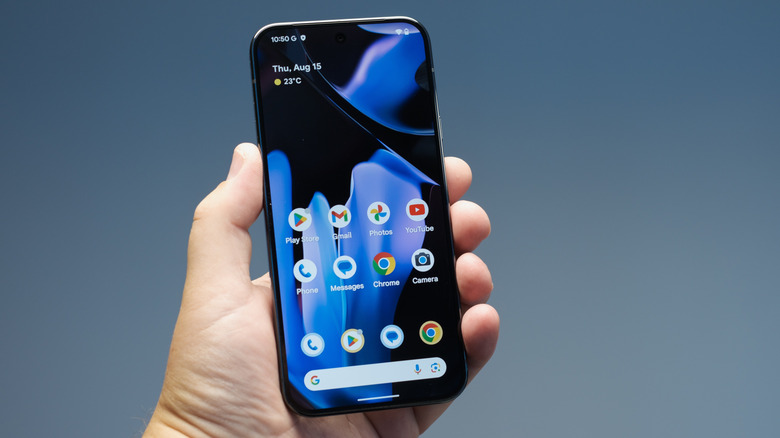
When picking an Android phone, the decision often boils down to the software and UI running on the device, as most new phones have excellent specs. Some prefer the feature-rich One UI on Samsung phones, and others like Google's clean and classy Pixel UI. And while it may not have the same number of features, Pixel UI has several clever touches to improve the user experience when using the phone every day.
For starters, the entire Pixel experience is a lot more snappy. Then, there's the At a Glance widget, which uses AI, location services, and data from your emails or calendar events to display useful information right on your home screen.
Now, aesthetics are completely subjective, but many people also feel that the Pixel UI looks a little more sophisticated. Google's implementation of Material 3 Expressive theming on the Pixel 10 looks rather appealing, since it also affects Google's first-party apps. Combine that with some smart AI features integrated into the UI courtesy of Gemini, and the Pixel 11 seems likely to offer an even better software experience in terms of utility. And of course, the Pixel 11 will also be among the first phones to receive the latest Android version updates, in addition to being among the first running Android 17 out of the box.