

5 Jeep Engines You Should Steer Clear Of
Jeep has spent more than eight decades building a reputation few automotive brands can match. From the original Willys MB that helped turn the tide of World War II to modern Wranglers tackling the obstacles on the Rubicon Trail, the seven-slot grille has housed legendary engines like the AMC 4.0-liter inline-six — a cast-iron workhorse so well-crafted that it became the standard against which every Jeep engine that came after it gets measured.
But like every automaker, Jeep is not perfect, and neither are all of its engines. Jeep's ownership has changed hands multiple times, from American Motors Corporation (AMC) to Chrysler, Fiat Chrysler (FCA), and the current Stellantis umbrella, and each era brought some questionable engines. Some were borrowed from other platforms and could not handle the demands Jeep owners place on their vehicles. Others introduced new technology that proved to be too ambitious for their time, and a few arrived with systems that led to federal fines and fire-risk recalls — never a good sign for any engine program.
The five engines we're discussing affected hundreds of thousands of vehicles, with problems like excessive oil consumption, blown head gaskets, stalling, and outright engine failure. Does that mean every example will suffer? Absolutely not, and many of these problems have been addressed through recalls, warranty extensions, service bulletins, or manufacturing changes. But if one of these engines is powering the Jeep you're considering, knowing the history before could save you from learning it in a very expensive way.
2.4L Tigershark MultiAir II
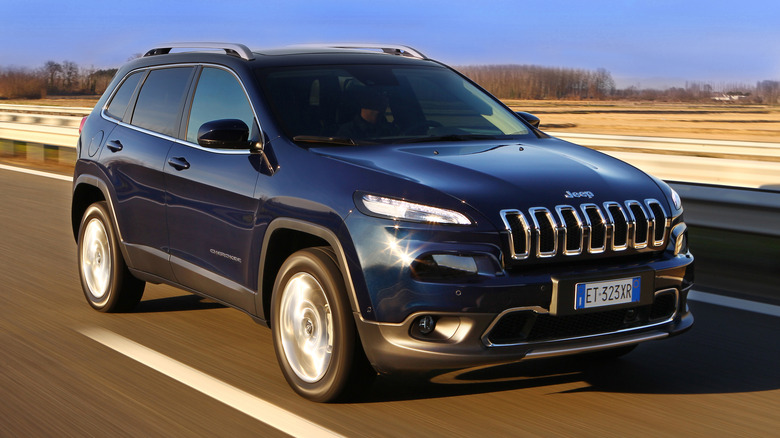
The 2.4-liter Tigershark MultiAir II was FCA's (Fiat Chrysler's) reworked successor to replace the old World Gas Engine family. The big change was MultiAir. Instead of using fixed camshaft lobes to open intake valves, MultiAir uses electrohydraulic actuators controlled by the engine software. This allows the ECU to change valve lift and timing on the fly, to improve both power and efficiency without the usual compromises of a fixed cam profile. It was a promising piece of engineering, but in the case of the 2.4-liter Tigershark, it led to more problems than solutions.
The issues started with the piston rings. In any engine, piston rings keep combustion pressure above the piston, and oil below the piston in the crankcase, which prevents the oil from migrating upward into the combustion chamber. The Tigershark's piston rings weren't sealed properly, partly how the MultiAir system works, which caused oil to slip past into the combustion chamber, and burn off through the exhaust with little warning. This allowed oil level to drop to critical levels so quickly that some engines suffered secondary internal damage for running on low oil for too long. The problem often showed up as misfires, and if the level dropped far enough, the engine could also stall. In more severe cases, the damage led to cylinder scoring and, eventually, full engine replacement.
The engine ended up in 2014-2019 Cherokees, 2015-2018 Renegades, and the 2017-2018 Compass, among others. FCA tried to fix the issue through multiple customer service campaigns instead of a recall, then faced a class action lawsuit that ended in a seven year (or 100,000 mile) warranty extension, though some of the earliest affected vehicles have now aged out of that coverage window.
Chrysler 3.8L V6
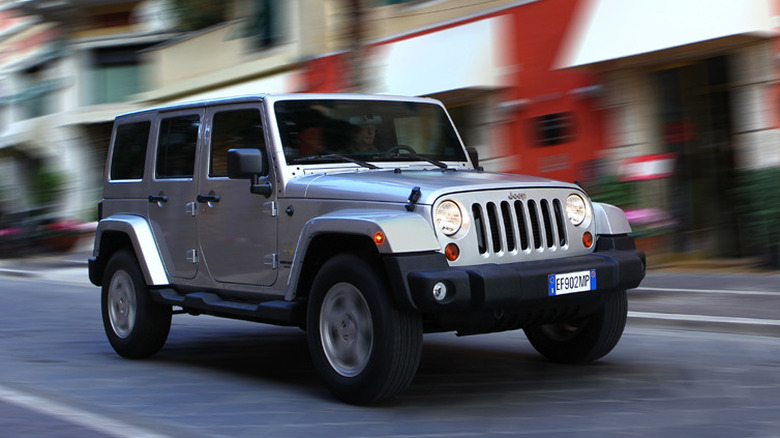
When the Wrangler moved into its all-new JK generation for 2007, Jeep dropped the great 4.0-liter inline six and replaced it with the 3.8-liter V6. It had the thankless job of following the engine a lot of Jeep owners still think of as the one to beat, and in addition to being underpowered than its predecessor, it came with its own set of reliability problems.
The main problem was with oil consumption; the 3.8L V6 was either going through it too fast, leaking it or both. Once the engine is deprived of oil for too long, the crankshaft, rod bearings, and cam surfaces lose the lubricant that smooths metal on metal contact. That could send metal shavings through the fuel system, the engine could start knocking or develop bottom-end noise, and in some cases result in full engine failure. Another reason the oil problem got worse is that the front timing cover became porous and the casting itself started leaking oil through tiny imperfections. Oil then seeps through the front of the engine can look like its coming from several other places, which means you can fix the wrong leak while the engine quietly keeps losing oil.
Additionally, there was also the problem of exhaust manifolds developing cracks, which allowed exhaust gases to escape near the engine instead of flowing cleanly downstream. It typically creates a ticking noise, sometimes triggers a check engine light, and very rarely dump exhaust fumes into the cabin, but it isn't known for killing an engine outright.
Only the cracked manifolds were treated by a service bulletin. Jeep went on to phase out the 3.8L V6 after 2011, replacing it with the 3.6L Pentastar for the 2012 Wrangler.
3.0 EcoDiesel V6
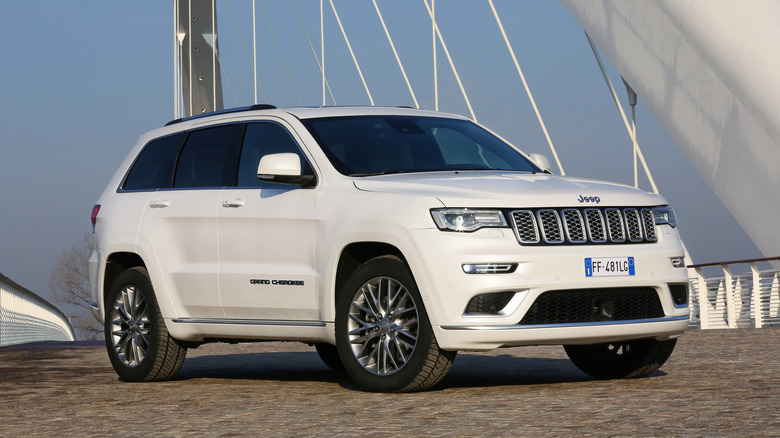
Few engines in recent memory have had a murkier track record than the second-gen 3.0-liter EcoDiesel V6. Supplied by VM Motori and offered in the 2014-2019 Grand Cherokee WK2, it was marketed as the diesel solution American buyers had been waiting for. Instead, it brought one of the most troubled engine programs in FCA's modern history, complete with an emissions cheating scandal, multiple service bulletins, and reliability problems.
In 2017, the EPA accused Fiat Chrysler of using defeat device software in roughly 104,000 vehicles equipped with the EcoDiesel, including 2014-2016 Grand Cherokees. FCA eventually settled for over $800 million in penalties, recall costs, and owner compensation costs. But the emissions lawsuit, expensive as it was, became a footnote compared to what followed.
The most concerning issue was with the EcoDiesel's exhaust gas recirculation (EGR) cooler, which could crack internally from heat cycling. This allowed coolant to leak out, and if that coolant reached hot exhaust components, it could ignite and start a fire.
The second problem was with the EcoDiesel's diesel particulate filter (DPF). Its job is to trap soot (basically carbon particles) during diesel combustion. Once there's enough soot built up, the engine goes through a regeneration cycle to burn off the soot. The EcoDiesel's DPF started holding more soot than the system could burn off during regenerations, which led to the filter getting clogged up, which restricts exhaust flow and hurts performance or even forces the engine into limp mode. A small number of cases involved the DPF sensors melting and needing to be replaced.
Only the EGR leak got a safety recall, and the DPF problem was treated through service bulletins and software updates.
3.6L Pentastar V6
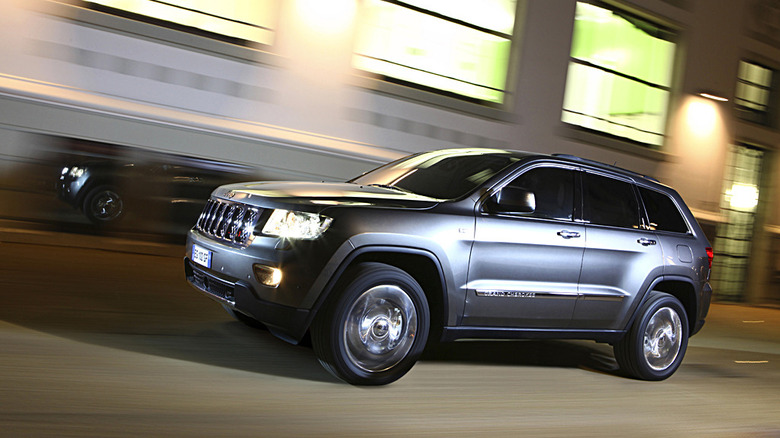
The 3.6L Pentastar V6 engine eventually became one of Chrysler's most successful engines, but that reputation came after the company issued some serious flaws that plagued the early years of production.
The first issue involved the valve seats in the left-bank cylinder head, around cylinder number two, four and six. Every time a cylinder valve closes, it slams against a hardened ring called the seat. That happens thousands of times per minute while the engine is constantly heating up and cooling down, which puts the seat and the surrounding aluminum head under a ton of thermal stress. If the valve seat isn't hard enough, it wears prematurely. In early Pentastar engines, those valve seats wore faster than they should have, transferred excess heat into the surrounding aluminum, and over time led to cracks in the cylinder head.
It also gave birth to a ticking noise, which become known as "the Pentastar tick", which was often accompanied by rough idle, particularly noticeable when the engine hadn't reached operating temperature, and check-engine lights illuminated with diagnostic codes pointing to cylinder two misfires. If the ticking wasn't coming from the valve seats, it meant it was the camshafts, lash adjusters or rocker arms that were failing, which are also located in the cylinder heads. Additionally, some Jeep vehicles with the 3.6L Pentastar also came with sand residue left in the radiator, which would then circulate inside the engine and cooling systems, leading to coolant loss and overheating issues.
Only the left-cylinder-head issues got special coverage through an extended warranty program; Chrysler handled the rest through service bulletins, standard warranty repairs, and private settlements, not recalls. The main Jeep models affected were 2011-2013 Grand Cherokees and 2012-2013 Wranglers with the 3.6-liter ERB.
3.7L Powertech V6
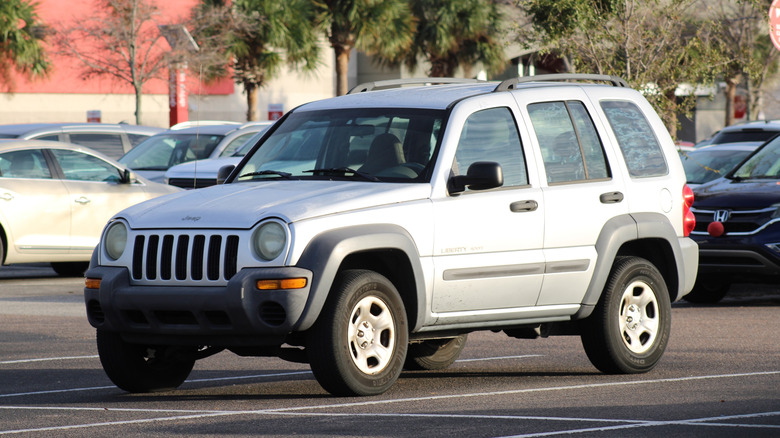
Chrysler introduced the 3.7L Powertech V6 in 2002 for the 2002-2007 Jeep Liberty and eventually the 2005-2010 Grand Cherokee and the 2006-2010 Commander. It shared its basic architecture with the larger 4.7L Powertech V8 and used a cast-iron block with aluminum SOHC heads, producing 210 horsepower and 235 lb-ft of torque.
On this engine, heat was a big problem. Overheating could sometimes cause the intake valve seats in the aluminum head to loosen up and drop into the combustion chamber. Then the cylinder cannot seal, and the loose seat could get smashed between the piston and the valve, scoring the cylinder, and sometimes destroying the engine.
There was another problem. Once the engine overheats badly enough, the aluminum heads expand beyond what they are supposed to, and the head gasket can stop sealing between the head and block. Once the seal is compromised, coolant and combustion gases can start mixing and going where they shouldn't, which leads to coolant loss and misfires. If the heat damage continues, the head itself can crack, and at that point, the engine is usually headed toward replacement.
Finally, there were also sludge-related oil problems, where degraded oil could thicken, clog passages, starve the engine of lubrication, and eventually lead to knocking or failure.
None of these issues got a recall, but the overheating side of things at least got some cooling-related service bulletins.
How we chose these engines
To build this list, we gave priority to Jeep engines with a long time on the road and serious enough problems to trigger service bulletins, recalls, warranty extensions, lawsuits, and other regulatory actions. None of this means every Jeep with these powertrains is doomed to fail. In fact, plenty of owners have had, long, uneventful runs with most of the powertrains on this list.