

Right Now A Hybrid Sounds Like A Great Idea, But Is The Prius PHEV Worth It?
It's no surprise, with gas prices surging, that drivers fearing their next fuel-up are looking to electrification to ease the pain. While EVs may avoid the gas station forecourt altogether, hybrids and plug-in hybrids can ease the transition and help avoid things like range anxiety. In fact, that's always been the Toyota Prius' big boast.
We're a long way from the oddball first-generation Prius launch in 1997, however. Almost three decades on, the 2026 Prius Plug-In Hybrid — once known as the Prius Prime, a title since retired though the "Prime" branding remains on the back of the PHEV's key fob — now promises the best of gas-electric. Though a little more expensive than the standard Prius (which starts at $29,745 including $1,195 destination), the plug-in's bigger battery means a healthy 40 miles of EV-only driving.
 Chris Davies/SlashGear
That's a real advantage over the standard Prius, which can muster a little lower-speed EV-only range, but not for long. That said, there's more than just the $5k premium for the Prius PHEV that might leave you second-guessing Toyota's plug-in.
Turning heads (but in a good way)
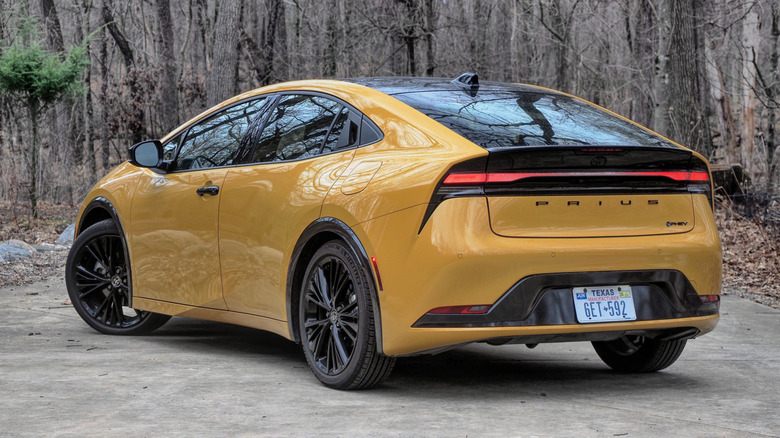
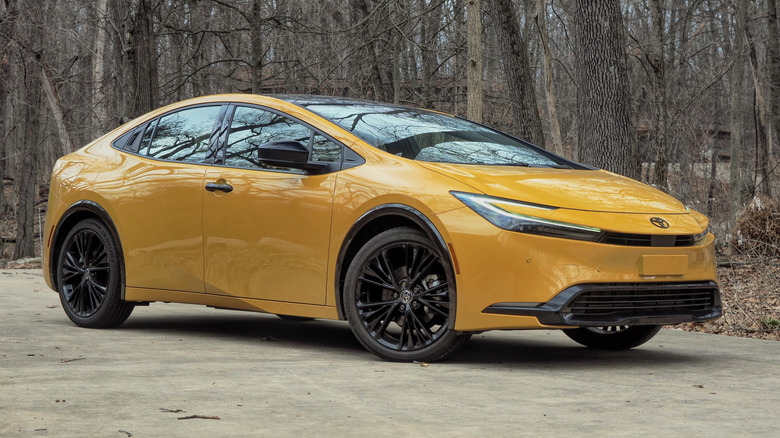
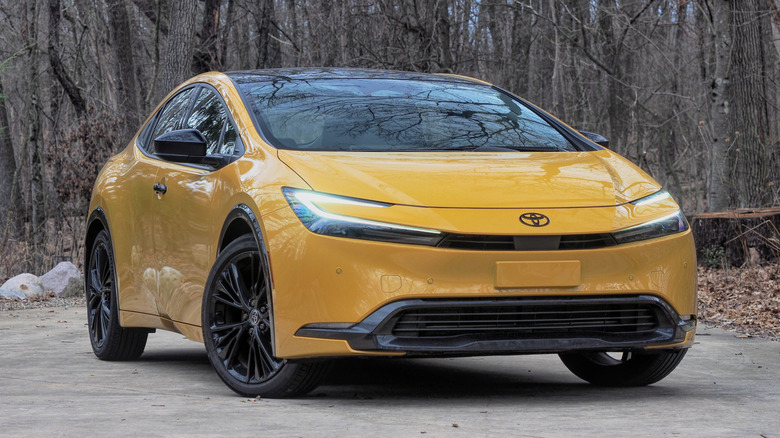
Much has been said about the Prius' transformation from ugly duckling, to anonymous, to arguably one of the best-looking new vehicles on the road. This Nightshade Edition — in addition to the trim-exclusive Karashi paint, a nod to the Japanese yellow mustard of the same name — gets special 19-inch black finish alloy wheels, versus the 17-inch set (with aero covers) on the base SE, and the 19-inch silver alloys on the XSE and flagship XSE Premium.
 Chris Davies/SlashGear
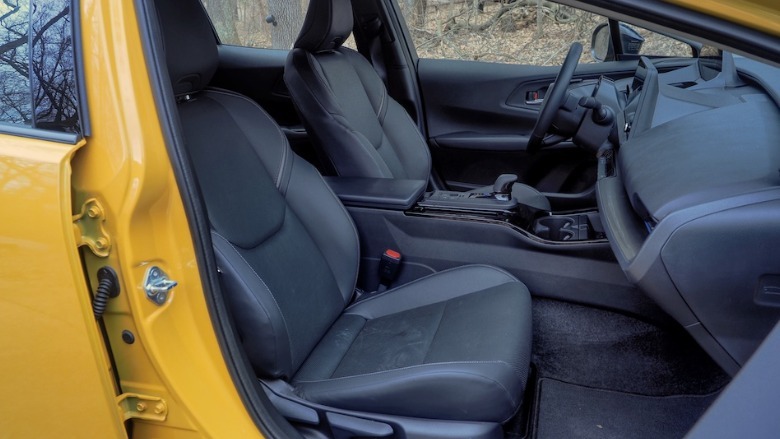
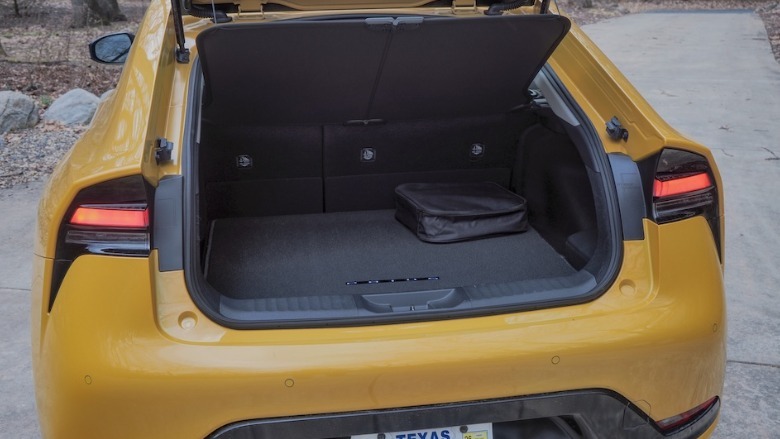
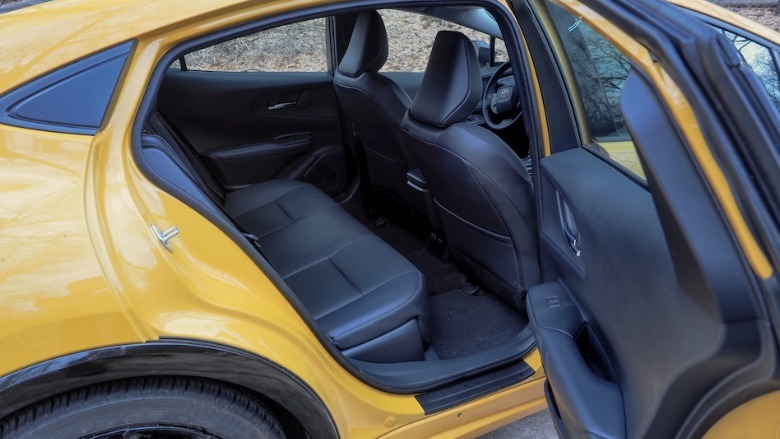
Styling is subjective, and there have been practicality compromises made along the way: this generation's 20.3 cu-ft of trunk space (rising to 26.7 cu-ft with the rear seats folded) is markedly lower than the 27.4/50.7 cu-ft of the previous-gen Prius.
 Chris Davies/SlashGear
I can see some way to excusing that, since the Prius no longer shoulders the brunt of Toyota's hybrid ambitions. A RAV4 PHEV will swallow over 33 cu-ft of stuff with all its seats up, or almost 64 cu-ft with the second row down. If you want electrification and greater capacity than the Prius offers, these days you'll find it elsewhere in the same dealership.
As much power as it really needs
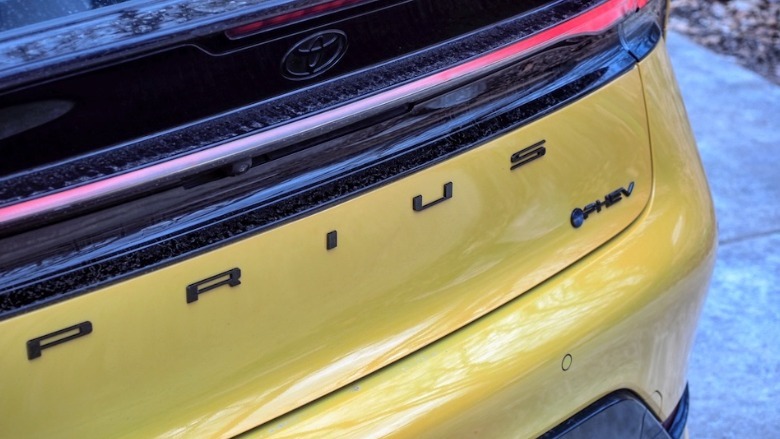
220 horsepower may not wow on paper anymore, but it's more than sufficient to leave the Prius PHEV a fun ride around town. The instant electric shove zips the roughly 3,500 pound Toyota away from stop signs, lights, and junctions; only the relatively narrow rear window stopped me from enjoying the expressions of surprise among drivers astonished to have lost the 0-30 mph sprint to something with PRIUS boldly emblazoned across its rump.
 Chris Davies/SlashGear
The steering is heavily power-assisted, the suspension tuned for compliance more than cornering speed, and — even in Sport mode — the Prius isn't pretending to be an especially sporty car. I can't say the 2.0-liter inline-four gas engine contributes a sonorous soundtrack when it kicks in, but that rousing is at least smooth and well-integrated. This is an easy car to drive, and more entertaining than it probably needs to be.
Toyota doesn't forget buttons, but there are still some dashboard oddities
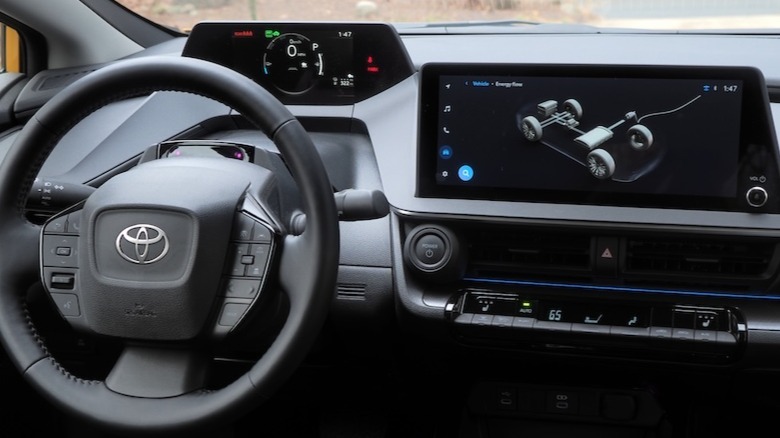
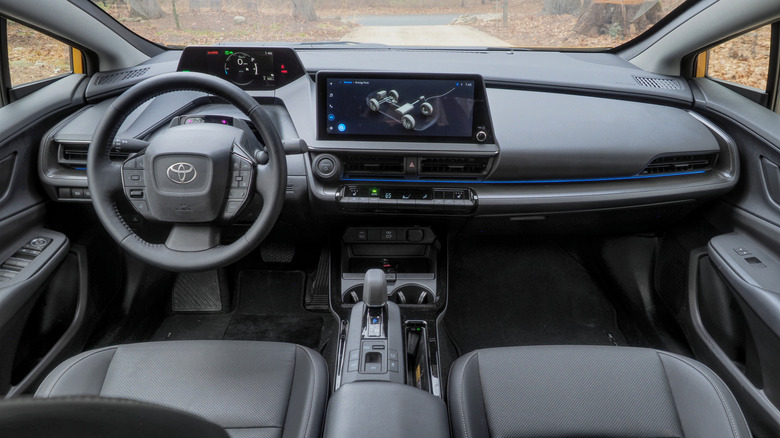
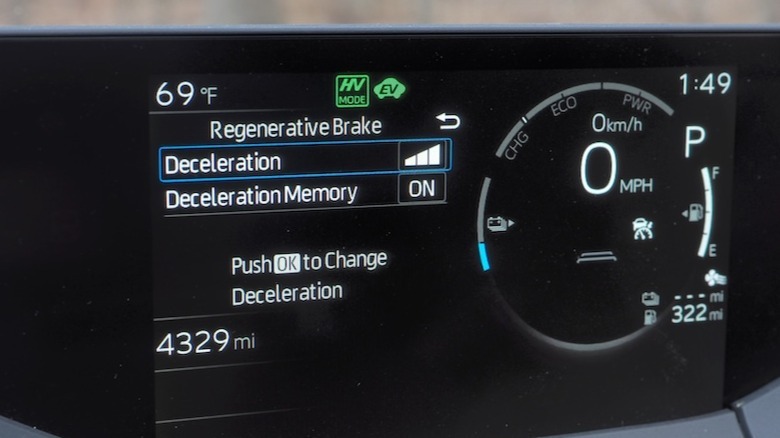
The Prius' dashboard remains button-heavy, but if it's a choice between a surfeit of switchgear and everything being handed over to a touchscreen, I know which I'd prefer. Toyota's infotainment system — served up on an 8-inch touchscreen as standard — is wildly improved over previous-generation Prius models, though its aesthetic doesn't really match the crunchy graphics on the smaller driver display parked up close to the base of the windshield.
 Chris Davies/SlashGear
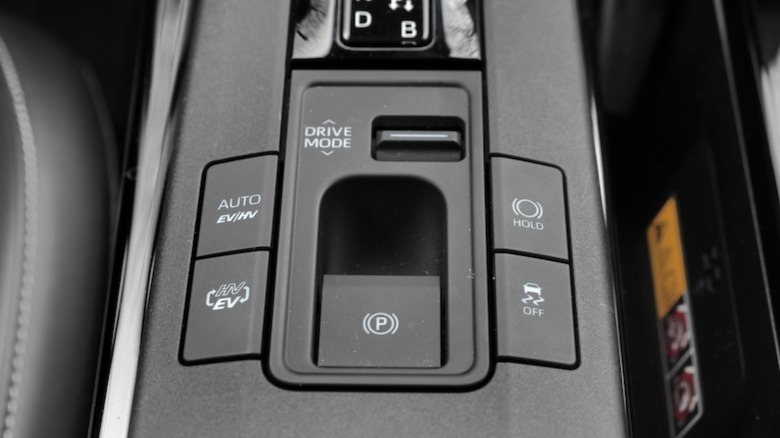
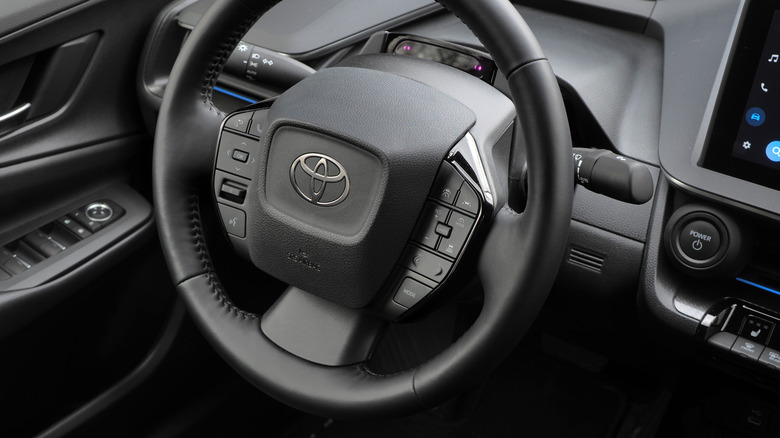
In fact, there's a lot of ergonomic oddness happening with the Prius PHEV's primary controls: from a steering wheel which looks like it melted in the sun and drooped down into the driver's lap, to the way regenerative braking settings are buried. The "B" drive mode offers three levels of intensity, but flipping between them requires parking up and then digging through the driver display menu. A weird decision, given most electrified vehicles will let you adjust levels on the fly.
Nightshade Edition isn't necessarily the trim I'd pick
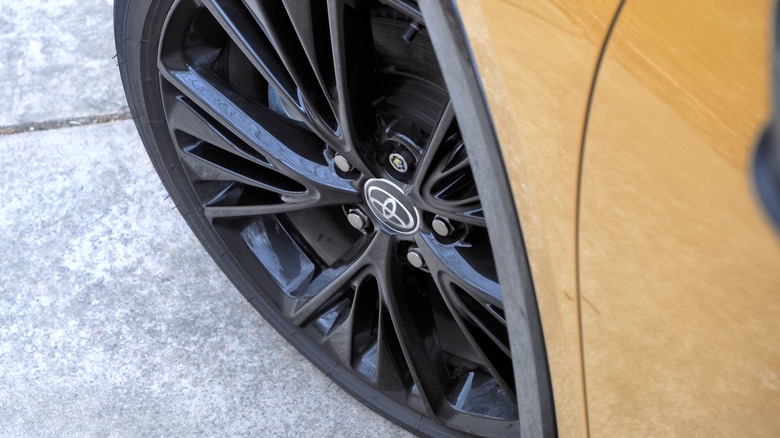
Nice as this Nightshade Edition (from $38,990 including destination) may be, were I in the market for a Prius Plug-in Hybrid myself, I'd be looking to stretch my dollars as far as possible. That's not one but two check marks for the base Prius SE: not only is it the least-expensive of the PHEVs, from $34,970 (including destination) but the smaller wheels help it to be more economical.
It's rated at 52 mpg combined or 127 MPGe, whereas the XSE, Nightshade, and XSE Premium trims see those numbers dip to 48 mpg and 114 MPGe. Still nothing to be ashamed about, no, but in combination with the most frugal Prius PHEV also being the cheapest, I could go without the creature comforts you sacrifice. Only the absence of heated front seats might rankle.
 Chris Davies/SlashGear
All that said, the 52+ mpg shown on this particular Nightshade's trip computer suggests even Toyota may be underestimating its PHEV. Admittedly, my own testing skewed closer to city use, compared to the specific 55% city/45% highway blend the EPA relies upon.
The Prius PHEV is good, but it's not for everyone
The biggest drawback with the Prius PHEV is the absence of an all-wheel drive option. Whereas you can have the regular Prius hybrid in either FWD or AWD form, Toyota only offers the former with its plug-in version. For those drivers in cold weather states — or, frankly, any of the locations where climate change means snow and ice are now an unpredictable possibility — the extra traction available on the non-PHEV is definitely appealing.
Instead, you need to choose: is traction your priority, or that 40 miles of electric-only range and the plug-in's extra power? The cheapest Prius with AWD is $31,145 (including destination); you'll spend at least $3,825 more for the PHEV. Annual running costs are less for the PHEV — the EPA says you'll typically spend $800 a year, versus $1,100 for the standard Prius AWD — but that initial MRSP delta will cover a lot of gas station visits.
 Chris Davies/SlashGear
Contributing factors to that decision will obviously include your parking proximity to an outlet, since the Prius PHEV requires plugging in to make the most of its drivetrain. If you don't have such a spot, the relative ease of refueling the standard Prius will likely appeal.
As I often find with plug-in hybrids, the times when the Toyota was driving on electric power alone felt the most successful: it's quiet, smooth, and refined. While "go full-EV" might seem the logical conclusion, then, that's not going to fit every driver. However long this electric transition takes, I suspect plug-in hybrids will continue to fill an important gap. The Prius PHEV may not be the right plug-in for everyone, but it's certainly a benchmark in such company.