

12 Of The Worst Cars Ever Made (Judged Solely By Aerodynamics)
Among the ways to judge a car, there are a few metrics we are used to seeing. For the average consumer, one must consider how a car performs in everyday tasks. How much do you spend at the gas station? How many kids, and dogs can fit in the rear seats? How much does it cost? Will it break down after 20,000 miles, or will the infotainment glitch and play one song on repeat? For the gearhead, performance is the question. How fast can it get to 60? What's the braking distance like? Will I embarrass myself at a red light revving with a soft limiter? The concerns vary, as do the measurements in how people judge a car. One area of study, though, is germane to almost every consumer—aerodynamics.
For the consumer, aerodynamics means efficiency. The more harmoniously a car can pass through the air, the less energy it has to burn, which translates to less cash for the owner to spend. For the gearhead, aerodynamics means confidence. Well-designed aero elements help performance cars stay stuck to the tarmac at high speeds, allowing the driver to sling and yank the car in and out of turns without the fear of spinning out. This can be measured by the drag coefficient, where the lower the number, the more aerodynamically efficient the car is. Most cars are good at making themselves slippery, but what about the ones that aren't?
Tesla Cybertruck
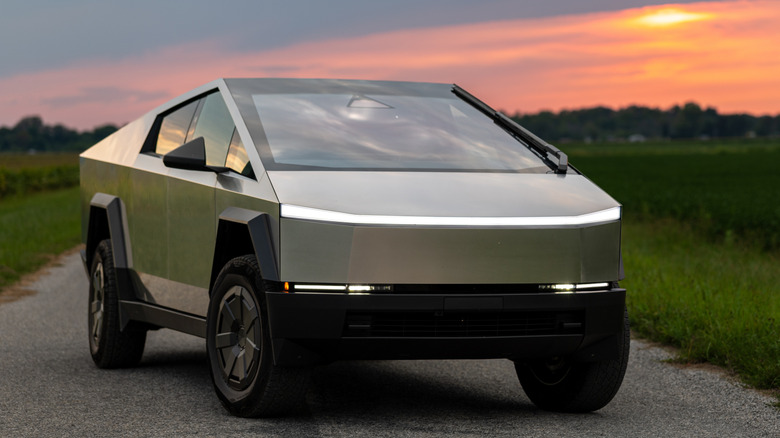
One look at Tesla's futuristic four-wheeled polygon, and you can expect the Cybertruck doesn't exactly finesse through the air. The front fascia is flat and stands completely upright against the air hitting it. The body is made almost entirely of stainless steel alloy that Tesla calls "Hard Freaking Stainless." That steel body is also rather large, with the Cybertruck measuring up at 18.6 feet long, 6.7 feet wide, and 18.6 feet long. This enormous body translates to curb weight of over 6,000 pounds. That's a lot of substance to push for the car's electric motors, and while most of the car seems to scoff at the mention of aerodynamics, it does have some tricks up its sleeve to manage its colossal weight.
One strength of an electric vehicle is the simplicity of the drivetrain under the hood. On gas-powered cars, there are only so many moving parts you can cover up on the underbody, but for an EV the entire exterior floor can be made flat. The Cybertruck does exactly this, which helps pass air through the underside without fuss and turbulence. Another clever addition is the bed cover. The open bed is a pain for most pickups aerodynamically, but the Cybertruck features a sliding cover which, accentuated by its extremely simple downward slope, helps feed air over the bed smoothly. Still, the shape and weight prove difficult to defeat, as the Cybertruck has a drag coefficient of 0.38.
2019 Land Rover Defender
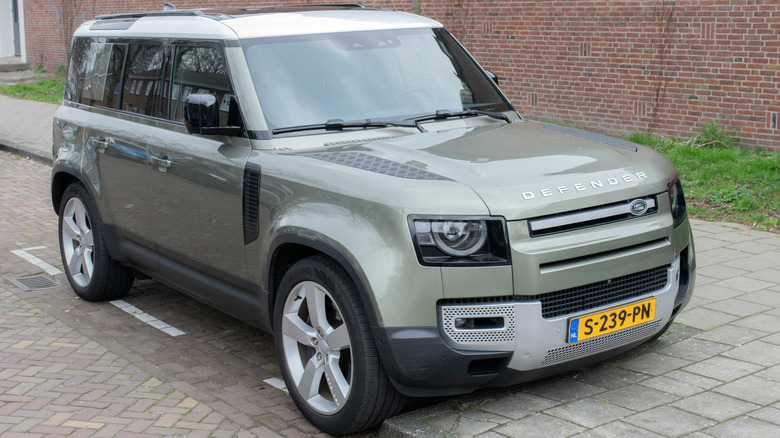
The Land Rover Defender is perhaps one of the most famous nameplates in the world. The original Land Rover has been around since 1948, but it wasn't until 1990 that the brand introduced a customer version, the Defender, to the masses. By that time, even though the Defender was a new nameplate, the brand's reputation as Britain's best off-roader was solidified. In 2019, Land Rover refreshed the Defender and brought their signature rugged 4x4 into the 2020s. The new Defender brought with it all the new tech you'd expect for a car of today, but one aspect seems pulled straight from the past. The Defender's styling is incredibly reminiscent of the original Land Rovers, and does everything it can under modern safety regulations to bring back memories of the original shape.
The original shape in question, while pretty, is quite boxy, and boxy means poor aerodynamics. The Defender measures up at 6.7 feet tall, 6.6 feet wide, and 16.5 feet long. These measurements all come together at angles that are nearly 90 degrees across the body, making for an undeniably retro shape, but one that feels awkward in the wind tunnel despite the smooth rounding of its historically sharp edges. The Defender does what it can for its shape, but retains a drag coefficient of 0.39.
Volkswagen Beetle RSi
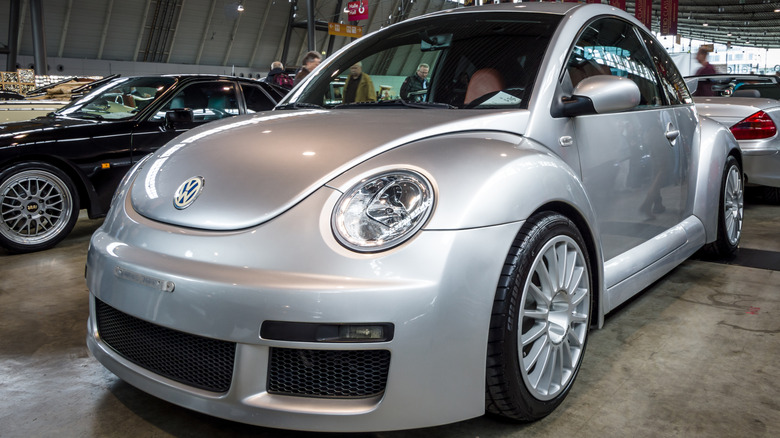
Besides the Porsche 911's ancestral connection to the Volkswagen Beetle, there's really nothing about the Beetle's essence that screams performance. However, in the early 2000's, Volkswagen decided they wanted to see what the Beetle would look like if it did. The answer was the Volkswagen Beetle RSi. The RSi took the look of the early 2000's Beetles and slapped a spoiler, fender flares, and new bumpers to make for something that was very clearly a performance car despite its foundation. Powered by a 3.2 liter V6, the RSi was no joke, with its 221 horsepower and a redline of 6,200 rpm.
The RSi somehow morphed into a performance car in many ways, but this did not come without sacrifice. Although not boxy like many of the other entries on this list, the Beetle's ballooning roundness was not exactly desirable for aerodynamics either. The addition of new aero parts for the RSi helped in stability, but increased drag too. All said and done, the RSi came out with a drag coefficient of 0.40 — an impressively poor number for a car of its size.
Porsche 911 SC
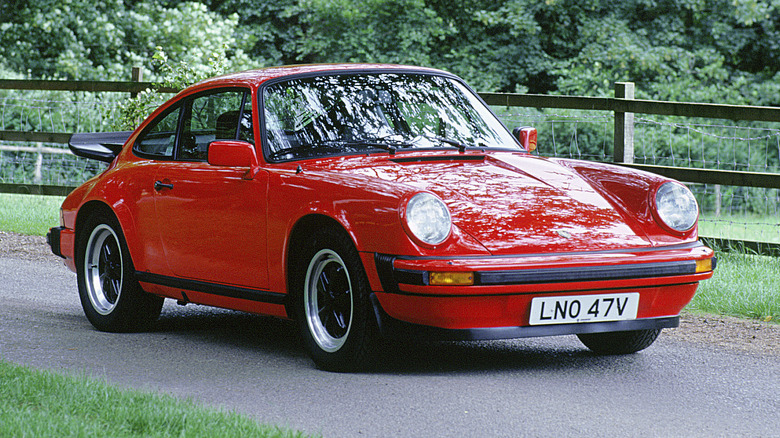
Derived from the aforementioned Beetle, the Porsche 911 became one of the most iconic sports cars of all time. Today, they boast the best of the best in everything performance. Their engines are powerful, their transmissions, such as the PDK, are lightning quick, and their aerodynamic abilities bring racing technology to the streets, as with things like the GT3 RS's DRS button. However, things weren't always like this. While Porsche has always tried to make the ultimate sports car, that doesn't mean they've always succeeded.
Built only from 1978 to 1983, the 911 SC is the classic 911 of yesterday. SC stood for Super Carrera which was fitting, as the car was impressive for the time with its 188 horsepower. The car weighed just over 2,500 pounds, which, combined with its flat-six, made for a lovely sports car. However, the time of its creation had its limits. The 911 SC's body was fantastic to look at, but not so much in a wind tunnel. Despite its identity as a sports car, the 911 SC produced a drag coefficient of 0.40.
Lamborghini Countach
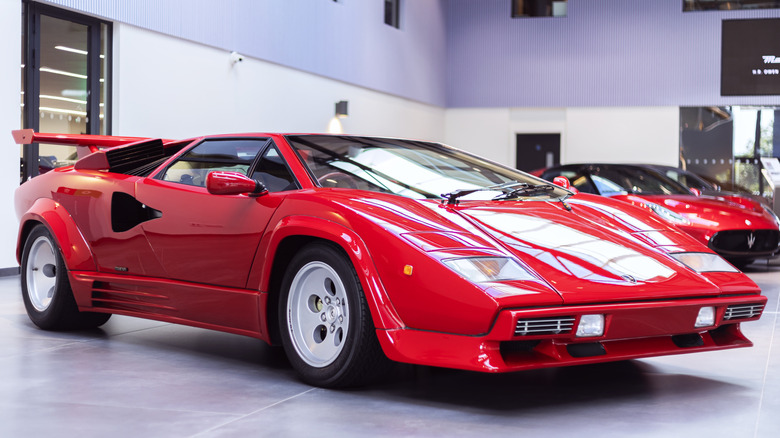
The Porsche 911 might be one of the most iconic sports cars of all time, but the Lamborghini Countach might be the most iconic supercar of all time. First presented at the Geneva Motor Show in 1971, the Countach would go on to father the future generations of Lamborghini's flagship V12 supercars, and it started the lineage with a bang. The name itself, Countach, translates to plague or contagion, but it is colloquially used in Italian as an exclamation of wonder, which could not be more fitting.
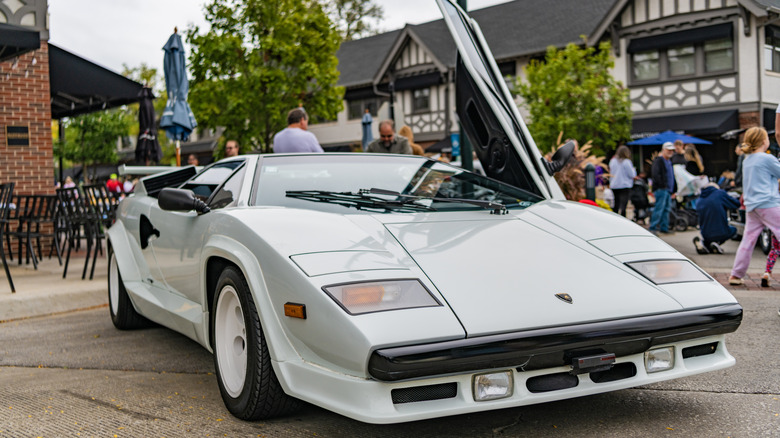
Powered by a monstrous V12, the Countach produces 348 horsepower and a 5.4-second 0-60. You could talk numbers all day, but the real magic of the car is the package those numbers come in. The Countach is the poster boy of the wedge supercar. Its slab-like lowness, sharp angles, and unembarrassed excess are what have earned it its place as one of the all-time greats. Elements like its huge rear wing make it recognizable even under a showroom cover, but they also make a lot of drag. In classic Italian fashion, the form besets function, as most of the aero elements were made to cater to the heart and not the wind. This philosophy is what led the supercar to its drag coefficient of 0.42. A high number, but one that is forgiven after one look at the thing.
Original Volkswagen Beetle
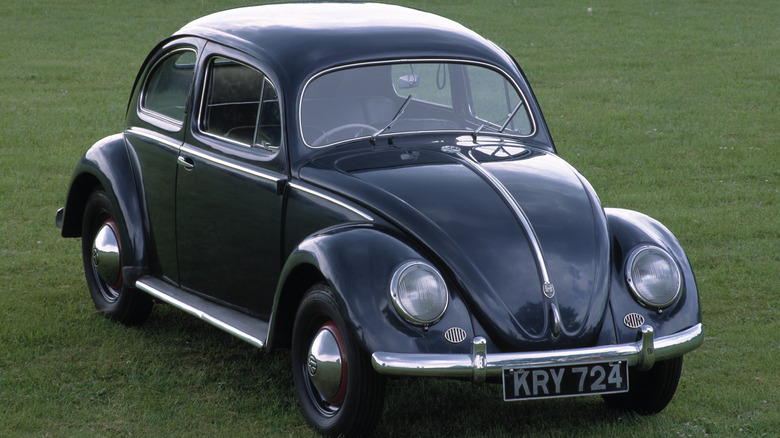
In the quest for poor aerodynamics, we return back to the Volkswagen Beetle and its colorful history. Before the second world war, Ferdinand Porsche proposed a design for what he called a "people's car." This economic and ergonomic little thing was the Beetle, and just before the factory building them could ramp up production, the war began. Once concluded, production began again, and the Beetle would go on to become one of Volkswagen's longest-standing nameplates.
The Beetle's mission was to be the best car it could be at a low cost to both the customer and the manufacturer. It was small, underpowered, and lacking in anything unnecessary. The Beetle became loved, though, for exactly that Spartan attitude, and for its cuteness. Its shape is rounded and compressed, again in line with its utilitarian mission. However, its charming shape was not without issues, though, as the Beetle was poorly sculpted for aerodynamics. The curving roofline looks nice, but it does nothing to smooth airflow over the end of the body as its shape might suggest. The windshield is nearly upright, which allows for good visibility but makes for an uncalculated wall for oncoming air. Even so, you can't blame it. The Beetle never promised to be some kind of aerodynamic whizz, which is apparent in its 0.48 drag coefficient.
Hummer H2
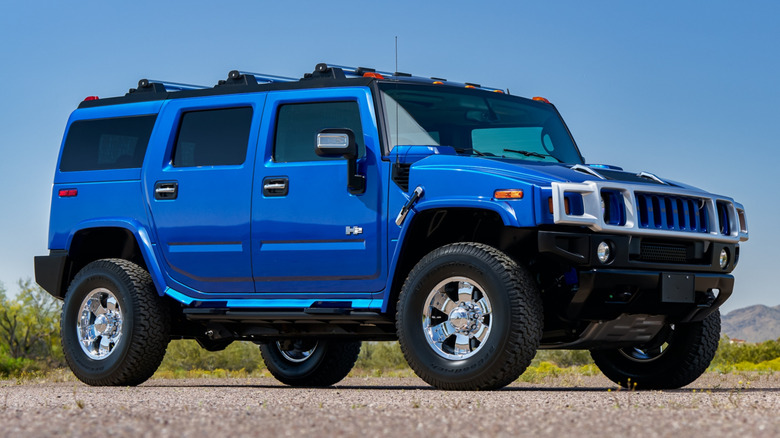
The Hummer H2 is a product of its time. Think back to its release in 2002 America. Halo, Mountain Dew, Tom Brady, Nickelback and Britney Spears. While the airwaves were full of bubblegum pop music and grating nu metal, the roads were full of many now archaic cars, such as the Hummer H2. The Hummer's origins go back to 1983, when the Pentagon contracted AM General Corporation to build the Humvee. The Humvee was an enormous armored personnel carrier meant to be tough enough to take on any terrain. Later, in 1999, GM bought the rights to the Humvee, and somehow turned it into a civilian vehicle.
It was a civilian vehicle in name only, as the Hummer H2 looked like it had not been picked up from the lot, but from a C130 cargo plane. It was a gas guzzler if there ever was one, and its trademark personality trait was its size. The H2 was huge, almost obscenely large, and weighed just over 8,000 pounds. It wasn't particularly concerned with efficiency, as evidenced by its 10 mpg rating, which was a good thing, because this hulking brick was anything but aerodynamic. Its huge surfaces and boxy angles were concerned only with presence. There was no effort to make it agree with the air, and it instead muscled through it. At the end of the day, the H2 had a drag coefficient of 0.52, which should come as no surprise after one look at the thing.
W463 G-Wagen
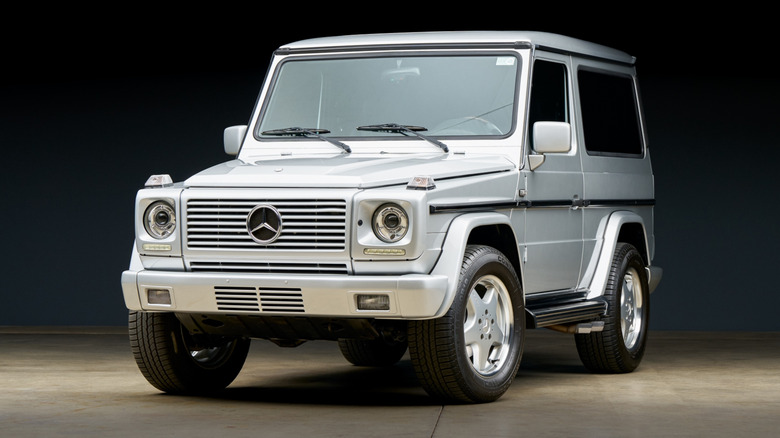
Although it predates the Hummer, the G-Wagen seems like Germany's spiritual answer to the American colossus. Similar to the Hummer, the G-Wagen was derived from a German military 4x4, and was made into a civilian car in 1979. But, it wasn't until the second generation, called the W463, that the G-Wagen became the off-roading luxury box that it is known as today.
The W463 premiered at the Frankfurt Motor Show in 1989. The W463 took everything its predecessor did well in the off-roading department, and souped up the creature comforts, further driving the G-Wagen into its place as the civilians' favorite off-roader. It introduced things like interior wooden trims and bench seats while retaining its capabilities in the wilderness with things like standard four-wheel drive and electronic locking diffs. It also refreshed the exterior, but only slightly. The G-Wagen remained a very upright box on wheels, and this led to a predictably poor effect in aerodynamics. The wide-open underbody and nearly vertical windshield and front bumper made the W463 the antithesis of aerodynamic. The brash and upright edges and surfaces of the W463 means it has a drag coefficient of 0.54, but hey, beauty is pain.
Dodge Viper ACR Extreme
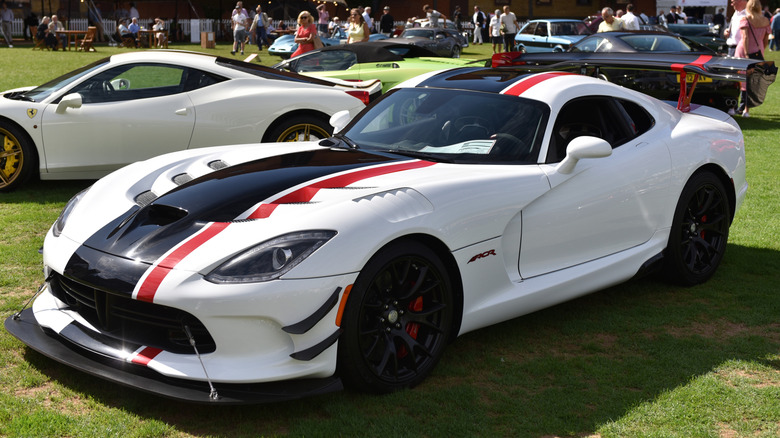
What happens when a brand known for muscle cars tries to make a supercar? The answer is the Dodge Viper. The Viper is truly the American idea of a supercar. In true American fashion, the Viper's engine was a V10 that was originally intended for a Ram pickup truck. After some advice from Lamborghini, certified experts in the matters of 10 cylinders, Dodge altered the engine to make it more adept for performance on the track and not on the farm, and the original Viper was born. Since the first model in 1992, the Viper has gotten a lot faster.
At the end of its lifespan, Dodge decided to go all-out and see just how insane they could make the already insane Viper. The result was the Viper ACR Extreme. Some quick numbers help you get a sense of the car's character. 8.4-liter V10 with 645 horsepower, 0-60 in 3.2 seconds, and a six-speed manual. The outside however, is where things get really crazy. If you opt for the Extreme package, your Viper ACR will come off the line with growths in the splitter, rear wing, and diffuser. These bits are enormous, and while they help keep the angry snake planted to the asphalt, they do a number on its aerodynamic efficiency. With the Extreme package, the Viper's drag coefficient is 0.54, but remember, here, downforce is the name of the game.
Ford Bronco V
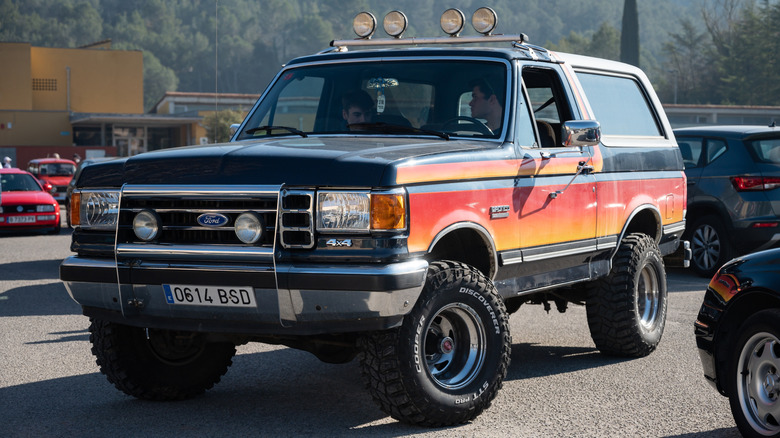
Before the Bronco returned in 2021, the 5th-generation Bronco was the last consumers ever saw of Ford's iconic SUV. The Bronco 5 was effortlessly pretty, which was an impressive feat for its hulking bodystyle and the time it came from. The 5th generation brought an array of new technologies and features to the nameplate, such as new seating configurations with an optional front bench seat, a digital odometer, three-point safety belts, and more. Outside, the Bronco refreshed its face and cleaned up the lines and proportions of its predecessors, making for a sleeker look.
However, you can only be so sleek as an American SUV. Even as a two-door, the Bronco was still a huge car, and its size and heavy weight tipping the scales at 4,519 pounds meant that the Bronco was doomed to be another poor-performing subject in the wind tunnel. The Bronco 5 had all the hallmarks of an aerodynamically challenged SUV, with big, flat surfaces, tall panels and windows, and a wide-open underbody. All said and done, the Bronco had a drag coefficient of 0.60.
1993 Caterham Super Seven
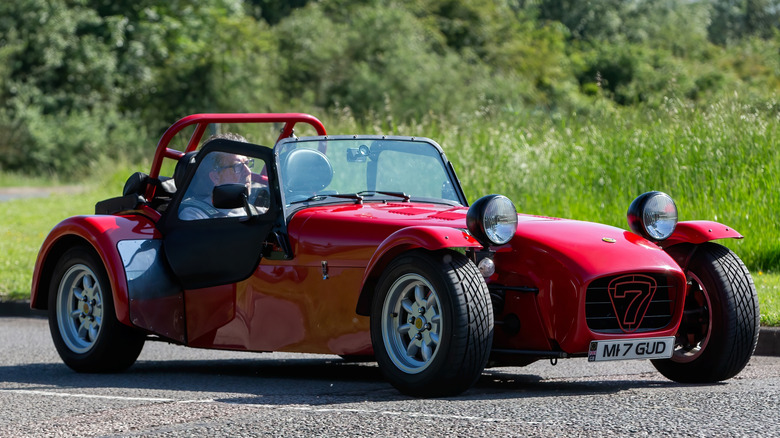
The Lotus Seven is one of the most iconic sports cars of all time. The car is so well respected and loved, that today, even 54 years after Lotus stopped producing the Seven in 1972. Just one year after Lotus ended production of the Seven, Caterham acquired the rights to produce the car from Lotus's lead man Colin Chapman. Since then, Caterham has produced the Seven the way it was intended by Chapman, all while keeping it up to date with the modern motoring world.
Although the Caterham Seven is a sports car, it ranks particularly low for its aerodynamic finesse. The upright windshield doesn't help, but the real culprit is the open-wheel design, which has become so iconic for the Seven. The problem is a classic one for race cars, and one that can only be solved by covering the wheels, which eliminates drag but fundamentally changes the car's character. Open-wheel designs offer no protection for the spinning wheels, creating a chaotic, turbulent airflow zone. A fender covering would be the quick fix for this issue, but then the Seven would no longer be a Seven. The Caterham Seven's signature look means it has a drag coefficient of 0.62.
Ford Model T
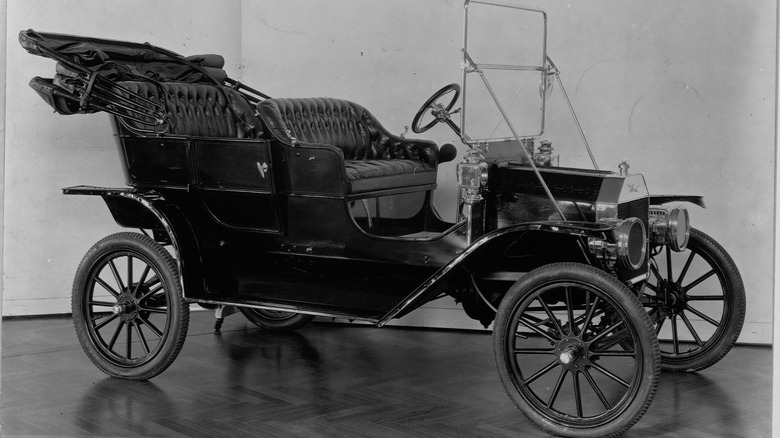
The one that started it all, the Ford Model T is the grandfather of the modern automotive industry. Born in 1908, the Model T did not compete with other cars, but did compete with horse-drawn carriages. Henry Ford's creation set the blueprint for the skeletal basics of the consumer car, with things like steering wheel placement, a tool kit, and a gas tank. The Model T had the barest of bones, and much of its look came from the Horse-pulled buggies before it, such as its tiny, bicycle-like wheels and its leather bench seats. The Model T was powered by a four-cylinder engine that had to be started via crank, and which produced a modest 22 horsepower. Those 22 horses could push the Model T up to 40 miles per hour, almost neighborhood speeds today, but vastly impressive for its time.
Given that Henry Ford's goal was quite simply to make a car and nothing more, it feels unfair to critique his landmark creation for its aerodynamic capabilities. Still, Ford was extremely limited by his time, and by today's standards, the Model T suffers from abhorrently poor aerodynamics. The upright windshield, open-wheel design, and exposed cabin make for a nightmare of chaotic air channels and haphazard flows, all of which give the Model T a drag coefficient of 0.79.