

15 Of The Weirdest Tech Items That Never Really Became Popular
The history of modern technology feels small if you only look at the victors, like smartphones, social networks, and interfaces that have become extensions of our physical selves. However, for every device that changes the world, hundreds of others arrive with a splash only to sink into obscurity. These are the outliers and the odd inventions that, despite their failure to capture the mass market, give you a good idea of the potential of technology.
Innovation is a messy process that forces inventors to take risks, and sometimes those risks result in products that sound good but receive limited fanfare. These failures teach that innovation is limited not just by imagination but by widespread acceptance.
Whether it was an issue of timing, price, or an aesthetic that was too experimental for the average living room, these weird devices didn't capture mainstream attention. Below, we take a closer look at the stories behind some of the most unusual experiments in tech history to see what went wrong and what made them so unique.
Sony Rolly
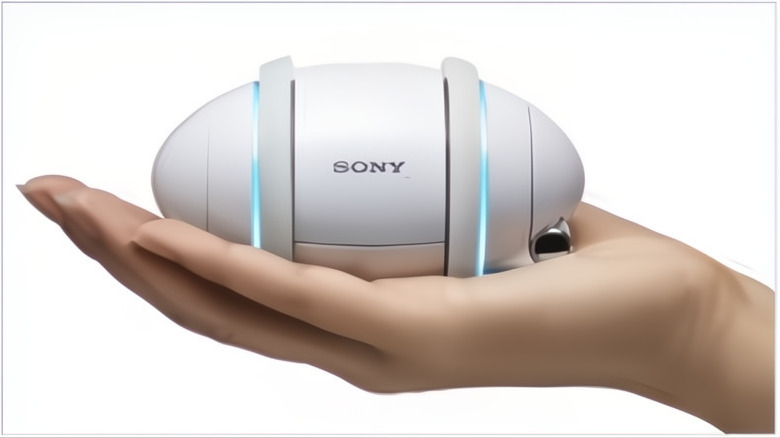
The Sony Rolly was an egg-shaped music player that moved while playing audio. It used two rubber wheels to move forward, backward, and spin 360 degrees. The device has wings on its ends that open 90 degrees to reveal stereo speakers, along with LED bands that create different color effects.
You could play music from its 1GB or 2GB internal flash memory or stream audio using Bluetooth. It included an accelerometer to detect its orientation, letting you navigate tracks with the top wheel or change the volume with the bottom wheel when you held it upright. Shaking the device shuffled the playlist and turned the lights purple. Sony also provided Rolly Choreographer software for PC so users could map custom dance moves to MP3 files. Some markets included Earth, Wind, and Fire's Boogie Wonderland pre-loaded on the device to demonstrate these movements.
The device had several drawbacks, like a $399 price tag and the lack of a digital screen or a 3.5mm headphone jack. The audio quality sounded muffled whenever the mechanical ear flaps closed during a dance routine. Since the device required constant motion to be interesting, it drained the battery in four hours, and it could roll off the edge of a table. Sony denied discontinuing the device in 2009, but it hasn't appeared since then.
Nabaztag
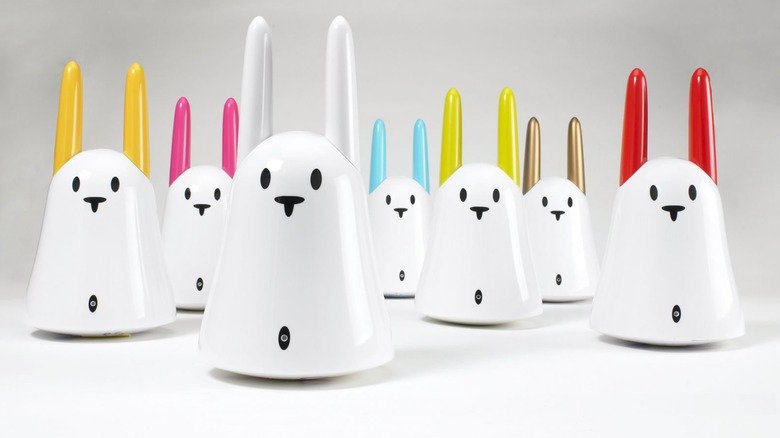
The Nabaztag was a Wi-Fi-enabled robotic rabbit. It could read the weather, stock updates, messages, and news, while also functioning as an alarm clock. It could also use Facebook at one point.
The rabbit occasionally practiced tai chi or played internet radio and podcasts. It had a quirky personality and would randomly rotate its ears or flash its multicolored LEDs. You could even marry your device to another one, and if you moved the ears on your bunny, the other's ears would mirror that movement anywhere in the world. Creative owners used its API to program things like rabbit operas, including a performance with 100 synchronized rabbits.
Its high price and limited uses makes it seem more like an interesting gadget, instead of being a necessity. Violet went bankrupt, and the official servers shut down. However, these resilient bunnies are still running using custom software and parts like the Raspberry Pi-based tagtagtag.
Clocky alarm clock
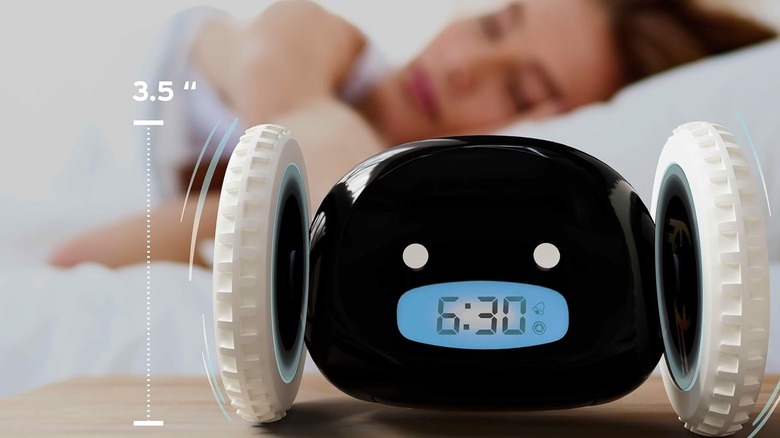
Clocky looks like a great alarm clock to ditch your smartphone for. You won't hit the snooze button too often if you add this hide-and-seek element to the morning. When the alarm sounds, the clock jumps off your nightstand and moves across the floor. You have to get out of bed and chase it to stop the noise, which is a very effective way to wake up.
The clock has large rubber wheels and shock absorbers, so it survives the fall to the floor. An internal microprocessor lets it roll away at random speeds and directions, helping it navigate around obstacles to find a new spot each day.
Since it sounds a second time, you are forced to search for it, which guarantees you are fully awake. Nanda's prototype had a shag carpet covering inspired by her kittens; however, the commercial version used a plastic and chrome exterior.
Hushme
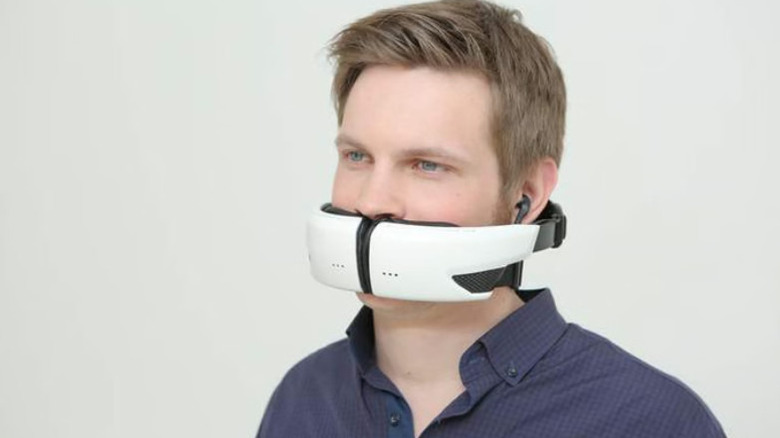
The Hushme is a voice mask for a mobile phone meant to keep your conversations private when you are in busy areas. You wear the padded mask over your face, and it acts like a muzzle to lower the volume of your voice. It relies on passive soundproofing, like thick foam rubber and leather pads pressed against your lips, to dampen your speech.
If the muffling does not work well enough, the device plays masking sounds through external speakers. Using a companion app, you can broadcast sounds like rain, wind, or odd noises like monkeys, squirrels, or the voices of Darth Vader and Minions. Since this might stop people from listening to your conversation, it draws a lot of attention because it looks weird.
When the magnetic clasps are locked, you look like Bane or Loki, or someone with a gag that happens to be a device. It seems physically awkward to hold, and it makes squirrel noises to cover your words. Overall, it may be weird, but it serves a practical purpose.
Twirling spaghetti fork

The motorized fork is helpful for people with limited hand movement, injuries, or disabilities. However, this specific use case meant it didn't become a household staple. For most people, this may be just a comical novelty that fits into the Japanese art of chindogu, which involves gadgets that solve a problem but are too impractical for regular use.
You can get this as a gag gift, but it looks like it can help kids who don't have full control of their motor skills. If you look on Amazon, you can see versions intended to make eating fun for kids, though they need practice to avoid making a mess. For most, it is a niche gadget that will not make bolognese any easier.
Air-conditioned fan jacket

Hiroshi Ichigaya, a former Sony engineer, invented the air-conditioned fan jacket. He had the idea in 1988 as a way to find an energy-efficient alternative to cooling entire cities. He modeled the jacket after the way sweat naturally cools the body. The garment keeps battery-powered fans hidden inside its fabric to move a constant breeze around you.
The dual fans draw in air, which evaporates sweat before the warm air escapes through the collar and cuffs. The lithium-ion battery can last up to 11 hours on one charge. When it launched in 2004, it came with a few problems, which required another relaunch in 2009 with those worked out.
It is easy to see the jacket being popular among factory and construction workers in Japan, especially after power shortages in 2011 forced companies to cut back on air conditioning. However, it hasn't seen global success. Most people's instinct is to take layers off when it's hot, so a high-tech summer jacket may be something that only Japan can really appreciate.
Teasmades
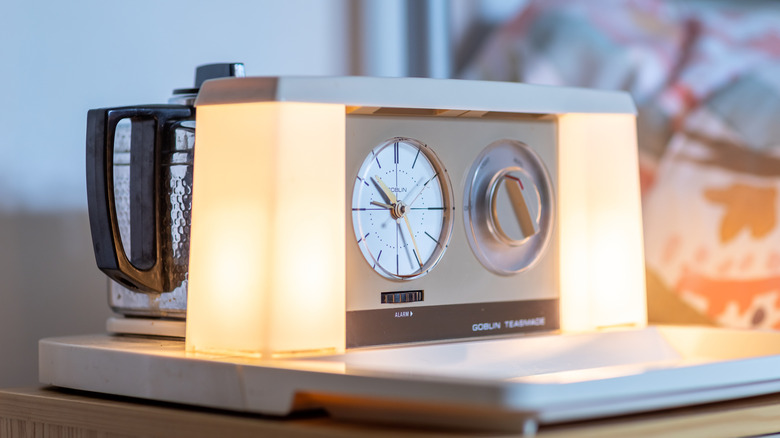
A Teasmade is a bedside appliance that combines an alarm clock with an automated tea brewer. It prepares a cup of tea by boiling water right when you wake up. The concept started in the late 19th century, though early versions had safety issues. A 1902 model used a clock to strike a match and light a spirit lamp, which poured boiling water into a cup after steam lifted a plate.
The device became more practical in the 1930s as electricity became common. Inventors like George Absolom and William Hermann Brenner Thornton created electric versions. These machines used steam pressure to push boiling water into a teapot, which then triggered a switch to turn off the heater and sound the alarm.
These machines were popular in the UK during the 1960s and 70s. Some models included reading lamps or clock faces painted with radioactive radium to make them glow. Apparently, you can hear the machines making wheezing and boiling sounds before the alarm actually goes off. Since central heating and fast electric kettles are now common, these bulky machines aren't necessary anymore.
Samsung Ballie
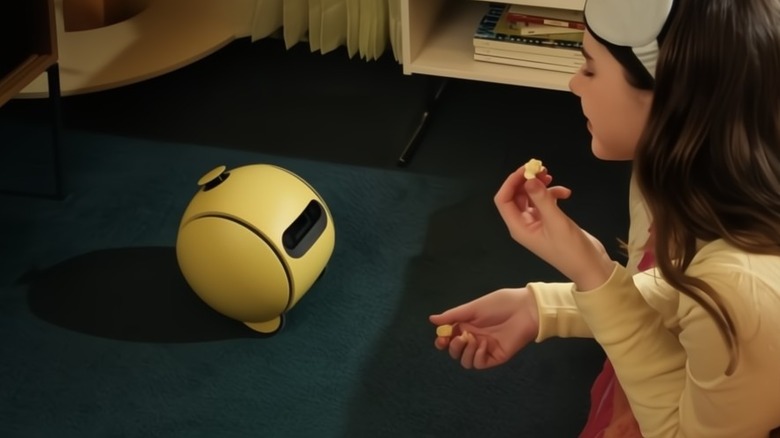
Samsung designed the Ballie robot as a sphere that could roll around your house on its own. The robot used three wheels along with LiDAR and high-resolution cameras to move around furniture. It moved between rooms to manage devices like lights, thermostats, and laundry machines.
Ballie also acted as an interactive laser projector. It could display recipes in the kitchen, project video calls onto a wall, or show a live feed from your front door camera. The robot could identify your posture and face, so if you were doing crunches on the floor, it shifted your workout video to the ceiling.
It functioned as a pet monitor as well, since it could send video to your phone and trigger smart feeders to release food. Despite the publicity, Ballie never reached retail stores, and the company eventually shelved the project. It struggled to find a clear market when compared to functional robots like vacuum cleaners. It is definitely one of the weirdest Samsung products of all time.
Meowlingual
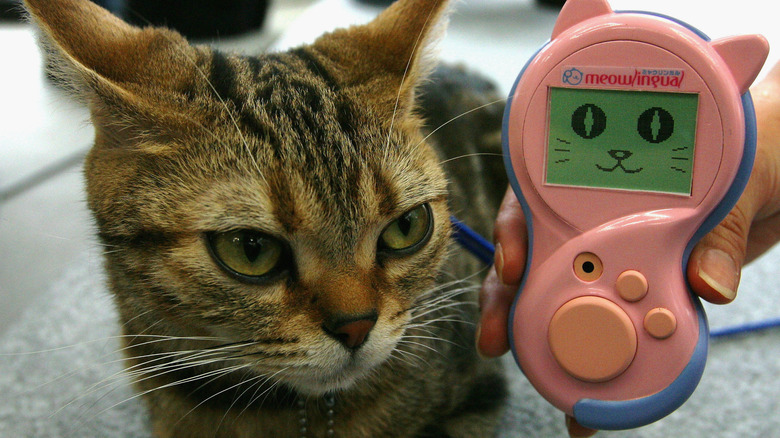
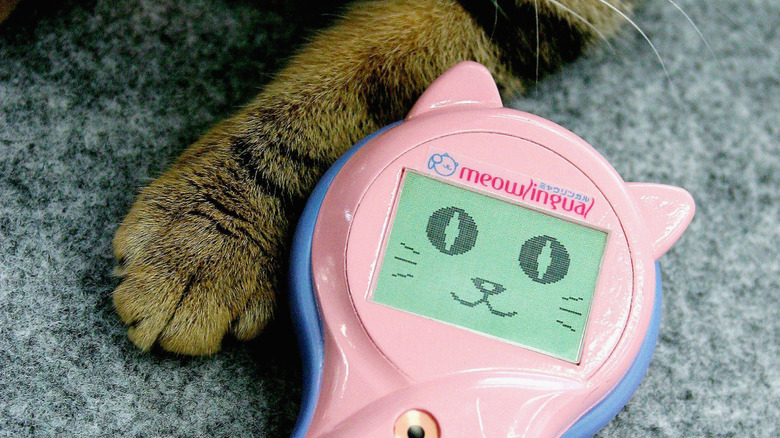
The meowlingual was a handheld device designed to translate cat sounds into human phrases. You pointed the gadget at your cat, and it used acoustic analysis to display the mood and a short sentence on an LCD screen. Despite the name, it is not a Duolingo alternative.
Unlike the dog version that used a collar microphone, the meowlingual was handheld because cats are finicky. You had to hold the microphone close to the cat's mouth to record a meow. The software sorted the sound into six emotional states like frustration, menace, or joy. It pulled from a dictionary of 200 words to show phrases like "I'm hungry."
The device included extra features like a timer, health advice, and daily horoscopes for cats. It cost about 75 dollars, but there is no real translator for cats, so the accuracy was questionable.
Air purifying face masks
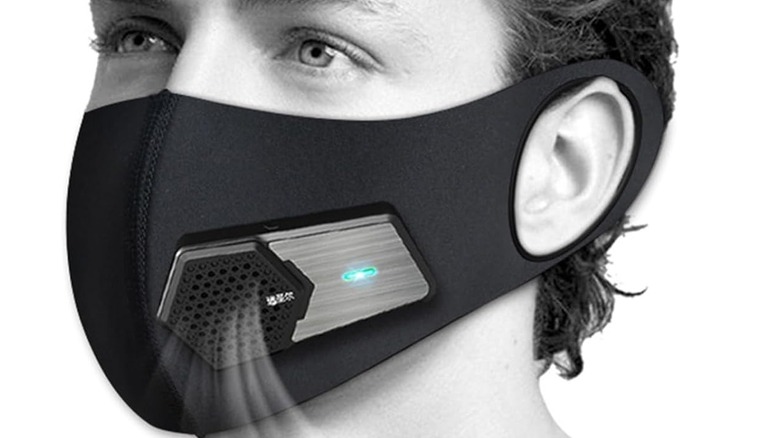
Bluetooth face masks are wearable purifiers that come with speakers and RGB lighting. You can take phone calls or listen to music while breathing through replaceable filters. These gadgets appeared during the COVID-19 pandemic, with the Razer Zephyr serving as one of the well-known examples. It featured a transparent shield and cooling fans that spun at 6,200 RPM.
These masks included advanced features like silicone seals and mobile apps to control lighting. Some versions, like the Hushme, focused on privacy and muffled your voice while playing masking sounds like rainfall or sci-fi noises through external speakers. Others included built-in microphones and amplifiers to make your speech sound clear despite the mask.
They never became popular since they were heavy, weighing over seven ounces, and were uncomfortable for long wear. The battery life was also short, sometimes only lasting three and a half hours. Since the demand would be highest during COVID, they wouldn't be seen as a necessity outside the pandemic. The $100 price and the cost of filters also made them look like an impractical luxury.
Enomad Uno

The Enomad Uno is a portable hydroelectric generator about the size of a thermos. It launched on Kickstarter to help campers charge devices using moving water. It works by converting the kinetic energy of a stream into electricity. You submerge the turbine, and the spinning blades charge a 5,600 mAh internal battery or power a built-in lantern.
The battery takes about four and a half hours to charge and produces 2.5 to 7 watts of power. The base can turn into a waterproof lantern, speaker, or Wi-Fi router. While it could be towed behind a kayak, it didn't become popular with everyday campers because of some practical problems.
The turbine required a very strong current to work, so it wouldn't spin in a gentle river. The propellers also got tangled with leaves, twigs, and seaweed, which stopped the power generation. It goes for $280, which was a high price for a tool that required you to find a perfect, fast-moving river to get a charge.
LG StanbyME Go
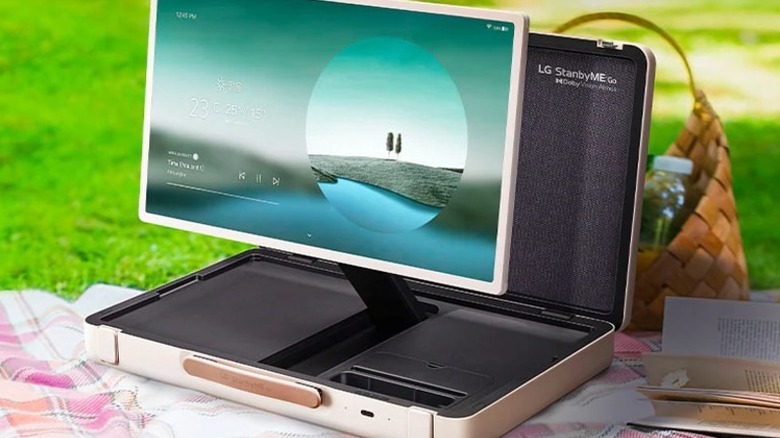
The LG StanbyME Go is a portable entertainment system that packs a 27-inch touchscreen and speakers into a durable briefcase. You can move the screen using an adjustable arm, which lets you rotate it 90 degrees, set it to landscape mode, or lay it flat for digital board games. It is designed to bring a television to places like campsites or tailgates.
The 28-pound unit features a four-channel speaker system and connects to Wi-Fi to run apps like Netflix and Disney+. It works with AirPlay 2 and Bluetooth, and you can plug in a gaming console through the HDMI port. The case meets military standards to keep the screen safe from drops and extreme temperatures.
This device has not seen much mainstream success. Its battery lasts for three hours, which can be limiting for outdoor trips or watching long films. Since the unit weighs 28 pounds, it is difficult to carry for long periods. In this case, it may be more practical to use your own laptop or an iPad to watch media on the go.
Rollkers
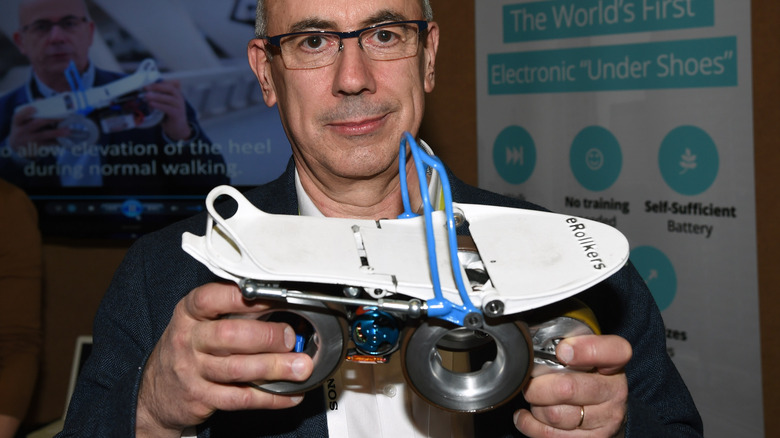
Rollkers are personal mobility attachments designed to act like a motorized walkway for your feet. The company first showed them at CES in 2015 as a way to help with city commutes. These battery-powered devices strap onto your regular shoes. Unlike roller skates, they have an articulated heel that lets you walk with a normal stride.
A built-in sensor detects if you are standing, walking, or running, and the electronic stabilization helps you keep your balance. They can double your walking speed, reaching up to 7 miles per hour, without you having to work harder. However, they only have a 30-minute battery life since moving a person with small motors drains power very fast.
Development has been slow, and the product has stayed in the prototype phase for nearly a decade. With that short battery life, it is hard to imagine they would hit the mass market. They offer a look at the future of travel, but they remain an invention that has not taken off.
CD-ROM magazines

Publishers once tried out CD-ROM magazines, also known as diskmags. These were digital publications you read on a computer instead of paper. When you loaded a disc, it showed you a graphical interface that included music videos, interviews, and multimedia articles. Since CDs had plenty of storage, they included background music, animations, and movie trailers.
These magazines were interactive, offering features like quizzes, surveys, and software like shareware or fonts you could install. Some publications even asked you to mail the discs back with your feedback. Titles like "LAUNCH" and "Blender" were early examples of this format. For instance, "LAUNCH" eventually turned into an online video site that Yahoo! bought.
The quick growth of the World Wide Web in the late 1990s ended the market for CD magazines. Once you could get multimedia content directly from the internet, you did not need to buy physical discs anymore. Today, people mostly view these as promotional tools, which makes the CD magazine a relic of the 90s.
Qoobo

Qoobo is a robotic, headless pillow that came out in 2017. It was designed to offer the comfort of a pet without the tasks of feeding or cleaning. The device is a lap-sized cushion made of foam and fake fur that features a robotic tail. It is great for people with allergies, those living in apartments that restrict pets, or elderly individuals.
The device centers on tail therapy. The tail senses how you pet it, so a gentle stroke will have it do a soft wave, while a vigorous rub makes the tail swing with more energy. It also wags on its own to acknowledge your presence. There have even been studies to show how robotic pets provide emotional companionship and support.
Unfortunately, it hasn't become a mainstream hit, and it may be because it looks really strange. The appearance of a tail-wagging robotic torso was generally seen as too unusual for most people to add to their homes.