

5 Things That Will Void Your Milwaukee Tool Warranty Immediately
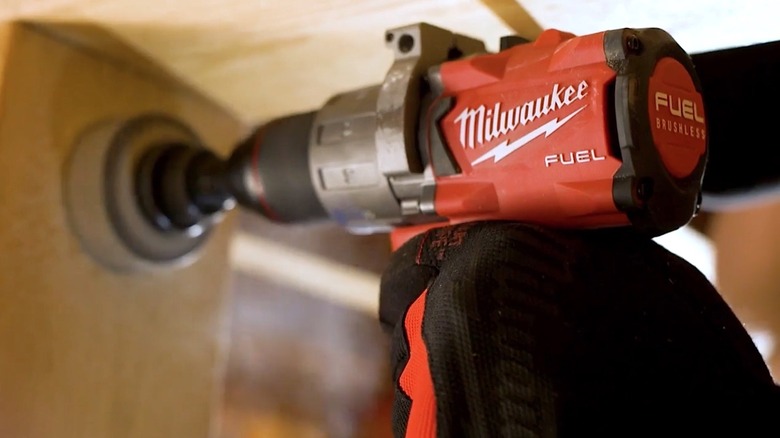
In many corners of the consumer power tool market, Milwaukee Tools is a name respected for manufacturing tools that boast a desirable mix of power, performance and durability. Milwaukee has also served as one of the more forward-thinking names in the powered tool game, with the company developing innovative gear like the reciprocating saw, and spearheading the market's move towards game-changing Lithium-Ion battery technology.
These days, Milwaukee Tools makes powered and non-powered devices that can handle pretty much any job you might encounter on a work site or undertaking DIY projects on the home front. Apart from its reputation for producing innovative, high quality tools, Milwaukee backs those products by one of the better warranty programs in the consumer tool arena.
There are, of course, conditions to Milwaukee's warranty coverage, with customers required to officially register the tool within 30-days of purchase to qualify. Assuming you properly check all the warranty boxes, Milwaukee's coverage should protect you from any number of "defects of the product during the warranty period, due to faults in workmanship or material at the purchase date." The coverage is, however, restricted to a "repair or replace" policy. Moreover, there are several rules that owners of Milwaukee Tools need to abide by to ensure their device is still properly covered if they need to cash in on the warranty. Here's a look at a few things that might lead Milwaukee Tools brass to void that coverage with a quickness.
Using an incorrect power source
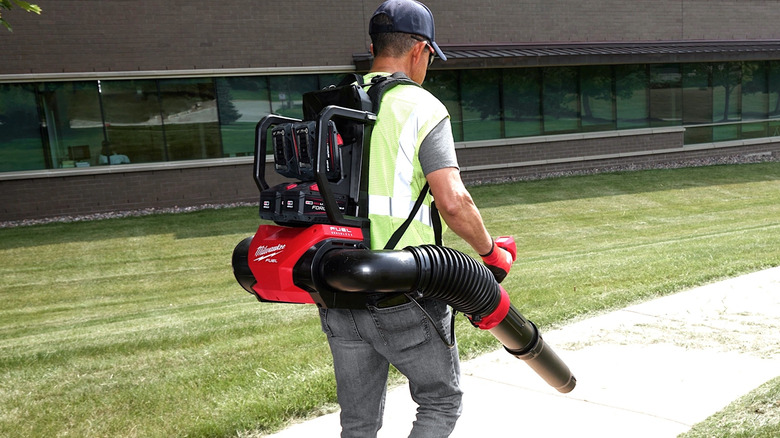
Given Milwaukee Tools' history with Lithium-Ion technology, it's not hard to understand why the company has pivoted as hard as any of the major power tool manufacturers into battery-powered devices. These days, there are dozens of devices that fall under the brand's M18 family of cordless power tools. Of course, if you've already purchased a device or two in the M18 lineup, you likely know that you may need more than one rechargeable Lithium-Ion battery to power them, and that those battery packs are hardly cheap.
That last fact may tempt you to search for off-brand power packs that are compatible with Milwaukee's M18 offerings, as they tend to be cheaper to buy than official gear. You may, however, want to think long and hard about taking the cheap way out when it comes to powering your Milwaukee tools gear, because according to the company's warranty terms, connecting your device to an improper supply will instantly void your coverage.
In particular, that term specifically includes any power supply that provides the wrong level of amps, voltage, or frequency to the device it's connected to. Yes, that also includes any corded Milwaukee tools you might be plugging into outlets that are providing too much or too little power. As such, you'll want to be vigilant about not only where you plug your tool in, but that any battery packs you are eyeing fit within the power specs laid out by Milwaukee Tools in its instruction manual.
Improper maintenance or modifying your tool in any way
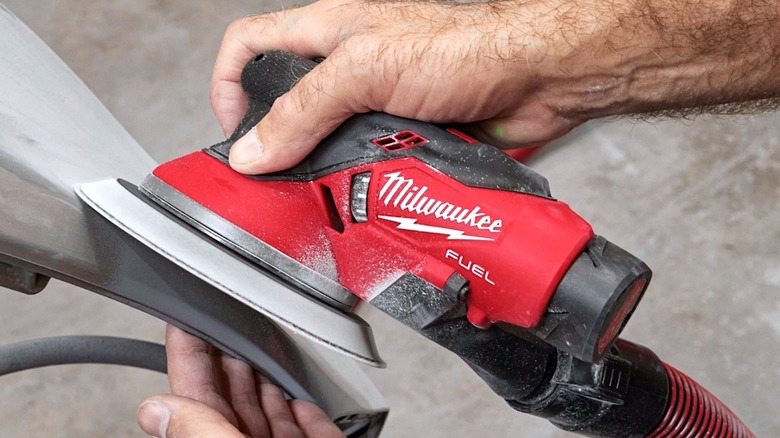
One might reasonably assume that every Milwaukee-branded tool has been designed and manufactured to perform precisely as it should when deployed for the job it's intended for. Operating under that assumption, it would seem pretty unnecessary to even consider trying to bolster the device's performance with upgrades or modifications. Even still, there are no doubt Milwaukee Tools owners who want to push their current device beyond its intended limits with alterations and enhancements of their own doing.
Apart from the potential dangers that come with making those sorts of mods on your own, you should know that such alterations will also negate any warranty coverage that may still exist for the device itself. Per Milwaukee Tools warranty conditions breakdown, that caveat will negate coverage for "Any product that has been altered or modified," seemingly without exception.
Now that you know you should not try to alter or modify your Milwaukee device on your own, there is another factor to consider, which is that you will also need to properly care for and maintain your tool during its warranty period. While Milwaukee does not specifically break down the parameters of such care, it's reasonable to think that includes things like cleaning up your device after every use. With battery packs, it may also include proper storage habits, and with tools like chain saws, it means ensuring they are properly oiled during use, as failure to do so may indeed void your warranty.
Repairing a tool yourself
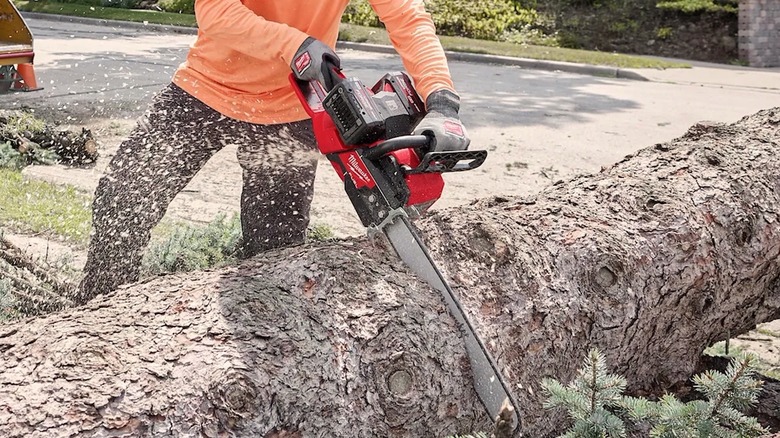
Despite having a reputation for being durable on the job, there's no guarantee that your Milwaukee device will not malfunction or break during usage. That possibility is, after all, one of the primary reasons that warranty coverage exists in the first place.
The good news is that, should your Milwaukee Tools device fail or break during usage, it can likely be repaired quickly when you use the company's eService Repair support option. That option will almost certainly, of course, require that you ship the device to a Milwaukee repair center so that the fix can be made by a certified professional. That means you'll be without your tool for as long as it takes to make the repairs and ship it back to you, which may be too long for some folks; especially those who have a knack for fixing broken things on their own.
As tempting as that may be for folks who enjoy tinkering with broken things and fixing them on their own, Milwaukee Tools has strict rules about the way their warrantied devices can be repaired. And yes, if you choose to undertake that repair on your own, or use an unapproved third-party, the warranty coverage will be voided. It is not clear, however, how far ranging that rule is, particularly when it comes to relatively simple fixes like re-attaching the chain to a saw's guide bar. So, you may want to contact Milwaukee Tools before undertaking such endeavors.
Using a tool for work it is not designed for
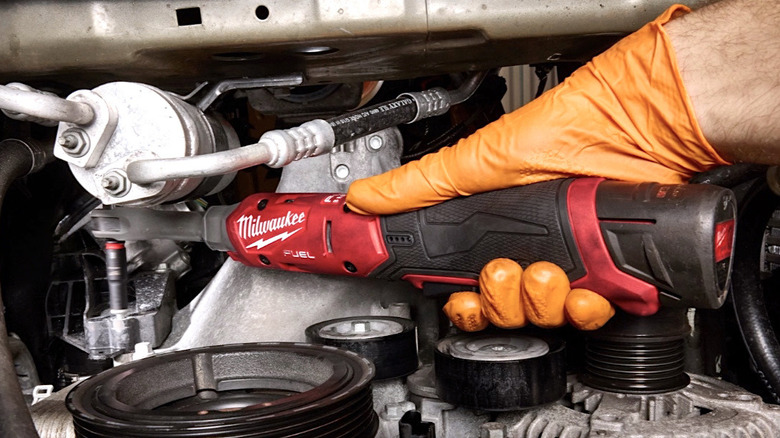
It should go without saying that every device bearing Milwaukee Tools' iconic lightning bolt logo has been painstakingly designed and tested to perform a specific task before it made its way to the consumer retail market. Given the fact, it should be just as obvious that each of those devices should only be used to perform the work it was specifically produced to perform.
Unfortunately, that concept is not so obvious to some pro workers and DIYers throughout the Milwaukee Tool using world. We might even go so far as to posit that it is not entirely uncommon for those who utilize Milwaukee devices to apply the "multi-tool" label to some devices that are not at all intended for the multi-use approach. As tempting as it may be to save a few bucks by tasking a seemingly capable tool with a job it wasn't designed to do rather than buy a new one, doing so will indeed void said tool's warranty coverage.
Milwaukee covers that restriction a couple of ways in the terms and conditions of its warranty coverage for tools, stating initially that coverage does not apply to "Any damage caused by non-observance of the instruction manual." A later bullet point on Milwaukee Tools' terms and conditions page goes on to add that a warranty will also not cover "Inappropriate use, overloading of the tool." So, go ahead and count yourself warned.
Using unapproved accessories
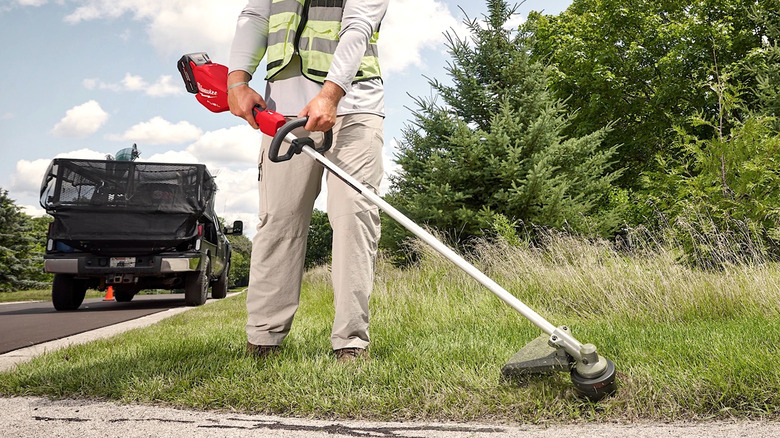
On the "misuse" list, Milwaukee's warranty coverage also does not cover things like damage caused by water, hazardous chemicals, or foreign objects. However, it also doesn't cover average wear and tear the device might endure during usage, though most warranties are not meant to protect against degradation for the duration of the tool's lifespan. For the record, that last bit also includes any accessories that were included with the tool at the point of purchase, with Milwaukee specifically noting, "screwdriver bits, drill bits, abrasive discs, sand paper, blades and lateral guide, blades, saw chains and cutting lines."
It turns out that accessories are a bit of a hot button subject when it comes to the warranty coverage provided for many Milwaukee Tools, as the brand will also void said coverage if it is discovered that you have been outfitting your device with accessories or parts that have not been approved for use with it. That list no doubt includes a wide range of Milwaukee compatible accessories that were manufactured by brands other than Milwaukee.
Just as with battery packs, off-brand gear tends to be priced considerably cheaper than some official Milwaukee accessories. This restriction would also seem to cover incorrect usage of even Milwaukee-branded accessories. While we'd never try to dissuade you from saving a few bucks in the often pricey power tool market, we are still compelled to encourage you to weigh the potential savings of buying off-brand gear or misusing official gear versus the risk of losing your warranty coverage.