

5 Telltale Signs You're Probably A Bad Driver
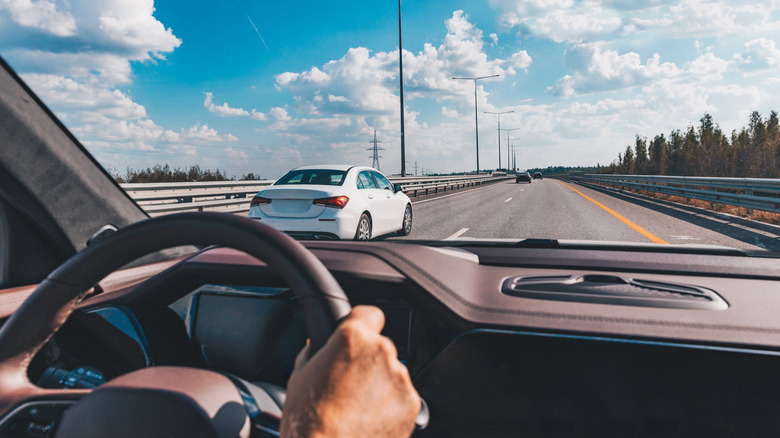
Few people believe they are bad drivers, which is exactly why terrible drivers remain blissfully unaware that they are menacing the road. In 1981, a Stockholm University study found that the majority of drivers reported having "above average" driving and safety skills. This wasn't a one-off, either, as a 2021 study by five researchers at the University of Hong Kong and Linköping University reaffirmed the widespread tendency to overstate one's abilities.
Try an experiment the next time you're in a group setting. Ask people what they'd rate their own driving skills, and you'll probably receive answers ranging from "above average" to "excellent," which can't be true. By math and logic, most drivers have to be "average", as that's the definition of the word.
This cognitive dissonance — as the researchers call it — happens because bad driving rarely results in fiery crashes and police chases on TV. It happens every day, through many small failures like poor spacing, inconsistent speeds, late or harsh braking, hesitant decisions, and more such minor problems. Together, these small, irritating problems endanger everyone on the road. Also, all of the signs on this list are objectively measurable failures in vehicle control, not just driving preferences. With all that said, here are five worryingly common signs of a bad driver.
Thinking everyone else is the problem
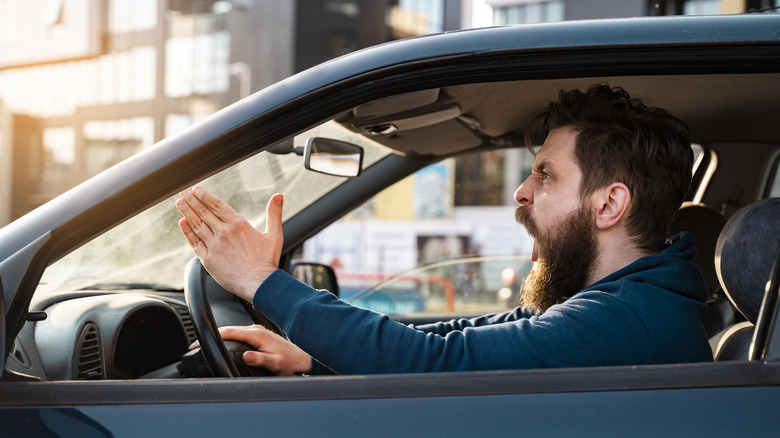
Perhaps the most definitive metric of what defines a bad driver is the "I'm never in the wrong" attitude. If someone you know is constantly bemoaning the state of drivers on the road, then it's extraordinarily likely that they are the bad driver themselves. Furthermore, if anyone says something along the lines of "that crash was unavoidable," that indicates a poor or inexperienced driver. In 2016, a Proceedings of the National Academy of Sciences study found that driver-related issues were to blame in over 90% of cited crashes.
While most literature on driver confidence is published outside the U.S., a 2013 National Library of Medicine (NLM) study by two researchers from NYU and Elizabethtown College found that Americans are prone to thinking they are better drivers than average.
Tailgating other drivers
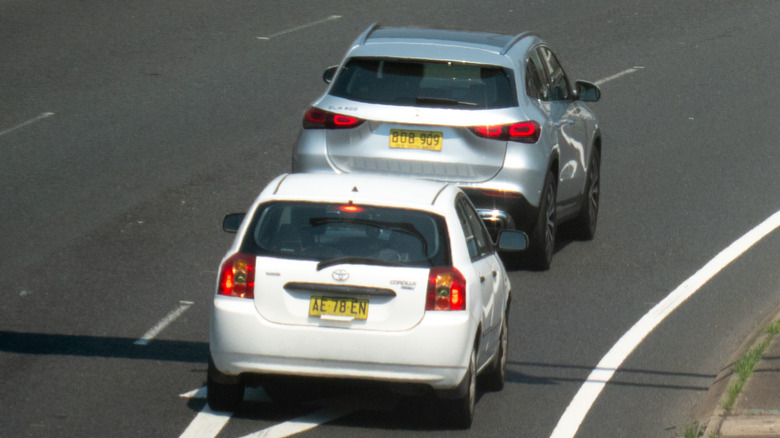
Many people don't realize that even if you're in front of someone going the speed limit, the law requires giving way to someone faster than you. That is why it can be very frustrating to be stuck behind a driver who is camping in the left lane on a highway, especially if you're in a rush. However, this is not an excuse to tailgate the slowpoke in the left lane, and doing so is dangerous and a telltale sign of a bad driver. Studies have shown that tailgating drastically impacts reaction time and road safety, should an incident occur.
In most cases, the two or three-second rule should be applied, wherein you look at a fixed object on the road, and ensure at least three seconds pass between your passing that fixed object, and the car in front of you.
This leaves adequate braking distance should something require a quick stop of the car ahead of you. Furthermore, the evidence overwhelmingly suggests that younger drivers are more likely to be tailgaters than older drivers, though it is one of many common mistakes that even experienced drivers make.
Never missing an exit
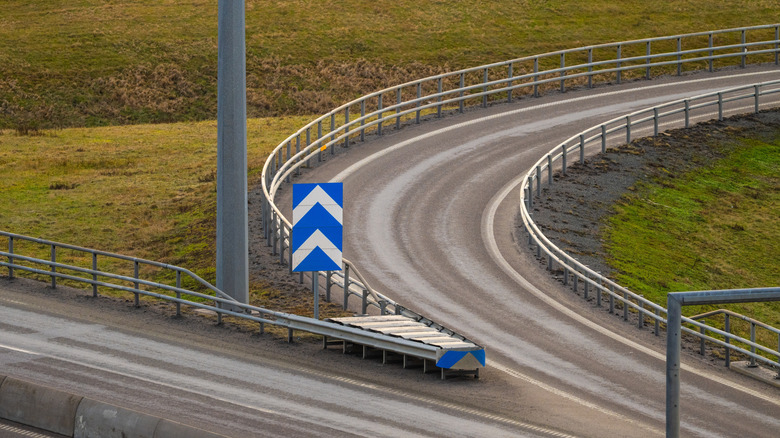
A lot of you must have seen the "I turn now, good luck everybody else" snippet from "Family Guy", Seth MacFarlane's Disney-owned running animated sitcom. There's a famous saying that goes along the lines of "bad drivers never miss their/an exit", which is what that snippet plays on. The idea is that someone who is an objectively bad driver will do dangerous things, like cutting across several lanes of traffic, crossing solid yellow or white lines, or braking extremely hard before taking an off-ramp in order not to miss their exit.
The underlying assumption is that someone who is a "good" driver will prioritize road safety, and if that means adding time and distance to their journey, they'd do it over making a hazardous exit. Of course, the situation can be quite frustrating, especially in certain areas of the U.S. where a single missed exit can result in 15 or even more minutes of extra driving time each journey. The easiest way to not miss exits is to be prepared for them, which might sound intuitive, but is easier said than done. You could be on a new road, visibility could be bad, road markings and signs could be faded, and if you're going fast, GPS callouts might be a bit delayed. Nonetheless, it's always better to have a bit more driving time and not cause an accident than to make a risky turn to save a bit of time.
Hard or late braking
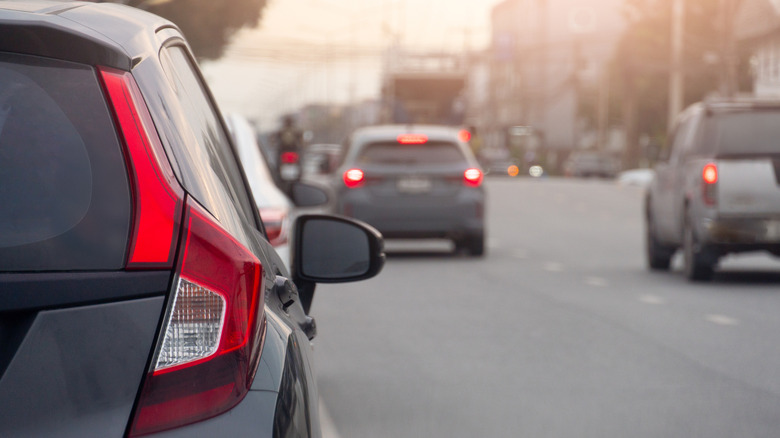
Arguably, knowing when to brake (and how much to brake) is the most important skill that a driver can possess, and having a car with a good stopping distance goes a long way in keeping you safe. If you think back to your driving classes, many instructors would have emphasized checking at least the rearview mirror before braking hard, though this may not be possible all the time. On that note, it's worth taking a look at our guide on how to minimize blind spots in your car, as many drivers fail to set up their mirrors properly.
Anyway, smooth braking is a skill that not a lot of drivers have, because it does take a fair bit of time to develop. Highway traffic can often meet standstill cars, especially near major interchanges in and out of the city. An example would be the Mass Pike interchange in Massachusetts (the U.S. state with the worst drivers, statistically). It is at places like these where you'll typically hear tires squealing, and more than one person moving into the emergency lane to avoid a crash.
If your passengers are constantly doing the invisible passenger-side brake stomp, it's probably worth taking a closer look at your braking habits. The easiest fix to this problem is to drive slower, as you would have more control over the vehicle.
They hesitate at predictable situations
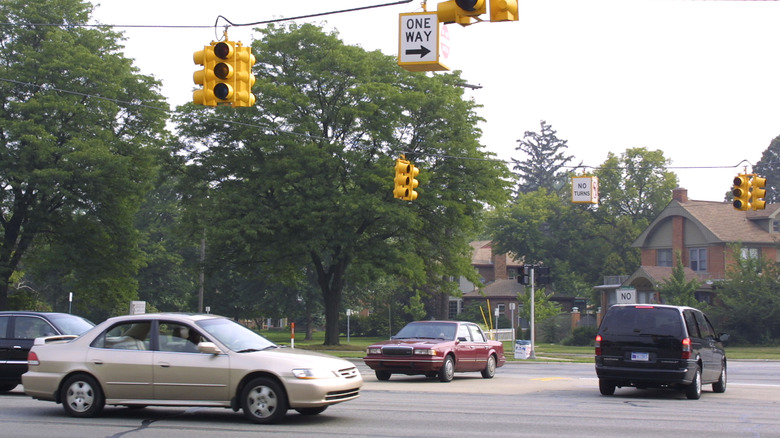
We've all been at an intersection, free-right, stuck behind a new driver who cannot judge the speed of an oncoming vehicle before merging onto the road. This either causes frustration among the people waiting in line to turn, or downright danger as the oncoming vehicles need to brake or swerve to avoid an incident. These situations often freak people out, especially beginner drivers. Examples that spring to mind are four-way stops, California stops, free right turns, U-turn areas, roundabouts, and, of course, the notorious zipper merges.
Poor decision-making in these situations is a telltale sign of a bad driver, such as not matching speed during on-ramp merging, waiting too long to enter a roundabout, taking a U-turn without gauging oncoming traffic, and more. There is strong evidence to suggest that this hesitation disproportionately affects newer drivers.
A study conducted by four researchers from Jilin University and Yanshan University in January 2021 found a moderate relation between the driver's total experience and driving violations. This suggests that the more one drives, the easier it becomes to gauge and judge road situations and react to them appropriately. It also means that if you find yourself hesitating with right-of-way and safety decisions, you shouldn't be too hard on yourself, and that things will get better the more you drive.