

Honda And Sony Killing Their Ridiculous EV Is About The Only Thing 2026 Got Right So Far
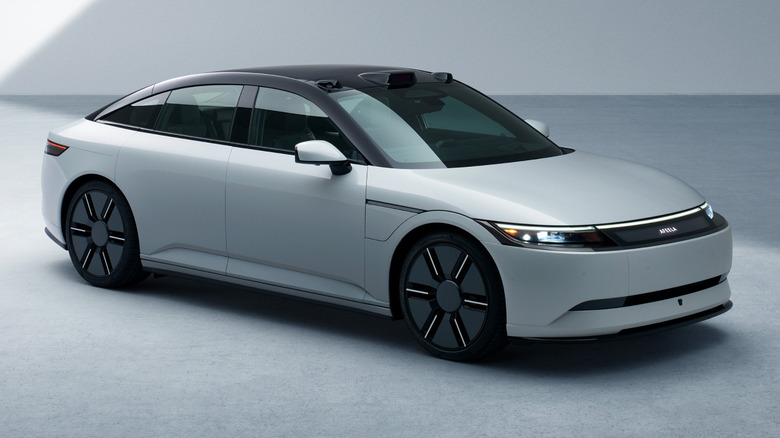
The Sony and Honda collaboration in the form of the AFEELA is no more, according to Sony Honda Mobility, the company formed to develop and produce the car. It was, Sony Honda Mobility says, a result of Honda's move to dial back it's electric vehicle strategy. "In light of this change," the company confirmed, "SHM (Sony Honda Mobility) has determined that it does not have a viable path forward to bring the Models to market as originally planned."
Earlier this month, Honda announced its intent to axe its own upcoming EVs, namely the Honda 0 EV and Saloon, and the Acura RSX. It was a move that certainly didn't help Sony, considering that the joint venture planned to base both Afeela and its follow-up on Honda's new EV tech. Instead, no new Honda EVs equals no Afeela.
For those of you in the audience scratching their heads at the concept of a Sony-produced electric car, the interestingly named Afeela was first teased in 2022 and has been in development limbo since then, with supposed launch dates getting shifted around as the EV market ecosystem got more chaotic. The car even showed up as a drivable model in Gran Turismo 7 as a promotion. Now, the virtual Afeela is as real as it is ever going to get.
Couldn't get Afeela for the competition
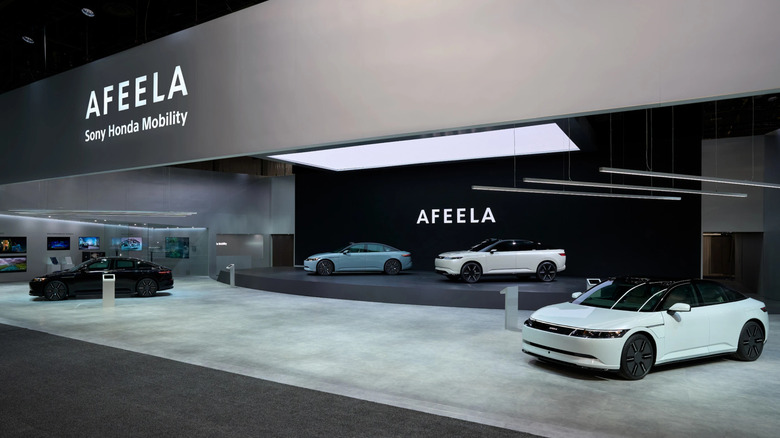
In theory, a car like the Afeela from two companies renowned for offering mostly high quality products might have been a good idea. In practice, though, the resulting car was a bit of an oddball. Apart from looking almost entirely anonymous, the Afeela wasn't all that impressive in actual specifications, even when it was first announced.
Its two-motor drivetrain and 91 kilowatt-hour battery would add up to a range of around 300 miles ,according to Sony's estimates. The launch model was priced at a pretty ridiculous $102,900 (the later version, originally set to arrive in 2027 was priced at $89,900), out-pricing competing cars like the base model Lucid Air and Tesla Model S. As good as Sony and Honda's individual products are, the Afeela just seemed like it was capitalizing on a trend without coming up with a good product first.
This all comes downstream from Honda's mixed bag approach to electrification. As demand has waxed and waned over the years, Honda has remained steadfast in waffling between an all-electric future and going back to mostly hybridization as a way forward.
Poor timing
As of now, Honda's only EV in the U.S. is the Prologue, which itself is based on tech borrowed from General Motors. That's a fairly weak offering in 2026, when most brands have more than one electric car on the market. The Afeela may have given Honda enough cash to develop more EVs, but all of those points are moot now anyway.
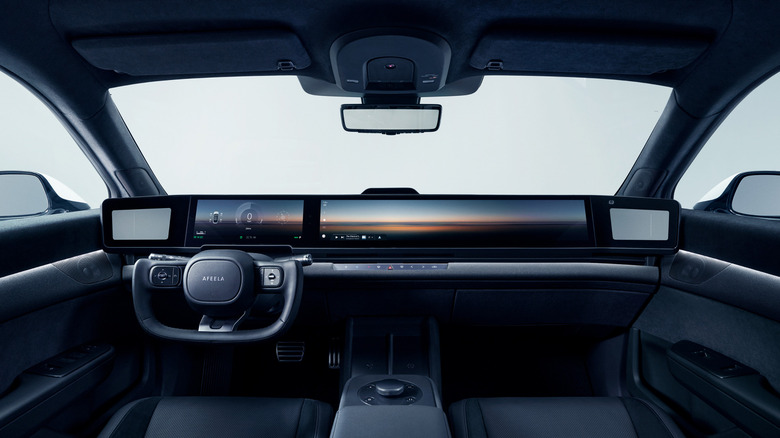
All of the tech included in the Afeela couldn't save it from macro economics, and the fact that it was too expensive and didn't look all that interesting. The Afeela will now rest in the hallowed halls of other tech company-developed automotive products like the Apple Car.
In all likelihood, the Afeela was probably doomed from the start. The market definitely doesn't need more six-figure luxury sedans with middling range numbers, especially as demand has slowed over the past year (that, of course, may change with fuel prices climbing). Cars like the Hyundai Ioniq5, Nissan Leaf, and new Chevy Bolt are probably more of the right path forward. Big luxury sedans will always have a place in the automotive landscape, but when it's your only product and it isn't all that competitive with other big luxury sedans, it's a hard sell. Requiescat in pace, Afeela.