

5 Unique Cars Powered By Motorcycle Engines
Cars come in many shapes and forms. Engine locations, gearing ratios, drivetrain layouts, seating configurations, cylinder counts, brake materials, and so much more are all subject to the will of the designers and engineers behind each automotive creation. A car is only a car when all its parts come together, and each is important in its own way, but if one part is paramount, it has to be the engine. The vast majority of cars are developed with engines designed specifically for them, but as always, there are outliers.
Enter the motorcycle-powered car. This strange realm encompasses a small but fascinating corner of the automotive world, where engineers deem an engine meant for two wheels suitable for their four-wheeled creations. As the following list shows, the reasoning behind this decision can range from fuel economy to track performance. Sometimes this marriage of motorcycle heart and car body is unnoticeable until you pop the hood; sometimes you wonder if the result is more motorcycle than car; and sometimes you get something that opens up a whole new no-man's-land that bridges the gap between the two. Here are 5 unique cars powered by motorcycle engines.
1. Ariel Atom 500
The English have a thing for building strange, lightweight track cars for the road. Before Ariel was building track cars like the Atom and off-roaders like the Nomad, the man behind the company, James Starley, was improving the weird and wonderful Penny Farthing bicycle. In 1898, Starley built the Ariel Tricycle, a motorized three-wheeled bike that would evolve into a four-wheeler called the Quadricycle, a sort of proto-quad bike. Then, in 1901, Ariel built its first motorcycle, powered by a 10-horsepower two-cylinder engine.
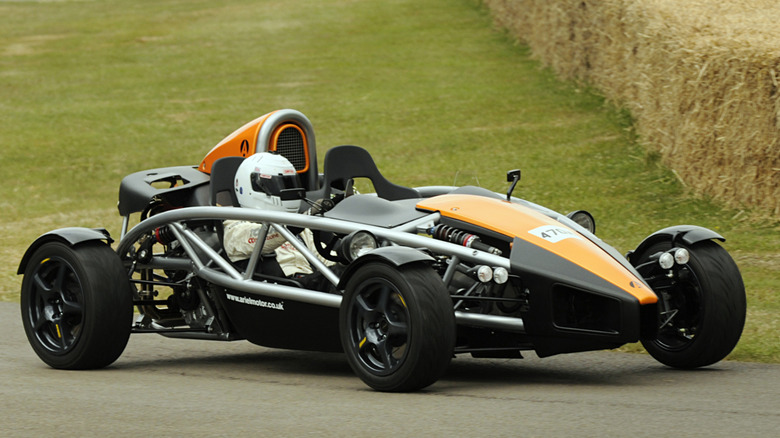
Despite the motorcycle engine being woven into the brand's early days, Ariel decided to outsource a bike engine to power their modern road-going track weapon. The Atom 500 is powered by a V8, so naturally, you might be wondering where Ariel found a V8-powered bike. The short answer is that they didn't, but they found the next best thing in the Suzuki Hayabusa — one of the fastest bikes in the world. The Hayabusa lineage has been powered by a few editions of mighty four-cylinder engines, so the Ariel engineers did what any good-hearted petrolhead would do and bolted two of them together. The result is a Frankensteinian 10,000-rpm V8 that produces 500 horsepower. This Hayabusa-hearted machine shows the creativity, or insanity, depending on who you ask, that frequents the minds of those who want to build something that goes fast.
2. Peel P50
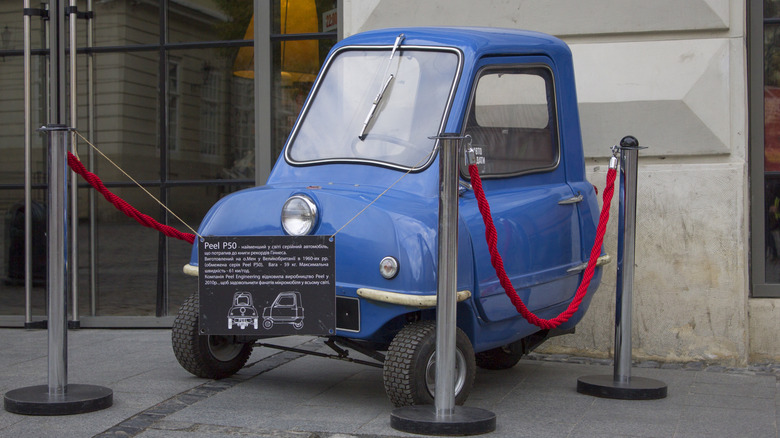
The Peel P50 looks like something out of a Richard Scarry book. Built on the Isle of Man, a place that knows a thing or two about motorcycles, the Peel P50 was only produced from 1962 to 1965. Most gearheads' first exposure to this whimsical little three-wheeler came from a Top Gear bit, where Jeremy Clarkson takes the P50 to work and wheels it around the BBC offices behind him like you would a suitcase at the airport. This P50 almost looks like a child's toy, measuring just 54 inches long and 41 inches wide.
Riding on what looked like a set of bicycle training wheels, the P50 was advertised as the ultimate economy car with the company claiming it was, "almost cheaper than walking." Under the hood, if you can call it that, is a tiny 49cc single-cylinder, two-stroke DKW motorcycle engine. This little pocket engine made just 4.2 horsepower but could push the little P50 to a top speed of 40 mph. The P50 sold for just £199 and got nearly 100 mpg thanks to being one of the lightest cars ever to hit the road. The P50 is one of the more comical examples of what happens when you stuff a motorcycle engine inside a car.
3. BMW Isetta
Nowadays, it's hard to imagine BMW as anything but one of Germany's finest automakers. The Bavarian marque is known for its high-performance and ultra-luxurious models, and its position and reputation in the car world are unquestioned. However, that wasn't always the story. After the Second World War, BMW was in shambles. The German economy was wrecked, and most of the brand's offerings were not the most economical and proved undesirable for the average financially struggling German consumer. With the country split by the Cold War, many of BMW's facilities were suddenly separated, creating a fractured corporate network.
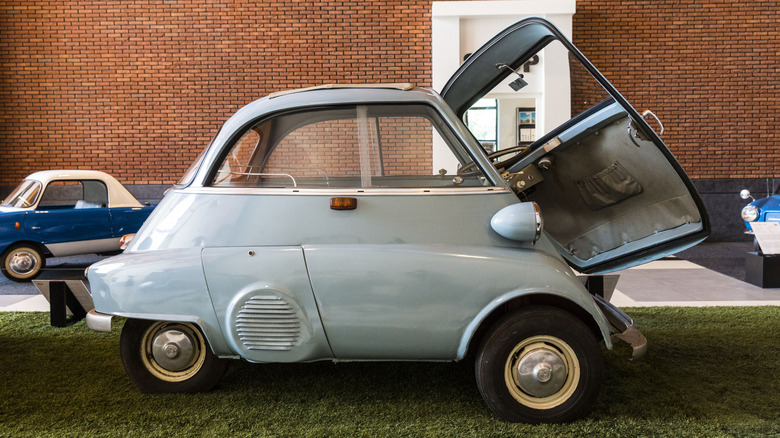
To pull themselves out of the mud, BMW built the Isetta. To be clear, it didn't actually come up with the Isetta; it bought it. An Italian firm called ISO dreamt up and created it before selling the manufacturing rights to BMW. BMW scooped up the cutesy bubble design and made it into the poster child of an economy car. Powered by BMW's own 300 cc motorcycle engine, the Isetta produced just 13 horsepower. The Isetta was so small it didn't even have traditional doors. To step into the Isetta, one needs only to pull open the front fascia, which reveals a small set of pedals, a tiny steering wheel, and a bench seat. The Isetta went on to sell over 160,000 units, helping to save BMW from bankruptcy.
4. Morgan 3 Wheeler
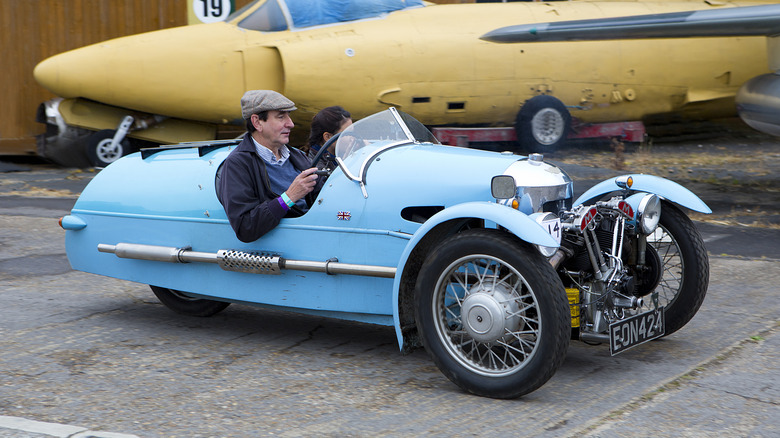
The story of the Morgan Motor Company began in 1909. Henry Fredrick Stanley Morgan founded the company on the principle goal of building lightweight, handcrafted cars made for the enjoyment of the driver. After an on-again, off-again relationship with the U.S. due to regulatory constraints, Morgan finally re-entered the market in 2011 with the Morgan 3 Wheeler, which would enjoy a 10-year production run, with final models coming off the line in 2021.
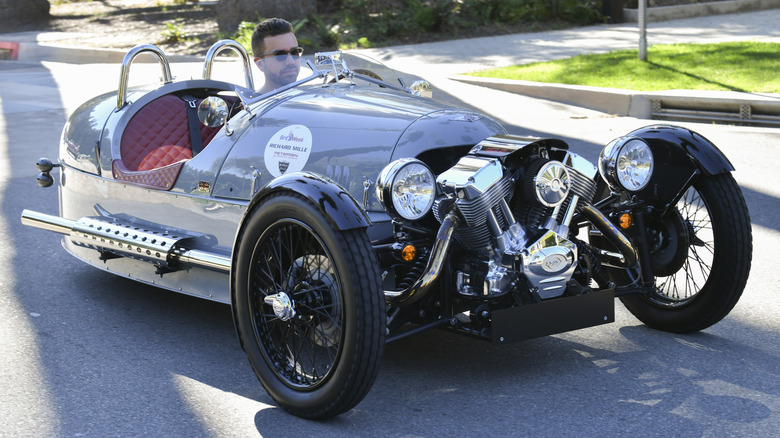
The street-legal 3 Wheeler lives up to its name in a literal sense. Say what you will about British naming creativity, there's no denying the 3 Wheeler is a truly unique car. It looks like something out of a Jules Verne novel. A steampunk Spitfire fighter that traded its wings for side pipes. It's a love letter to British eccentricities that would please a royal family member as well as a lorry driver. The 3 Wheeler is only about as big as a motorcycle, so it's no surprise that Morgan chose to fit it with a V-Twin engine sourced from American Harley Davidson supplier S&S Cycles. The engine produces a respectable 82 horsepower, which is delivered through a five-speed Mazda gearbox. The result is a creation that balances the best of both four and two-wheeled automobiles, and puts it all together in a package that is as wonderful as it is strange.
5. Radical SR1 XXR
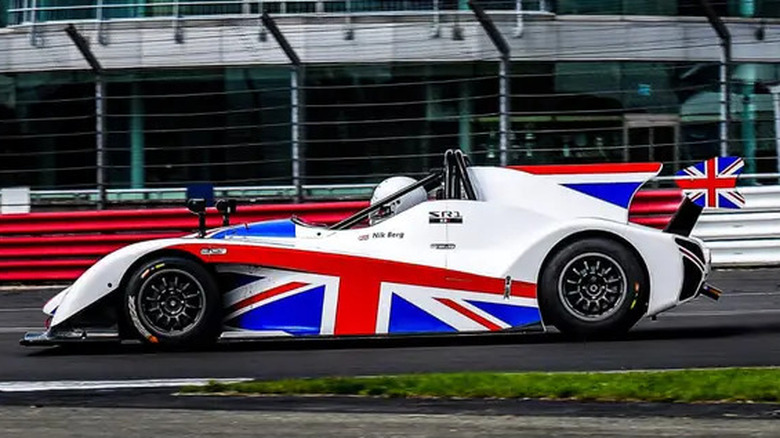
If you've noticed a trend in that most of the entries on this list come from the U.K., you'll not be surprised to learn that the Radical SR1 XXR is yet another motorcycle-powered creation born of the British mind. Radical started in 1997 in Cambridgeshire, England, with its first car being the Clubsport. The Clubsport would set the standard for Radical's mission to build the world's most exciting racecars that don't come with seven-figure price tags or a brand-loyalty prerequisite. Over the next few years, Radical improved and expanded upon the idea it pioneered with the Clubsport, and the world would see a wide variety of British-made race cars.
Within the current Radical lineup, the so-called entry-level car is the Radical SR1 XXR. You'd be right to feel like that name has too many scary-sounding letters to denote an entry-level car, because even though it's advertised as "the first step on the Radical ladder," the SR1 XXR is a serious car. Double wishbones, adjustable roll bars, a brake bias adjuster, a detachable steering wheel, a fire extinguisher, and more onboard goodies on the SR1 XXR show that this is a true track weapon. With a mid-engined configuration, sitting in the heart of the car is a 1340 cc Hayabusa-sourced engine that can rev up to 9,000 rpm, all housed in a package that weighs just 1,124 pounds.