

Every Electric Car Discontinued In 2026 (So Far)
Just a few years ago, it seemed that every day marked the launch of a new EV from a legacy automaker or a startup. In 2026, with EV sentiment waning, incentives expiring, tariffs on imports, and a myriad of other things happening, automakers are starting to prune lineups a bit.
2025 was a bloodbath of sorts. Towards the end of last year, Ford decided to axe (or at least massively rework) the F-150 Lightning, an actually pretty compelling EV. Nissan sent the Ariya to the big fast charger in the sky, and Tesla saw a serious drop in sales, partly due to customer sentiment towards Elon Musk.
Now with this year a little bit more than half over, the list of dearly departed models has grown considerably. There are a few EVs going back to the drawing board to be re-released, so those aren't included in this year's "In memoriam" segment, but a large amount of these models are gone for good.
Tesla Model S and Model X
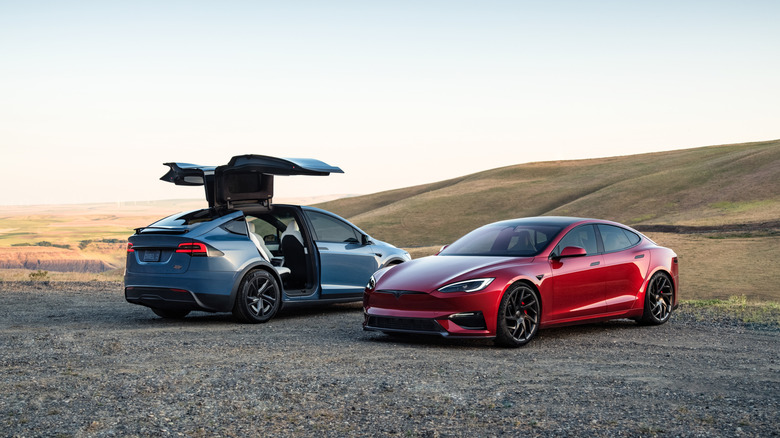
Love it or absolutely despise it (there doesn't seem to be a middle position), the Tesla Model S put the brand on everyone's radar and turned the company from a niche shop that made Lotus-like EV roadsters to the EV powerhouse it became. Soon afterward though, the Tesla Model 3 and Model Y took over as the face of the lineup, with the Model S struggling to break more than a few thousand units delivered per year.
The Model X was Tesla's first really weird car and could be seen, albeit briefly, as a symbol for the brand's refusal to do anything by the book; that is, before the rolling eyesore Cybertruck came around.
The Tesla Model S and Model X are equally divisive and vital to the EV landscape you see today. Now, both models are dead without replacements in Tesla's lineup.
Honda Prologue
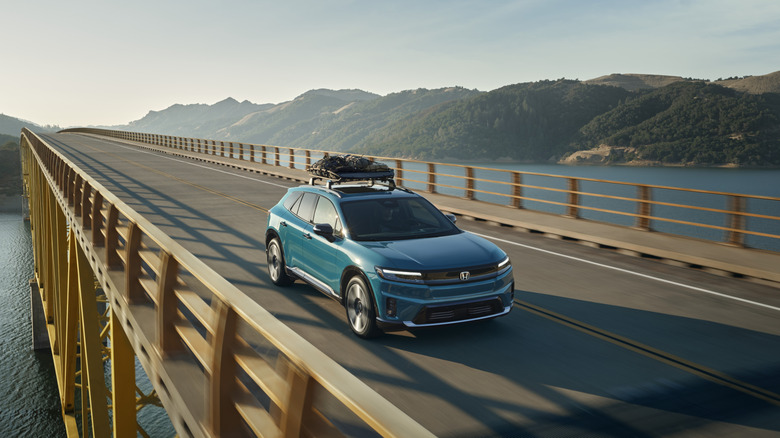
Much has been said about the Honda Prologue and the name itself wasn't indicative of what the car was. It wasn't really a Honda in that it borrowed a lot of components from the Chevy Blazer EV, and it didn't seem to be a Prologue for anything as Honda now has no EVs for the North American market. It even cancelled a number of other EV projects in favor of hybridization.
If a bit uncompetitive, the Honda Prologue wasn't really all that bad of a car, like the Chevy Blazer it's based on. It just wasn't a hot seller for Honda. Since drivers no longer get any incentives for choosing an EV over a hybrid or fully gas-powered car, the Prologue just wasn't all that compelling of an option compared to something recognizable like a CR-V, Pilot, or Passport.
More Honda EVs would certainly be a plus, but it doesn't look like the brand is going to offer much besides hybrids anytime soon.
Volvo EX30
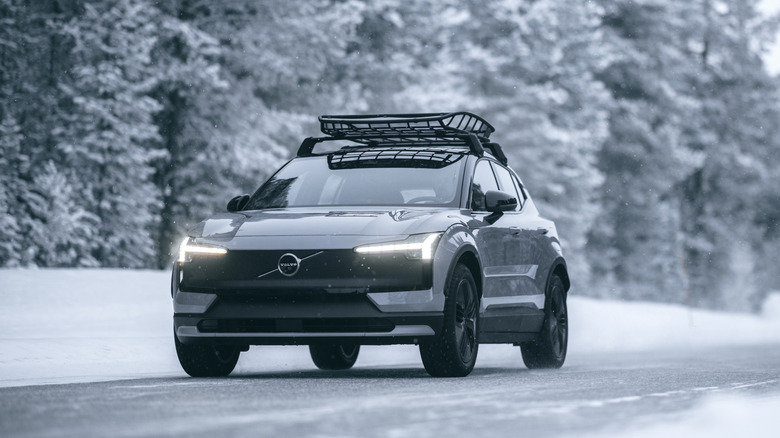
Without much fanfare, Volvo pulled the figurative and literal plug on its smallest and least expensive car, the EX30, plus its slightly more rugged Cross Country variant. Like all Volvos, the EX30 was very well-equipped and loaded with standard safety features. The base model, for example, had a panoramic glass roof, rear cross traffic alerts, collision avoidance hardware, and all kinds of driver alerts.
Range-wise, it wasn't fantastic at a maximum of 253 miles, but for a compact SUV, that's not terrible. Volvo didn't state a reason why the EX30 is leaving the United States, but Edmunds hypothesizes that tariffs are likely to blame, as the EX30 will continue to live on in Mexico and Canada.
Volvo still must think the value proposition is good enough for its other models, as the EX90, EX60, and EX40 are still hanging around, at least as of late August 2026.
All of Polestar
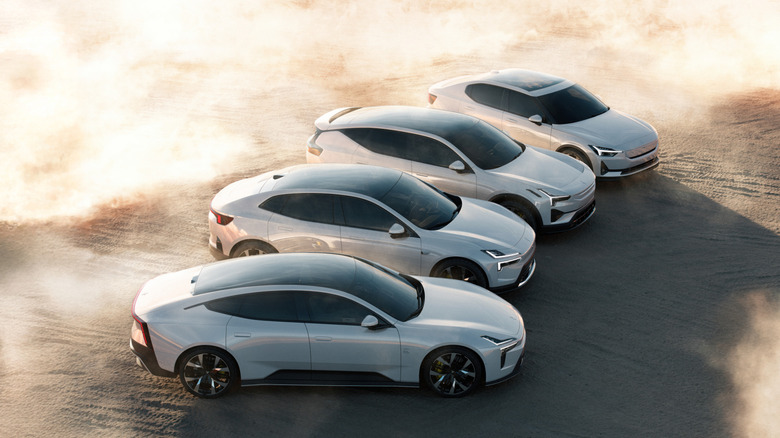
As with a lot of the conversation around electric cars, the withdrawal of Polestar from the United States is highly politicized. Precarious and perplexing tariffs have caused a lot of automakers to pump the figurative brakes on cars produced overseas, but Polestar has another wrinkle to deal with. It's owned by Chinese automaker giant Geely (it also owns Volvo and Lotus).
Earlier this year, the Bureau of Industry and Security under the U.S. Department of Commerce did not certify Polestar to operate its car in the United States under its "Connected Vehicle" legislation. Instead of dealing with that highly politicized mess, Polestar decided to stop offering the Polestar 3 and Polestar 4 stateside after this model year.
Confusingly, Polestar has factories in the United States where it makes the Polestar 3. But as a press release from June noted, the vast majority of Polestar sales (94%) come from outside the United States.
Kia Niro EV
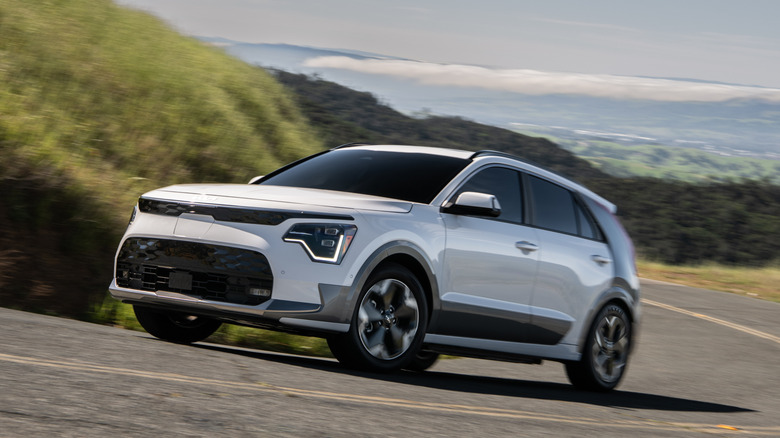
Perhaps the smallest EV on this list, the Kia Niro EV is shuffling off its mortal high-voltage coil. The gas powered variants of the Niro are still staying around, though.
The Niro EV was a bit of an oddball in 2026, so it's not a huge surprise that it's gone. It was rather expensive for what it was, with a starting price of $39,700, which puts it higher than cars like the Hyundai Ioniq 5, Tesla Model 3, and Chevy Equinox EV. For a compact Kia Niro, that doesn't seem like a very good value. When it comes to sales, the Niro isn't much of a success, and current sales data puts it in second to last place behind the significantly more expensive EV9.
Politics and tariffs have an outsized impact on EV lineups this year, but the Niro EV might just be a victim of the oldest enemy of cars; the fact that nobody bought one.
BMW i4 and iX
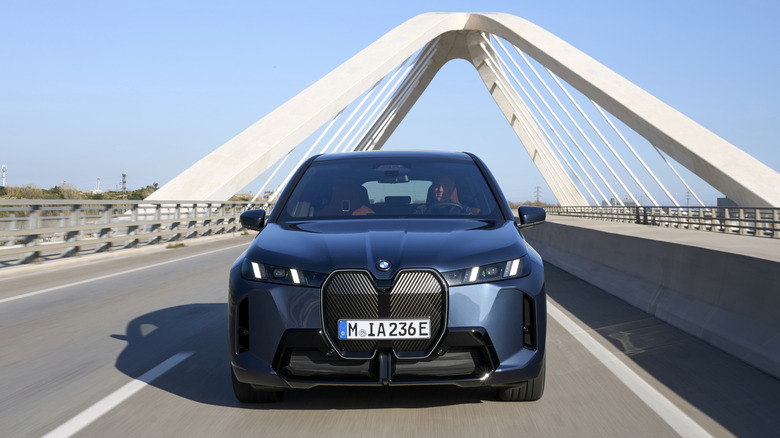
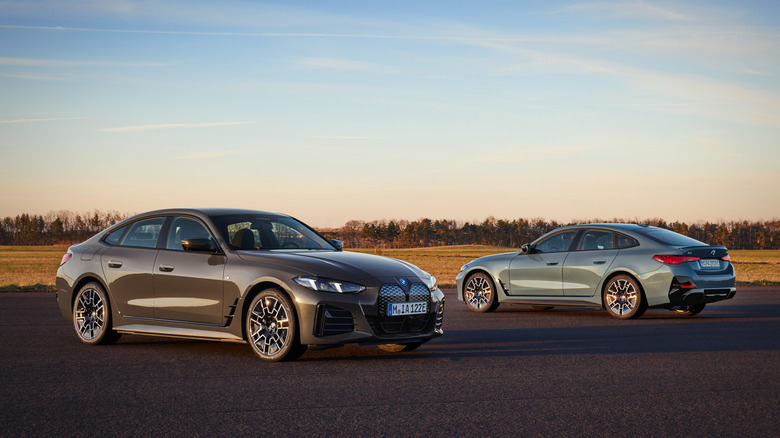
Several previous cars on this list are getting axed for reasons varying from poor sales to tariffs. The i4 and iX, however, are getting phased out in the name of brand progress. BMW has teased its Neue Klasse (new class) line of cars for a number of years now, and it appears that the i4 and the iX are the first models get go.
The i4 will get replaced with the i3 and the iX will depart in favor of the iX3. Whether or not the 4-series will get an EV version isn't 100% certain, but Car and Driver talked to BMW earlier this year and the automaker didn't rule it out somewhere down the line.
But for now, the i4 and iX are gone for a new line of BMW EVs that are reportedly going to have better range and better pricing. More importantly, Neue Klasse cars are built with EV architecture in mind, making the whole car a more cohesive experience than trying to electrify an existing car.
Hyundai Ioniq 6
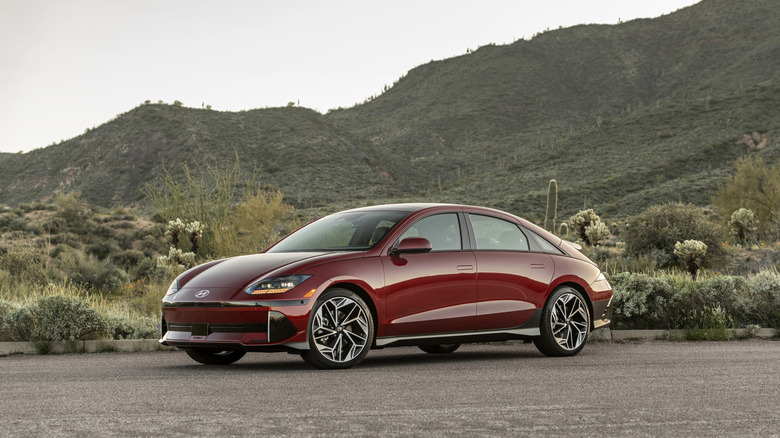
The Hyundai Ioniq 6 always seemed like it played second fiddle to the much more angular Ioniq 5. Perhaps it was the less than conventional shape, or it's higher starting price than the Ioniq 5. Either way, the Ioniq 6 wasn't a big seller. Hyundai sold a scant 76 Ioniq 6s last month, compare that to the 3,636 Ioniq 5s that drivers bought.
Car and Driver confirmed the Ioniq 6's demise for the U.S. market after this model year. For whatever reason, the 641 horsepower Ioniq 6 N will still be available, so that's nice.
The Ioniq 6 was not a bad car by any stretch, and as SlashGear found in 2023 when it first arrived, it was quite good. The 2026 model offered up to 342 miles of range, which made it a compelling option for a non-Tesla and non-German EV sedan. Perhaps the slow sales and discontinuation means that you can find a good deal on an Ioniq 6 that's been sitting on the lot for a while.
EVs on the chopping block or coming back soon
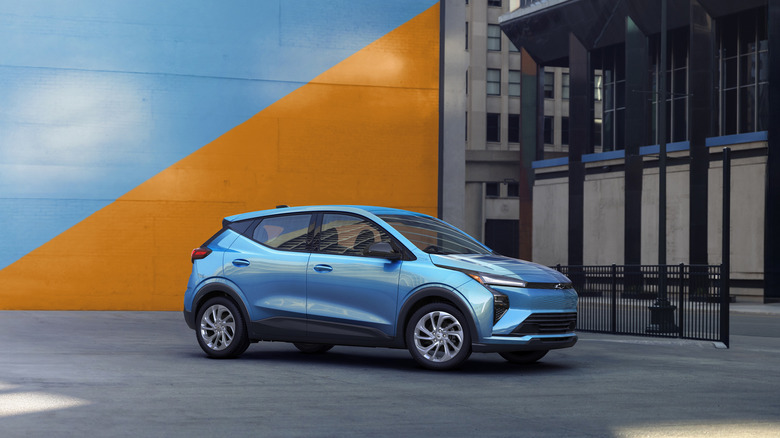
A few EVs like the Chevy Bolt are going away (again) by the 2028 model year. So, get your Bolt soon if you want one. GM seemingly can't decide whether or not it wants to keep making the Bolt, as this marks the second time the Bolt has been discontinued.
The electric version of the Jeep Wagoneer, the Wagoneer S, is coming back for the 2027 model year. Stellantis has had a rough year with electrified models, going as far as axing its plug in models like the Jeep Wrangler 4xe and Chrysler Pacifica plug-in. The Volkswagen ID.Buzz is also skipping 2026 and returning as a 2027, according to a press release from VW. The EV microbus is getting a few software, trim, and quality of life updates for 2027.
The EV market is fickle, so this could very well change drastically by the time 2027 rolls around. But for now, automakers are making a lot of tough choices when it comes to electrification.