

If You Hate Touchscreens In Your Car, These 5 Dashboard Gadgets Are For You
We may receive a commission on purchases made from links.
If there's one standout difference between old and new car interiors, it's the presence of a touchscreen display. While generally convenient, touchscreen infotainment systems have been the source of derision and controversy, with critics bemoaning how distracting they are, their obnoxiously massive sizes, how they're nullifying the gratification of using physical dials, and so on. But no matter how you see them, they still offer unprecedented levels of functionality. From GPS data and easy-to-read radio to smartphone connectivity, you'll never be able to replicate their utility in vintage cars... right?
Actually, you'd be surprised at how many gadgets exist that add these features to vintage cars, usually without touching things like the head unit or requiring invasive surgery on the dashboard. These accessories are perfect for people looking to daily drive their classic car while keeping it practical, for example, preserving the interior's character while allowing you to enjoy modern amenities. Some of these products even offer functionality that goes beyond what touchscreen displays can offer.
Is this list comprehensive? Absolutely not; in fact, the possibilities are nearly limitless, especially if you're willing to swap out things like the head unit. But if you want to retain the look and feel of your classic, whether you're after the tactile feel of pressing a physical button or are a purist looking to get away from the oppressive minimalism of massive touchscreen displays, here are a few gadgets for you.
RetroSound: A new head unit with an old look
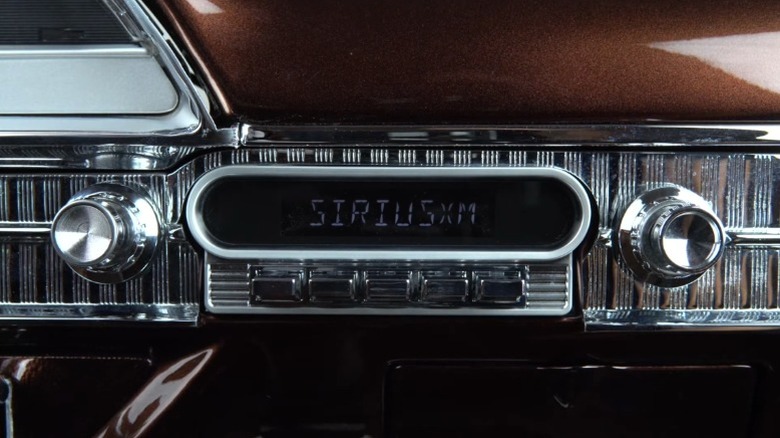
Let's set the stage: You own a classic car but want modern stereo system features, such as Bluetooth connectivity and iPhone compatibility, without an ugly aftermarket stereo disrupting the dashboard aesthetics or a touchscreen display crowding out the analogue gauges and dials. The solution: a retro-style modern head unit from the likes of RetroSound. The company's products are basically HD stereos with customizable functionality built into a vintage-looking head unit, perfect for discreetly modernizing a classic car.
RetroSound's offerings are complete packages, allowing you to pair the head unit of your choice with accessories ranging from hideaway HD speakers to automatic retracting antenna systems, granting virtually any car the same functionality as modern cars with satellite-capable, high-quality audio systems. The star of the show here is, of course, the stereo receiver, styled dozens of different ways to suit all sorts of retro vehicles. They're not one-to-one replicas of old units, in many cases, but they generally look correct enough to pass the smell test. The head units have analog or digital displays with correct-feeling buttons, dials, and faces.
Unlike some items on this list, this particular gadget is both universal and costly; custom head units like these can easily cost hundreds of dollars, especially if you go for the more full-featured radio motors and add on extras like subwoofers. However, your outlay preserves the look and feel of a classic while retaining all the radio functionality one would expect of a modern car. With hundreds of combinations, there's likely going to be something for almost anyone out there, too.
Auto-Vox T2 rearview mirror with camera
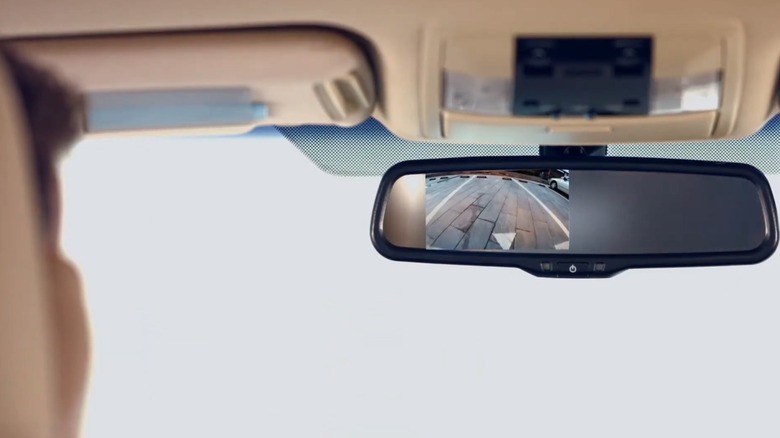
Here's one gadget that could theoretically apply to just about every car out there: the Auto-Vox T2. Backup cameras have been compulsory in modern cars since 2018, with units ranging from basic 480p displays on the infotainment screen up to HD smart displays with safety warnings and assists. You won't get any of that here, not at this level of functionality. But what you do get is a license plate bracket with a hidden camera and a wired rearview mirror — all that a cautious driver really needs, most of the time.
Unlike other smart mirrors, this one doesn't have a touchscreen; instead, it has physical buttons on the bottom of the mirror to power it up and change the settings. It's quite minimalist, with only three buttons to access all the functions, making it particularly good for stealthy upgrades. This is a one-size-fits-all rearview mirror which, unfortunately, may not look right in many classic cars. As such, it's more useful in cars from the 2000s and early 2010s assembled before backup cameras were mandatory.
The unit costs $140, a relatively competitive price as far as smart mirrors go, but it is stuck at 480p and has a relatively narrow view, so it's not the absolute best choice out there. But if your priority is something that's not noticeable and retains that analog look and feel, then this is one of the only options on the market for a mirror backup camera that doesn't involve touchscreens.
A digital heads-up display
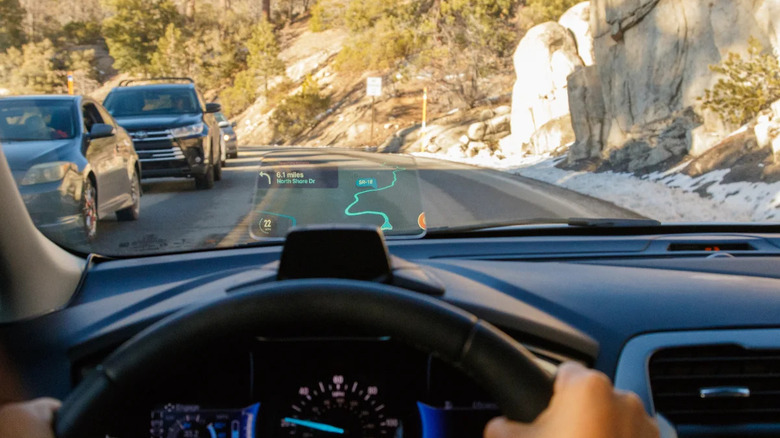
Head-up displays are typically found as performance-oriented options in sports cars, as well as luxury add-ons in more premium vehicles. But the principle is very basic, and they work a lot like projectors, displaying an image on the windshield in the same way as an overhead projector shows a presentation. It's often more complicated than that, of course, but the core principle is that light hits the windshield and gets reflected in such a way that the driver can read it.
What, then, is stopping someone from simply mounting such a projector to their dashboard ahead of the instrument cluster, providing roughly the same functionality? As it turns out, nothing. There are many heads-up displays online, such as this 5.5-inch Arestec unit that plugs into your car's OBDII port and projects various vitals onto your windscreen. Other, more basic ones don't require an OBDII to function, just power. You also have high-quality, smartphone-compatible units that project an image onto their own glass, like the Hudway Drive.
Obviously, these devices aren't going to be as good as an actual factory heads-up display. Images might be distorted or display incorrectly on windshields not designed with this functionality in mind. After all, the projector itself is only one component of the complete set. But if you're looking for something cheap, practical, and unobtrusive, a basic heads-up display is one of several useful dashboard accessories you can buy.
Cobra radar detector: For the spirited driver
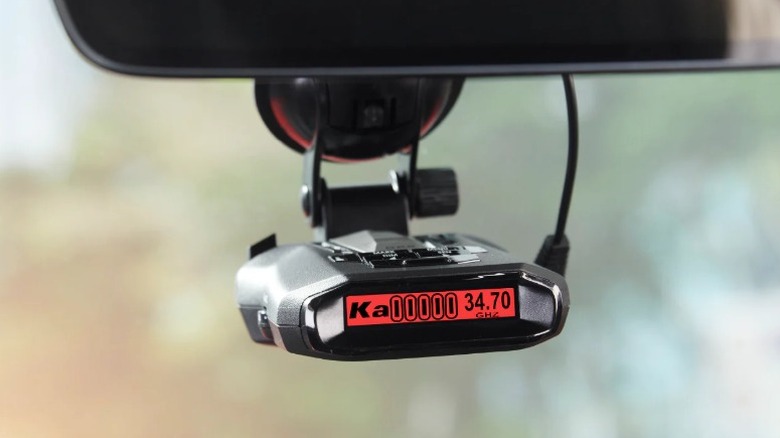
Fun fact: it's actually legal to have a radar detector everywhere except Virginia, Washington, D.C., and military bases, as long as you don't drive a commercial vehicle weighing over 10,000 pounds. These devices can be extremely useful tools if you live in places with great driving roads or have a particularly heavy foot. While we'd never condone breaking the law, certainly not by speeding, a radar detector remains a mainstay in many a driver's kit.
Radar detectors are essentially standalone radio receivers, scanning for radar gun signals and alerting the driver when detected. In a perfect world, radar detectors would all be able to detect radar guns with no errors, but law enforcement has its own ways to combat them. It's thus a continuous arms race between the two sides, with some of the best detectors running deep into the hundreds of dollars, like the Bluetooth- and smartphone-compatible Cobra RAD 700i.
While expensive, higher-end radar detectors offer extra connectivity and functionality. They may allow drivers to share information or isolate specific frequencies, and some even offer ticket guarantees, paying off your speeding tickets (with certain caveats). Regardless of the brand, these devices typically mount to the car's windshield, though not every state allows radar detectors in an unobscured location. It's worth noting, however, that modern cars' use of radio frequencies and radar for features like smart cruise control and lane-assist can lead to false readings. Newer models will have filtering to minimize false alarms, providing a better picture of police presence than older models.
FM radio transmitters
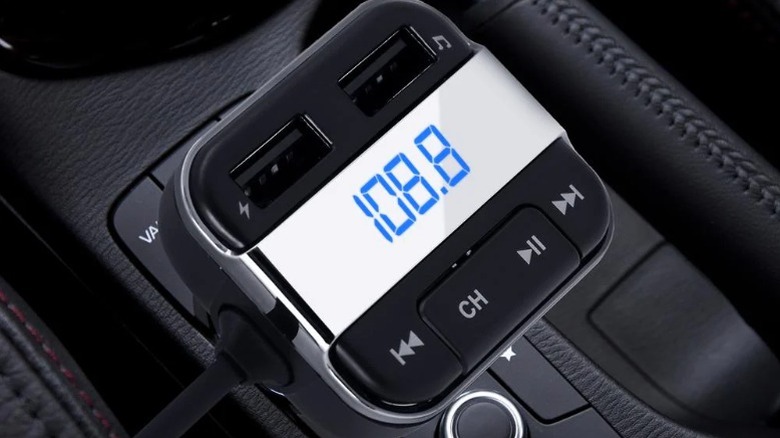
Let's face it: being able to connect your smartphone and have your music roll over to your car when you start it up is very convenient. That's not a recent invention, though; phone adapters of all shapes and sizes have existed since cassette players, in the form of those wired cassette adapters with aux cables for your Walkman. But we live in a modern, sophisticated world, one in which many phones (annoyingly) don't feature standard headphone jacks. What do you do?
The answer is a wireless radio transmitter you plug into your car's cigarette lighter, like this Pyle Bluetooth FM transmitter. It's a Bluetooth receiver that picks up your smartphone's signal like any other connection, then converts it to a radio frequency of your choosing. After that, you simply tune your car's radio to that frequency, and your smartphone audio plays through your car's speakers. It basically overrides the designated frequency with its own output signal.
This is an invaluable tool for those of us who can't live without our music and don't have a phone with a headphone jack, or those who want to use the Lightning or USB-C to charge their phone up while they're driving instead of plugging it into the radio. Sound quality obviously depends on your car's speakers, but the sound can be improved with better-quality transmitters as well, though they remain fairly inexpensive for their level of added capability.
How we decided what's on our list
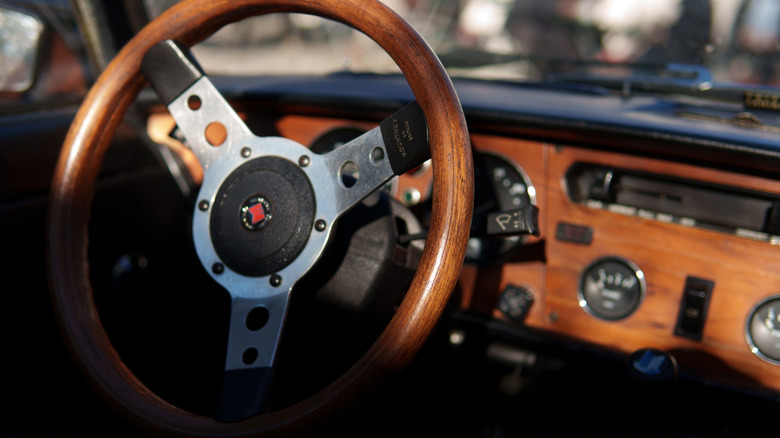
The first and principal point here was simple: Absolutely no touchscreens. Second, we looked for items that are relatively unobtrusive or easily tucked out of the way. Part of the point of going without touchscreen-based tech is to retain that retro look and feel, and we sought products that retained that. Likewise, we only selected items that didn't require any major lasting changes to the car, with the only outlier being the head unit — it got a pass for its period-correct styling.
We also made sure to select gadgets that compensate for some of the functionality that's lost if a car doesn't have a touchscreen. Infotainment systems offer plenty of options and features we sometimes miss on older cars, and the intention was to offer some of that without the baggage of modern touchscreen-based systems. We made sure to highlight products that are readily available online or in stores and that users can install themselves, as opposed to gadgets requiring custom installation, like specialized audio or video equipment.