

Five Chevy Engines You Should Steer Clear Of
Chevrolet engines have found their way into everything from economy cars to high-horsepower performance machines. The sheer breadth of that range means a few bad apples are sadly inevitable. Within this lineup, many of the engines have earned their reputation for being reliable. Whether it was the Gen I 350-cubic-inch small-block V8 from 1960s Camaros or the Gen II LT1 5.7-liter V8 from 90s Corvettes, there are many reliable Chevy engines that can be found in the wild. That said, not every powerplant to come out of General Motors has stood the test of time.
Some have developed reputations that are hard to shake, whether that be through complaints, NHTSA investigations, bulletins, defects, or costly recall campaigns. To dig deeper into the automaker's bad apples, we've compiled a list of Chevrolet engines with well-documented and widespread reliability issues. Some of these problems have since been addressed; some have even led GM to the brink of bankruptcy. Others remain cautionary tales that are yet to be fully explored or complained about. Either way, here are five Chevy engines you should steer clear of.
1971 to 1977 Vega 2.3L I4
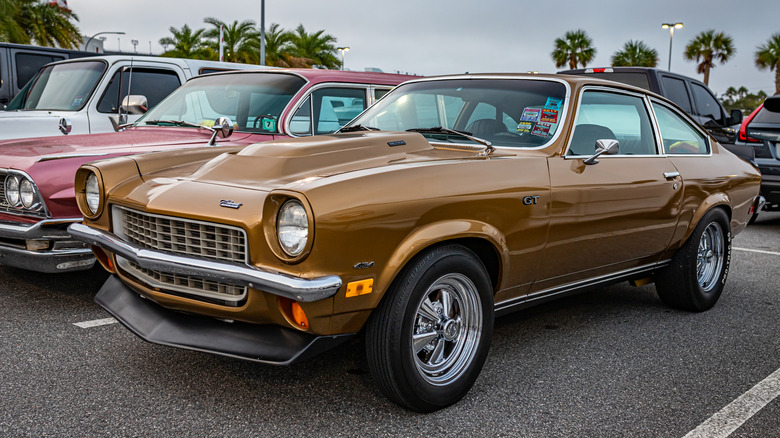
In an effort to lower fuel consumption and compete with the likes of the Volkswagen Beetle and the Ford Pinto, GM's CEO Ed Cole rushed the development of the Chevrolet Vega with its 2.3-liter four cylinder engine. That has proven to be one of the biggest mistakes in GM's engine development history. The engine block was cast from a high-silicon aluminum alloy known as A390, with the bore surfaces acid-etched to expose silicon particles as a wear surface.
The theory was sound; the execution was catastrophic. GM bolted a cast iron cylinder head onto the aluminum block — two different metals with very different thermal expansion rates. When the engine overheated (which it did due to poor cooling properties) the aluminum expanded faster, stressing and ultimately destroying the head gasket. Without sealing, coolant entered the chamber, oil consumption spiked, and the block itself warped into oblivion.
According to Hagerty, in May 1974 Chevrolet quietly notified the approximately 1.3 million Vega owners at the time that it would cover under warranty the cost of any engine damage caused by overheating. This was a direct, documented admission that the engine's overheating problem was GM's fault. The issues with this engine and the Vega as a whole were so bad they almost ruined GM, and because of that, we also named it the worst Chevrolet engine ever made.
2007 to 2014 5.3L AFM Vortec
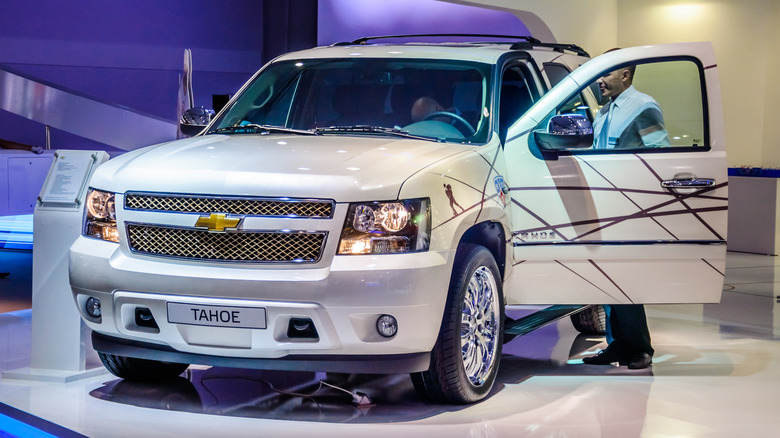
We do have to stress that not every year of the 5.3-liter Vortec is deserving to be on this list. Overall, the worst years for this engine were 2007 to 2014 because of largely two massive problems: active fuel management (AFM) and positive crankcase ventilation (PCV). First of all, this engine was used for some of GM's most important models like the Silverado, the Tahoe, and the Yukon. The AFM system uses 16 specialized collapsible lifters, and these are known to incorrectly collapse, bend the pushrods, and destroy the cam lobes.
A repair for an AFM-related issue that starts as a $2,000 to $4,000 lifter job can become a more than $8,500 engine replacement if the cam is wiped. GM added a deflector to the oil pan in October 2010 and issued Techhnical Service Bulletin (TSB) 10-06-01-008 in October of 2012 acknowledging oil pressure and AFM valve issues. Besides filter management problems, the 5.3 Vortec also experienced serious issues with piston ring oil consumption, mostly on 2011 to 2014 models, due to faults in its PCV system.
Defective piston rings caused engines to consume oil at up to 1 quart per 1,000 to 2,000 miles, fouling plugs and in severe cases causing complete engine failure. In total, GM had to say goodbye to as much as $150 million total in lawsuit settlements because of these problems. When we went through the worst GM engines ever put in a production car, the 5.3-liter Vortec was duly noted.
2019 to 2024 GM 6.2L L87 V8 EcoTec3
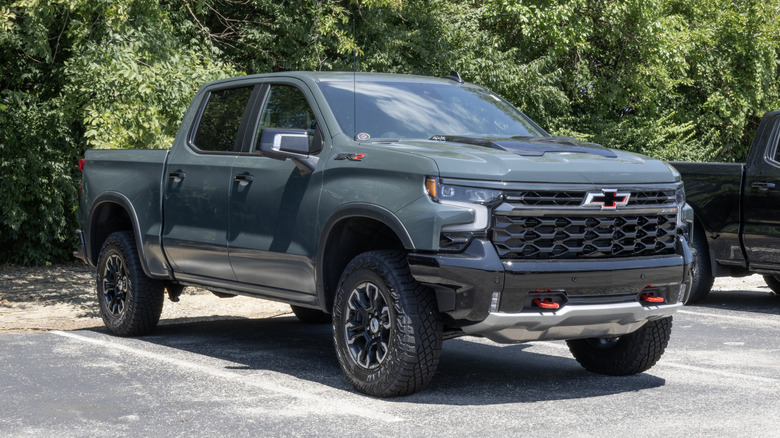
Unlike the 5.3L Vortec's slow-burn lifter drama, the L87's engine failure saga is a lot more sudden. It all began with the NHTSA 25V-274 teardown analysis in April 2025 that identified two root causes: Contamination in the crankshaft and connecting rod oil galleries, and poor crankshaft dimensions and surface finish from the factory. This has even led to engines seizing at highway speeds with no warning — and all without the check engine light illuminating. In worst cases, the engine's connecting rods punched through the engine block.
The same month, GM recalled 597,630 vehicles with the NEF-107DM safety recall report. The fix? Swap the factory 0W-20 oil for thicker 0W-40. Engines continued to fail anyway, because changing oil viscosity doesn't fix out-of-spec machining. NHTSA then opened a second investigation — this time into whether GM's own recall remedy actually worked. By October of that year, NHTSA had logged 1,157 bearing failure complaints, including four crashes and fires.
GM's internal records showed 28,102 incident reports by that same point. As of March 2026, multiple class-action lawsuits have been consolidated into a single federal case. Plaintiffs called the recall "inadequate." As of this writing, the story isn't over — which is exactly why this engine belongs on this list and why GM truck owners are demanding thicker oil in future V8 engines.
1978 to 1985 Oldsmobile 5.7L Diesel V8 LF9
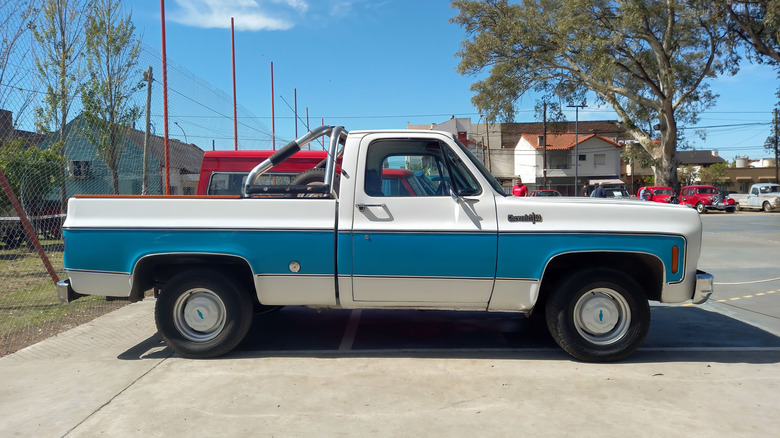
It must be said that the 5.7-liter diesel V8 was not technically a Chevy engine, but it was used in a variety of Chevys, including the C10 pickup, Impala, Caprice, and Malibu. As such, it sure was a problem for owners. The downfall of this engine is actually quite similar to the 2.3-liter Vega engine. In other words, it was also rushed into production, but because of Chevrolet trying to meet new emissions standards.
The main failure was a cost-saving decision to keep the gasoline engine's insufficient head bolts. Specifically, the problem was that this diesel powerplant had a compression ratio nearly three times higher than a gas engine. The bolts could not take it. All of this led to head gasket failures, coolant finding its way into the cylinders, and finally, engines destroying themselves. GM also got rid of a water separator in the fuel system which led to inner corrosion of the injection pumps.
According to The New York Times, former G.M. engineer Darrel R. Sand warned company executives that the engine was not ready for production, stating that "the diesel couldn't hold up," but his warnings were ignored. Ultimately, the 5.7 diesel was a promising engine that failed to live up to the hype, and put a major dent in Americans' willingness to consider diesel cars for decades.
2004 to 2011 GM 3.6L V6 LY7
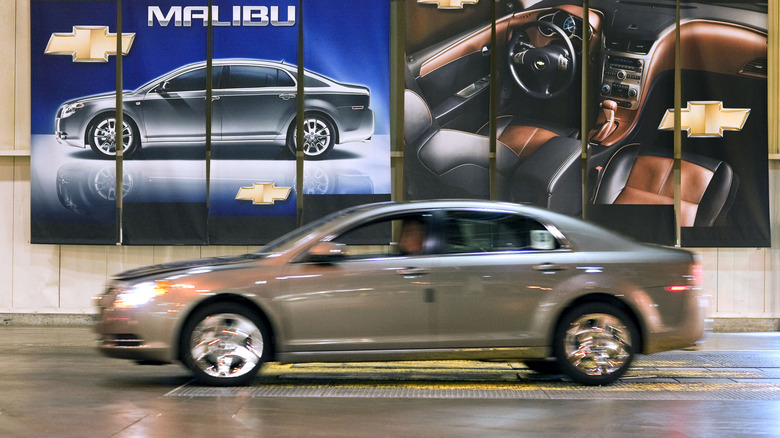
The LY7 3.6-liter V6 was not an engine exclusive to Chevrolet, but it was used in some of Chevy's most important models at the time, including the Malibu, the Traverse, and the Equinox. The first major issue of the 3.6 was associated with the timing chain. Specifically, GM wanted to reduce chain noise by using smaller links, reducing them from 9.5 mm to 7.7 mm. However, this eventually led to premature stretching of the chain, sometimes even as early as 40,000 miles.
If this does happen, it can lead to bent valves and a bill that can run higher than $3,000. GM wanted to rectify the problem by essentially telling the engine to require shorter oil change intervals with the 10287C TSB it released in April 2012 to vehicle owners. However, with the November 2012 113400 TSB, GM extended the warranty coverage for the engine and reprogrammed the ECM. Later on, GM also issued the August 2013 12-06-01-009D TSB, which introduced timing chain service kits.
As we noted in our look at used Buick models to avoid, the 3.6L was a key reason several models made that list. Besides just timing, the 3.6-liter is also prone to oil consumption, water pump failures, PCV system problems, carbon buildup, and cylinder misfires.
How we made the list
When we went to source as much credible information as we could to write this article, we quickly realized that issues like these are never black and white. Some people are likely to experience completely different impressions with any of these engines, meaning that they'll run like butter and never miss a beat. However, the point of this article was not to find Chevy engines that will always fail but to find those that are more likely to do so.
To make sure our list represents reality, we went through tons of available reliability data, recalls, bulletins, warranty coverages by the NHTSA, professional mechanics, RepairPal, CarComplaints, GM Authority, The New York Times, Hemmings, MotorTrend, and Hagerty. We also pored over tons of owner impressions, discussions, and forum posts from various corners of the internet. We did our best to back these claims with multiple sources, and we also relied on previous efforts by our writers to cut through the noise and find credible information you can trust.