

3 Tools You'll Never Find In A Pro Mechanic's Garage
We may receive a commission on purchases made from links.
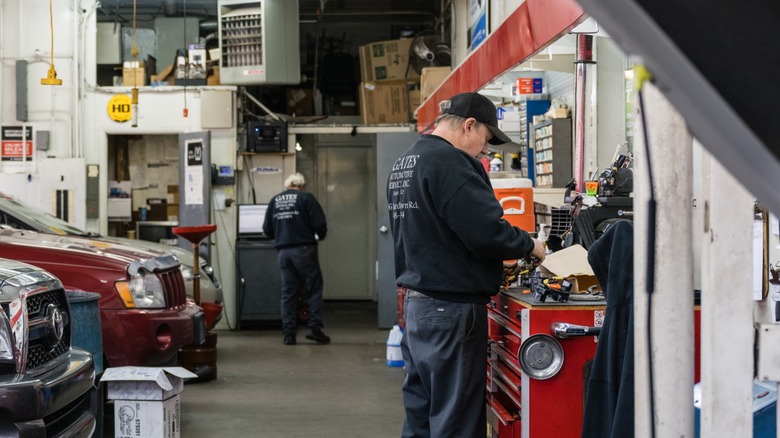
Besides a broad knowledge base and some specialty tools that every home mechanic will wish they had sooner or later, there are some common tools used by DIYers that you'll never find in a pro mechanic's garage. Pro mechanics and DIYers alike depend on tools like wrenches, ratchets, sockets, and screwdrivers every day. However, some brands favored by DIYers for their budget-friendly pricing will not hold up to the rigors of the heavy-duty use seen in professional garages day in and day out.
On the other hand, some prosumer-grade tools, especially those types that get the most abuse, like Harbor Freight's orange dead-blow hammers, might even be preferred by pros if they're affordable and have a lifetime warranty. Many of the pro mechanics I've known have started their careers with the best tools they could afford and replaced them with better quality versions as they wore out or broke. While that's a great way to start a tool collection, certainly better than taking on a mountain of tool-truck debt, there are some tools you'll never find in a pro mechanic's garage.
Cheap tool sets
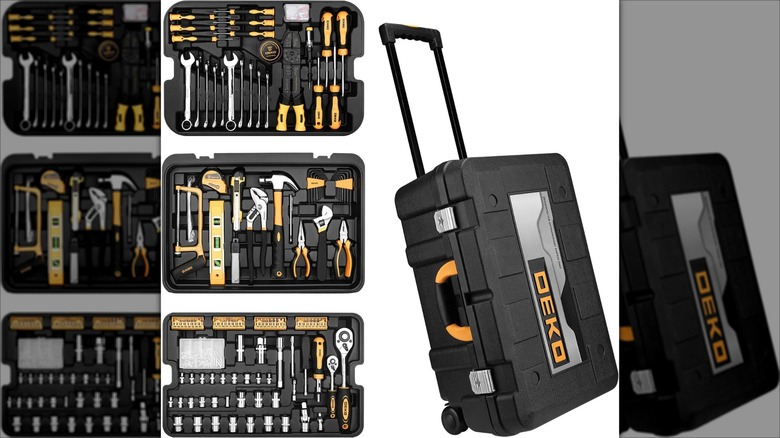
For the casual DIYer, some cheap mechanics tool sets are worth buying. However, for the professional mechanic who bases their reputation on the quality of their work, the low quality of cheap tool sets makes them a non-starter. The kind of cheap tool sets we're talking about contain wrenches and/or socket sets and, in some cases, various other tools with an average per-tool price coming in at $1 or even less. The Dekopro 258-Piece Tool Kit from Amazon is one example. It's priced at $135 and comes in a rolling tool box with an extension handle like a carry-on bag you'd see in an airport.
Given the price and quantity of tools in the Dekopro set, each tool costs an average of around $0.52. The kit includes combination and adjustable wrenches, screwdrivers, sockets, ratchets, various pliers, and other tools reportedly made from forged steel. Another red flag concerning the set's construction quality is its weight. According to Amazon, the Dekopro tool kit weighs just 25.9 pounds in total, lightweight even for a bargain tool set.
Pro mechanics would never have a tool set like this in their garage. While there is a high likelihood that cheap tools will fail when put to the test, the reasons they're avoided go beyond broken tools. A broken tool takes time to replace, time away from the garage to buy or warranty-replace it with another tool. It also means time away from work to get another so you can finish the job. A failed tool can also affect a pro mechanic's reputation. A wrench or socket that slips can damage fasteners or surrounding parts and looks like substandard workmanship if not corrected. In addition, having to borrow a tool from another mechanic to finish a job because a cheap tool failed is bad form.
Universal sockets
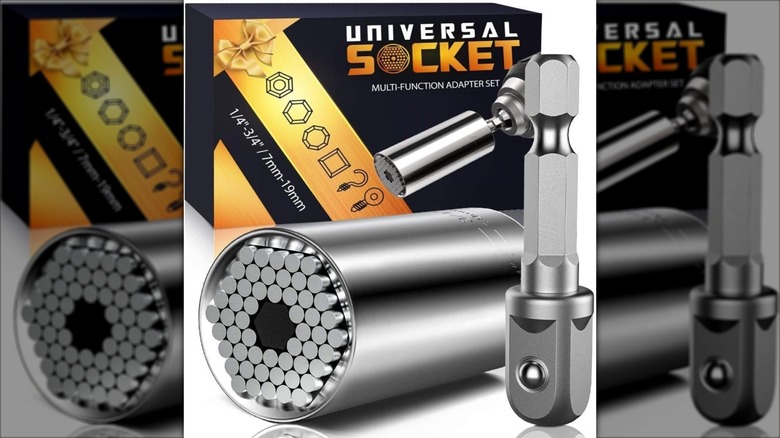
Some will argue that those universal sockets really do work, but I've certainly never seen them used in a professional mechanic setting. Although, I wouldn't be surprised to find one in a professional handy-person's tool kit due to their versatility. Universal sockets, available on Amazon from suppliers such as the Hanpure store, go for around $10. They use a series of spring-loaded pins contained in the outer shell of an apparently traditional socket to grip a variety of objects.
SlashGear's Alex Hevesy spent his own money to review one universal socket brand to see just how useful they are. His full review is linked above, but the short version is they work for some things and fail at others, leaving the claims of replacing your entire socket set suspect. A pro mechanic wouldn't use these in their garage for the same reason they avoid cheap tool sets. Sure, they'll apply some torque and turn a bolt in some cases, but when the going gets tough, they'll probably end up wasting time sweeping all of those pins into a dustpan.
Substandard strippers
While it's always preferred to simply unplug a component for testing or replacement, sometimes wires must be cut and stripped to get the job done. Using a substandard pair of wire strippers just makes the job harder and increases the likelihood of mistakes.
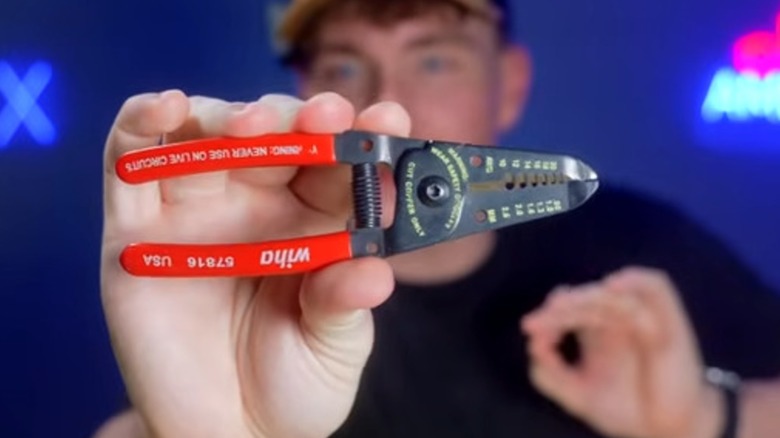
Substandard strippers share some common traits, such as plastic handle coverings that slip off, blades that damage wire strands, and poor designs that don't cut wire insulation cleanly. One of the worst wire strippers, according to YouTuber American Electrician, is the Wiha 57816 Classic Grip Wire Stripper. In the video, the host explains the feel and function of the Wiha stripper are nowhere near as good as the Klein Tools Insulated Wire Stripper & Cutter, a version of which is just $10 more than the Wiha.
If you prefer an automatic stripper/cutter, check out the Katapult Wire Stripper/Cutter. It's also featured on our list of useful Klein hand tools to add to your tool box. Another good wire stripper that combines the functional needle nose plier is the Rack-A-Tiers Croc's Needle Nose Wire Stripper. These strippers can cut, strip, and crimp connections on 10 to 22 AWG wire and feature glow-in-the-dark ergonomic handles to help with finding them in dark engine bays.
Methodology
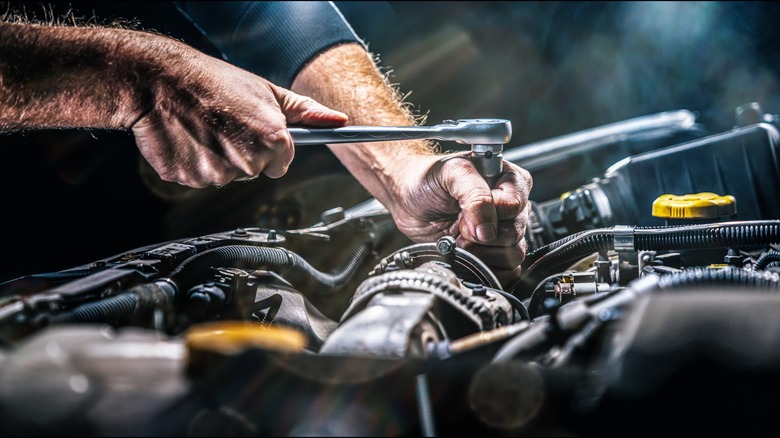
Having served time in various auto repair shops, salvage yards, auto parts stores, automotive machine shops, and aerospace factories for as long as I can remember, I've seen a lot of tools in professional mechanics' hands. I'm left with a lasting impression that quality tools lead to quality results, but at the same time some tool types can wait for an upgrade.
The thought behind this list involves spending good money on tools where it's most important. I searched the internet and my memory for tools purchased with regret, tools that don't perform as advertised, and tools that are more gimmick than hard-working. These three tools appeared the most prevalent, though I'm sure there are other examples.