

I Love How BMW's 2026 i5 Looks And Drives, But Range Demands A Tough Decision

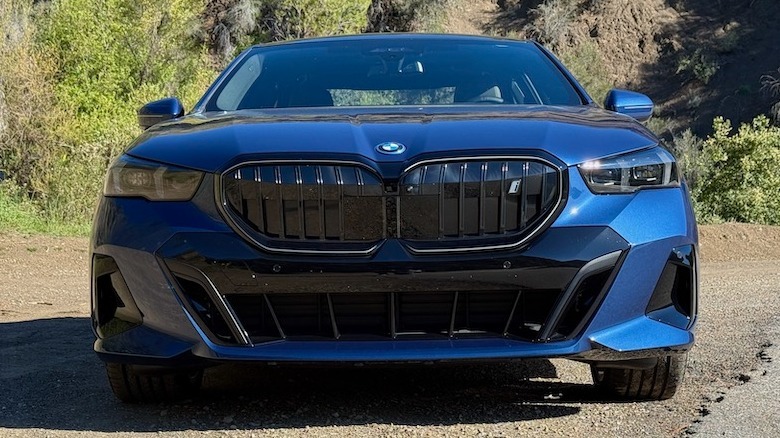
The 2026 BMW i5 isn't on a mission to convert you to any specific kind of motoring. It doesn't want passers-by to swoon over its controversial styling, nor does it want them to jeer as it rolls past. It doesn't have funky design or an unconventional approach to commuting, just because it's electric — there are no gimmicks here. The i5 is stately and mature, even if it isn't ornate. It's a simple luxury that delivers on every promise it makes. Just like the standard 5 Series, the all-electric BMW i5 is comfortable and well built — it just so happens to be powered by batteries and driven by electric motors.
 Travis Langness/SlashGear
For all intents and purposes, the i5 is a regular 5 Series. It's the same length, width, and height, and it's even styled to match. There's a tiny difference in cargo space between the two, but not enough of a difference that most owners would even notice. The i5 does its propulsion the silent way, though, via an 84.3-kWh battery pack and a choice between rear- or all-wheel drive.
It's available in regular trims, or there's a high-performance model, and — as is the case with just about every BMW these days — there's a middle-of-the-range trim that aims to satisfy both the power-hungry buyer and the shopper craving a lavish driving experience. That's where the i5 xDrive40 steps in, my chariot for a week of zero-emissions driving.
Powertrain is middle of the road, and that's okay
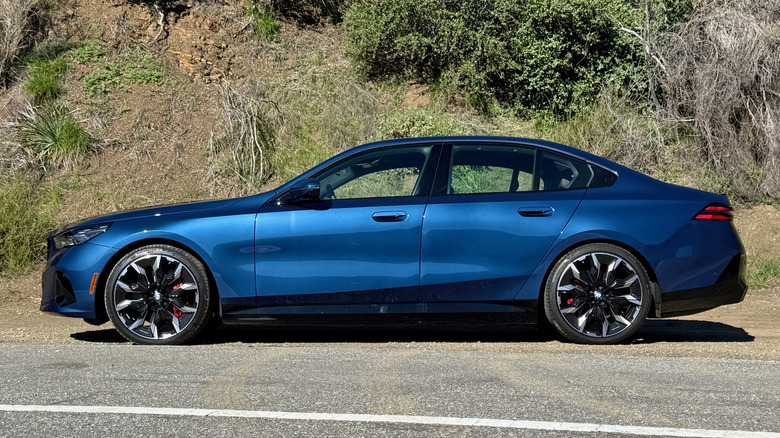
With dual motors and standard all-wheel drive, the xDrive40 version of the i5 is right in the middle of the lineup and its performance reflects that. BMW claims that the xDrive40 will accelerate from zero to 60 mph in 5.2 seconds: impressive for such a large sedan, but appropriate for an EV in the luxury class. It does that sprint with 389 horsepower and 435 lb-ft of torque on tap.
 Travis Langness/SlashGear
Like most EVs with similar power, the i5 accelerates with a big, torque-inspired shove off the line, making it easy to catch any yellow light or pass any slow-moving motorists. It isn't particularly dramatic about its approach to speed, but the i5 is certainly quick enough for most. It's all part of the stately persona. If you want extra gusto, there's always the i5 M60, which produces 593 hp and 586 lb-ft, dropping its zero-to-60 time down to just 3.6 seconds.
Range is also middle of the road, and that's less okay
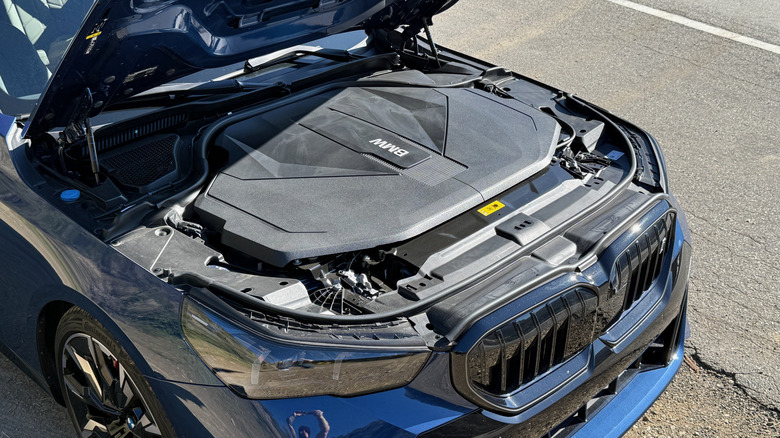
The i5's 84.3 kWh battery pack isn't as large as the batteries from rivals like the S6 e-tron Sportback I recently tested (that one is a hulking 100 kWh), so a bit of range reduction is acceptable. Even with those muted expectations, however, the BMW's range isn't great.
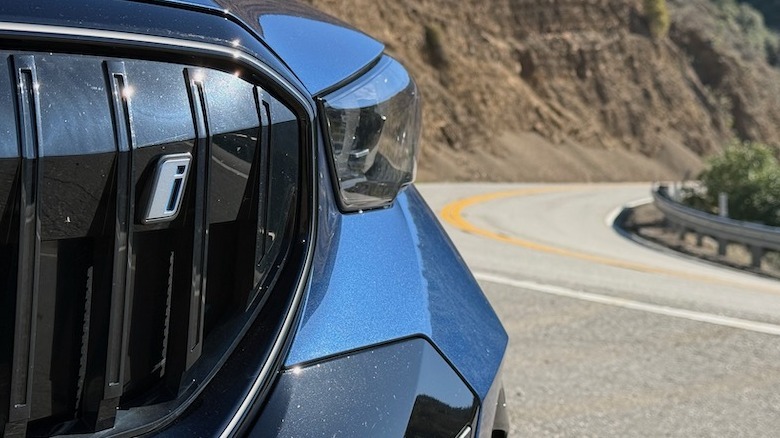
This particular trim, the i5 xDrive40 with 21-inch wheels, has an EPA estimated range of just 259 miles and an energy consumption rate of 37 kWh/100 miles (remember, with energy consumption, the higher number of kWh's an EV consumes per 100 miles driven, the less efficient it is). That range is a bit optimistic, too, especially if you spend your commuting time at freeway speeds.
 Travis Langness/SlashGear
The standard eDrive40 with 19-inch wheels does much better, with an estimated range of 310 miles and consumption of 31 kWh/100 miles, though it does take a small hit in terms of power. No matter what version of the i5 you get, it recharges at a pretty decent speed. The i5 maxes out at 205 kWh with DC charging, and BMW estimates that it will charge from 10 to 80% power in 30 minutes, an acceptable rate for the class.
A premium price but plenty of equipment
The base i5 eDrive40 starts out at $68,550 (including $1,450 destination fee), which is significantly more than a base gas-powered 530i at $61,950. Without any federal tax credits laying around anymore, it's a tough leap to make.
The 2026 i5 xDrive40, with the addition of all-wheel drive, brings the price up to $71,550 before options. This particular xDrive40 had some pretty notable options packages, but nothing too wild. A Driving Assistance package tacked on $2,500 to the price tag, and the M Sport package added on another $3,000.
 Travis Langness/SlashGear
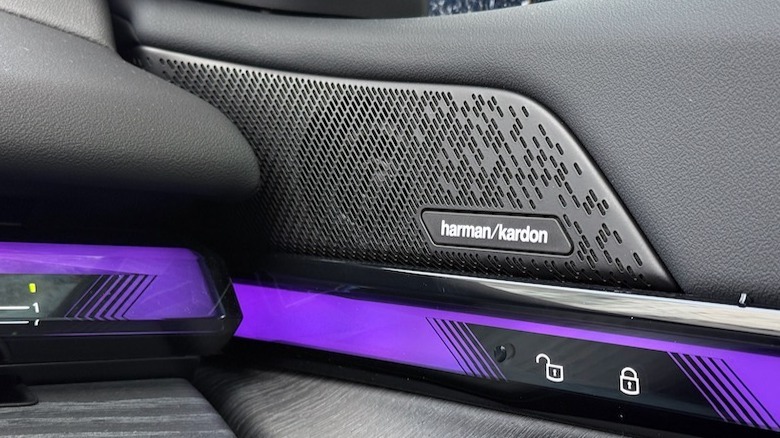
The most expensive addition was the Executive package at $3,100, which includes the panoramic glass roof, the glass interior controls, power rear sunshades, the head-up display, heated steering wheel, 3D parking camera, and a mobile parking assistant. It made the interior feel particularly upscale, and — in this price range — it's worth the upcharge. All these options add to an already plentiful list of features from the i5 like the excellent Harman Kardon stereo, wireless smartphone connectivity, and heated front seats. That put the total price for my test vehicle at $82,700, which is no small number, but it never felt underwhelming.
You get the peace and quiet you pay for, but some smudges too
There are no surprises on the inside of the i5, at least not if you're familiar with BMW's high standard for build quality. It's utterly quiet at most speeds, with virtually no wind or road noise sneaking into the cabin. The materials all look and feel excellent, and there wasn't a single stitch misplaced – at least not that I could find. The dashboard, center console, and door panels are all part of the appeal with fabrics that feel as high-quality as they look.
 Travis Langness/SlashGear
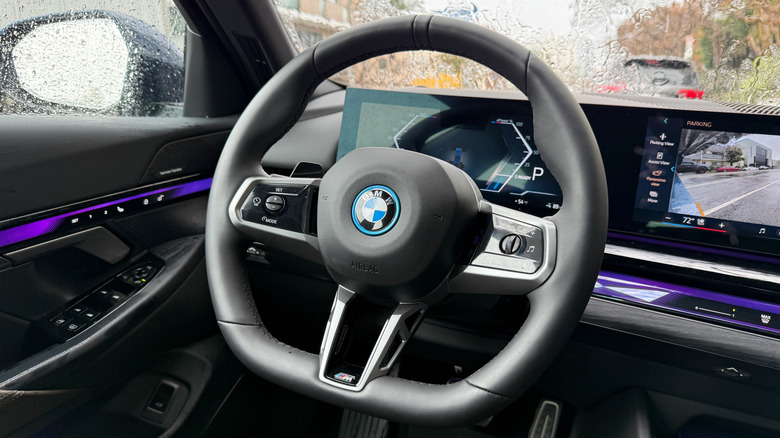
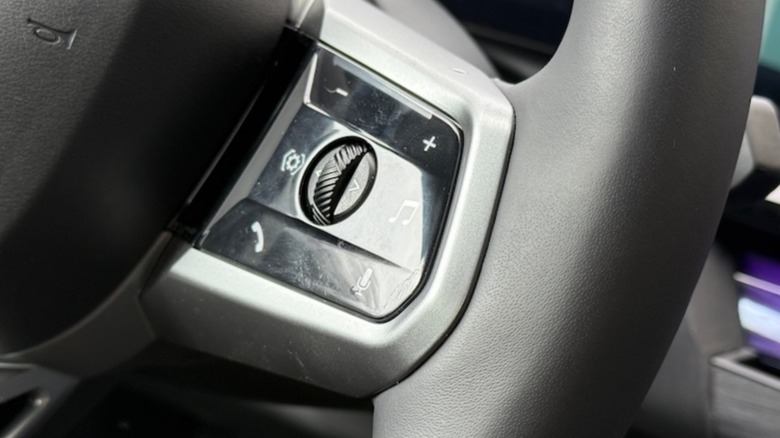
There are, however, some piano-black trim pieces that easily smudge when you use the controls they house — an especially annoying trait when it comes to the steering wheel controls. The volume and voice command buttons, for instance, are made of some shiny plastic pieces that get fingerprints on them very easily, much like the touchscreen and the stop/start button on the center console. If the i5 were mine, these smudges would probably be enough for me to keep a few microfiber towels around.
Comfortable seats, comfortable suspension, comfortable everything
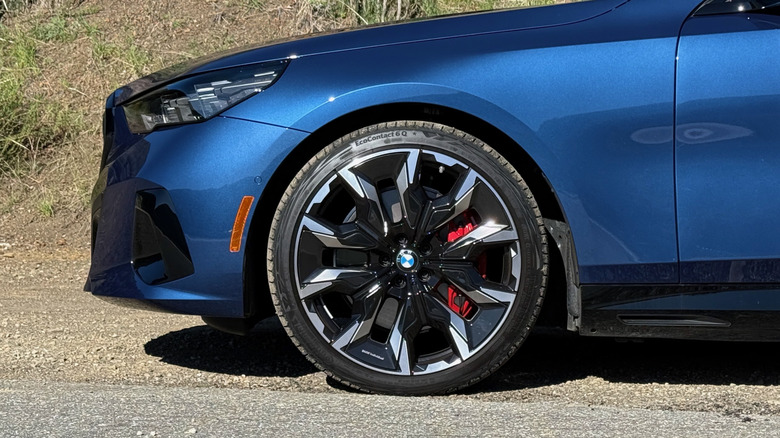
My time with the i5 included a lot of freeway driving: I took the big BMW to and from Toyota's first drive event for the rebooted C-HR and bZ Woodland, which was held a few hours north of Los Angeles. Driving that route in the i5, back and forth from Los Angeles to Ojai, there are a lot of road imperfections and inconsistent road surfaces. But, over big and small bumps alike, the i5 was unfazed. Even with the big 21-inch wheels, the cabin seldom jostled or shook when met with a big crack or speed bump.
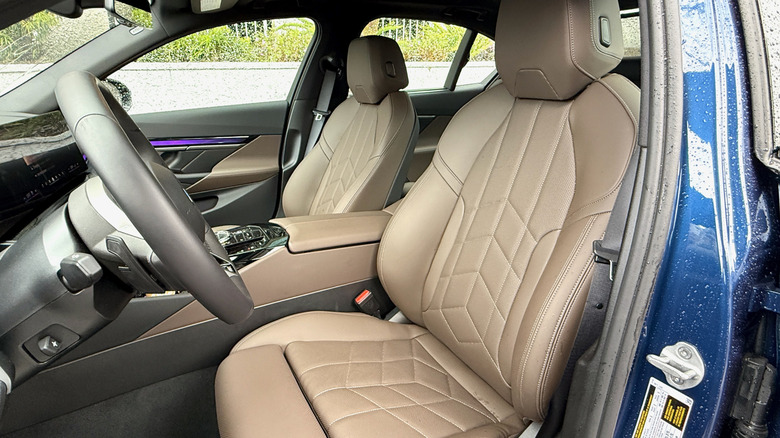
The suspension underpinning the i5 kept me comfortable on the road, and the seats were good from the moment I climbed in until I handed back the keys to the folks from BMW. The xDrive40 has heated front "sport" seats as standard, and they were excellent. The front seats in the i5 are well shaped, but not aggressive. There's plenty of bolstering, but not so much that it makes the front seats uncomfortable. In other words, they held me in place while scooting up some canyon roads, but they were also top-notch road-trip companions. Whether you're sitting up front or in the rear, there's plenty of space to stretch out, too: lots of legroom, headroom, and shoulder room for adults.
Tech that's easy to use, mostly
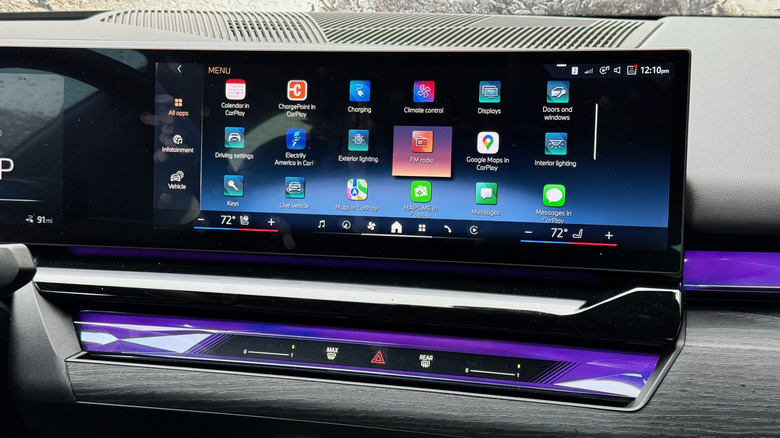
The i5's interior layout is pretty intuitive, with the various buttons and on-screen controls arranged in an easy-to-understand fashion. The one-big-screen philosophy has made it through most of BMW's lineup, and the i5 is no exception, with two separate sections of the large touchscreen typical to luxury vehicles these days: one for the driver display and the other for the center touchscreen.
Both of the screens are high contrast, with high-resolution graphics, and the touchscreen responds immediately to touch inputs. That's the good stuff.
 Travis Langness/SlashGear
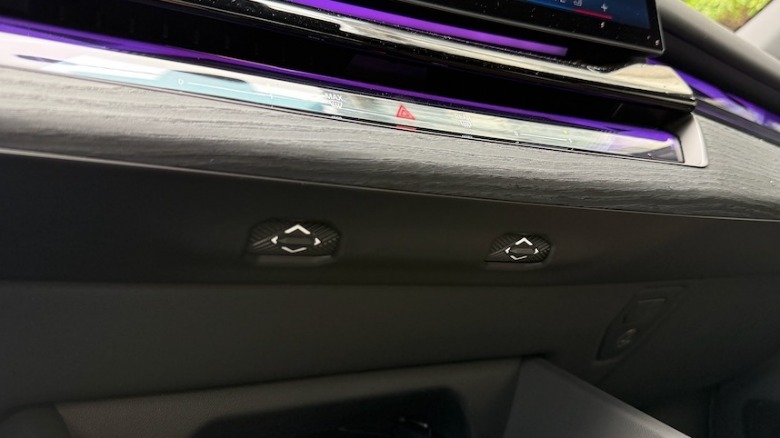
The small row of climate-control inputs along the bottom of the touchscreen are a pain point, though, because they're hard to adjust while you're driving. If you're the kind of person who sets their temperature once and never adjusts it, they should work well in practice, but not if you like to change things on the go. The tiny directional controls for the climate control vents were a bit difficult to find tucked under the dashboard, too, and they're needlessly small for my taste.
2026 BMW i5 xDrive40 verdict
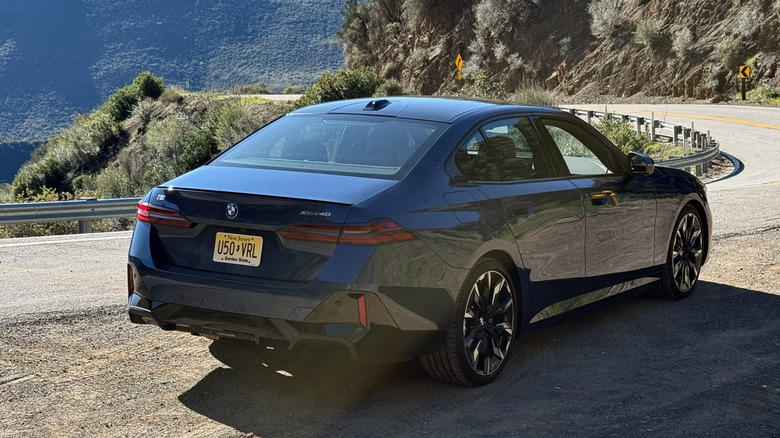
If the 2026 BMW i5 were a student in a grade school, it wouldn't receive any of those "exceeds expectations" notes on its report card, but it would pass every test and pop quiz you could cook up for it. That's not damning with faint praise either: the i5 competes against some pretty impressive rivals, so it's in a classroom with high expectations. And for the mid-level trim, that's just about where you want the i5 xDrive40 to be.
If buyers want more spice, they can always upgrade to the M60 version of the i5, with its 593-horsepower version of the same formula. Or, if you're looking for a bit more range, and basically all the same creature comforts at a lower price, there's always the slightly more humble eDrive40; that would be my choice if I landed on the BMW at the end of my search.
There are, of course, a few EV sedan rivals worth considering, too. The Audi A6 e-tron Sportback is gone for the 2026 model year, but it will be back for 2027 if you're willing to wait. Depending on your priorities (and willingness to take a chance on an unfamiliar brand), the lavish Lucid Air is also worth a closer look.