

4 Amazon Gadgets That Will Save Your Tired Eyes

We may receive a commission on purchases made from links.
By now, no one is ignorant of the fact that we spend way too much time on our screens. Some studies, like this one by Reviews.org, estimate that we invest an average of three hours a day on smartphones. That's before you factor in TVs, computers, tablets, or the many other types of screens we encounter on a daily basis. So far, the consensus seems to be that none of this is causing permanent eye damage — though let's hope the evidence doesn't soon prove otherwise — and the whole "blue light ruins your sleep" thing may be a popular myth. Nonetheless, excessive screen use can cause temporary issues like headaches and blurry vision. Aside from all the classic tips on keeping your eyes protected from frequent daily screen time, a few changes to the devices you use daily can help.
On the bright side, companies have seen the demand for devices that go easy on the eyes and have answered. Now we see eye care monitors, special phone screen protectors, and computer glasses aimed at those who are conscientious about the effects of frequent screen time. This list follows in those footsteps with a few simple recommendations for Amazon gadgets that could help alleviate tired eyes. Note: We're not looking at anything meant to treat tired eyes — like eye massagers — but rather devices that could help mitigate the migraines and watery eyes you get from a long day behind a screen.
E-ink smartphone
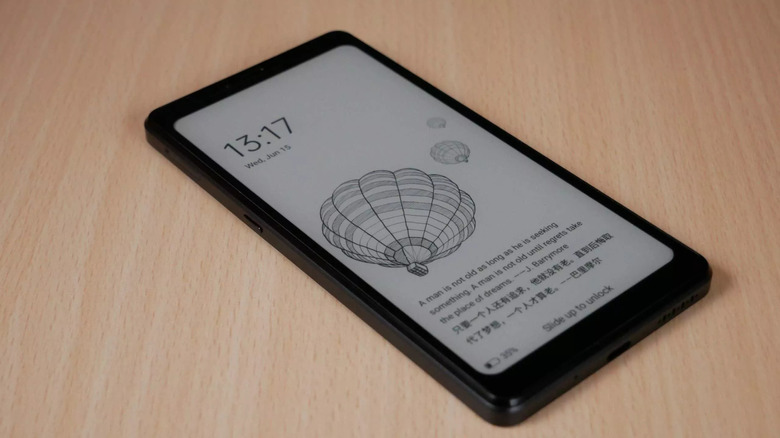
Kindle is no longer the only name you should associate with e-ink screens. Some of the best e-readers on the market aren't Kindles, and as e-ink tech has gotten better, it has spread to devices of all kinds, including the incredibly small Xteink X4. Alas, those secondary devices don't address the primary problem: that most of your screen time is coming from your smartphone. If you're really dedicated to saving your tired eyes, the solution may be to "downgrade" to an e-ink phone screen.
Although this is still a pretty niche market, you'd be surprised how many e-ink smartphones exist right now that you can buy. The Hisense A9 is one example, a $469.99 device with a 6.1-inch screen, 13 MP camera, and a Snapdragon 662 chip. This is a full-fledged smartphone, by the way, including all the bells and whistles you'd expect, like Bluetooth support, a SIM card tray, NFC, and so on. Rest assured, the black-and-white ink screen has a backlight so you can use it in the dark. Since this is an Android-based phone, you would be able to make calls, send messages, install apps, and do virtually anything an Android smartphone can. Others in this market include the BOOX Palma 2 Pro and the Mudita Kompakt.
Before you head to the checkout, though, bear in mind that this is going to be a sea change in how you use a smartphone. Something as simple as taking or watching videos will be painful, even with a "high" refresh-rate color e-ink screen. Even outside of situations where you need good viewability, these phones can make everyday activities less doable or enjoyable — you'd basically be sacrificing anything you enjoy on your current LCD/OLED smartphone screen. Maybe test one before committing.
E-ink tablets
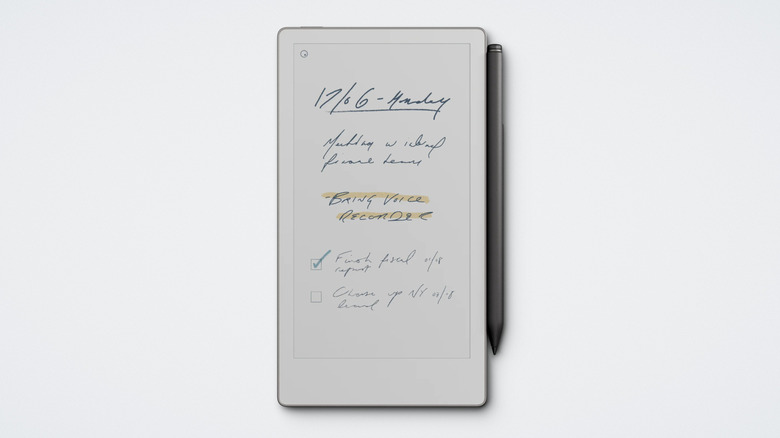
Changing your entire smartphone just to get the e-ink screen would be excessive for most, so maybe start a bit slower with a tablet instead. We've taken a look at several devices in this segment, including the reMarkable Paper Pro and the reMarkable Paper Pro Move. Both got high ratings from us, provided the high price is something you can live with. They're basically like an iPad and Apple Pencil, if that combination were dedicated exclusively to paper-like writing and minimal content viewing (i.e., news articles). E-ink screens have progressed by leaps and bounds in recent years, so this is not the slow, grainy display you're familiar with.
The market for e-ink tablets has expanded quite a bit in recent years, so you can now find many great options at a lower price or that are better suited to your workflow. We'd imagine that in another decade, e-ink will make even larger leaps toward high refresh rates and screen clarity. Perhaps in some sci-fi future, we'll have a hybrid screen that can produce rich, vivid, bright colors, then shift to an e-ink-like display whenever you want to give your eyes a break. But until then, these tablets handle everything that doesn't require a high refresh rate screen or complex visual clarity.
It's worth noting that many people use their tablets as glorified miniature televisions for watching Netflix in bed. If that describes the lion's share of what you'd do with a tablet, then this is a no-go for sure — and an expensive one at that. However, for productivity purposes like taking notes, handwriting in your journal, or drawing, they are brilliant. The minimalistic OS — such as that on reMarkable devices — lends itself to focus and productivity.
Neck-worn reading light
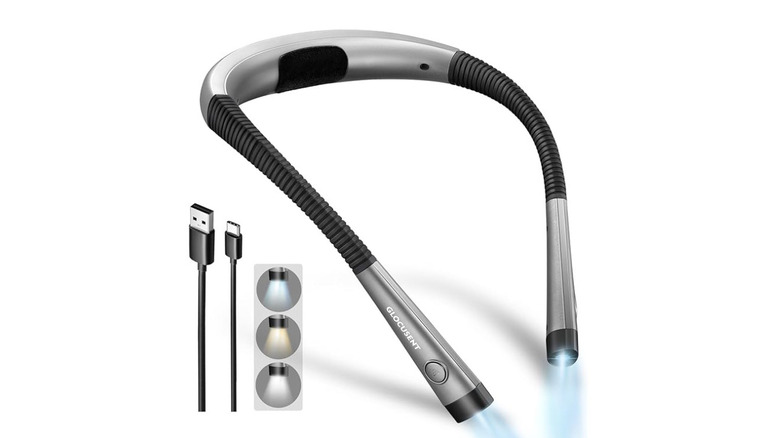
There are roughly two groups of readers out there: Those who will die before surrendering their paper books, and those who have succumbed to the sweet embrace of e-ink screens. If you're not ready to commit to the latter yet, then maybe upgrade your reading light instead. The problem with reading lights is that a lot of them involve a clip-type design that (anecdotally) can be annoying or cumbersome. Try a neck reading light instead.
Our choice is this Glocusent Book Light, but there are many others like it. This one just happens to have 154,000-plus reviews that crown it with a 4.7-star average. We'd argue this sort of reading light is superior because it's a lot more comfy to use, easy to adjust, and works for a wider range of books or old backlight-less e-readers. The fact that it sits around your neck means it can work for almost any activity, like late-night drawing, crocheting, you name it.
This particular model has multiple light and color temperature settings, and roughly 80 hours of usage; generally speaking, clip-on lamps have to be light, and so they often don't have as much battery life. In particular, the Glocusent excels at what it does because the beam is a bit more focused, so it can be used in bed without disturbing the person sleeping next to you. It could also serve in place of a headlamp in a pinch when doing something in the yard at night — or camping, or working, or whatever activities you must do in the dark.
Smart table lamp
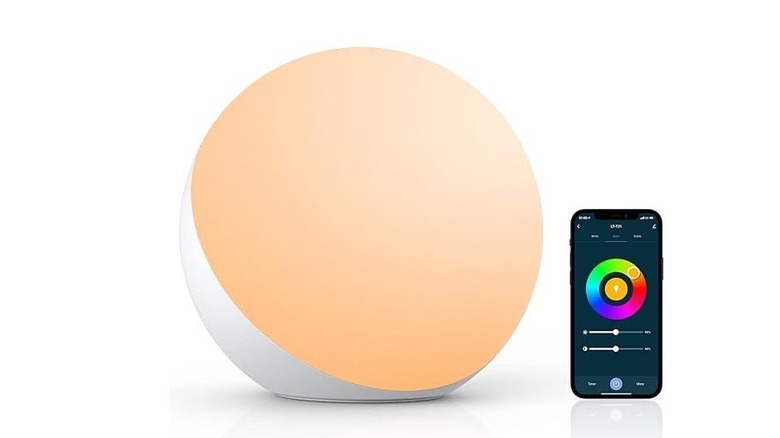
Reading lamps are reading lamps; any bulb with a shade will work. But if your lamp is smart, it makes the reading experience just a touch better. They're relatively cheap, too, like the Govee Smart Bulb at $39.99. Benefits? Being able to drop the brightness very, very low so you can read late at night without searing your eyeballs with an incandescent or LED bulb at full, unmitigated brightness. Being able to control it with your voice via a smartphone assistant is a huge plus, too.
A step above that is the Hifree Smart Table Lamp. Aside from looking stylish, the warm ambient glow can be activated with a touch (or smartphone voice control) and works both for reading and to make a living space feel a bit more comfortable. It also includes an anti-blue light LED, if that's a concern you have. A lamp like this would also probably make for a good sunrise lamp to wake you up naturally instead of a blaring alarm.
Having a table lamp that you use for reading or late-night activities is a small but meaningful change. Personally, having the lowest brightness possible before bed really aids falling asleep. It doesn't remove the usefulness of a table lamp when full brightness is needed, either — just change it back to 100% and the color to white. Plus, it's arguably much easier to tell your voice assistant what brightness you want than to have to cross the room to flip a switch.