

5 F-150 Engines You Should Steer Clear Of
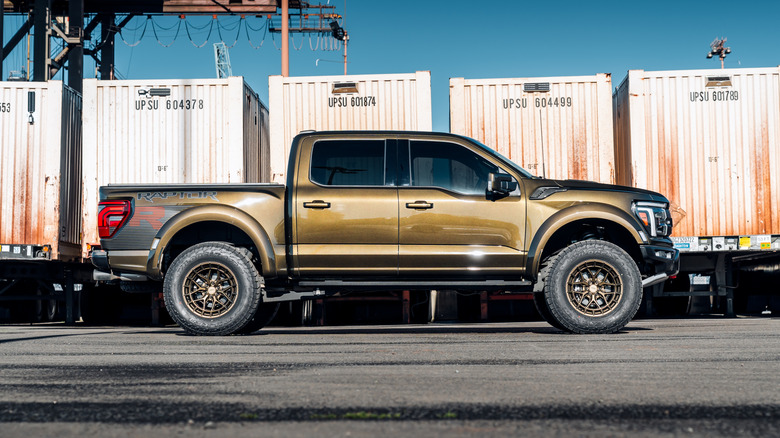
The Ford F-150 has been one of, if not the best-selling new car in the U.S. for almost five decades. According to Business Insider, more than 33 million F-Series trucks have been sold since 1977, the majority of which were F-150s. Throughout such a rich and encompassing history, there have been many great F-150 engines. Think the 300-cubic-inch Inline Six, 5.8L 351 Windsor, 3.5L EcoBoost V6, all some of the best engines ever put in a Ford truck.
Some of these have even been the backbone on which the U.S. infrastructure was built, while others brought the F-Series into the 21st century. However, not all of Ford's engines share the same sentiment as some have been less reliable or more controversial than others. Ownership experience can vary, but certain units are widely associated with recurring issues and costly repairs. Therefore, here are Ford F-150 engines you should steer clear of.
Ford 5.4L Triton V8
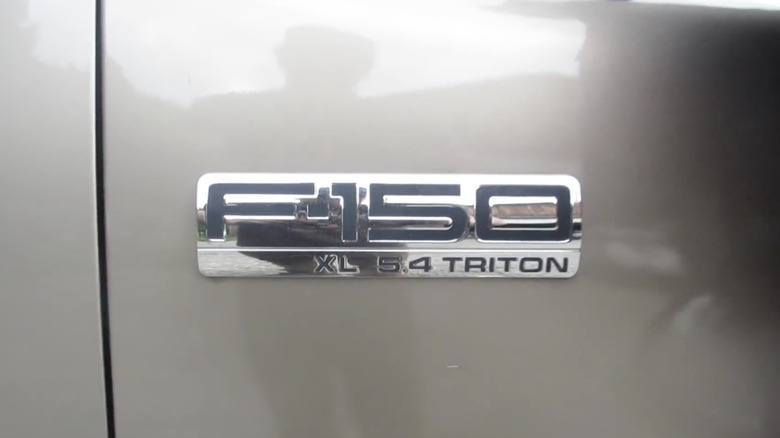
As Car Wizard put it bluntly, the engine is "my personal most hated engine on planet Earth." He went further, calling the unit "absolute trash," warning owners who defend it by saying their truck is still running to "just wait." He also claimed, "I, personally, have replaced 14 of these... and it's around six or seven grand a pop." We also tried our best to find the worst engine Ford ever put in a truck, and you guessed it, it was the 5.4L Triton.
When it comes to Triton's worst issues, spark plug-related problems of the early models are certainly up there. Besides them being incredibly difficult to remove without special tools (as acknowledged by Ford in TSB 08-7-6) the luckiest of drivers were even treated with plugs flying out the side of the cylinder heads due to bad cylinder head designs. Other common problems of the Triton include oil sludge buildup, timing system issues, fuel system module corrosion, and gasket and oil leaks.
Although Ford never recalled a vehicle due to the Triton engine, there have been numerous bulletins published. Variable valve timing problems, often described by owners and technicians as the "death rattle," have also been associated with the 5.4L Triton. These seem to be largely linked to oil pressure–dependent cam phaser operation and sludge buildup.
Ford 3.5L EcoBoost V6 (earlier generations)
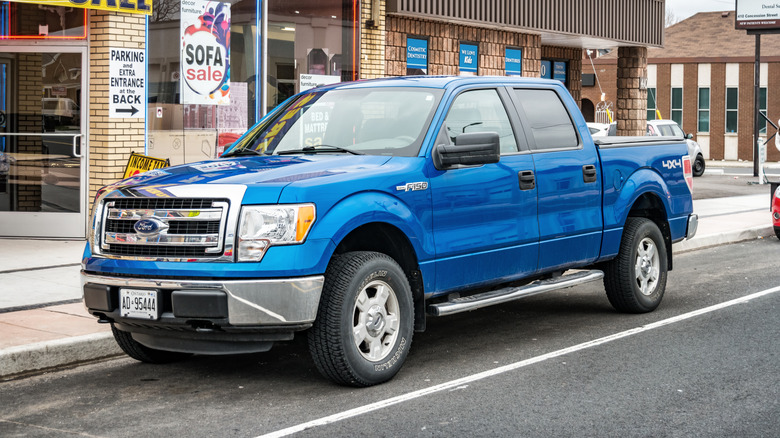
As a disclaimer, not all of Ford's 3.5-liter EcoBoost engines are deserving of being on a "worst F-150 engines" list, but an exception has to be made for some of the earlier iterations. Specifically, pre-2015 EcoBoost V6 engines are associated with expensive timing chain problems, thus making them some of the worst Ford 3.5-liter EcoBoost years you should avoid. Once again, no recalls were ever carried out, but Ford did issue TSB 18-2305, TSB 15-0131, and TSB 21-2119 programs, all of which were related to cold-start rattle, variable cam timing component wear, and timing chain or phaser-related noise conditions on early 3.5s.
Besides timing chain problems, 2017 to 2020 models were also prone to cam phaser problems. Ford did issue the Ford 21B10 Service Action, which directly addressed cam phaser noise complaints on 2017 to 2020 vehicles equipped with the Ford 3.5L EcoBoost GTDI V6. The program extended repair coverage and instructed dealers to reprogram the powertrain control module in order to mitigate + cam phaser noise. In addition, a separate Ford 21N03 Customer Satisfaction Program was issued, providing a cam phaser replacement for vehicles that continued to exhibit problems after the update.
Other problems on earlier 3.5-liter EcoBoost engines include turbo coolant fittings leaking coolant, broken exhaust manifolds, and leaking vacuum pumps. Overall, the Ford 3.5-liter is far from being the worst engine Ford ever made, but given how earlier iterations of the engine had serious issues that can cost thousands of dollars to fix, it had to be included.
Ford 4.2L Essex V6
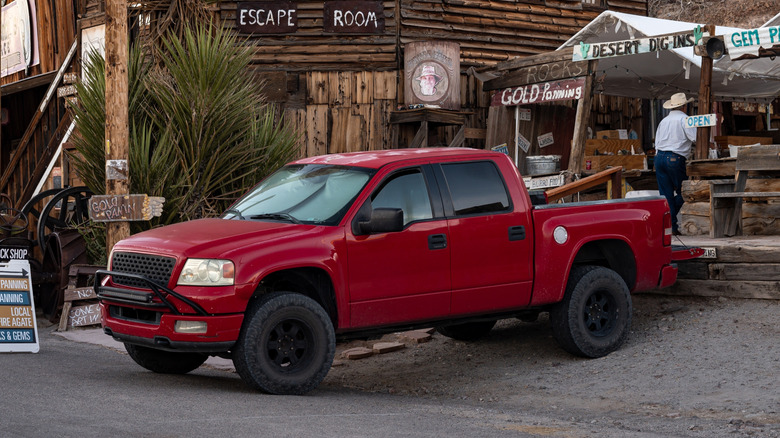
The Ford Essex V6 engine family earned its notoriety by replacing well-established V8 engines with comparably smaller yet similarly powerful V6 engines. However, when Flying Wrenches ranked Ford F-150 engines from best to worst, they placed the 1997 to 2008 Ford 4.2L Essex V6 in D (the lowest) tier, saying, "You know it's going to let you down one day." One of the main pain points of the 4.2L Essex V6 has to do with its intake manifold gasket failures.
If you are unlucky, you can experience coolant leaking into the cylinders which can hydrolock it and even bend the connecting rods. Ford did issue the TSB 99-20-7, addressing internal coolant leaks on 1995 to 1998 4.2-liter Essex engines caused by failing lower intake manifold or front cover gaskets. The bulletin outlines revised gasket designs and installation torque specifications in order to cope with the problem.
However, this did not stop the 4.2-liter V6 from suffering from similar issues found in Ford's V8s. Besides the intake gasket problem, the 4.2 experienced problems with the timing cover gasket leaking and ignition problems. Timing cover problems were recognized by Ford with the 99B29 service program which required gasket replacements to combat the issue.
Ford Powerstroke 3.0L V6
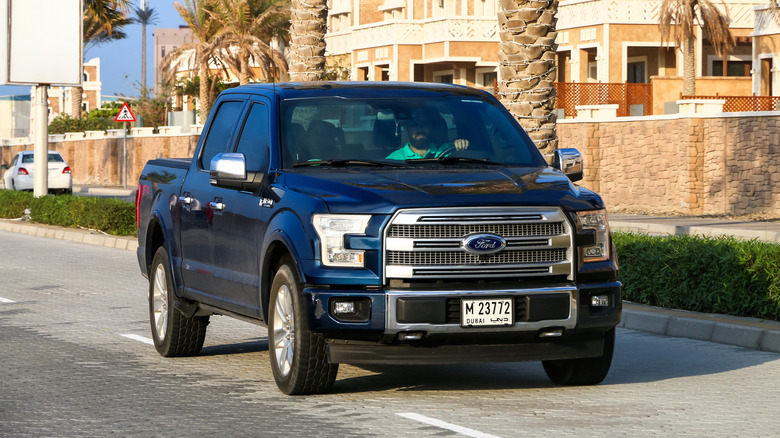
The Ford Powerstroke 3-liter V6 was offered for F-150 models from 2018 and later, but it never really caught on. This Ford diesel pickup engine was discontinued in 2021 because it was caught in the midst of a semiconductor shortage crisis, while also because it was outsold by its own gasoline counterparts. Part of the reason why people choose diesels over gasoline trucks is towing, but the 3-liter Powerstroke was not really any better in this regard compared to available gas engines.
Additionally, it was a very difficult engine to work on since it was intended for Range Rovers, not F150s. Regardless, the main problems of the 3-liter Powerstroke include crankshaft bearing failures that could lead to engine failures. The truck also experienced problems with the EGR system, which could cause subpar performance and overheating issues. Besides these, owners have also complained about DPF problems and EGT system problems.
When Getty's Garage did a deep-dive on why the 3-liter Powerstroke was discontinued, he mentioned that "It costs more to get, you know, relatively the same exact performance, so why would you get the diesel?" This was also reflected in the availability of aftermarket supports, meaning that it never truly caught on for the 3-liter. Even though this was a fairly economical engine, it was not strong enough for towing. Plus, it was not the most reliable, and it certainly wasn't the one people wanted.
Ford 6.2L Boss
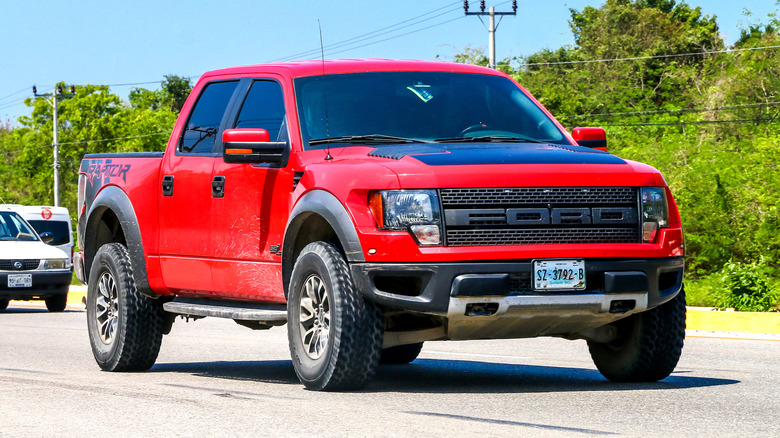
The Ford 6.2-liter Boss engine was introduced by Ford in 2010 and was reserved for the amazing V8 F150 Raptor until it was replaced by the new EcoBoost in 2019. Overall, it must be said that the 6.2 is not an engine you should steer clear of by itself since it has proven itself as a fairly durable platform. However, it is not perfect. This is especially the case when buying a used Ford F150 Raptor with the 6.2 that has not been properly taken care of. Things can turn south really quick.
The three most common problems with Ford's 6.2L Boss engine include faulty spark plugs, broken valve springs, and oil leaks. In terms of spark plugs, this engine has 16 of them. They are not easy or quick to replace. When Chris from I Do Cars did a teardown of a Ford 6.2L Boss V8, he mentioned that "some of the early 62s have been notoriously bad for broken valve springs," He later confirmed it by saying he tore one down and found "a mess inside."
Oil leaks have typically been associated with internally leaking valve cover baffles on the right side of the valve cover. Ford issued the TSB 15-0161 which instructed dealers to replace affected cover assemblies to solve it. Overall, when maintained properly, the 6.2 is not likely to be one of the F150 engines to avoid, but given the problems some examples experienced and how much it costs to fix them, we decided to include it.
How we made our list
The Ford F-150 is a staple of American car culture. It is a truck that supports much of American daily life. It has been one of the best-selling vehicles for decades for good reason. It offers a strong balance of capability, practicality, and driving comfort, appealing both to people who need a work truck and those who simply want a reliable daily vehicle.
However, given the size of the F-150 community, a wide range of issues has also been documented, and some engines have developed stronger reputations for problems. It is important to emphasize that all engines discussed here can still be reliable. We are not claiming that every 5.4-liter Triton engine will fail. Rather, according to tons of online data, these are engines that appear more likely to experience problems.
We reviewed numerous F-150 forum posts, mechanic expert reviews, teardowns, technical deep-dive videos, information from NHTSA databases, Ford service bulletins, service programs, and warranty extension notices. We also built upon the previous research conducted by our team on similar topics to make sure our list is credible and can easily be verified.