

After 1,200 Miles In The Lexus GX, These 3 Things Would Make Me Think Twice About It
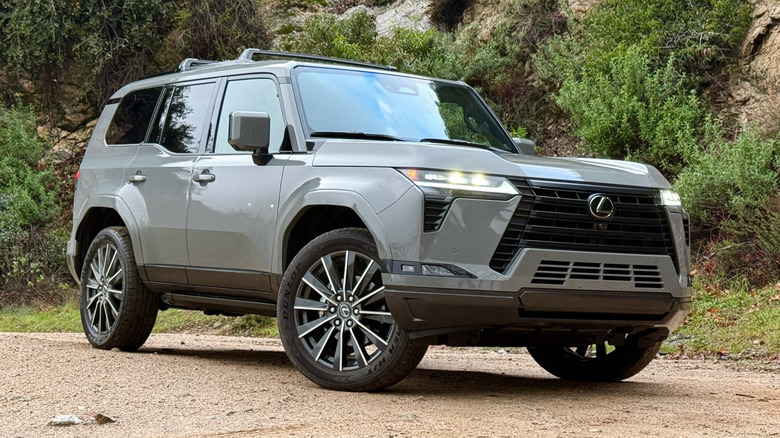
Driving long distances has never been an issue for me. I enjoy spending time on the road, especially if I can cue up some good music, set the cruise control, and watch the horizon come at me while in good weather. I spent a lot of time in the back rows of Suburbans, station wagons, and Astro Vans as a child, so enjoying a good road trip is baked into my personality as an adult. This is just part of the reason I typically drive to visit family over 500 miles away, when most other travellers would likely fly — and that's where the Lexus GX comes into play.
 Travis Langness/SlashGear
The last time I took this kind of trip, I used the big three-row Chevy Suburban as my vehicle of choice. This most recent version of the see-my-family trip was done from behind the wheel of a Lexus GX — another big, three-row SUV, and one with a different set of skills. I've had limited experience with the GX in the past, so I was excited to get behind the wheel for such an extended period.
Normally, when evaluating vehicles, I take them around Los Angeles, run errands, and visit the local canyon roads. This was going to be a much more extensive test with passengers, several tanks of fuel to go through, and some inclement weather. The GX, with its combination of a rough-and-tumble attitude and upscale luxury interior, was bound to be interesting.
The good stuff
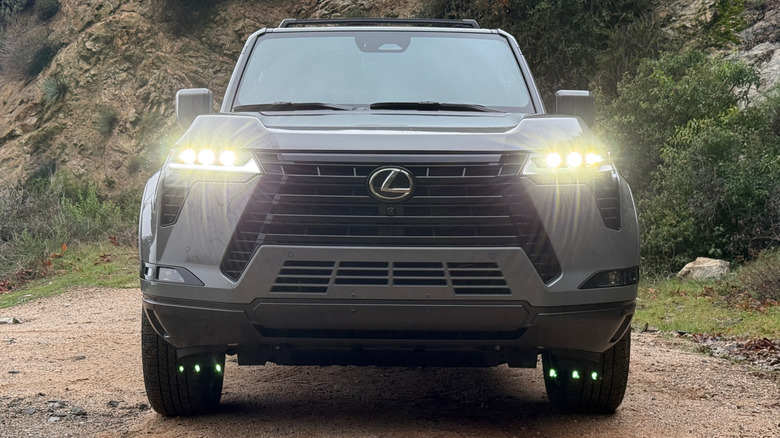
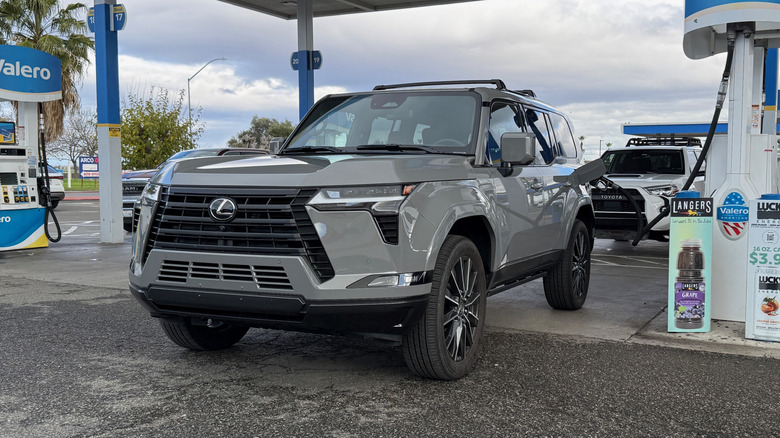
The GX's style is undeniable. It has a presence on the open road, and it even got compliments from other motorists. When I'm testing new cars, I often get questions about the fast and sporty ones, like the LC 500 I recently tested, but this big Lexus had total strangers asking me about it at gas stations and in parking lots.
 Travis Langness/SlashGear
Few luxury SUVs offer the sort of off-road capability that the GX does, and even fewer pair that capability with such a robust towing capacity. My trip didn't include any off-roading or towing, but the specs speak for themselves. Every GX has an approach angle of 26 degrees, with departure angles between 21 and 23 degrees. Those aren't quite as off-road friendly as the Toyota Land Cruiser or the 4Runner, but they're pretty close, and you're unlikely to get the GX's bumper hung up on small obstacles (especially with the off-road-ready Overland model). This particular trim, the Luxury+ with its 22-inch wheels, isn't one I'd take off-roading, though — that's for the Overland.
 Travis Langness/SlashGear
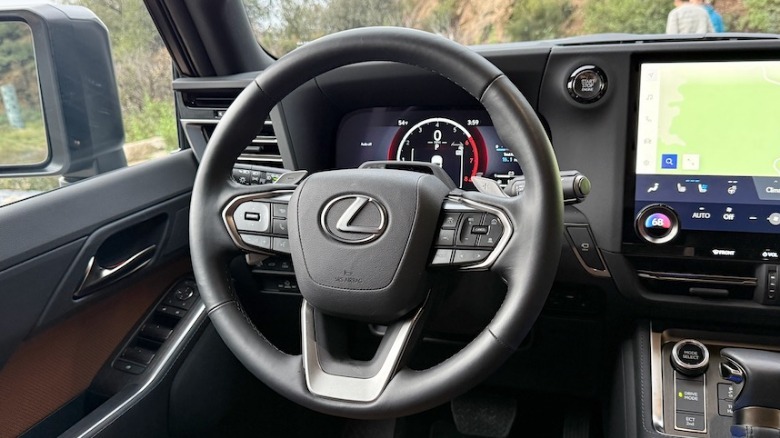
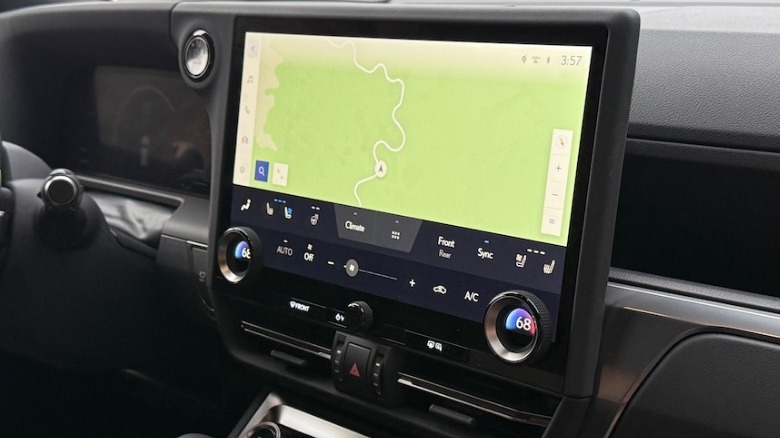
The 14-inch center touchscreen is a high point, too. It's essentially the same screen that you get in the new crop of Toyota EVs (the C-HR and bZ Woodland, for instance), and it's an intuitive setup. The controls are easy to see, buttons respond quickly to inputs, and it's simple enough that I learned where all the important commands were in just a few minutes.
Fuel economy was pretty rough
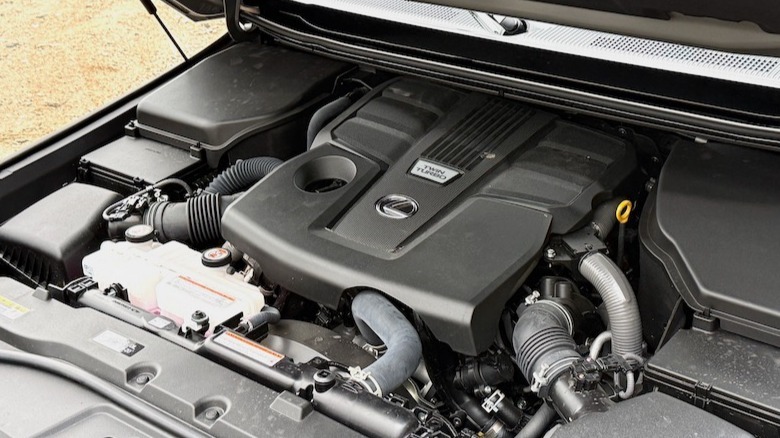
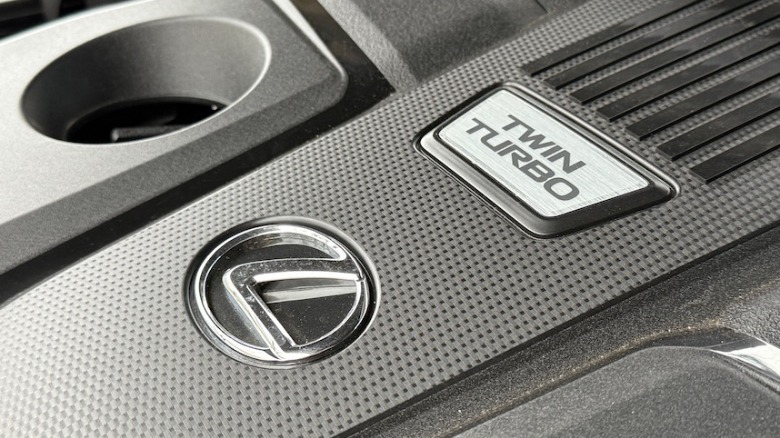
Powering the GX is a twin-turbocharged 3.4-liter V6 that makes 349 hp and a massive 479 lb-ft of torque. The V6 is paired with a 10-speed automatic transmission that shifts quickly and doesn't wander around much trying to find a gear on long uphill stretches. According to Lexus, that combo can take the big 5,500-pound-plus SUV from zero to 60 mph in just 6.5 seconds.
It's also enough power for the GX to tow over 9,000 pounds in its Premium and Overtrail trims, or between 7,600 and 8,000 pounds in the Luxury trim. That's nearly the same as some full-size trucks. But when you combine a big, powerful engine, impressive towing capability, and a boxy exterior, you often get pretty poor fuel economy.
 Travis Langness/SlashGear
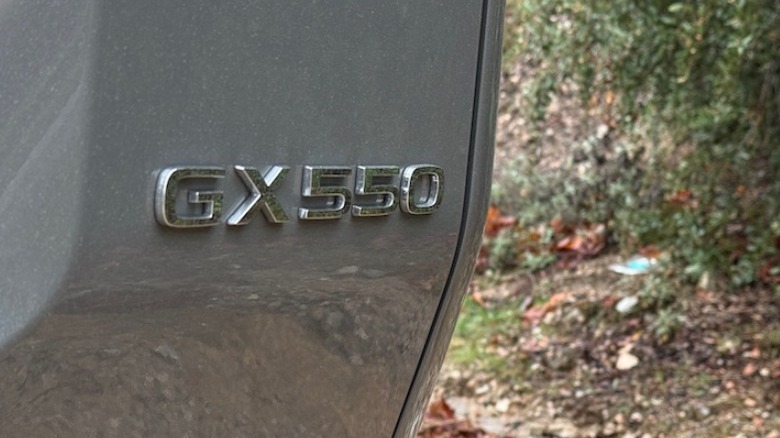
The GX550 has an EPA-estimated fuel economy rating of 17 mpg combined (15 city/21 highway), and, with the kind of driving I was doing, I was lucky to get near that number. There were lots of fuel stops along my journey, and filling up the big 21.14-gallon tank never felt cheap. What's more, Lexus recommends premium fuel for the turbocharged V6, so you can't save money by filling up with 87-octane fuel instead.
Pricing and wheels would make me pick a different trim
The GX is available in six trim levels, so there's a pretty wide spread of pricing. The base Premium trim starts at $66,935 (including $1,450 destination fee), and to me, that's the GX's sweet spot. There's no standard-versus-optional engine choice, so even the base model gets the impressive towing capability and swift acceleration of the twin-turbo V6. There's plenty of standard equipment to be had, too, like heated and ventilated front seats, a 12.3-inch driver display, six USB-C ports for charging devices, a 10-speaker stereo, and all of the driver aids that come standard as a part of Lexus' Safety System+ 3.0.
 Travis Langness/SlashGear
The Luxury trim adds quite a few creature comforts, but it comes at a cost, with an MSRP of $79,400. The Luxury+ trim I tested costs even more: With a starting price of $83,400, it's nearly $20,000 more than the base Premium trim.
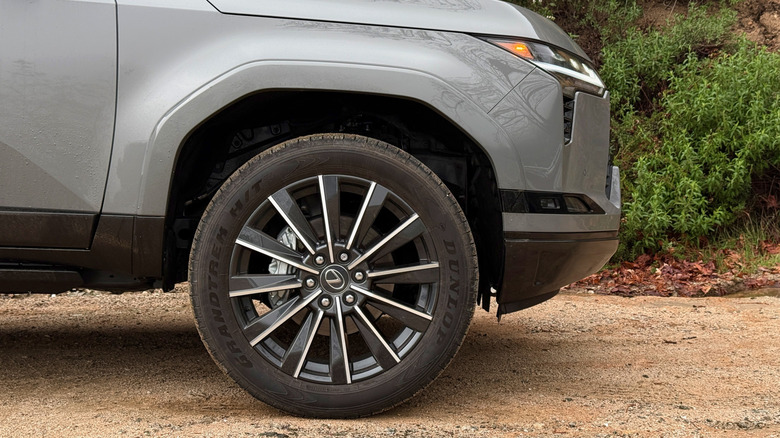
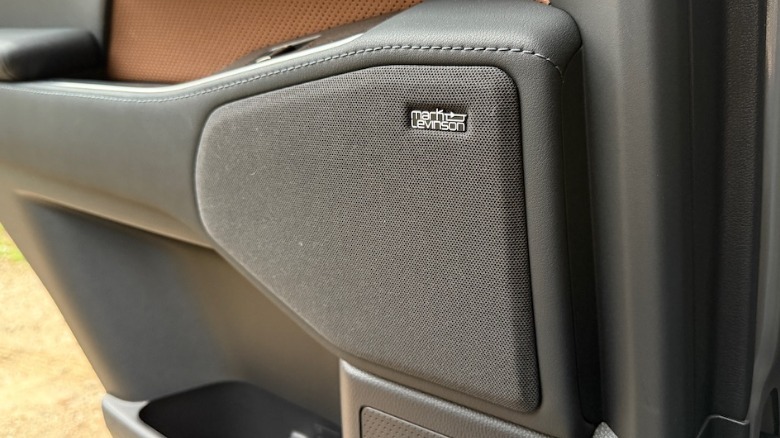
It comes with 22-inch wheels instead of 20-inch wheels, which makes the ride a bit worse — a strong reason not to go for the Luxury+. Features like massaging front seats, a center-console cool box for chilling your drinks, and an excellent 21-speaker Mark Levinson stereo are attractive incentives, but it's still a hard sell overall. On top of that, Lexus still charges for optional extras like second-row heated captain's chairs (an extra $440) and a head-up display ($900), even with the Luxury+'s steep starting price. Thus, the GX I'd go with is the least-expensive Premium trim. The middle option, the Overtrail, could also save shoppers a bit of cash.
It rides like an off-roader
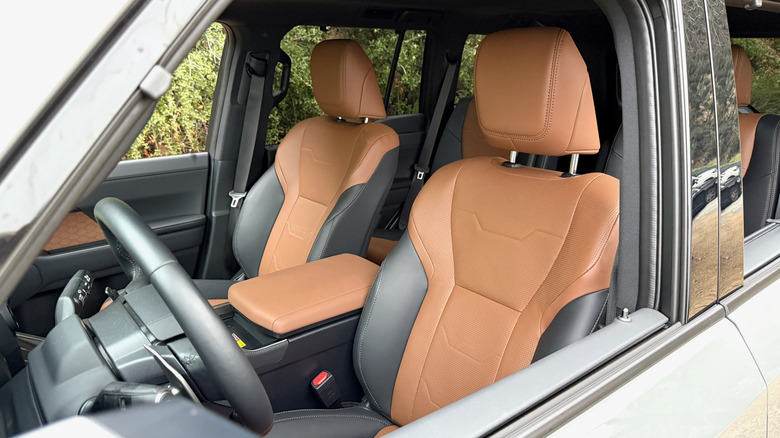
At a standstill, the GX's front row is a very comfortable place. The seats fit my frame extremely well, and I could spend hours behind the wheel if I were driving on a smooth road. There are a lot of rough highways in California, though, and the sort of roads I drove the GX on were particularly tough on ride quality.
Lots of little impacts made their way into the cabin, which I imagine is a result of the too-large 22-inch wheels. The GX Luxury+ has multiple suspension settings thanks to the optional Adaptive Variable Suspension, but no matter the road, I left the GX in its softest mode: Comfort.
 Travis Langness/SlashGear
Another less-than-ideal bit of vibration I noticed during my extended test of the GX came from under the hood. At idle, the big twin-turbo powerplant rumbled a bit. It felt raw and truckish, which is good for a brutish SUV, but less impressive for an expensive luxury product, regardless of the shape or size. I'm not sure whether softer motor mounts would smooth things out, but Lexus should think of a way to address the engine vibration issue.
I'd think twice, but I'd probably still recommend the GX
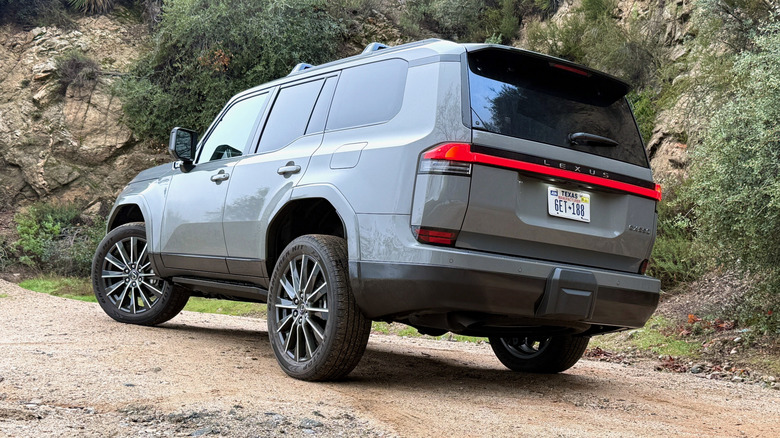
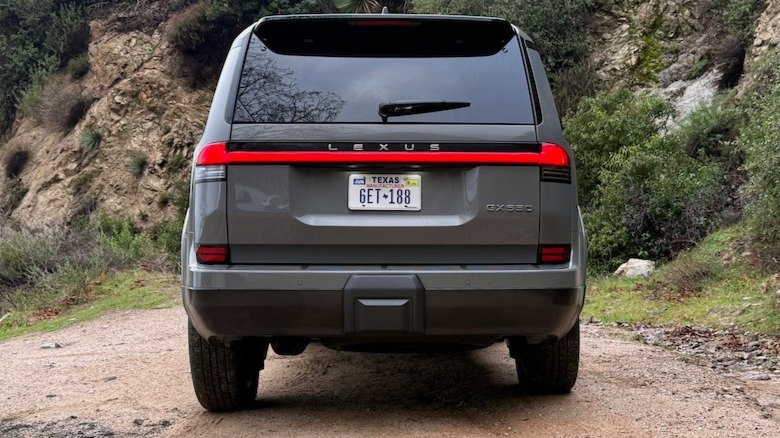
The GX is a rare vehicle. It's extremely well-equipped and full of luxury trimmings, but also built to conquer the toughest of trails. The best off-road trim is obviously the Overland model, with its 33-inch all-terrain tires and lifted ride height, but even a tough fire road would be an easy task for the other trims. The twin-turbo V6 is strong, with excellent towing, and the SUV has plenty of modern tech. It does have its foibles, though.
 Travis Langness/SlashGear
Poor fuel economy, a rough ride, and eye-watering top-tier pricing are the hardest pills to swallow. The third row has limited space, which means rivals like the Escalade and Navigator will probably be better for big families, but the GX is hard to beat for premium off-road motoring. That said, you might also want to consider the 2025 Land Rover Defender 110, which is priced and equipped similarly to the GX. Overall, though, the Lexus GX is an SUV that's hard to ignore, even with the drawbacks that would make me think twice about buying it.