

Makita Vs. Milwaukee Vs. DeWalt: Which Power Tool Brand Is Best?
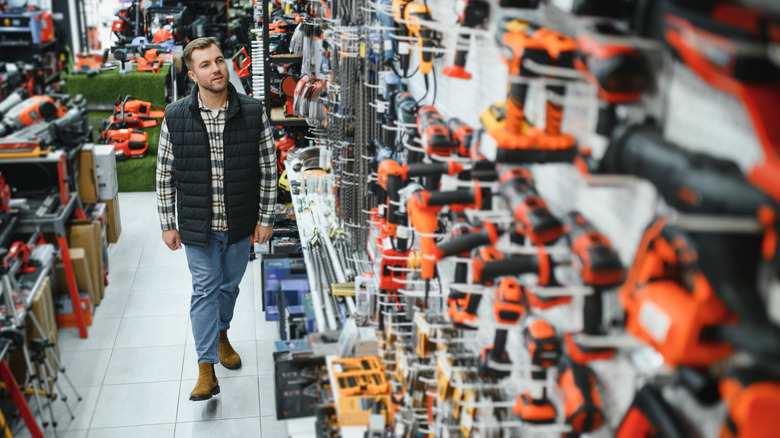
The age old question of which tool to buy still keeps home improvers and professionals up at night. Every brand delivers its own strengths, and no two tools will provide exactly the same performance or experience. This makes crowning a definitive champion among the field of excellent options challenging, if not outright impossible. The market is constantly shifting, and today's top dog may be relegated to a lesser status tomorrow thanks to a new release or even a recall notice on a tool. In 2026, Pro Tool Reviews named Milwaukee the best cordless power toolmaker, but the year prior OnlineTradesman gave the honor of "Best-in-Trade Winner" to DeWalt, with Makita earning the runner up spot. Countless outlets focusing on the tool marketplace have developed numerous rankings systems and come to varying conclusions on the value and positioning of these massively popular brands.
One thing is certain, however: These three toolmakers are virtually unchallenged at the podium when considering the power tool ecosystem. While they may trade places frequently, other competitors rarely knock the trio from this perch. In our own testing and research, Milwaukee claimed the top spot, followed by DeWalt and then Makita. It's important, however, to note that the differences between the toolmakers is razor thin, and all three will serve users exceedingly well. I've had the opportunity to use numerous power tools from all three brands, and own cordless tools from two (and corded implements from the third). My experience helped ground the research, but pricing, power, user reviews, and other data points played a primary role in drawing these conclusions.
Catalog range: Makita's coverage takes the cake
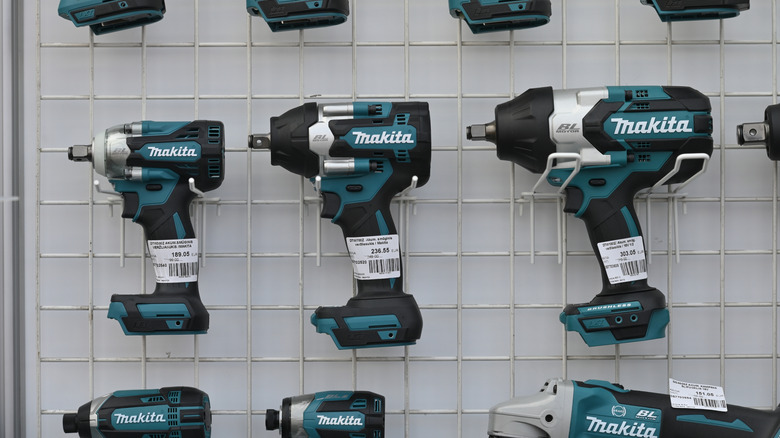
Each of the three tool brands offer something unique to buyers seeking niche equipment. That much is undeniably true, and so it can be difficult to pin down a general scope that hits the mark for every buyer. Milwaukee makes some specialized tools like a power trowel and a drain cleaning air gun. Makita offers gems like an LXT cooler/warmer and coffee machine. DeWalt's unique options include things like floor sanders and a wide range of pneumatic tools. There's also the ecosystem hump to get over. For tool owners already invested in one of these brands' cordless offerings, buying something new comes with the requirement to also tack on batteries and charging equipment. This can dissuade someone from branching out, even if their brand of choice doesn't make a specific tool required to handle a job on their to-do list.
One approach that can be illustrative of a brand's value to the generalist is the size of its mainline catalog. All three manufacturers offer numerous product lineups, but each delivers a primary range to the market featuring the bulk of their cordless power tools. Makita's coverage is the most expansive in this regard, with over 350 LXT tools in its 18V/36V lineup. Milwaukee's M18 cordless system ranks second here, with over 325 tools, including both its standard and Fuel badged options, and DeWalt brings up the rear with over 250 20V Max XR tools. It's worth noting, however, that Milwaukee has consistently been an innovator at the cutting edge of needs experienced by pro users, so there's a bit of bonus heft to the red and black power tool option.
Power output: Milwaukee reigns supreme
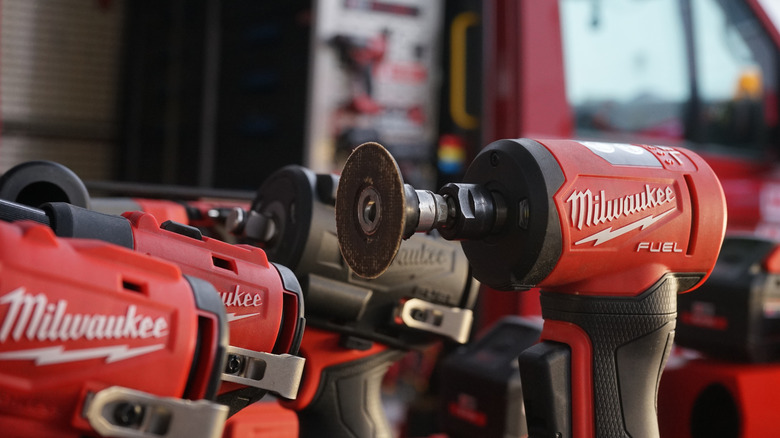
Output capability is a constant concern for anyone reaching for power tools. These implements are only as good as the force they can apply to a fastener, board, or other workpiece element, after all; a tool that doesn't radically improve upon the force you can generate by hand is one that's frankly worthless. Fortunately, none of these three primary competitors can realistically be accused of lacking the power necessary to accomplish tasks. All three make heavy duty tools as well as delicate force producers for use in nuanced application or removal tasks.
If it's power you're after, though, Milwaukee is the undisputed leader of the pack. Milwaukee tools, on the whole, deliver the best in power output across the trio, but this sometimes comes at the detriment of control or rotational speed. Sheer muscle is found most easily here, but that's not always the goal; buyers will want to think about the actual demands of their typical job parameters before simply investing in the tool with the highest torque output or deepest cut capacity while resisting bind ups. With that being said, if you're fastening substantial timbers for emergency preparations or building a large structure, Milwaukee's added power output may be a welcome addition. DeWalt offers a strong showing, too, but lags behind Milwaukee with added emphasis on battery capabilities, tool integrations, and ergonomics. Makita brings up the rear while leaning even more significantly into functional enhancements beyond sheer force production.
Integrated technologies: Makita's high-tech chops shine
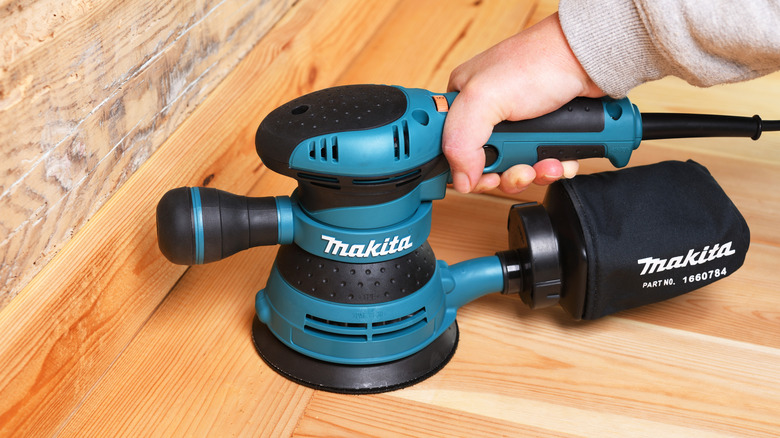
Makita's ergonomic designs are far and away the best of the bunch. Similar attention is paid to elements like its STAR Protection Computer Controls and anti-vibration technologies. Makita tools feature numerous exclusive technological upgrades that don't exist in other product catalogs. This sets the Makita tool ecosystem apart from its competitors as an innovative brand with lots of quality of life enhancements to offer its users. Coupled with the large catalog, Makita makes a strong case for itself as a flagship option that any kind of tool user might happily settle upon when shopping for near gear.
DeWalt is also a force to be reckoned with in the premium functionality department. The brushless motors the company uses in its power tools are a highlight of the brand's technological prowess, even as brushless power production is featured across all three brands. DeWalt's batteries are also more durable than Milwaukee's offerings, and feature FlexVolt capability as well as a higher top end with a 15Ah option. Milwaukee sits comfortable at the bottom of the pack here.
Pricing: Milwaukee (and sometimes DeWalt) offer the best cost efficiency
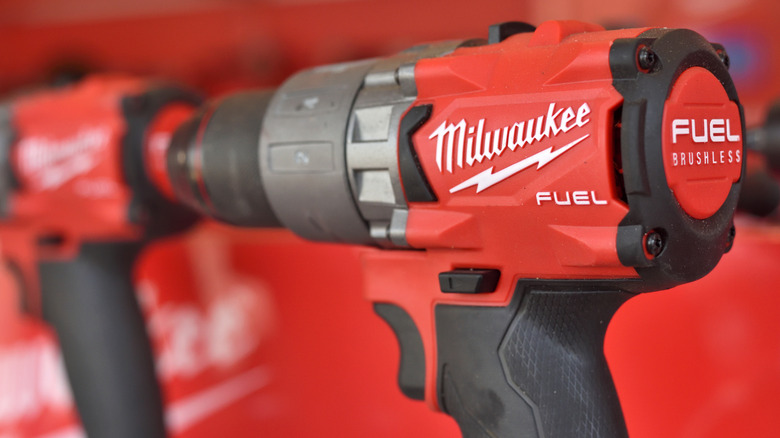
In many comparisons across these three tool brands, pricing is largely similar. There's not a huge divergence across the board, but some trends do start to emerge as more tools are stacked up against one another. While each brand will undoubtedly offer the cheapest tool of the three in some categories and at certain times (with sale pricing and phase outs muddying the waters even further), on average, Makita is the most expensive of the three. Where Milwaukee and DeWalt land in relation to one another is, surprisingly, a matter of perspective.
Because Milwaukee's M18 range features both a standard lineup and its enhanced Fuel tool system, making direct comparisons can be a little difficult. Among its flagship M18 tools, Milwaukee comes in as the cheapest overall manufacturer in this comparison, with DeWalt notably more expensive. We performed a roundup of five common home improvement and jobsite tools (drills, jigsaws, miter saws, angle grinders, and multitools) to get a direct sense of the typical pricing buyers can expect. Makita's average LXT tool price was $311.60, while DeWalt averaged $246.20 across its 20V Max XR range. Milwaukee averaged $271.80 when considering Fuel tools exclusively and $231.80 with three standard M18 models subbed in where applicable. Because the difference is marginal when evaluating the premium solutions in Milwaukee's stable, and across the breadth of the Milwaukee catalog it tends to come out as the more cost-effective option, DeWalt necessarily sinks into the second position in terms of overall pricing.
User reviews: DeWalt digs out the best overall user rating by a hair
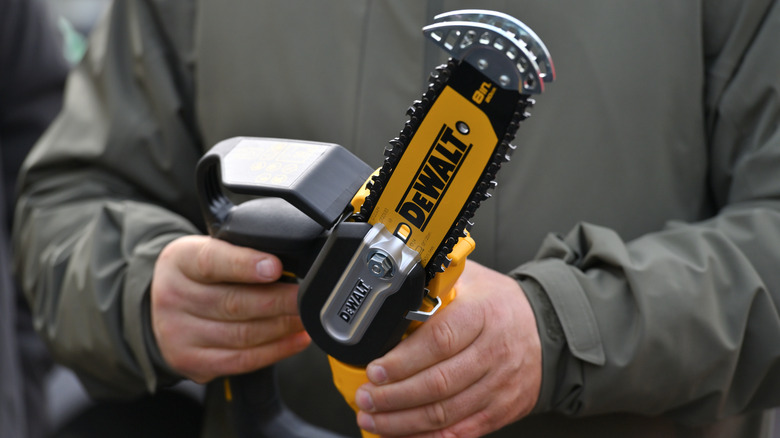
User feedback is perhaps even more important than any singular datapoint when comparing the tools that brands offer to the market. In many instances, the differences between tools are slight, and can come down entirely to personal preference over any distinguishable advantage that an individual unit holds over its competition. Naturally a smaller drill that doesn't sacrifice power offers better access in tight spaces, and a circular saw with a deeper cut depth can handle increased demands. But none of these brands provides every tool in their arsenal with a functional range that exceeds the alternatives. However, user experiences across the board can be instructive when trying to understand how well each brand hits the mark it's looking to set with its equipment.
Across a selection of the five standard home improvement and jobsite tools we looked at earlier, DeWalt earned the highest overall rating with a 4.778 average score (out of 5). The brand's tools collected a total of 32,781 reviews. Second place went to Milwaukee, with 8,406 reviewers giving it a slightly lower 4.761 average across both its Fuel products and standard M18 models. Makita brought up the rear with a 4.717 average across 4,640 reviews. It's worth noting that Milwaukee's score is heavily dependent on the treatment of its Fuel and standard model ranges. Focusing on Fuel-badged tools alone boosts its score to 4.794 over 6,180 reviews, bumping it into first position. Substituting standard models where applicable, the score sinks down to 4.646 with 7,008 total reviews, and dropping firmly into last place among the three brands. With this in mind, a combined score feels to be the most just approach to evaluating its offerings.
Methodology
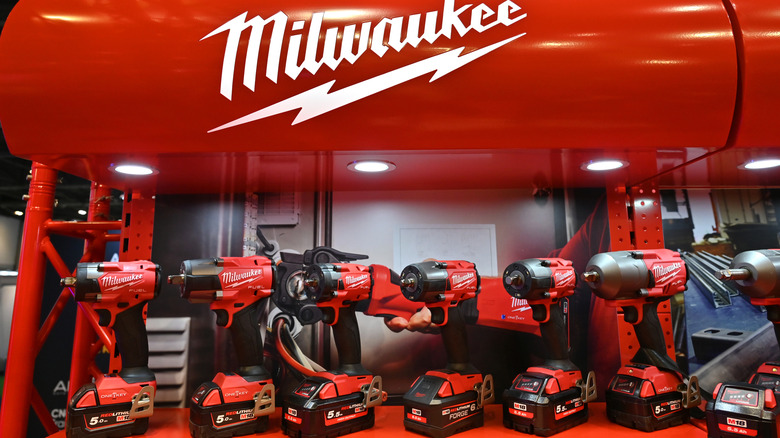
We ranked the three brands based on points accrued for each category, with first being worth 3 points, second yielding 2 points, and third adding 1 point to the tally. For the final two categories, we evaluated pricing and user feedback on five mainline tools that many buyers will either have already or prioritize for typical, future projects. They were the brand's full-sized offerings of drill/driver, miter saw, jigsaw, oscillating multitool, and angle grinder. After finalizing the scores, Milwaukee came out with 11 points, DeWalt with 10, and Makita had earned 9. It's worth noting that Milwaukee earned top marks in price based on overall costs across the flagship M18 range, but when evaluating only Fuel-badged tools the margin between the brands was so thin that the increase in price actually swaps their overall point totals and therefore their positions.
However, it seems appropriate to score Milwaukee on the breadth of its M18 range and not just the most expensive end of the products within that segment of the catalog. This choice does serve to highlight the value that each brand brings to the table, with all three offering excellent tools that users can gain a lot of value from, regardless of their personal preference.