

10 Of The Largest Naval Bases In The US, Ranked By Size
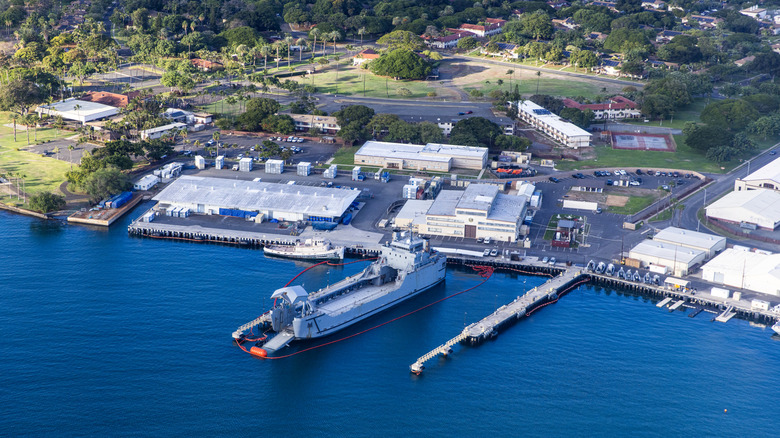
The U.S. owns one of the largest navies in the world; as a result, it is home to a large number of naval bases that support its fleet of warships, aircraft (yes, the U.S. Navy has planes, too), and other sea-related warfare. These bases undertake various responsibilities, including repair, maintenance, logistics, and training. Each base varies in the acres of land it covers, the fleets it serves, and the number of fleets each facility can handle.
Naval possessions are docked at these bases during times of peace and idleness. During times of crisis, all military ships come to these stations for refueling, repairs, and restocking weapons.
And the interesting part is that these navy bases not only manage the operations of the military warships and aircraft but also provide housing and recreational activities for the families of the active duty personnel and other staff on land. Several ships sank during World War II, but those who survived came to some of these docks for their repair.
Here is a list of the largest Navy bases in the U.S., from smallest to largest, that support different types of missions for the Navy.
Naval Base San Diego (1,600 acres)
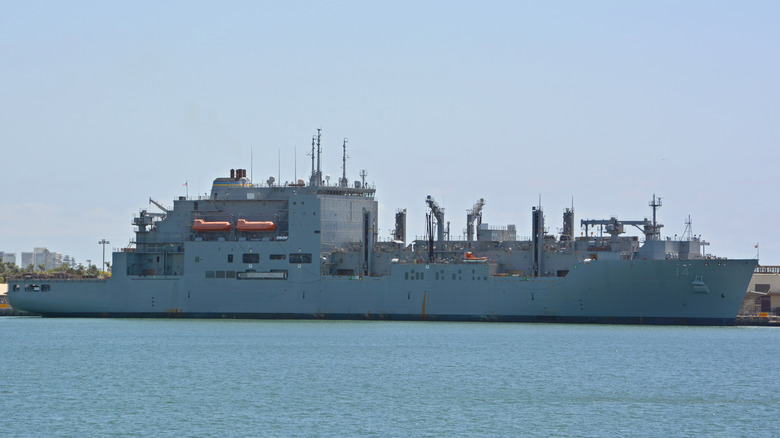
Established in 1992, the Naval Base San Diego is based on an area of 1,600 acres. The primary mission of this base is to support the Pacific fleet of the U.S. Navy, its fighters, and their families, and to enhance their operational readiness to counter threats at all times.
Located along San Diego Bay, this naval base hosts 60 U.S. Navy ships and two auxiliary vessels and serves as a quick pit stop for surface ships from international navies. Although you cannot visit the naval base as a casual tourist, there are other ways to get a glimpse of the base.
The USS Midway Museum, located close to the base, gives you a full view of one of the longest-serving aircraft carriers in U.S. naval history that gave an impressive performance during Word War II, all the way until 1991. Taking harbor cruises into the waters is another way to observe the naval ships from up close. Other than these, the Fleet Week San Diego also allows you to take ship tours at the 32nd Street Naval Station, along with other military-related activities.
Naval Air Station Joint Reserve Base (NASJRB) Fort Worth (2,300 acres)
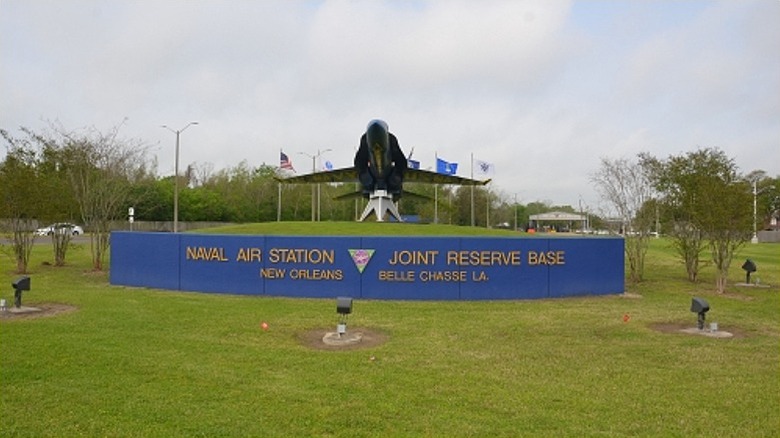
Covering an area of 2,300 acres, the Naval Air Station Joint Reserve Base (NASJRB) is situated in Fort Worth and enjoys the position of being the first Joint Reserve Base in the U.S. Moreover, it not only hosts the navy, but also various units of the Marine Corps, Air Force, Army, and Texas Air National Guard.
There are 40 different commands and 10,000 active-duty military, reservists, guardsmen, and more that come together to offer support to the national defense system. The base holds great influence in Texas, such that the population associated with the NASJRB contributed over $4.8 billion to the Texas economy in 2023.
It is a multifaceted reserve base holding the ability to cater to large aircraft, like the F/A-18, C-130, and the mighty F-16. Interestingly, the base is also marked as a hurricane evacuation site for the country's aircraft and the families of military personnel across the U.S.
Naval Air Station (NAS) Corpus Christi (2,844 acres)
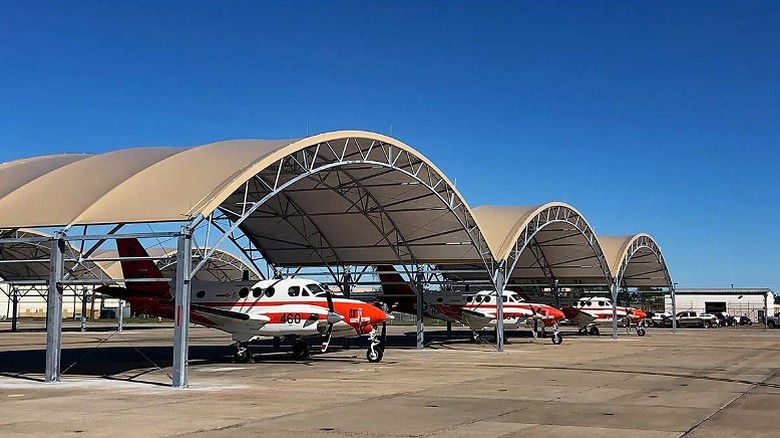
The Naval Air Station (NAS) Corpus Christi sits strategically in the south of Texas, covering the northern end of the Encinal Peninsula, underlain by the Beaumont geologic formation. The mission serves the aviation facilities and units of the Naval Air Training Command and other tenant activities.
While there are 50 tenant commands at NAS Corpus Christi, the largest of them is the Corpus Christi Army Depot, with the other major ones being the U.S Coast Guard, the U.S. Marine Aviation Training Support Group, and the U.S. Customs and Border Protection Service.
Additionally, the headquarters for the Chief of Naval Air Training is located in Corpus Christi, where rigorous training and mentoring sessions are conducted to help Naval Aviators succeed in times of crisis. There are approximately 43,000 active-duty personnel, civilian employees, and family members living on the 2,844-acre site. The base offers several activities nearby, including outdoor recreation, bowling, gyms, and water recreation.
Naval Station Norfolk (3,400 acres)
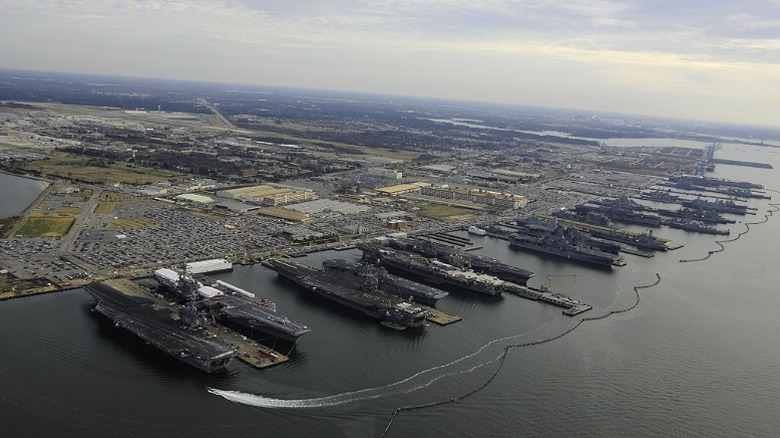
The Naval Station Norfolk is located on 3,400 acres and supports the operational readiness of the U.S. Atlantic Fleet. Boasting itself as the largest naval station globally, it takes care of 75 U.S. Navy ships, 14 piers, 134 aircraft, and 11 aircraft hangars. One of the best parts about this station is that you can go on a guided tour across the base — a 50-minute to one-hour bus tour will drive you around the facility so you can see the warfare up close.
In addition, air and port operations are two of the main tasks of this base, as it manages the movement of around 3,100 ships every year, while for air operations, the value exceeds 100,000.
A TMJ4 News journalist, who was part of "Sailor for a Day" (a program which allows media professionals to visit the naval base and learn firsthand about the U.S. Navy and its operations), provided rare views of the huge ships and aircraft inside the base and how days go by inside the station.
Naval Air Station (NAS) Jacksonville (3,400 acres)
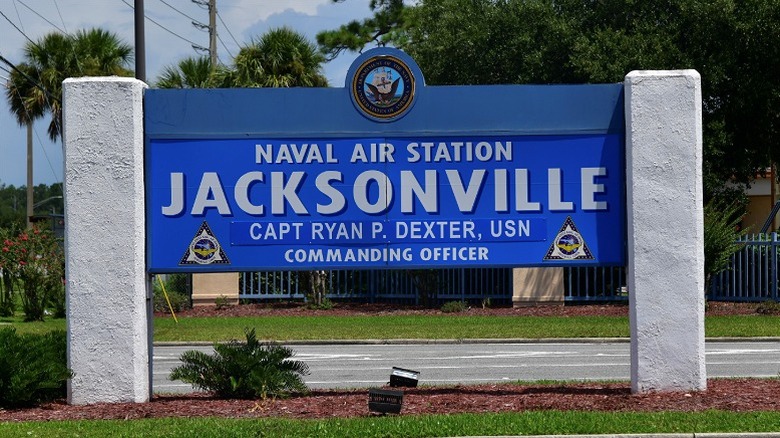
The Naval Air Station is sited along the west bank of the Saint John's River in northeast Florida, stretching over an area of 3,800 acres. This station supports the war readiness of the U.S. and allied forces that specialize in anti-submarine warfare and aviation training. Besides, the base is responsible for three main bombing ranges — Pinecastle, Rodman, and Lake George — along with the Outlying Field Whitehouse.
The Jacksonville NAS had around 4,553 active-duty service members and 32,000 family members, along with other employees and personnel as of 2024, housing the area. Additionally, seven active-duty VP squadrons, three reserve squadrons, five helicopter squadrons, and one MQ-4C UAS Triton squadron are housed at the facility, with more than a hundred aircraft operating from this base.
Moreover, the Commander of the Navy Region Southeast also resides within the same vicinity, plus it also homes other major commands, like the Fleet Logistics Center Jacksonville.
Naval Station Mayport (3,409 acres)
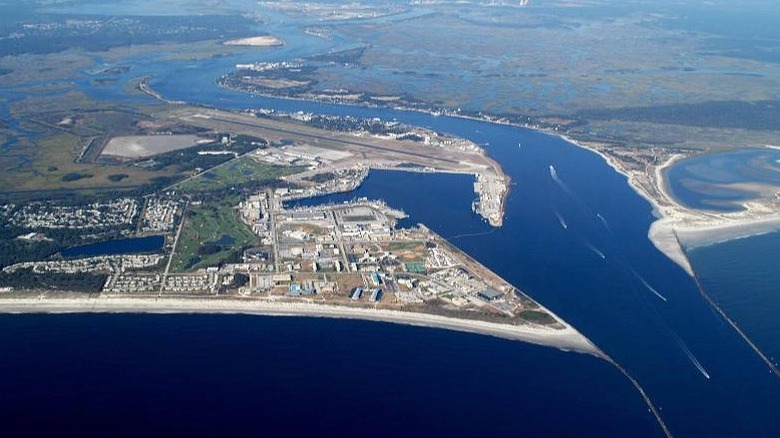
Emerging in 1942, the Naval Station Mayport rests on an area of 3,409 acres and takes pride in being the third largest naval facility in the U.S. Its motto is to provide "The Finest Service to the Finest Fleet," holding more than 80 supported commands, which include 20 naval ships and three helicopter squadrons.
Moreover, this naval base in Mayport has an 8,000-foot runway that enables a smooth take-off and landing for all aircraft owned by the nation's Department of Defense and a harbor that can manage 34 ships at a time. It remains busy around the year, as the military passenger flights carry about 13,000 passengers every year from and to the station.
Other than these, there are 22 U.S. Navy ships stationed at Naval Station Mayport — the fleet consisting of guided-missile cruisers, guided-missile destroyers, and guided-missile frigates. Location-wise, the base is located near the Jacksonville Port on the St. Johns River in northeast Florida, making it easier to access via inland waterways and the open ocean.
Naval Air Station Patuxent River (6,400 acres)
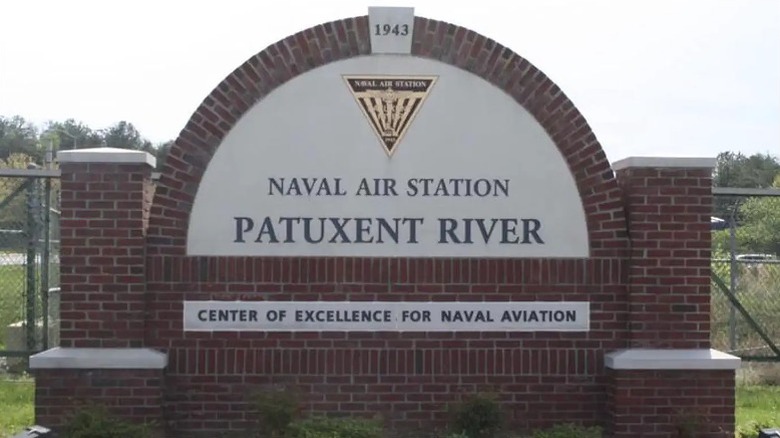
Naval Air Station Patuxent River, which spans about 6,400 acres, includes two major organizations that serve as the center of naval aviation for the U.S. Navy — the Naval Air Systems Command and the Naval Air Warfare Center Aircraft. Moreover, this air base successfully executes an estimated 200,000 air operations yearly and is home to 25,000 civilians, contractors, and military personnel.
NAS PAX is a growing hub for research, development, testing, and evaluation of different types of warfare owned by the U.S. Navy, attracting educators and researchers worldwide. There are highly advanced facilities, such as the Manned Flight Simulator, the Air Combat Environment Test and Evaluation Facility, the Aircraft Test and Evaluation Facility, and more that allow experts worldwide to execute rigorous testing and training.
A bit about the history: this naval base was crucial during World War II for testing airplanes and analyzing enemy aircraft. Moreover, the first all-jet airplane of the U.S. Navy to operate from a carrier — FD-1 Phantom — was also tested at NAS PAX between 1945 and 1946.
Naval Base Kitsap (12,000 acres+)
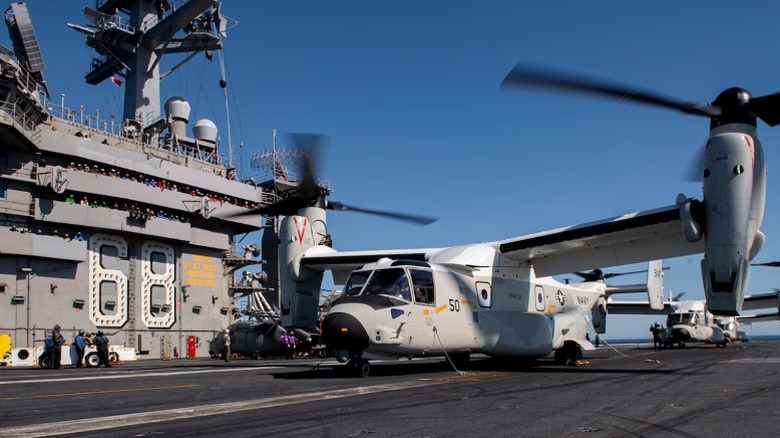
As the fourth-largest naval base, Naval Base Kitsap spans 12,000 acres across the Kitsap Peninsula. The base supports a diverse range of tasks, such as providing support for all kinds of submarines, and warships, like the USS America and gives space to the Manchester Fuel Depot which is the largest single-site fuel terminal for the Department of Defense in the continental U.S.. It is also home to one of the largest naval shipyards in the U.S. — the Puget Sound Naval Shipyard and Intermediate Maintenance Facility.
In addition, the base hosts around 70 tenant commands, including several commanders, such as the Commander, Navy Region Northwest; Commander, Submarine Group 9; and Commander, Carrier Strike Group 3, among others. Consequently, it plays a vital role for the U.S. Navy while also supporting a large number of jobs — 61,000 alone in 2024, which led to an economic impact of $5.6 billion.
The Supercarrier USS John F. Kennedy, the sea trials for which have begun, is also scheduled to sail to the Naval Base Kitsap since the dock was announced to be its homeport after the commission.
The Joint Base Pearl Harbor-Hickam (27,694 acres)
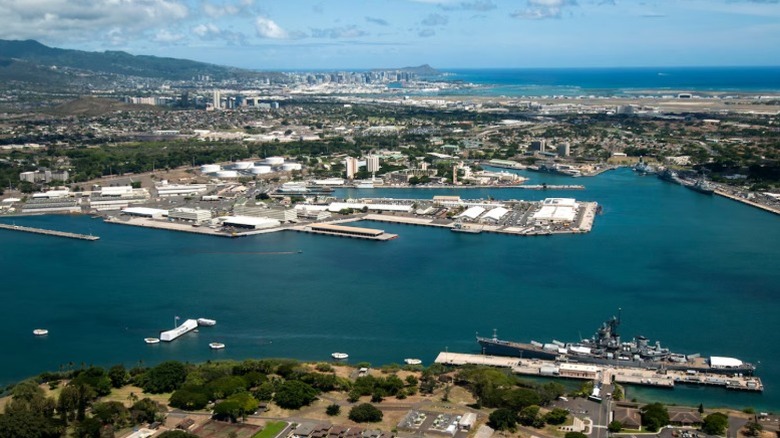
Joint Base Pearl Harbor-Hickam is among the finest naval bases in the country and aims to provide the highest-quality berthing and shore-side support to the surface ships and submarines of the U.S. Navy. In fact, the base can manage large warships in the navy, along with all types of aircraft carriers — fun fact, the Joint Base Pearl Harbor-Hickam was the only airfield in Hawaii that could tackle the giant B-17 Bomber during World War II. The Pacific Command is the major air force command on the base that helps in planning and executing defensive air operations in the Pacific and Asian theaters.
Plus, multiple maintenance and training facilities keep the fleet operation-ready at all times. It houses more than 160 commands and provides a range of support and activities for the fleet's families to ensure standardized living.
Naval Base Coronado (NBC) (57,000 acres)
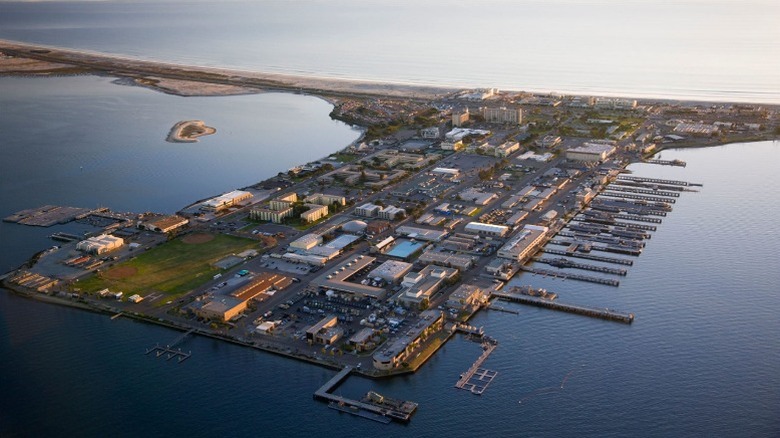
Built on an area of 57,000 acres, Naval Base Coronado is the largest naval base in the country (in terms of the physical area occupied), providing home to 36,000 active duty military and civilian employees. The base aims to serve as the "West Coast Quarterdeck" for the U.S. Navy by offering support programs and services to maintain operational readiness of the U.S. Pacific Fleet.
Moreover, it tackles the requirements and operations of 17 squadrons, three aircraft carriers, four SEAL Teams, Navy Expeditionary Combat Command squadrons, and more. The base, as a whole, is a consortium of nine different Navy installations – Naval Air Station North Island, Naval Amphibious Base, Naval Auxiliary Landing Field, San Clemente Island, and others that make up the huge area.
It is safe to say that this naval dock is the largest command in the Southwest Region of the U.S, contributing to 30% of its overall workforce.