

4 Smart Home Gadgets Proven To Save You Money
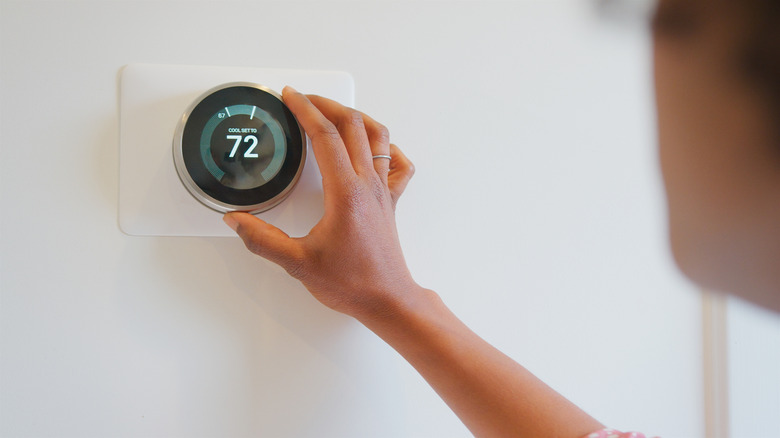
Smart homes have transformed the way we live our lives in so many ways. Ever since remote controls were invented, we've enjoyed the convenience, not to mention the independence and the accessibility, that comes with these sorts of features. Similarly, if you struggle with establishing a domestic routine, it's an absolute gamechanger to have a device that can do it for you.
There's much more to a smart home setup than simple convenience, though. Smart meters monitor your use of energy and break it down for you in an easy to understand fashion, thereby allowing you to make changes that save money. Some of them may represent a considerable initial outlay, but will help us to save on bills, repairs, or maintenance.
Smart home devices can have some unexpected uses, but saving you money is a primary one. Owning and maintaining a home can be a very expensive business, and so it's wise to see how smart home gadgets like water leak detectors and thermostats can work for us and help with those savings.
Smart water leak detectors

The ongoing shower versus bath debate, in part, highlights our worries about water usage. It's not just about the amount of water we generally use or run from the faucets, either. There could be leaks in your pipe system. Sometimes it's simply a dripping tap you can quickly rectify, but more insidious leaks inside your system can cause untold damage.
Quick detection is key, and one type of gadget can be an enormous help in that regard: the smart water leak detector. Some detectors wrap around lengths of pipe, such as cable sensors, while puck sensors can detect water leaking beneath appliances like refrigerators or washing machines. These kinds of devices are invaluable when it comes to detecting potential issues that could cause water wastage and expense (like the scourge of the frozen pipe). After all, repair costs can have a larger impact than any increase or reduction in water usage.
In fact, in 2020 a study from LexisNexis Risk Solutions demonstrated just how effective Flo by Moen Smart Water Shutoff systems are at averting disaster. It determined that water leak detection devices reduced water leak claim occurrences by up to 96% and severity by as much as 72%, compared to homes without such systems. This can translate to savings of thousands or even tens of thousands of dollars, depending on the harm a leak may have caused if left undetected. Careful use of one of these devices is just one smart home automation that can save you a lot of money.
Smart home thermostat
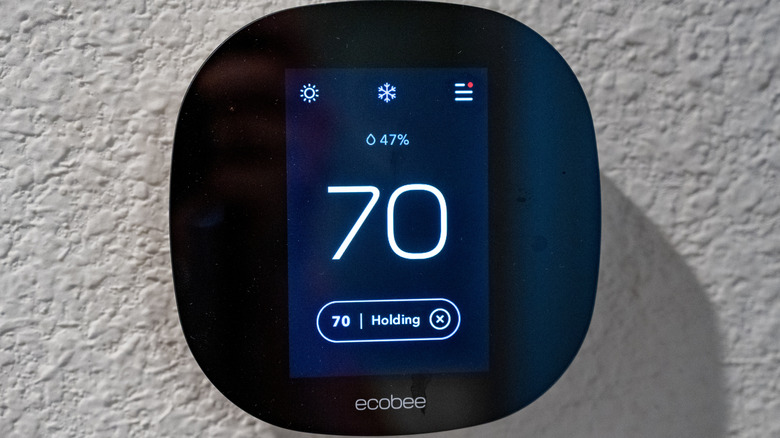
Thermostats are essential gadgets in millions of homes, allowing users to monitor and alter the temperature in their homes as they see fit. Sophisticated models like the Google Nest Learning Thermostat can learn a household's routine over time and adapt to it, thereby determining the most practical settings and options for specific homes and times of day, adjusting its settings as it does so. As a result, they can offer some very accurate insight as to the settings that are most economical.
For example, Google reports that after reviewing energy bills of homes using Nest thermostats across 41 U.S. states, the device helped its users to save between 10% and 12% on their heating bills. According to CNET, an Ecobee smart thermostat can save up to $250 per year, around 26% of average home energy costs. That's no doubt part of why Ecobee fared extremely well in SlashGear's ranking of major smart thermostat brands.
For smart thermostats in particular, one potentially vital thing to look for is the Energy Star labeling. Not only is this identifier independently provided by the United States Environmental Protection Agency, but according to Energy Star, it also signifies that a product has demonstrated consistent annual savings in homes across the United States.
Smart LED lighting
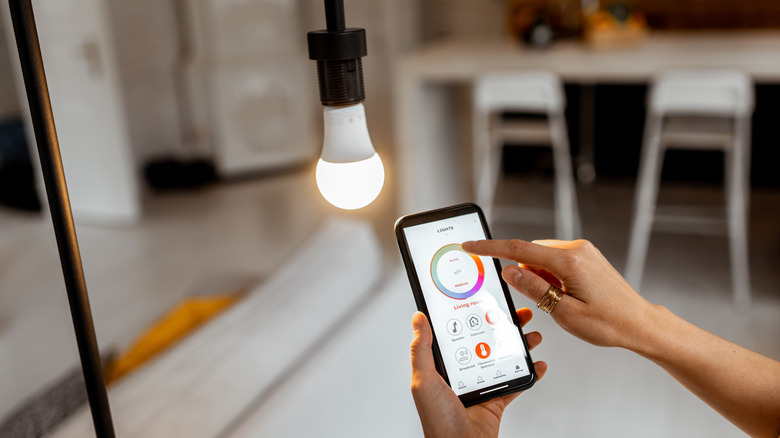
The virtues of LED lighting over older incandescent versions are well known. According to the U.S. Department of Energy, cumulative domestic energy savings from LED lighting could become equal to the annual energy output of more than 92 1,000 MW power plants by 2035.
It's important to note, though, that this more environmentally friendly and efficient lighting system can represent a more significant outlay in terms of the purchase cost. Electrician service Hutton Power And Light notes, for example, that a typical 12 watt LED bulb can cost around $6.25, far more than the equivalent $2.70 of a 60 watt incandescent bulb. With more elaborate lighting systems, those prices can increase further, but the thing to remember is the balancing over time.
Over a decade of use, with the original purchase cost included, the LED bulb will have cost approximately $19.45 to operate, per Hutton's calculations (based on 2019 average power rates in Virginia). Because incandescent bulbs have a dramatically shorter usage life (LED can last up to 25 times longer), several replacements must be factored in. Over that same time period, they will have cost approximately $93 to use.
It's for these reasons that the U.S. Department of Energy concludes that LED systems (again favoring those with the Energy Star distinction) can save the average household approximately $225 in energy billing. Smart LED lights, which can freely be adjusted from a smartphone or other device, give the user much more direct control over not only the look of the lights, but their strength, and so their power consumption.
Solar panels
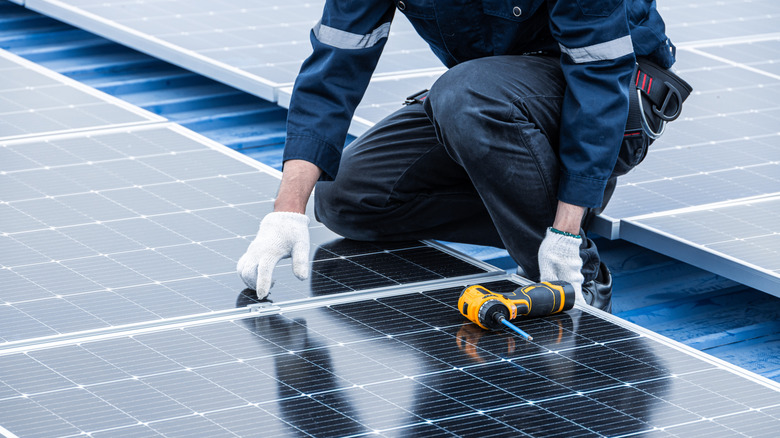
If any system can reliably help you save money on energy, it's solar panels. After all, they generate electricity using the power of the Sun with photovoltaic cells. U.S. homeowners may not have fully embraced the technology yet — according to a Pew Research Center study in 2023, only 7% of homeowners had it in their homes, and 28% were "seriously considering" it — but the advantages are undeniable. The technology offers proven, significant savings on energy costs. Smart solar panels can even be equipped with optimizers to automatically make the best of conditions to boost their output.
There are a lot of factors involved in determining how much savings solar may bring you. The amount of sunlight your neighborhood tends to get is an obvious one. The National Renewable Energy Laboratory has a PVWatts Calculator that can help provide a picture of how much energy a solar setup will produce in your area, and ultimately the amount you'll save. If you plan to feed energy back into the grid, there's also however your local energy supplier calculates that credit to consider.
EnergySage notes that a system of solar panels can have a lifespan of approximately 25 years, and over that time, a homeowner can save anywhere from $37,000 and $154,000. The upfront cost of installing the panels and the inverter and everything else is considerable — around $30,505 before any applicable savings — but it could represent huge potential savings in the long term. Be wary of certain common mistakes you could make when considering solar panel for your home, though.
Why we picked these particular types of smart home gadgets
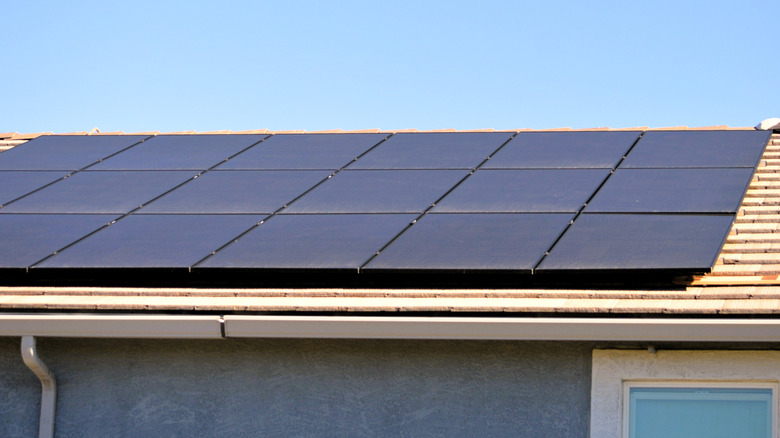
The first priority, of course, was to select items expressly designed to save money. A lot of smart home gadgets are convenient time-savers, but don't necessarily save money on bills. Solar panels, smart thermostats, and smart LED lights are all created to function more efficiently and therefore more cheaply.
Of course, it's impossible to determine precisely how much a given device in these categories will save a specific user. So much is dependent on individual situations. A smart water leak detector may never detect any leaks at all, and simply offer peace of mind. On the other hand, it could warn you of a potentially catastrophic leak. What we've closely considered, then, is the money-saving potential of the systems discussed, using reputable figures from trusted sources in the industry, such as the United States Department of Energy and LexisNexis Risk Solutions.
Typically, results available will reflect average values only, as seen from EnergySage's determination of the savings from solar panels. Additional resources, such as the PVWatts Calculator from the National Renewable Energy Laboratory, afford users a better picture of how such measures may contribute to their own personal lives. Ultimately, you'll be the best judge of what your home needs and what best complements your lifestyle.