

5 Car Repairs You Probably Shouldn't Do On The Side Of The Road

We may receive a commission on purchases made from links.
It's not uncommon to pop the hood and try a quick patch or temporary repair when you have a roadside breakdown. While a flat tire or a dead battery is a manageable fix that belong in your roadside emergency tool kit, there's a clear and critical line separating a simple operation from a garage-necessary fix.
The highway shoulder is a hostile environment, dramatically increasing the risk of even routine maintenance tasks. It's inherently unsafe because high-speed traffic is zooming past just feet away, creating constant physical danger and kicking up dust and debris that can contaminate sensitive engine components. You're also likely not getting proper lighting, a clean floor, the safety assurance of professional jack stands, and immediate access to specialized tools and solvents.
Before you reach for that multi-tool or makeshift repair kit, it's essential to pause and engage in a realistic risk assessment. A failed or botched roadside repair can result in permanent injury, thousands of dollars in new engine damage, or even a subsequent, catastrophic brake failure at high speeds. With some repairs, it's better to risk the cost of a professional tow. Your decision to call for help can be the responsible, safer, and ultimately more economical choice for protecting both your vehicle and your safety.
Patching a blown radiator
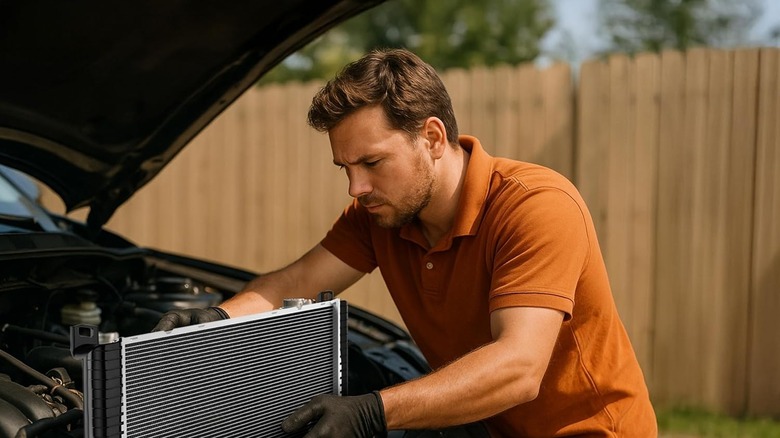
Trying to use stop-leak or epoxy on a busted radiator tank while you're pulled over is asking for trouble. Replacing or fixing a radiator is not one of those DIY car maintenance tasks that can save you from a mechanic; it's a big issue on the road. That boiling coolant can spray everywhere, and you could get seriously burned or even blinded if you're leaning over the engine when it happens.
Most car engines run very hot, and that turns your cooling system into a high pressure system the second you open the hood. It's common knowledge never to remove a radiator cap from a hot engine, because that sudden pressure release causes the liquid to instantly flash to steam and spray out violently.
Keep in mind the patching materials you brought likely won't work well in that environment. If you want to apply things like epoxies or putties, you should use a surface that's cool, clean, degreased, and dry. That's the environment of a shop, not the side of the road. So the best thing to do is to find a shop that will take you, or if you're not actually stranded, make the trip back home if you are nearby.
Brake pad or caliper replacement
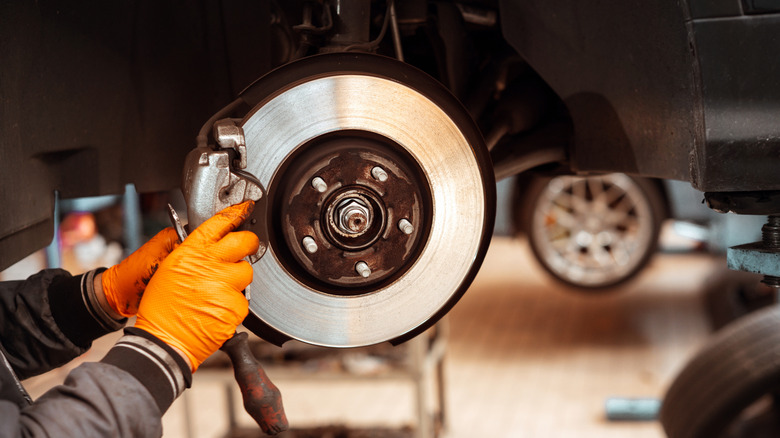
Changing your brakes is more difficult than swapping a flat tire, and it demands a level of cleanliness you just can't achieve on the side of the road. It's a common car maintenance myth that replacing your brakes needs to be left to the professionals, but it's still something you should do in a more controlled environment.
If a caliper is seized, trying to bleed the lines while traffic is zooming past at 70 mph and kicking up all sorts of debris basically guarantees getting air into the system. Replacing a caliper requires opening up your vehicle's hydraulic system, and taking off the banjo bolt to detach the unit means brake fluid will leak. Cleaning that up once you're done will also be tough to do on a dusty shoulder.
Aside from environmental issues, a seized caliper can lock your brakes, which can be a dangerous thing to deal with on the highway. However, as long as you pay attention to your car maintenance schedule, this may be an issue you deal with in a shop before it becomes a more serious problem.
Alternator replacement
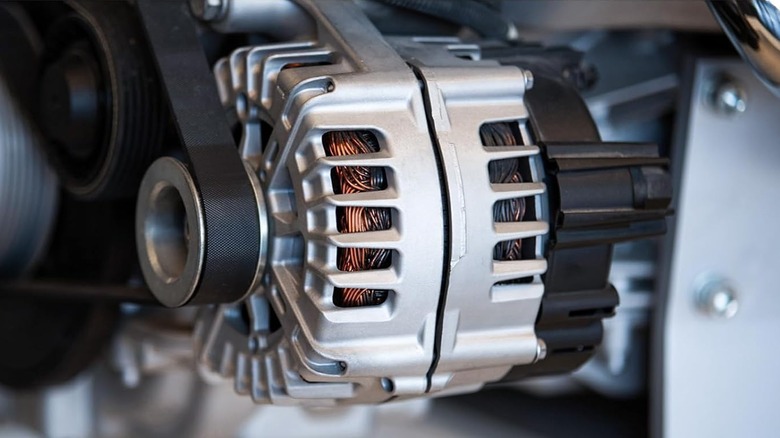
The alternator may look like something you can just bolt right on, but installing it means you have to mess with the car's main electrical system. If your wrench accidentally touches the frame while you're working on the hot lead, you could easily fry the engine control unit or even cause the battery to explode.
You can avoid this by disconnecting the negative battery terminal beforehand, but it's easy to forget things when you're stressed on the side of the road. The alternator is often buried too, hidden beneath layers of other components that are so easy to lose in the grass. You'll usually need to remove components like air cleaners, cooling fans, or other engine parts that fit tightly just so you can get to the alternator's mounting bolts.
If you drop a nut or bolt into the weeds on the shoulder, you shouldn't move your vehicle until you find it. You may be scared of getting ripped off by a car mechanic, but it's a lot scarier to destroy an engine by accident. Instead of trying this major repair on the road, you're usually better off just jump-starting the battery and limping to a nearby mechanic.
Replacing a serpentine belt
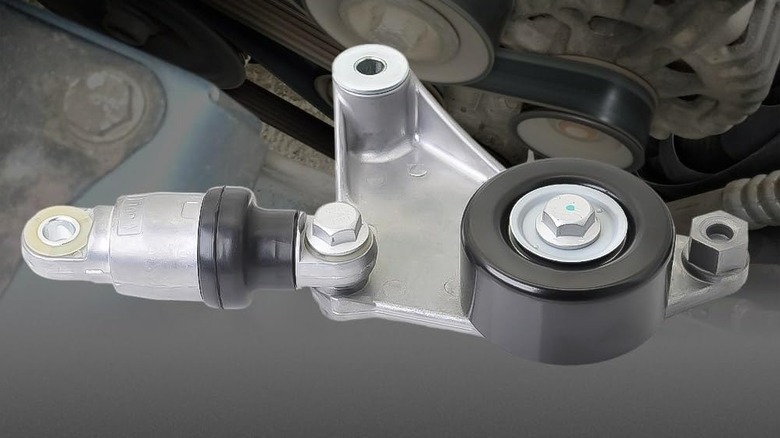
You might look at a serpentine belt and think it's just a simple rubber loop, but trying to replace one on the side of the highway is deceptively dangerous. This reinforced strip is the lifeline for multiple critical systems, winding like a snake around the alternator, the power steering pump, the AC compressor, and usually the water pump. Even if you see signs to replace the serpentine belt, you should never do it on the road.
When it snaps, you lose power steering and the alternator stops charging, but the real threat is that the water pump may quit working. This can cause your engine to overheat and warp cylinder heads in minutes. Even though it's urgent, trying this fix roadside is a bad idea since some engine bays are incredibly cramped. Installing it is not easy outside a professional garage, even if you have a spare handy.
There's a complex, specific diagram showing exactly how the belt wraps around the grooved and smooth pulleys. If the old one shredded or fell off, you've lost your visual guide, and finding a diagram decal under a grimy hood isn't a guarantee. Also, the belt may be held tight by a spring-loaded tensioner, hydraulic, or done manually, so you may need a specialized serpentine belt tool or a long breaker bar to get the leverage to rotate the tensioner and create slack.
Ignition coil or spark plug swaps
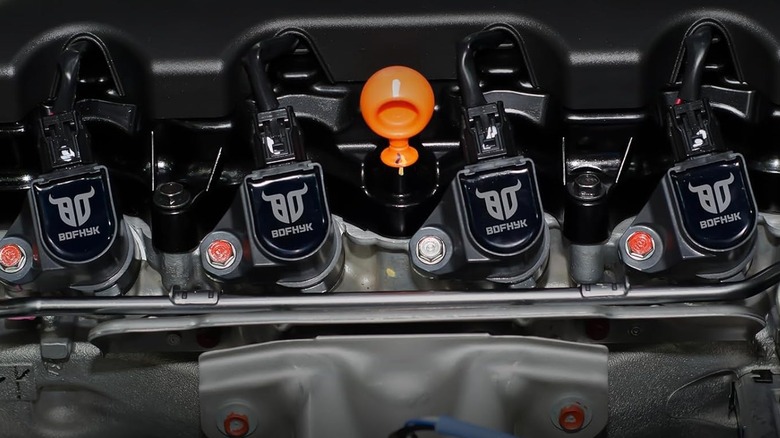
When your car is acting up and misfiring, it may seem easy to pop the hood and quickly swap out a coil pack on the side of the road. However, the second you pull that plug, road grime and random debris are going to fall directly into the open cylinder head. If debris gets into the combustion chamber, it could damage your engine's internals. Cleanliness is absolutely mandatory for things like this, and you just can't be sure of that on a road.
Things like rough idling, slow acceleration, and persistent check engine lights can seem like easy fixes, but the right way to figure out the problem usually involves switching coils between cylinders to see if the fault follows. That sort of diagnostic swap means repeatedly exposing the inside of the engine, which substantially increases the chance of junk getting in or damaging those threads.
Plugs and coils don't last forever. When they fail, a garage will be better at maintaining the correct torque. Doing it yourself on a filthy roadside is gambling with your engine's, and could make your car less reliable.