

5 Countries Where Manual Transmissions Still Rule The Roads
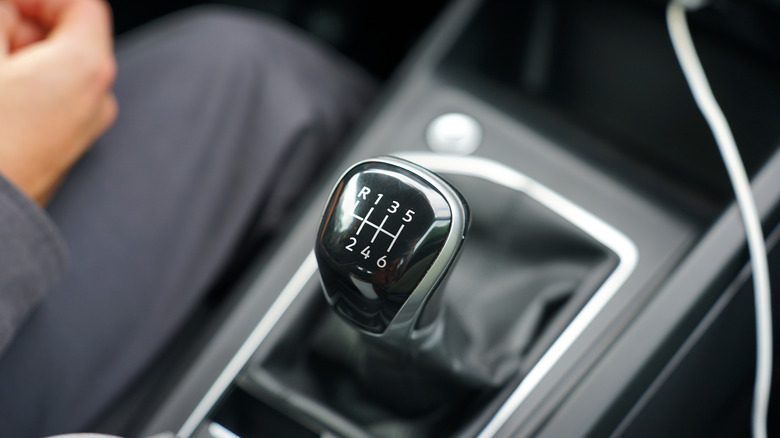
It wasn't too long ago in the rearview mirror of time that manual transmissions were ubiquitous on road networks. In fact, Motor1 says that in 2001, 91% of car registrations in major Western European markets featured stick shifts. 25 years later, that dominance has flipped on its head. In the United States, only about 4% of registered cars are manuals — and that transmission type made up less than 1% of the market share of new cars in 2021, according to The Drive. The European outlook is a bit less apocalyptic; 2024's numbers for the UK from the Society of Motor Manufacturers and Traders show a 22% slice of the cake (via AutoExpress).
There's a simple reason for the sharp downturn — comfort. Driving a manual car is a very involved affair: Knowing when to switch to neutral and understanding the deliberate pedal choreography are just a few of the idiosyncratic experiences that can be tiring for the average user. If you're just trying to get from point A to B, chances are you would prefer an automatic that handles all the intricacies of shifting for you.
Despite the bleak imagery, there are still quite a few countries where the manual transmission isn't something of a collector's item. In fact, there's a good chance you'll come across just as many manuals as you would an automatic in the nations on this list. Wondering how many cars still offer a manual transmission option? SlashGear has you covered there, too.
India
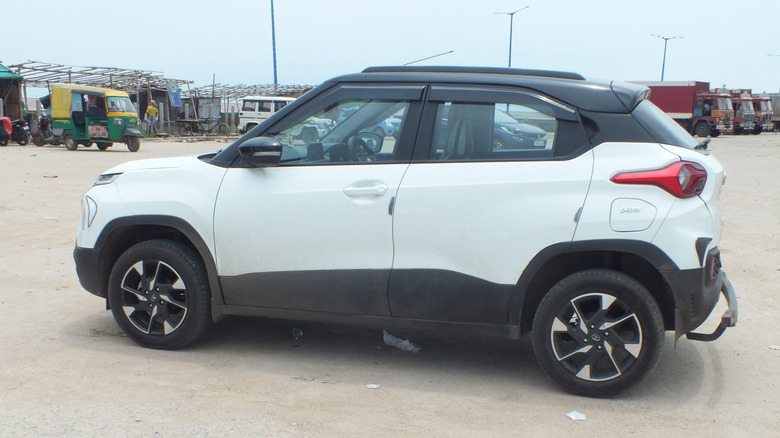
Strange as it may be that a country associated with so much technological innovation should lag so far behind, there's a reason for the slow change in composition of the transmission market in India. Automatic didn't go mainstream until the late 2000s, and even then, the high cost at the time didn't help.
As a result, only about 10% of passenger vehicles in India were automatics as of 2018 according to the Economic Times. However, things would finally kick into gear over the next five years. By 2023, the Indian Express reported that the proportion of automatic cars had tripled to just under 30% of market share. In fact, the Credit Rating Information Services of India Limited (CRISIL) found that the market share should approach an even 50/50 split by 2028. That buying pressure is in spite of automatics being costlier than their manual counterparts on average — there's a price gulf that can stretch anywhere between 60,000 rupees to 2 lakh ($600 to $2,200) between the transmission versions of the same vehicle.
It's not particularly surprising to see this trend when you consider how poorly Indian cities rank on the TomTom World Traffic Index; Bengaluru, Pune, and Mumbai all rank inside the top 20 for average congestion. So, with more consumers choosing automatics, it simply means drivers are prioritizing comfort over price while languishing in traffic. For now, though, India is one of the few countries in the world where manual transmission still "rules" in the sense of the word.
China
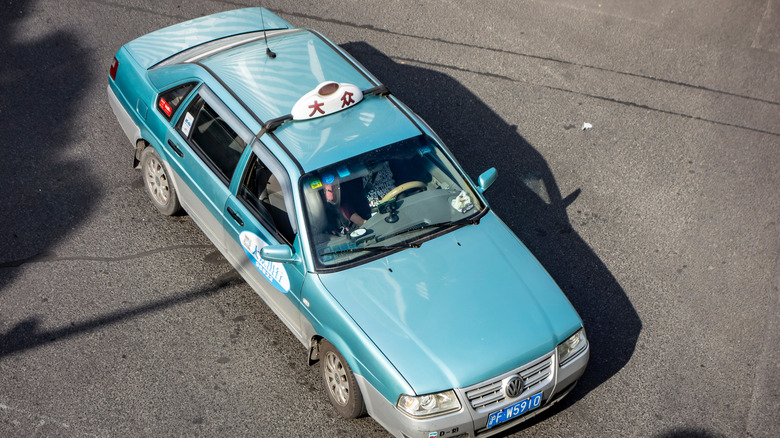
Given China's reputation for all things high-tech from construction to phones and especially the EV landscape, one would be forgiven for not even guessing it would be on this list. Almost all EVs have automatic transmissions, and since just over two-thirds of the cars sold in China are locally made, it would make sense for the transmission outlook to lean towards automatic. That assumption would be wrong. According to data from ResearchInChina's Global and China Automotive Industry Transmission Report, manual cars took up 41.4% of China's market structure as of January 2019. That's the latest official statistic regarding the composition of car transmissions within the country.
Multiple factors could be driving the persistence of manuals. First, there's the topic of the biggest motivating factor: price. While cars generally come at a discounted price tag in China due to the sheer number of automakers, manuals can be even cheaper than the alternative. It's part of the reason the Volkswagen Santana was so widely popular on Chinese streets, either as private cars or taxis — more than 6 million units had been delivered since the manufacturer began production in 1985.
Secondly, driving licenses in China have made it so that there are advantages to learning how to drive a stick. Attaining the C1 class gives access to three other certification types, including those with automatic transmissions. The C1 is the most popular license class among the country's drivers, so that's kind of a self-fulfilling prophecy of the manual's persistence in China.
Italy
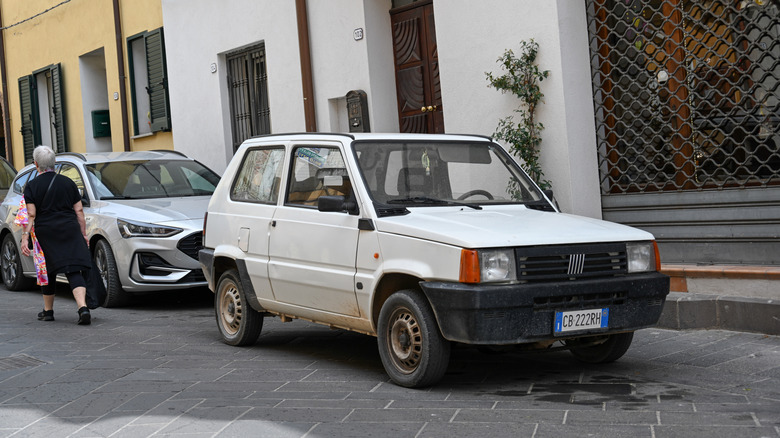
While the proportion of manuals in the transmission market share may have fallen off a cliff in America, it's a different story on the other side of the Atlantic in Europe. Manuals are still thriving, according to the latest statistics from the International Council on Clean Transportation for European vehicles (ICCT). SlashGear even has an in-depth explanation as to why manual transmissions are still popular in the region.
Tracking of automatic transmission percentage in passenger cars stops in 2020, where automatics made up 28% of new cars sold in Italy according to the ICCT. That's a similar profile to India, and the uptick in prominence of automatics has been just as slow and steady. As of 2015, just five years before tracking ceased, the percentage stood at just 14%, so automatics are at least twice as popular as they used to be. While manual may still be king for the foreseeable future, some factors are definitely contributing to the consistent climb of the automatic.
For starters, EVs are gaining quite some steam on Italian roads; market share more than doubled between 2024 and 2025. Again, couple that with the fact that almost every EV is an automatic, and it starts to make sense why the manual transmission is slowly but surely losing ground. However, the cheaper price profile of manuals is something that continues to appeal to Italians; they're easier to fix by yourself, and they cost less on average to buy. It's also easier to drive a modern manual than ever before, thanks to advances in automotive technology.
Spain
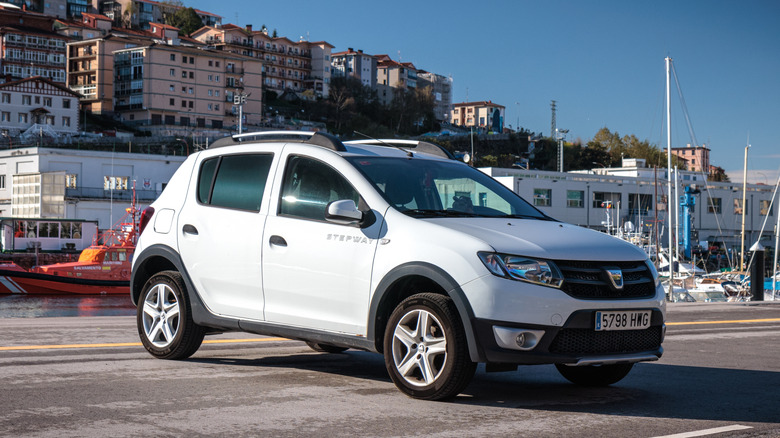
Similar to how things are in Italy, manuals are still very much in the lead in the transmission race for now. As of 2020, the ICCT says that 32% of new vehicles sold in Spain were automatics, compared to just 12% in 2015. That's a greater spike in terms of factors than Italy; in terms of numbers, the manual's dominance appears under slightly more threat in The Land of Cervantes.
The reasons for this uptick compared to Italy vary. While price remains a universal factor (automatics are more expensive on average), there are other determinants that are local to the Spanish populace. For instance, towns like Moraira and Denia are hotbeds for expats, particularly those from Germany, the UK, and the Netherlands. Automatics are far more common in these countries (the ICCT says 61, 56, and 58 percent, respectively), so these expats naturally gravitate to buying and leasing automatic cars.
Secondly, EVs are popping up more frequently on the roads. Rechargeable vehicles made up 19% of new registrations in Spain in 2025 according to the European Commission. That's up from just under 11% the year before, and couple that with a 630% rise in EV circulation since 2015 (via Climate Scorecard). However, many infrastructural hiccups, like charger station availability, are still preventing widespread adoption, and until these issues are solved, the manual will remain in charge of Spanish roads.
South Africa
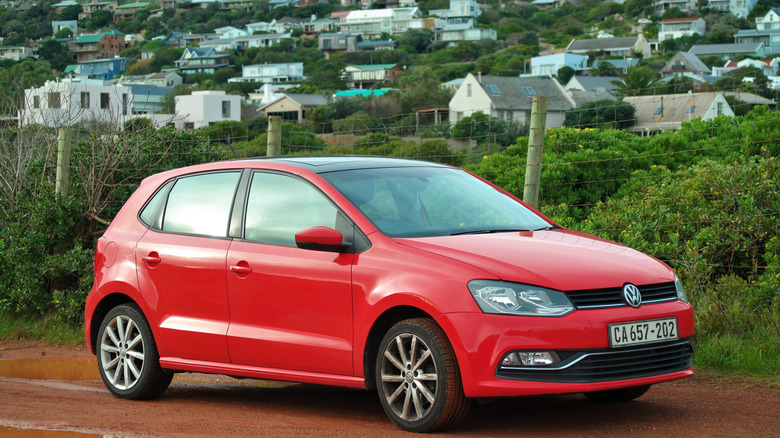
Just like the other countries on this list, South Africa is seeing the automatic transmission slowly shifting into gear, eating increasingly larger portions of the market share from manuals. It's been a story of consistent downtrend for the stick shift since 2013, when the category outnumbered automatics by just over three to one. In simpler terms, manuals used to make up 77% of cars on South African streets according to Lightstone Auto (via cars.co.za).
Fast forward to 2023 — the latest available data point for the Rainbow Nation from Lightstone — and the automatic has narrowly overtaken its counterpart in a 51-49 split to become the more common of the two in new car sales. EVs are partly driving this trend, with AutoTrader's 2024 Industry Report showing a 60% surge in the category in 2024 and a 92% year-on-year increase in the used car market.
Ostensibly, given all the dominance manuals have enjoyed over the years, the transmission type should still be in the comfortable majority on South African roads. Also, consider that the third best-selling car in South Africa as of 2024, after the Ford Ranger and the Volkswagen Polo, is the Volkswagen Polo Vivo. It's primarily a manual (there's only one 1.6-liter automatic variant), and it's quite obvious that many South Africans still prefer driving stick. However, given the trajectory, that might not be the case for much longer; they'll soon learn that even if driving an automatic vehicle is easier, you still need to avoid certain actions to take care of it properly.