

4 Best Uses For Your Old Audio System
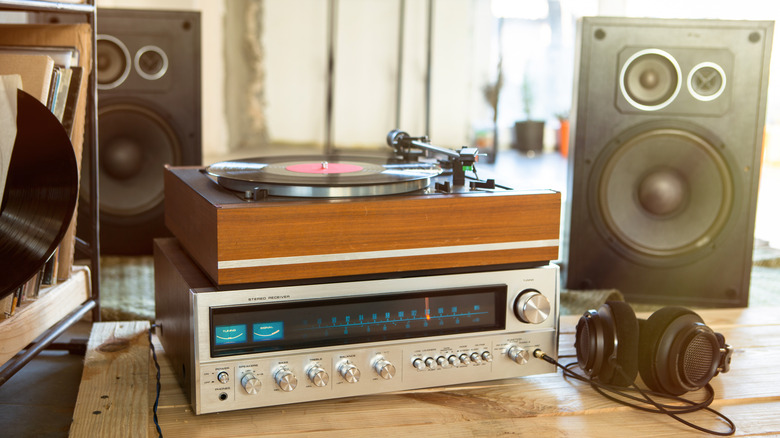
It wasn't so long ago that audio enthusiasts sat on couches to enjoy their 2-way hi-fi sound system, powered by beefy analog amps, connected to tape decks and turntables. In carpeted living rooms, large speakers with foam grilles bookended clunky television sets. By the 90s, this was still the case, only the compact disc was king, supplanting vinyl and cassettes. Soon, digital amps would come to the fore, and, combined with Dolby's "Surround Sound," the home theater experience was significantly enhanced. Things remained stagnant until Bluetooth technology and streaming services replaced chunky speakers and DVD players, ushering in an era of thin TVs, high-quality soundbars, streaming movies, and Spotify.
However, all this time, there have been die-hard audio enthusiasts who are, arguably, stuck in the past as it were. Many hi-fi fans kept their systems from the 80s; some let them gather dust, languishing in garages or cluttered closets. Traditionalists who never upgraded, opting to soak up the warm analog vibes amidst vinyl crackle, might find some inspiration here. Other readers who grew up in the streaming era, accustomed to listening to music on small portable Bluetooth speakers, might also find inspiration to dig out their parents' prehistoric stereos. Here, we cover some fun ways to repurpose a sound system from the analog era, updated to fit into our digital world.
Add Bluetooth Streaming To The Mix
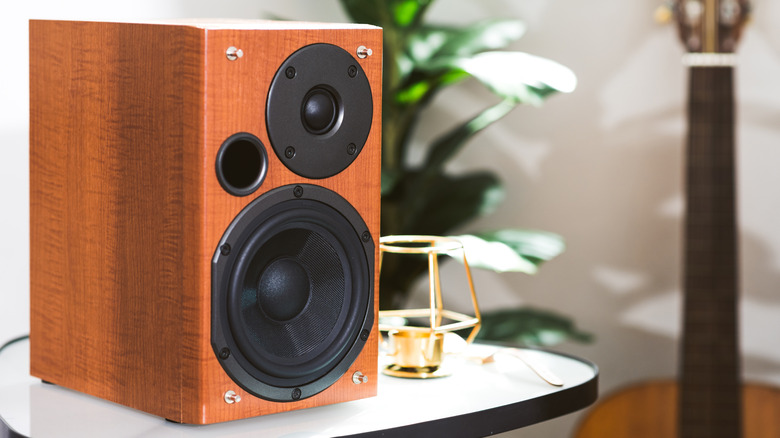
Some audiophiles may say that older systems, with analog circuitry, offer a warmth and character that is lost on modern audio gear. There's also the case for hidden value, with some old vintage tube amps being among the old tech worth thousands today. The cheap sound bars and Chinese-made speakers you get at Big Box stores could have a metallic coldness in their sound signature, which can grate after a few hours. But you might wonder: If I dust off my vintage hi-fi system, how can I listen to music with this ancient technology? The easiest answer is to integrate modern Bluetooth and wireless streaming capability into the chain. If we take, for example, two passive bookshelf speakers, an analog amp, and a smartphone or tablet, they need a bridge for streaming connectivity.
You'll need to buy a Bluetooth receiver, which can easily and cheaply be acquired online for around $20.00. These would require an RCA cable to interface with the amp, where you plug it into the "aux" input on the back, which stands for auxiliary. They can be powered by a DC adapter or USB, and while they might not offer audiophile fidelity, you'll instantly bring your outdated system into the 21st century. You might also notice less ear fatigue with warmer, old-school speakers. For many users, this upgrade can bring an otherwise obsolete setup back into rotation for a fraction of the price of modern smart speakers.
Repurpose An Old Audio System For PC Or Gaming Audio

For many gamers, classic computer speaker setups from brands like Altec Lansing and Logitech offer decent sound and take up minimal desk real estate. But it's usually an afterthought, unless you're looking at buying top-rated computer speakers for your PC. For others who are looking to upgrade their gaming experience on a budget, repurposing an old analog setup from the hi-fi heyday might be appealing. Those small plastic PC speakers, likely mass-produced in Chinese factories, can actually sound pretty bad. This is especially apparent when put up against 1980s handmade speakers by British brands like KEF and Celestion, or American brands like JBL and Boston Acoustics. If you weren't lucky enough to inherit high-quality components from your boomer or Gen-X parents, don't fret. You can find some pretty amazing stuff on Facebook Marketplace these days.
After arranging your old-timey amp and speakers, by routing your computer's audio output through them, you'll likely gain a fuller sound, better stereo imaging, and actual low-end presence — all without breaking the bank. Most PCs and laptops can connect via a standard headphone jack-to-RCA cable, plugging into left and right inputs on the back of your amp, while some gaming consoles with digital outputs may require a digital-to-analog converter (DAC). Once properly connected, the receiver will handle volume control, turning your previously anemic desktop system into something special.
Use An Old Audio System As A TV Sound Upgrade
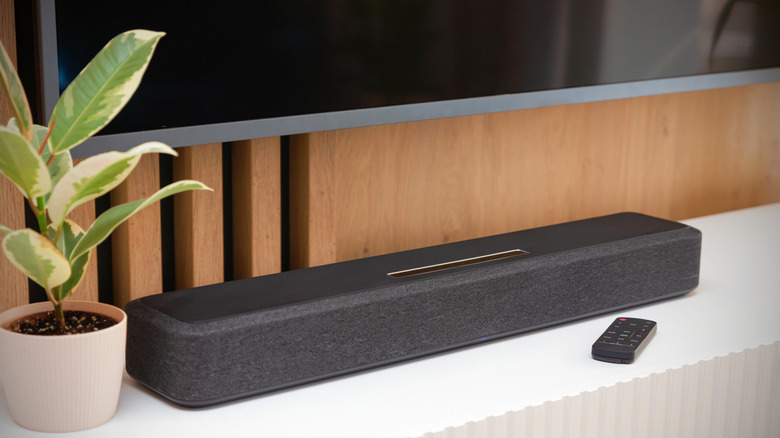
Your TV's built-in speakers are still a weak point in the overall entertainment experience. The picture quality and form factor of today's best smart TVs continue to impress, but when it comes to the sound, it might fall flat for some. Even a basic stereo receiver paired with a decent speaker can outperform most integrated TV audio with more dynamic range, most apparent in the low-end. After dusting off that retired hi-fi system from yesteryear, connecting it to a modern television may require a bit of finesse and some modern hardware, but it's quite straightforward. A compact optical-to-analog DAC bridges the gap, where you can get upwards of 48kHz digital sample rates off the back of your TV.
This, in turn, functions as a budget soundbar replacement, offering a wider soundstage due to the speakers being separated, with more power to draw from. Running your preferred streaming service app like iTunes or Spotify will grant you access to your library, where you use your smart TV as previous generations would a tape deck or turntable. Movies, shows on Netflix, and YouTube videos will sound richer with punchy bass and a warmer sound signature. This type of setup allows you to leave behind the hollow, metallic coldness of soundbars, without having to invest in a costly full home theatre system. What's more, it avoids compatibility headaches and potential firmware issues associated with some newer gear, while improving your at-home viewing experience.
Rehome An Old Audio System For Your Hobby Space

Many of us found new hobbies during COVID-19, taking us to places like garages and basements where, maybe, you're lacking a decent sound setup. Sometimes, the best use of an old hi-fi system from the 80s is to simply move it to a new zone. Sure, you could grab a cheap Bluetooth speaker for this purpose, but will it fill the garage with analog warmth, making you pause as you delight in the soundstage on display? Nope. In these environments, where sawdust is flying as you race to finish that end-grain cutting board project, you probably don't want to invest in a $1000 sound system.
This is where repurposing a disused soundsystem, or a secondhand find from Marketplace, can really come into focus as a life hack. While there are a ton of solid bookshelf speaker options on the market today, there is something to be said about the lushness that speaker builders in England and Massachusetts tapped into in the late 20th century, which remains unrivalled to some ears. Add a cheap Bluetooth streamer, and you're off to the races, able to control playlists from your phone with a vintage setup. Spilling paint on, or denting the sides of, expensive audio gear is never fun — but with hand-me-down hi-fi, or a low-cost secondhand find, you'll be able to focus more on the vibes in your hobby workspace.