

Are Duracell Batteries Better Than Energizer? What Consumer Reports Data Says
We may receive a commission on purchases made from links.
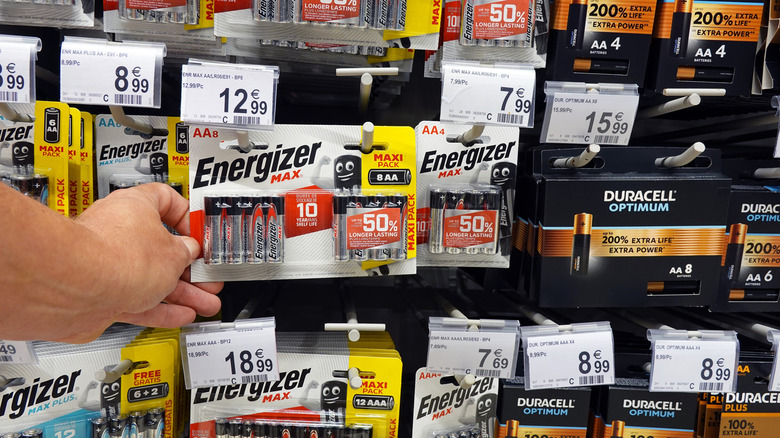
With some product segments, two rival companies dominate the market space. Boeing and Airbus sometimes even use the same engines, and chances are good you're reading this on a mobile phone running software created by either Apple or Google. When it comes to alkaline batteries, the two most recognizable premium brands are Duracell and Energizer. Consumer Reports tested 15 different AA batteries and rated the Duracell Quantum AA highest among alkaline batteries and equal in perfomance to Energizer Ultimate lithium batteries. Rayovac Fusion Advanced AA batteries also performed well, coming in just ahead of Energizer Advanced lithium and Duracell Copper top alkaline cells. Energizer EcoAdvanced and Max+ PowerSeal alkaline batteries scored a little lower; in the company of retailer-branded batteries from Amazon, CVS, Walgreens, and Rite Aid.
This round of Consumer Reports testing covered only disposable alkaline and lithium batteries. SlashGear's ranking of rechargeable batteries also placed Duracell just ahead of Energizer, although EBL and Eneloop batteries topped our list. Energizer and Duracell batteries cost more than most generic competitors, but expensive name-brand batteries usually last longer than cheaper ones.
Most tests (including this one from Consumer Reports) find Duracell and Energizer batteries to be more or less equal in terms of performance, although the Duracell Quantum was a top performer here. Energizer Ultimate lithium batteries more or less matched the Quantum's performance benchmarks, and Energizer Advanced lithium cells tested slightly better than Duracell Copper Top alkalines. Both brands are highly recommended by SlashGear and Consumer Reports with impressive performance that separates them from the rest of the pack, so buy either with confidence.
How to make batteries last longer
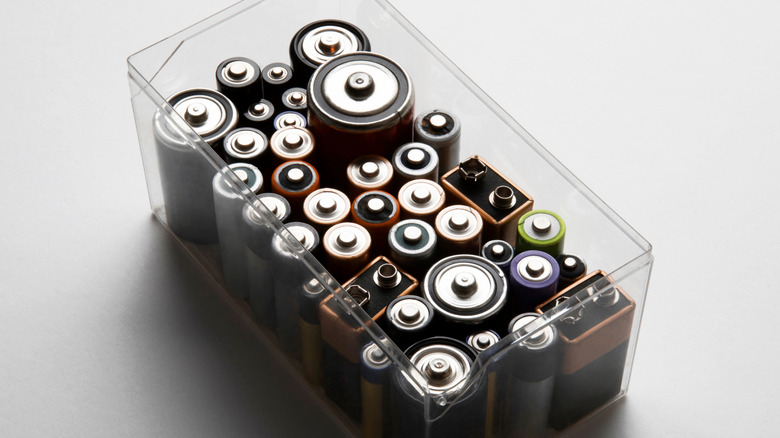
Consumer Reports tested this battery of batteries by measuring runtime in toys and flashlights, but use across a variety of devices might return different results. For example, a TV remote control doesn't require that much power to function and is used intermittently, so drain on batteries is low. That's why you may not need to change them for months, or even years. In contrast, Xbox controllers drain batteries very quickly because features like haptic feedback and wireless connectivity draw lots of power.
There are a couple things you can do to get the most out of your batteries. First, pay attention to the stamped expiration date if you're buying them in a store. If the batteries aren't going straight to use in a device, keep them in their original packaging in a cool, dry place. Contrary to a common myth, storing batteries in the fridge or freezer is a bad idea; condensation can form inside the packaging. Put them in an interior closet or water-resistant toolbox, and remove batteries from devices you don't plan on using for a while. Be careful not to store batteries loose in a box or drawer with other batteries or metal objects; short-circuits could drain your batteries or even cause a fire. A plastic battery organizer will protect batteries when not in use and can be stored in a closet or cabinet. Stacking batteries upright will prevent terminal-to-terminal contact, and always recycle used batteries according to local guidelines.