

5 Tools Ryobi Makes That Makita Doesn't
We may receive a commission on purchases made from links.
Makita and Ryobi are both popular tool brands that offer many of the same products, but they're certainly not interchangeable. Makita has been around for over a century and has a strong reputation for high-quality tools and equipment made for trades like construction and woodworking. That's why there are tools sold by Makita that Ryobi doesn't make, like heavy-duty breaker hammers, rebar tying tools, and massive cordless circular saws. While DIYers can certainly make use of Makita's premium-grade products, its tools are built for professionals who can rely on them every day for big jobs and serious projects.
Ryobi also makes well-made tools, but it caters more toward prosumers than professionals. DIYers and casual homeowners looking for good-quality products often choose Ryobi, as do some professionals. There is plenty of gear that both brands manufacture, like cordless drills and saws, as well as accessories like jobsite fans and work lights. But, because Ryobi's core user base is a bit more casual than Makita's, its catalog of products differs in certain ways.
Though it offers some hand tools, Ryobi focuses heavily on its battery systems, which power its cordless tools. It's not afraid to try out new types of tools and devices that users who already own compatible Ryobi batteries may try out. Compared to Makita, it also offers a wider range of more low-key and offbeat gadgets. That's why you can find things like Ryobi bug zappers and heated seat cushions that use the same batteries as its impact drivers. To better illustrate the different nature of each brand's product catalog, here are five tools Ryobi makes that Makita doesn't.
Power carver
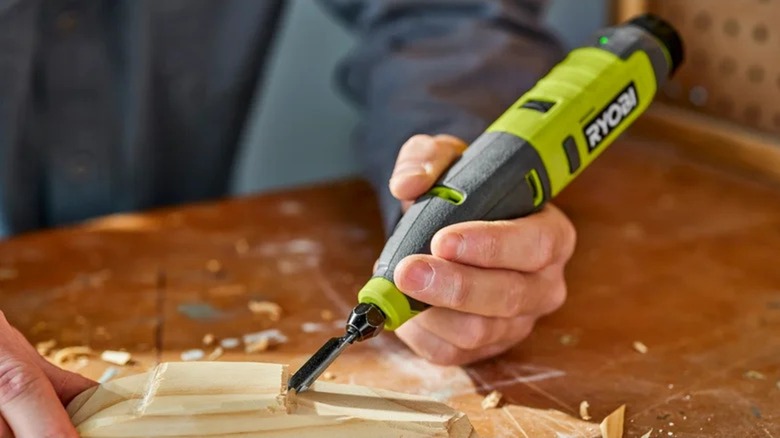
One category where you can typically find more Ryobi tools than Makita ones is crafting. Crafting can certainly require a ton of skill, but it doesn't require the sorts of professional tools that Makita makes. A power carver is one of those tools that can be very useful for both crafting and more serious carpentry, as it can be used for detailing shelving and other furniture. Nonetheless, Makita doesn't make one, whereas Ryobi does — in fact, its Ryobi USB Lithium Power Carver is the first cordless carver of its kind.
The Ryobi USB Lithium Power Carver (model FVH51K) has a compact, straight design and carves with a 1-mm stroke length. The 4-volt tool runs at 14,000 strokes per minute, and you can monitor battery life with a push-button LED indicator. The power carver comes bundled with a 21-inch USB cable and a USB Lithium 2 Ah rechargeable battery, which can be used with other compatible Ryobi products.
The tool also comes with three different attachments: a straight chisel, U-gouge, and V-gouge. Equipped with these three accessories, the product is one of Ryobi's many budget-friendly hobby tools and can perform a range of carving tasks for various kinds of woodworking projects. The straight chisel works well for detail work, making it particularly useful for furniture restoration, while the 90-degree V-gouge is designed for relief carving and cresting detailed lines through channels. The U-gouge has a ¼-inch wide blade, allowing it to clear relatively large amounts of wood.
Glue gun
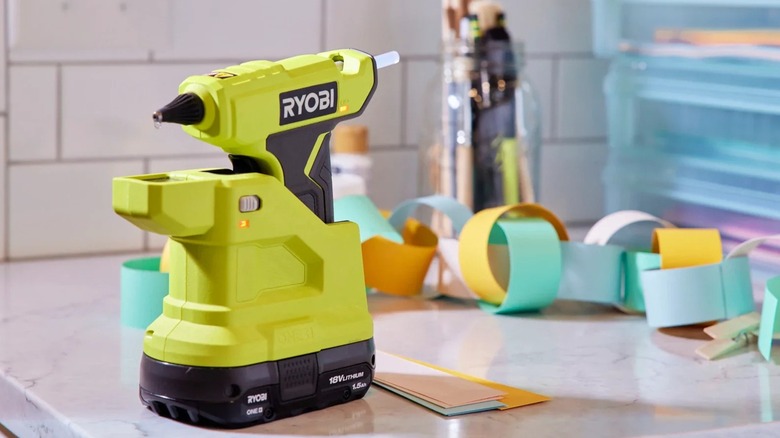
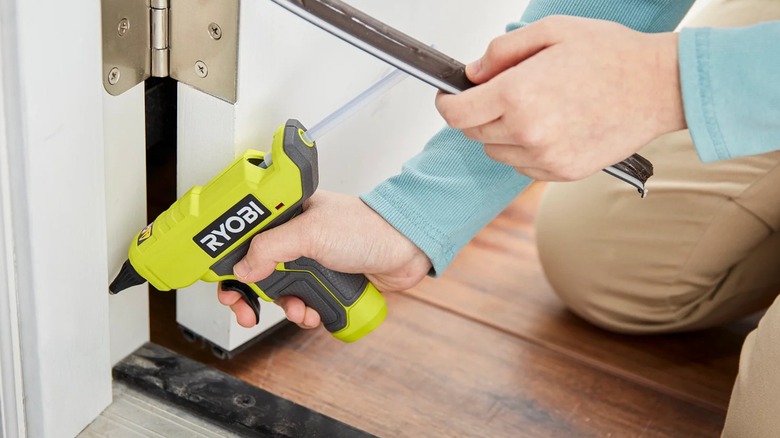
Another crafting tool Makita lacks in its product catalog is a hot glue gun. Ryobi, on the other hand, makes multiple different models, allowing users to opt for the one that best suits their needs and preferences. This includes glue guns for both its USB Lithium and 18V One+ power systems, with the USB Lithium Glue Gun (model FVH57K) coming with a 2 Ah battery and USB charging cable, as well as three glue sticks to start you off.
The brand's 18V One+ Compact Glue Gun (model P306) is still a small tool despite using a much larger battery, and also comes with three mini glue sticks. When powered by a Ryobi 18V One+ 4 Ah battery, it can go through over 100 mini glue sticks before needing to be recharged. However, the most popular Ryobi glue gun looks to be its dual-temp model. The Ryobi 18V One+ Dual Temperature Glue Gun (model P307) offers users more versatility because of its ability to run at two different heat modes: 248 degrees Fahrenheit or 320 degrees Fahrenheit. The lower-temperature setting allows the tool to be used with more heat-sensitive materials, while the higher mode can liquefy construction glue and other heavier-duty adhesives. The gun heats up to the necessary temperature in two minutes.
Along with 10 general-purpose glue sticks, the dual-temperature glue gun comes with an extended precision nozzle and spreader nozzle in addition to a standard nozzle. These add to the tool's versatility, letting you use it for multiple applications. The Ryobi 18V One+ Dual Temperature Glue Gun also features a fold-out drip tray and an integrated LED that changes color when the tool is sufficiently heated.
Ice auger
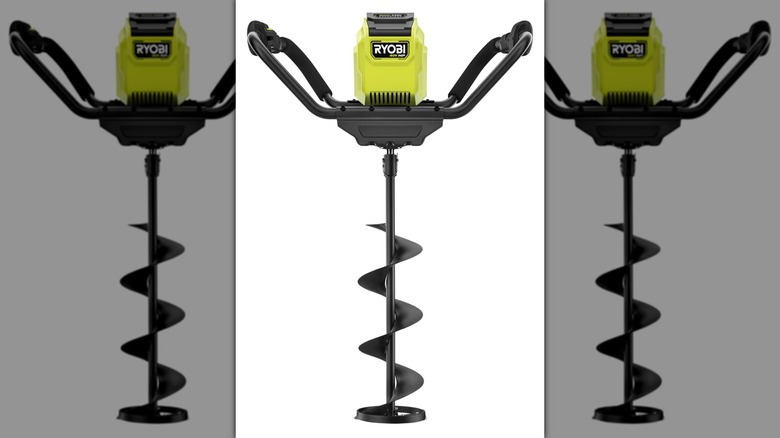
Like Ryobi, Makita makes a cordless earth auger that can drill into the dirt. Unlike Ryobi, though, Makita doesn't offer an ice auger. Despite both tools having similar design and function, there are differences between an ice auger and an earth auger, and the latter won't work very well if you need to make holes in ice. Ice augers, often used for both work (researching ice core samples) and play (ice fishing), need to deal with much harder drilling surfaces and function in very cold environments.
The Ryobi 40V HP Ice Auger (model RY40712) is a battery-powered drill designed to handle especially thick ice. Ryobi says that its brushless motor and 40-volt battery technology enable the cordless auger to deliver 30% more torque than gas-powered equivalents. It can be used in three different modes: high power, low power, and reverse.
Ryobi's ice auger weighs 34 pounds, which isn't exactly lightweight but still manageable for transportation and control. It has a two-handled top-down design, like a jackhammer, with a simple trigger mechanism for drilling. Ryobi also says it has engineered the tool to vibrate less during use, offering more comfort and control as it runs. The Ryobi 40V HP Ice Auger also includes the necessary 8-inch ice bit, which can be swapped out when it dulls.
Bucket top wet/dry vacuum
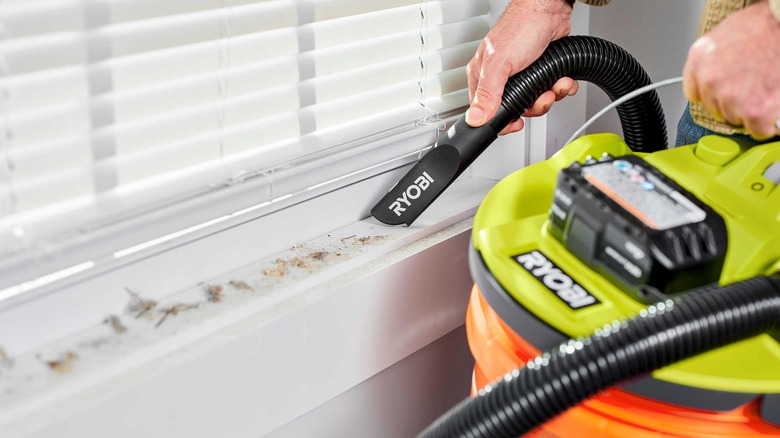
Just as many major tool brands do, Makita sells wet/dry vacuums that can be used to clean workshops and jobsites. However, Ryobi offers an interesting take on the tool that Makita has yet to copy. The Ryobi 18V One+ Bucket Top Wet/Dry Vacuum (model PCL732B) doesn't come with its own container for liquids or dry debris. Instead, the tool itself fits on standard 5-gallon buckets. This makes the tool much more compact and easier to store, especially if you use your bucket for other applications.
Weighing 4.25 pounds, it's also more portable if you're bringing it to a site that already has buckets you can use. The vacuum's built-in storage lets you keep the hose and crevice tool that comes with it attached to the vacuum, simplifying things. The hose is 1-¼ inches wide and 4 feet long, giving you a bit of flexibility when trying to clean tight or hard-to-reach areas. It also comes with a blower port that lets you use the vacuum to clear spaces of dust and debris, as well.
Ryobi says its 18V One+ Bucket Top Wet/Dry Vacuum is the most powerful cordless bucket-top vac on the market. In addition to the hose and crevice tool, the machine comes with a filter bag that helps keep dust and debris out of its motor. Replacement filter bags are available for when it wears out, as is a replacement accessories kit that bundles a new hose and crevice tool.
Soldering iron
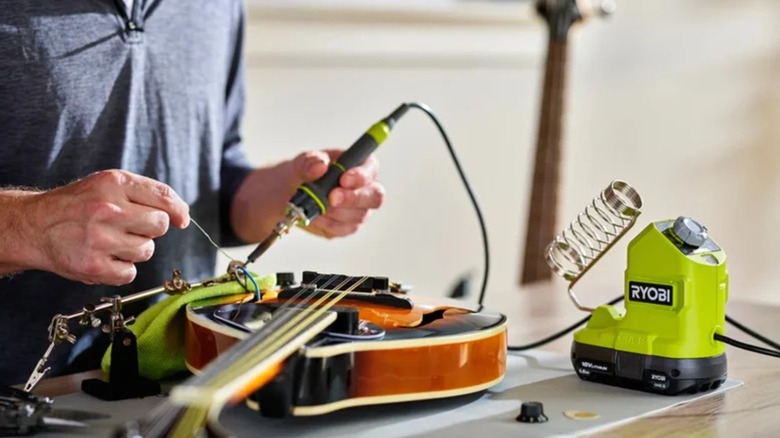
Makita's decision to ignore crafting gear like glue guns and power carvers to focus on more powerful, professional tools may make sense from a business perspective, but not offering a soldering iron is a bit of a head-scratcher. A soldering kit is certainly useful in many crafting projects, but it's also an essential tool in other trades, as well, whether it's for building circuit boards, repairing connectors, or splicing wires.
Ryobi offers a soldering iron in both its 18V One+ and USB Lithium lines of tools. The USB Lithium Soldering Iron (model FVH61K) has an ultra-portable, compact design, but is still capable of heating up to 900 degrees Fahrenheit in less than two minutes. Its smaller size and fine point make it especially useful for working with tiny components found in electronics and jewelry repair. Features include a tip cover that automatically turns the iron off when attached, an integrated worklight, and an LED battery life status indicator.
The Ryobi 18V One+ 120W Soldering Iron (model PCL946B) is a more versatile tool, as it's equipped with a temperature control dial that lets you adjust the iron's heat to suit your task. It can fully heat up in under 90 seconds and has a temperature range from 400 to 900 degrees Fahrenheit. An LED status indicator tells you when the iron is heating up, when it's at its max temperature, and when it's cooling back down. The soldering iron also has a 3-foot reach for more mobility at your workbench and to access harder-to-reach areas. Along with a solder coil, the tool comes with an iron holder and a fine point tip.