

5 Things Wire Strippers Can Do (Beyond Stripping Wires)
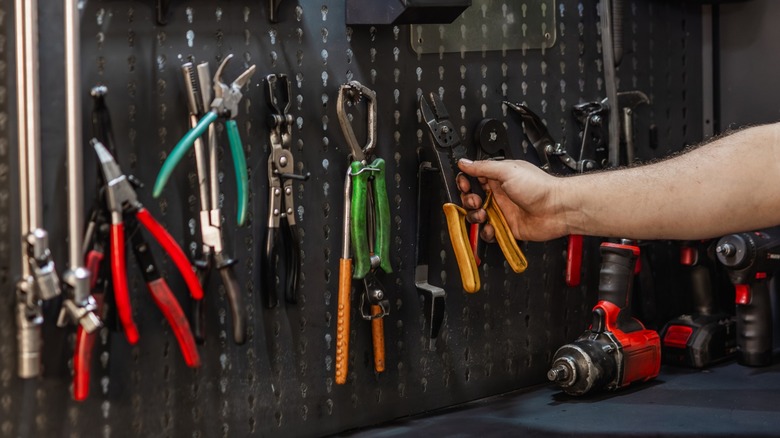
Wire strippers are specialized tools that — as the name suggests — strip the insulation from wires so you can connect them to other wires or a connector. Having a dedicated tool for such a simple task might seem overkill for most DIY-ers, but if you're a professional electrician and you need to strip a few cables (or hundreds, for that matter), this tool can save you a lot of time.
Aside from speeding up the job, wire strippers are designed to strip specific wire gauges. So, if you know how to use the tool properly, it will help prevent accidentally cutting or nicking wires when you're stripping and reduce waste.
This might still seem like a niche tool only used by pros, though, so some tool manufacturers have added other features to make ordinary wire strippers into useful multitools. Of course, the functions that you'll get will vary between brands and models, so you should carefully inspect the label or ask a salesperson to know what exactly you're getting.
Reach into tight spaces with the plier tips
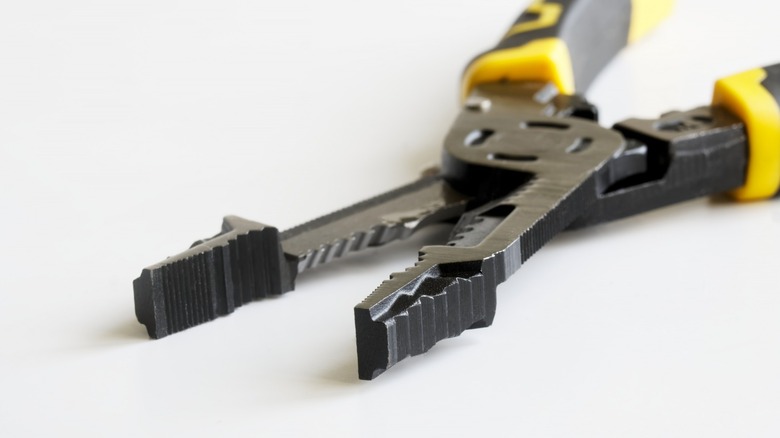
Some wire strippers come with a tapering tip that lets you grab wires and cables. This feature makes sense for a wire stripper to have; after all, they're built to work with wires. Models that have pliers or needle-nose tip pliers built remove the need to buy or bring another tool with you when you're working with electricity. So, even though wire strippers like the ones from Harbor Freight are already quite affordable, you can save even more in cost and weight by getting wire strippers like these.
This means that you can use your wire strippers for other tasks, like gripping wires if you need to pull them through a conduit, breaking off metal tabs, and even pulling headless nails that are stuck in the wall. If you intend to replace your traditional pliers with wire strippers that have them built-in, you should get ones that have are made from thick and solid material, not the thinner sheet metal ones that aren't as heavy duty.
Securely crimp terminals to cables
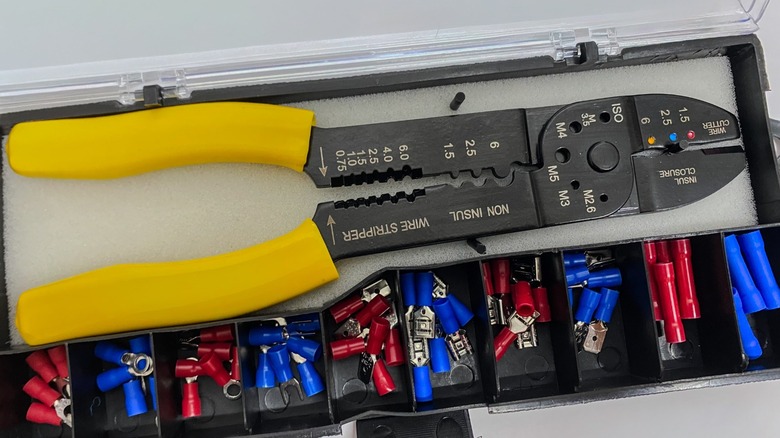
Crimping elements are another feature that you can find on some wire strippers. You can use these small curved (for insulated crimp connectors) or notched (for non-insulated crimp connectors) pockets to tightly squeeze a connector, like a terminal or a plug, together with a stripped wire. While you can technically use a pair of pliers to do the job, wire strippers generally with the feature come designed for the specific sizes crimp connectors usually come in. Aside from this, it should give you a strong connection between the connector and the wire if done properly.
A tool that has this feature makes it quite useful at home, especially as you can use it for general house repairs and some basic electrical work, as it allows you to connect two different wires using just mechanical force — no need to use soldering iron and apply heat to the joint just to connect them securely. This is why a wire stripper with crimpers is one of the most underrated home improvement tools you can put in your toolbox.
Cut bolts to size
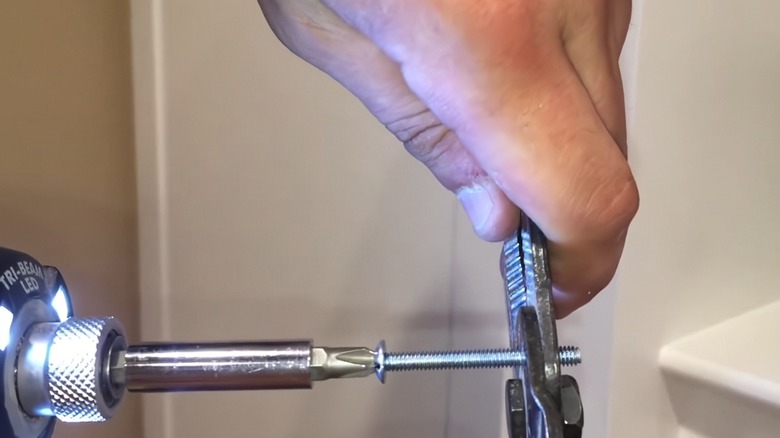
You might notice some wire strippers come with holes near the pivot point. These holes are often much larger than the gauge or diameter of a wire, and they're not used for measuring or cutting them. Instead, these are designed to resize and rethread bolts to fit your application. This is pretty useful if you're trying to install an electrical box or a switch and find that the included bolts are too long. Instead of using a hack saw to cut them to size, you can just use the wire strippers you just used to strip and crimp the wires that you're working on.
When you're using the bolt cutting function of the wire stripper, you have to look carefully and insert the bolt you're adjusting to the correct size, which is usually marked on the tool. Once you've done that, you just screw it to the correct depth and close the wire stripper to cut it. Note that you may have to apply some force to do so, depending on how sharp the cutting tool is. After you cut the bolt, the wire stripper will rethread the cut surface, ensuring that it will smoothly go in and out of the screw hole.
Create a loop or hook on the wire
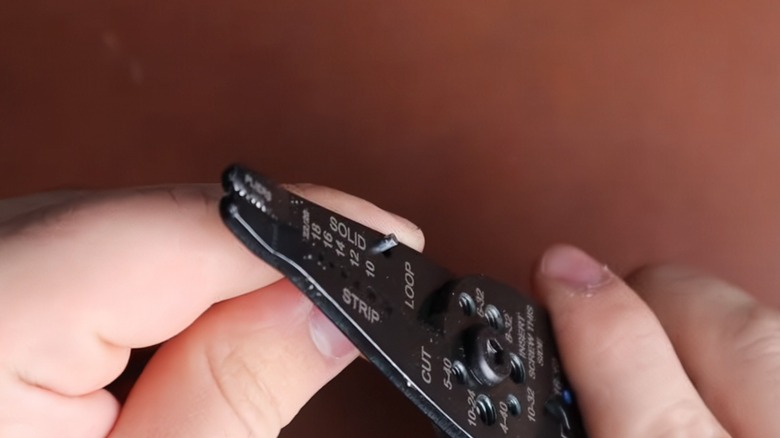
Aside from the holes near the pivot point of the wire stripper, you might also see a singular hole on one jaw of the tool. This is often unmarked, although some manufacturers also label it "loop." This feature is quite simple — you just insert the wire you're working with into the tiny hole and twist the wire stripper 180 degrees while gripping the wire. After you complete that move, you should have a perfectly formed loop at the end of your cable.
This is perfect if you're working on switches, circuit breakers, and other electronic equipment that use bolts for securing wires and cables. While you can technically use a pair of pliers to create that loop, especially those that have needle-nose tips, using the "loop" feature on your wire strippers is much easier. That's because you don't have to use force to hold the wire stripper closed when you're making the loop, reducing your stress and also allowing you to work just a little bit faster.
Smooth sharp burrs from metal conduits and knockouts
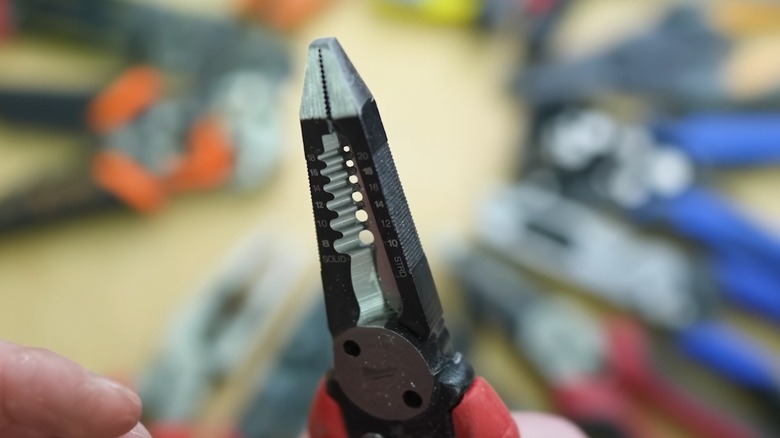
If your wire stripping tool comes with plier tips, you might notice that they have textured or rough outer edges. Although not all tools have this, they're not just there for aesthetics. These are called reamers, and they're designed to smooth out sharp edges and burrs like the ones you get after you remove a metal tab or knockout, or the interior of a freshly cut pipe. This feature is particularly useful for cleaning hard to reach areas, and it also reduces the chance that your wire insulation will get damaged as you pull them through a pipe or opening.
Of course, you'd still probably need a dedicated reamer or deburring tool, like one of the tools that you can get from Dewalt, for professional work. This is especially true if you're working on a massive electrical installation project where you need to work with hundreds of pipes and electrical boxes.