

5 Of The Most Common Problems With The Chevy Cruze (According To Owners)
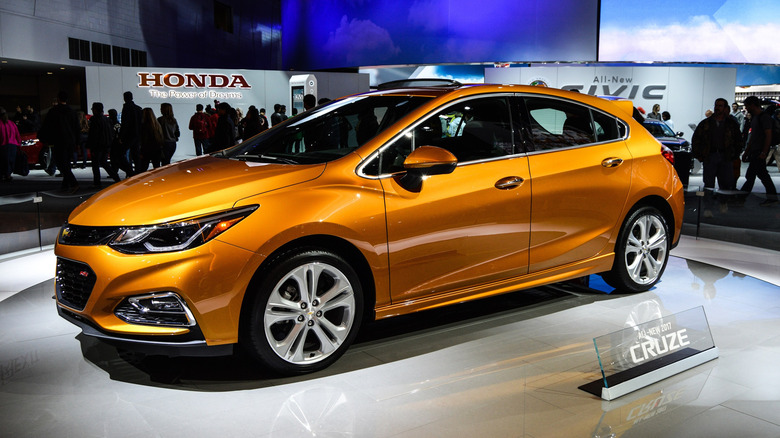
Chevrolet's Cruze was a welcome entry into the compact sedan category back in 2011. The Cruze was one of the most fuel-efficient Chevrolets ever made, for one thing. However, that didn't mean it was a great buy for all drivers. The Cruze apparently had — and still has — many problems, according to owner-drivers.
Ultimately, the Cruze was discontinued for reasons other than its reputation for some performance issues. The Cruze went away when Chevy stopped producing various sedans for cost-cutting. General Motors, the parent company of Chevrolet, also wanted to stop producing the Cruze in favor of focusing instead on SUVs, pickups, and crossovers in U.S. markets. Of course, had reviews (and sales) of the Chevy Cruze been better, it's possible the car could have survived the cuts.
While some model years might make a 'most reliable' list, complaints abound for various model years of the Cruze. These are the most common problems with the Chevy Cruze, according to consumers reporting their issues to aggregator sites like CarComplaints, RepairPal, and the National Highway Traffic Safety Administration (NHTSA).
Cracked pistons
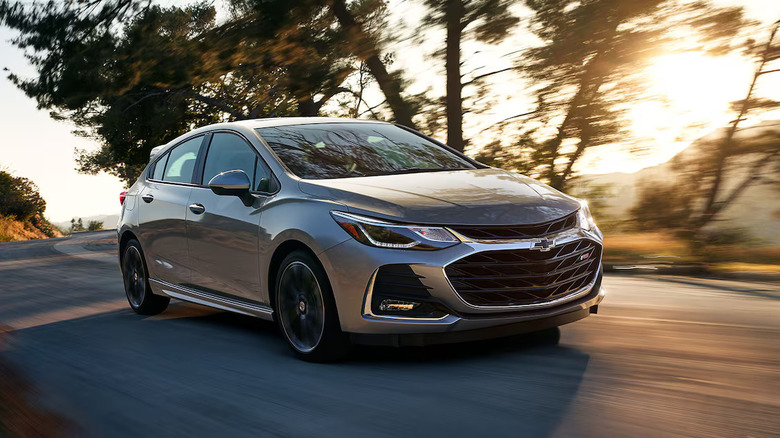
Based on consumer input submitted to CarComplaints, cracked pistons are one of the most common problems with the Chevy Cruze. Aggregated data suggests that the failure happened at an average of 33,000 miles.
The most-reported model year was the 2017 Cruze, with dozens of complaints specifying the need for replacement pistons or even a new engine. With the average fix costing nearly $3,000, plenty of consumers were upset about the issue, especially when the failures happened just outside their warranty windows. Some owners said their mechanics agreed the piston problems were known issues with the Cruze. Yet the 2017 Cruze only had two known recalls: a fuel leak that happens with rollover crashes and welding issues on seat frames.
Some signs that a Cruze had cracked pistons, according to owners, were rough idling, knocking noises, and sudden oil leaks. Multiple drivers first noticed a problem when their vehicle's warning lights came on, while some had catastrophic failures while driving at speed.
Transmission failure
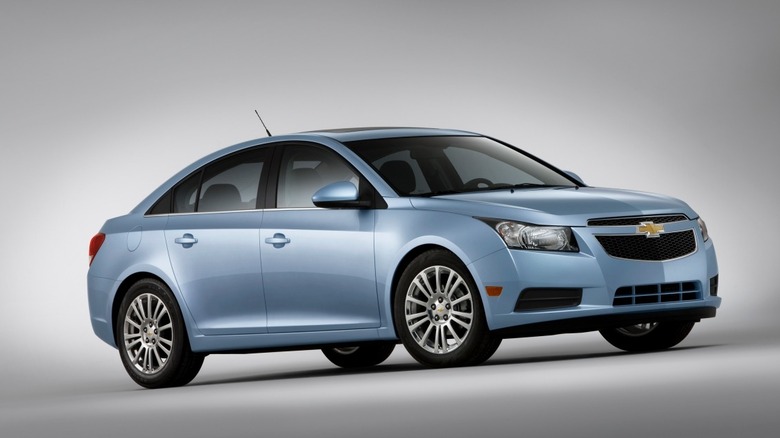
Because the Chevy Cruze was included in one of the biggest transmission recalls ever, it's not entirely surprising that transmission failure is a top complaint from owners. The massive GM recall covered four of GM's brands, Buick, Chevrolet, GMC, and Cadillac, and included 2018 and 2019 Chevy Cruzes, and aimed to repair a problem with transmission bolts. Missing or loose bolts, GM noted, could create a transmission oil leak and stop the vehicles from operating properly. However, other transmission problems have also been reported by drivers.
Consumer submissions on CarComplaints reiterate the issue, with most complaints centering on the 2011 Cruze. Many consumers reported needing to replace their Cruze's transmission, to the tune of over $3,300.
Some consumers also complained that the transmission shifts too hard. Hard shifting was the top complaint among Cruze owners who submitted their comments to RepairPal. Specific to the 2011 Cruze are hundreds of similar complaints documented by the NHTSA, many of which centered on powertrain inadequacies.
Weird smells
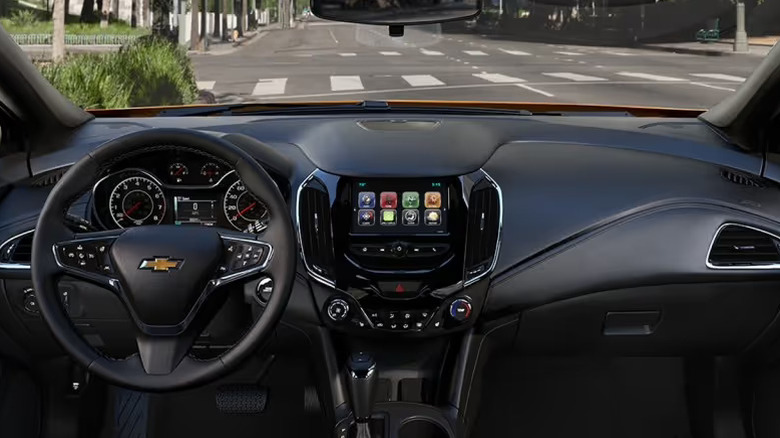
Oddly enough, a top complaint when it comes to driving a Chevy Cruze happens to be the interior smell. An antifreeze odor inside the vehicle prompted consumers to vent on CarComplaints, with the most complaints about the 2011 Cruze. Similar to the cracked piston issue also reported to CarComplaints, the antifreeze odor seems to crop up after about 33,000 miles.
According to CarComplaints, the smell may be a coolant leak, a reportedly widespread issue with the Cruze. Many complaints express frustration with the "bad" and "overwhelming" smell, while some owners have experienced completely dry coolant reservoirs and subsequent issues due to coolant running dry.
A class-action lawsuit even sprang up in New York to address consumers' complaints. That lawsuit was at least partially dismissed, however, as the plaintiffs aimed to argue GM concealed a known issue. No recalls for the 2011 Cruze, at least, appear to address that particular leak.
Engine leaks
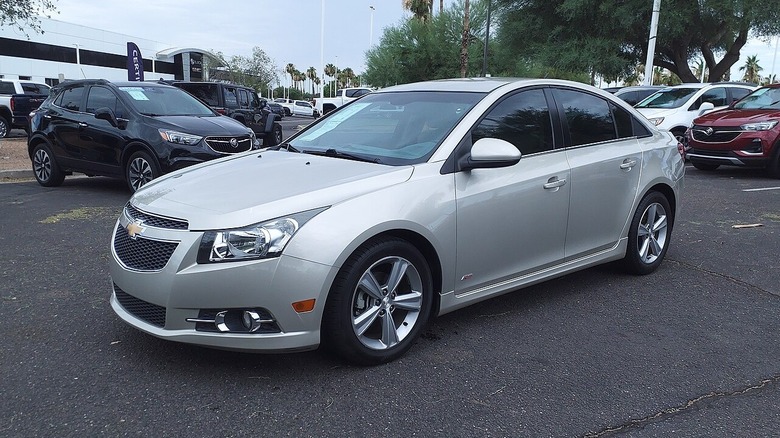
Although coolant leaks are a common complaint in Cruzes, other miscellaneous engine leaks are also commonly reported. Based largely on complaints and recalls, the 2011 Cruze was probably one of the worst cars of the 2010s. The 2011 Cruze's engine leaks and failures are mentioned frequently in consumer complaints documented by the NHTSA, making this one of the most significant performance issues overall.
Worth noting is that the 2018 Cruze, which was both compact and diesel-powered, averaged far fewer complaints than other model years. It was also only subject to three recalls, whereas the 2011 model year had seven.
Owners of 2011 Chevy Cruzes complained of oil leaks, burning oil smells, and vehicles overheating. Unfortunately for many drivers, the miscellaneous engine leaks sometimes turned catastrophic, requiring a new engine. In at least one complaint, the driver mentioned that their Cruze caught on fire. A 2012 recall apparently addressed oil leaks that could result in engine compartment fires, though some complaints stated their Cruzes were not included in that recall despite them reporting leakage issues.
Engine failure
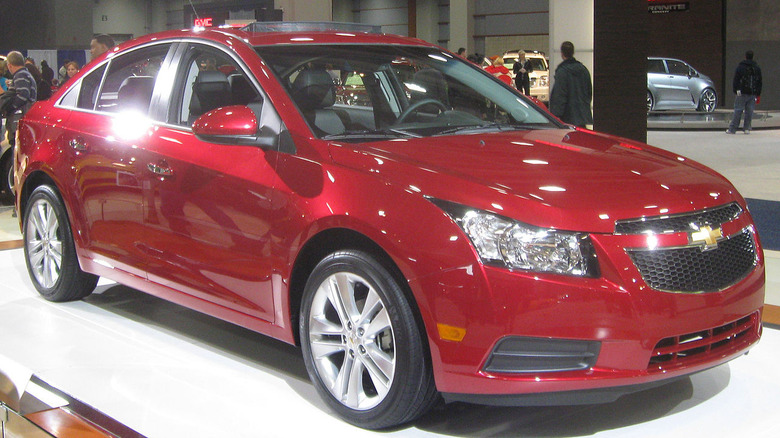
Based on consumer-reported coolant and oil leaks, it's not entirely unsurprising that engine failure is a common problem with Chevy Cruzes. Although the 2011 Cruze has received more than its share of criticism (it's the most complained-about Cruze model year on CarComplaints), the 2012 model year has the most complaints of any Cruze, based on information documented by the NHTSA.
Of over 800 complaints for the 2012 Cruze, about half center on the engine, powertrain, and fuel system. Complaints include everything from leaks to warning lights coming on to transmission failures and more. Despite all those apparent issues, the only recalls for the 2012 model year related to engine problems appear to be for oil and fuel leaks that could spark fires.
Unfortunately for owners, Cruzes are also one of the cars more likely to have the catalytic converter stolen. Especially since there are no longer improvements being made, it may make sense to steer clear of the Chevy Cruze. According to owners who have submitted complaints, you should, in fact, run the other way.