

15 Things You Should Never Say When Buying A New Or Used Car

Buying a car is a pain. You have to do research before even going to the dealership, and then the performative dance that is actually buying a car is exhausting and long. There's a reason companies like Carvana, boast no-haggling, no-salesperson car purchases. On top of all that, you also have to keep up with what to know about buying cars to begin with. It's a herculean effort, and once it's all done, you usually have years or sometimes even decades before you have to do it again.
So, if you're about to walk into a dealership and perform this long, strenuous activity, there are some things you should never say at a car dealership. These will maximize your odds of getting a good deal, good trade-in value on your car, and the least amount of drama possible. The only thing to keep in mind is this advice largely won't work at a good dealership since they're not trying to end around your needs anyway, but with that said, it's still good information to know.
Don't tell them your monthly payment budget
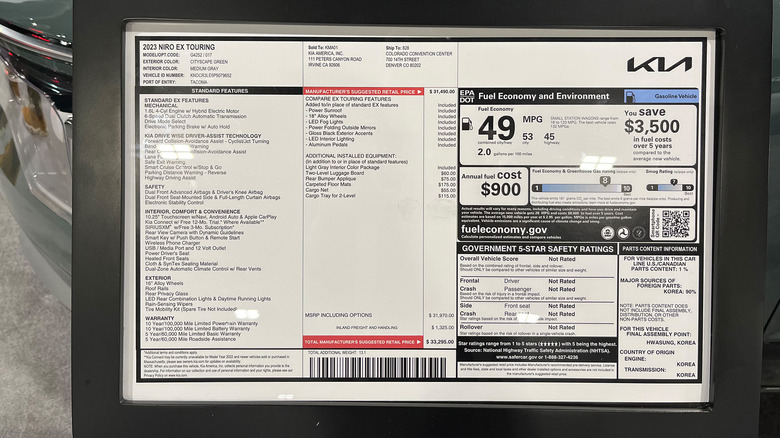
This is a common mistake that car buyers make, where they focus on the monthly payment instead of the overall cost. The scenario is this. You walk into a dealership, and tell the salesperson you can afford a maximum of $600 per month, for example. There are a wide number of things that the salesperson can do to get you to that monthly payment, and in some cases, those adjustments can actually increase how much you pay over the course of the loan.
For example, financing $40,000 for 60 months at 5% interest nets you a payment of $754 per month. That same $40,000 stretched out to 84 months at 8% interest is $623 per month. However, over the course of the 60-month loan, you'll pay a hair over $5,000 in interest, and $45,000 overall. With the 84-month loan, you pay less every month, but ultimately $12,000 in interest and $52,000 overall. Thus, you should always negotiate the out-the-door price of the car first and worry about monthly payments second.
Don't tell them your need is urgent
You may need a car as soon as possible so you can get to work and take your kids to school. However, it's usually a pretty bad idea to actually tell that to a dealership. This is actually something some salespeople are trained to look for in a potential customer. The greater your urgency, the more the salesperson can drive up the pressure, and usually, people in need will cave since they actually need the vehicle relatively soon.
Instead of telling the dealership you need the car immediately, play it cool. Let them believe that you're willing to walk out of the dealership and that you're in no big rush. This helps counteract the high-pressure sales situation and keep you in control of your negotiations. More reputable dealerships won't let this affect their deal-making either way, but bad dealerships will absolutely turn the screws to get you to buy something at a higher price and potentially an unfavorable interest rate to cash in on a quick sale. Play your cards closer to the vest.
Don't say anything about your trade-in
Trade-ins are a tricky business. The actual price of your car can vary greatly depending on the market. For example, during the COVID-19 shortages, used car prices skyrocketed, and people got top dollar for their trade-ins regardless of condition. Today, trade-in values are down compared to a few years ago, so you should be as careful as possible when talking about your car to a salesperson. If you talk it down too much, they may give you less money for your trade-in, and use your own logic to justify giving you less.
Before this gets out of hand, we are not suggesting that you lie to your salesperson about the condition of your car. They'll find out during appraisals anyway. The key here is letting them know that your car is fine and that you'll drive it away with no problems if you don't get a good deal on it. There are also some things you can do to increase your car's resale value if you think it'll be too low at the dealership.
Don't lie

This seems obvious, but you should never lie to your salesperson. If your trade-in is literally on fire in the parking lot, don't tell them that the car is in like-new condition. Don't lie about your credit score or total income. Car sales are there to put you into a car, so if you beat around the bush regarding your budget, financial status, and things like that, deals can fall apart rapidly, and people may even get mad at you.
The biggest detriment to lying is potentially tanking your own deal. If your trade-in is in rough shape and you say it's perfect, that'll add thousands of dollars to your bottom line once appraisals are done. If you lie about your credit score, you will almost certainly not get the interest rates you want. What may seem like a nice deal on paper will fall apart quickly as the truth runs up the price, ultimately causing you to waste your own time and everyone else's. Just be honest, it's better that way.
I am bad at math

This one is a little granular, but if you're not strong in math, it's probably not a good idea to parade around that fact. A reputable dealership will walk you through all the numbers and help you understand what's going on. A bad dealership will use the opportunity to talk circles around you in order to confuse you into believing that the deal you're getting is a good one when it isn't. There are thousands of stories on Reddit of people getting the run-around from salespeople because of this.
These tactics can manifest in several ways, including the salesperson not being forthright about interest rates, dealership add-ons or markups, or other items that might be glossed over by someone without strong math skills. It's a good idea to take someone with you who is strong in math, or to get the deal in writing, take it home, and look over it outside the context of a high-pressure sales situation. You can sometimes even negotiate some of the dealership fees if you know what they are.
I haven't been shopping around
If you have not done your research, one of the last things you want the sales team to know is that you don't know what else is out there. The ability to go somewhere else to buy a car is a great negotiation tactic for consumers. Dealerships rely heavily on getting you through the door, dealing with the prices there, and then getting you to buy without telling you that the same car might be a couple thousand dollars cheaper at the dealership across town.
By doing your research and seeing what's out there, you can walk into the dealership with the tools you need to negotiate better. If you find that car $2,000 cheaper across town, you can easily just tell them that you'll go shop there instead, which will put the sales team on defense instead of offense. Knowledge is power, and the power in this case is the ability to negotiate a better deal. Without that knowledge, the dealership may refuse to lower the cost any further, resulting in you paying more money.
I'm paying in cash

It may feel really good walking into a dealership with the metaphorical equivalent of a briefcase full of cash, ready to buy a car and drive it out without any payments, but when it comes to car negotiations, this is actually not the best idea. It's well-known that car dealerships make tons of money from banks by financing cars, and by not financing the car, you are taking that money away. This may make the dealership less likely to give you the best possible deal since it knows it can't recoup any of it from the financing kickbacks.
There are two ways to handle this, but one of them is dishonest. We don't recommend lying about financing until the very last second, as that may cause drama at the end of the sale. Instead, the better idea is to finance the car for the lowest APR possible, and preferably 0% APR if possible. Then, after a few months, pay off the loan. Dealerships will still get some of their kickback money, and you get a better deal on a car.
I have my own financing
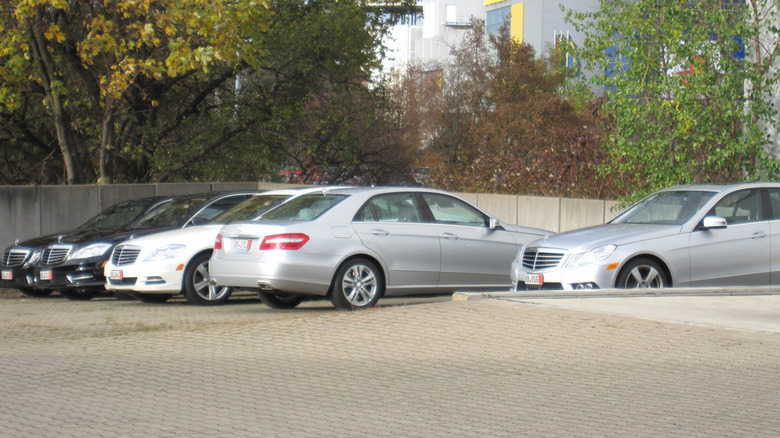
Having your own financing is very similar to walking in and saying you have cash. You are essentially telling the dealership that it's not getting its finance kickbacks. That will almost certainly impact your deal, even at reputable dealerships, since the kickbacks from financing may be making up for some of the discounts you're getting. Taking that off the table reduces the wiggle room and, therefore, may cost you more money.
That isn't to say that taking your own financing is bad; it's just not the best way to open the negotiation. Some folks recommend being open with your options and telling the dealership that you'll use their financing if it's better than what you have. That not only leaves your options open, but may help you find an even better deal than you got from your bank. Also, similar to the cash option, don't lie about not having your own financing and then spring it on the dealership at the last second. That may impact your deal and cause problems.
I love this car
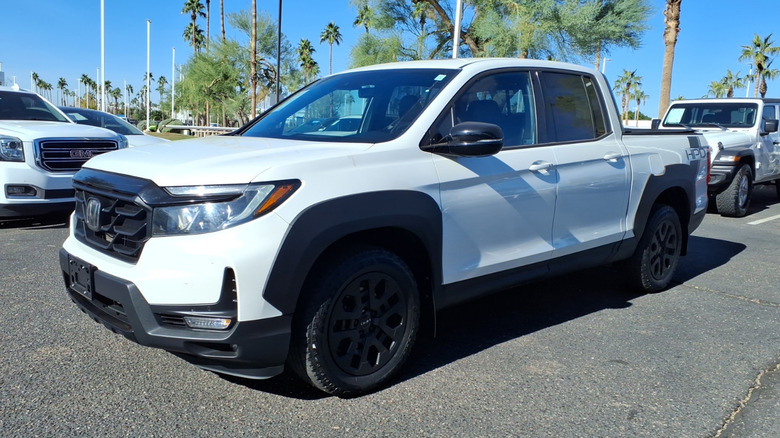
Showing strong emotions during negotiation is rarely a good move, and that includes the positive ones as well. Thus, telling a dealership that you loved the car, or showing any other strong positive emotions, may reduce your ability to negotiate. After all, the dealership already knows you love the car, so you'll probably stay in the dealership to get a deal done. Alternatively, it may dial up the high-pressure sales tactics since they know that they have a metaphorical fish on the line, which may make your experience less enjoyable.
Instead, try to be even with your emotions. You can say that you enjoyed the car, but keep it on a high level and don't show emotional attachment. You should always be ready to walk away from a bad deal, even if you really like the car, and your communications should reflect this. This sets the tone, and a competent salesperson will pick up on this, and still try to get you a good deal, even on a car that you really enjoy.
I want this car in this specific color
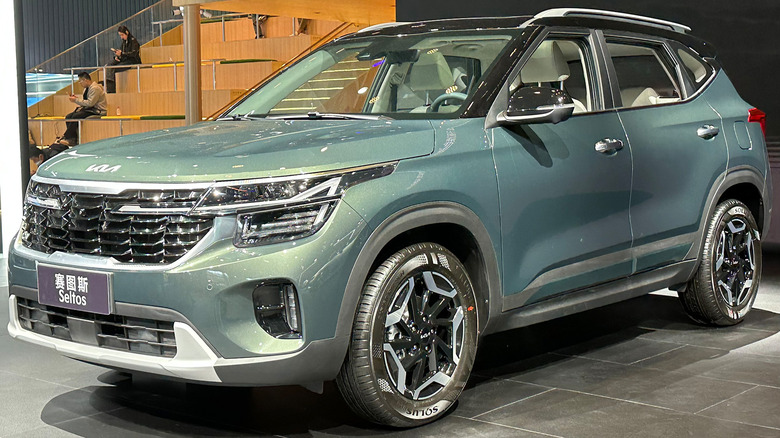
Being selective is part of being a customer, and there is nothing wrong with wanting a specific car in a specific color. However, when that specific car and color are both hard to find, and likely not at any other dealership in the area, two problems arise. The first is similar to what happens when you tell a dealership that you love the car. You box yourself in, and the dealership knows it has something you want that others don't have. This can translate to a high-pressure sales situation where the dealership has all the leverage.
The second problem is that if the color combination is difficult to find, you box yourself in even further when deciding which dealership to work with. It's much more effective to have multiple color options you like, or at least have colors you'll settle for if you can't find the one you want. Colors often cost more from the factory, but dealerships may mark them up further if they know they have exclusivity, which doesn't bode well for you.
I don't know anything about cars
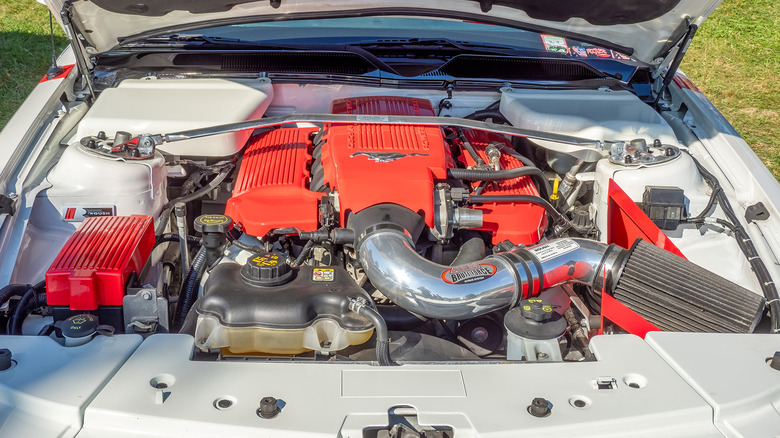
This is much less of a problem than it used to be, but admitting that you don't know anything about cars can be detrimental to your dealership experience. Reputable dealerships will ask questions and get you into something that answers those questions, and it's not so bad. Bad dealerships may try to skirt around your concerns and put you in a car that is either not enough for what you need or too much for what you want. This advice also applies to auto mechanics, who may try to upsell you on stuff you don't need just to make a few extra bucks.
If you really aren't a car person, there are three ways you can deal with this. The first is doing the research before going into the dealership, so you know what you want. Alternatively, you can take someone with you who knows more about this stuff and can help you negotiate. Finally, you can take offers home to research them later to make sure you wind up in the car you actually need.
Give me every accessory

Dealership accessories range from maximally useful to a complete waste of money. It's something dealerships are pushing more because markups on accessories can more than make up for losing profit margins on new cars, and they can add up very quickly. You can swiftly add $50 to $100 in cost to your monthly payment with just a few too many yes answers, when in reality, the correct decision is to shop around. For instance, when I bought my Honda Ridgeline, I noted that Honda-brand all-weather mats retailed for $200. They don't even protect the carpet under the gas pedal. Third-party variants are often half the price and cover more floor space.
Then there are dealership accessories that aren't good values. One common one is ceramic coating, which is really mostly a wax-style temporary coating that comes with a warranty, and what you really pay for is the warranty. The real deal from an auto body shop is much more protective, longer-lasting, and costs just about as much. If you shop for accessories, you'll find better ones than what you get at the dealership.
Not mentioning if you're military or a first responder

Sometimes what you don't say matters as much as what you do say. Dealerships have tons of rebates and discounts depending on a variety of factors. One of those things includes job-specific discounts, often for military and first responders. Half the dealerships in my area have these, and while they are small — roughly $500 or so — it's one of those scenarios where every dollar helps, especially if you're putting the car on a long-term loan. As a former military member, I take my DD214 anywhere where I think it might be useful, and oftentimes it is.
There is another layer to consider here, too. Some businesses partner with local dealerships and make new car discounts an employee perk. As an example, Nationwide Insurance is headquartered in Columbus, Ohio, where I live. The company lists cheaper new cars from participating dealerships as an employee perk. So, check your employee benefits, and if such a thing exists for you, try going to those dealerships first and mentioning your employer to see if you can get a few extra bucks off of your purchase.
I don't need a test drive
You need a test drive, and don't let anyone tell you otherwise. This matters a lot more for used cars than it does for new cars, but in either case, you should make sure that you like the thing you're about to spend a ton of money to purchase. I got caught with this one. Once upon a time, I took a very short test drive of a Hyundai Santa Fe and then bought it. Later, it turned out that I hated how soft the suspension was, and I ultimately sold the car to get something with a slightly firmer ride. Learn from my mistakes.
For used cars, it's even more important to take a test drive, as that'll give you an indication of what may be wrong before making your purchase. I once test-drove a Ford Edge that was being sold as-is. It was so messed up that the wheel would randomly turn while driving in a straight line, which caused me to get motion sick on a 15-minute test drive. The dealership said they wouldn't entertain fixing it before the sale, so I walked right out of there.
Don't say rude things

Buying a car is stressful. On one end, a salesperson is trying to make a living, and on the other end is you, committing to a major purchase you may have to live with for a decade or two. Everyone's on high alert, and while some amount of performance is expected, things can go too far. Being rude, aggressive, or confrontational will almost assuredly have the opposite effect of what you want, and may even result in you being thrown out of the dealership by security.
There are tons of stories on Reddit of people getting into terse interactions with salespeople, but there are just as many stories of people going too far and hurting dealership employees, which is equally not okay. There is no debating that a trip to the dealership will usually take a long time, and that negotiation can get intense. However, it's important to keep things in perspective and remember that you can just leave if you want to. Don't wind up a story on the six o'clock news, and make sure to stay civil.