

These Are The Most Aerodynamic American Cars Ever Made
Among the sciences and practices involved in building an automobile, aerodynamics is one of the most important. Creating a car that can efficiently cut through or manipulate the air around it is a guiding principle for cars with any goal, whether it is high miles per gallon or low lap times. Aerodynamics and aero are common words in the car world, and much of the time, we use them to refer to aero elements that actually increase drag for performance reasons, such as spoilers or splitters. However, aerodynamics is also concerned with efficiency. The most efficient cars must move through the air with as little resistance as possible.
The primary way to measure aerodynamic efficiency is with a measurement of the drag coefficient (Cd). NASA defines a drag coefficient as equal to the drag divided by the quantity: density multiplied by half the velocity squared times the reference area. The math is a bit complicated, but the point is that the lower the drag coefficient, the more aerodynamic something is. When it comes to American cars, they're not exactly known for being the slipperiest things out there. Everything's bigger in America, and many of its cars follow that rule by taking the form of a small house on wheels, whether they're an oversized pickup or a monstrous muscle car. However, not all of our creations are so averse to efficiency. Here are some of the most aerodynamic American cars ever made.
1986 Ford Taurus
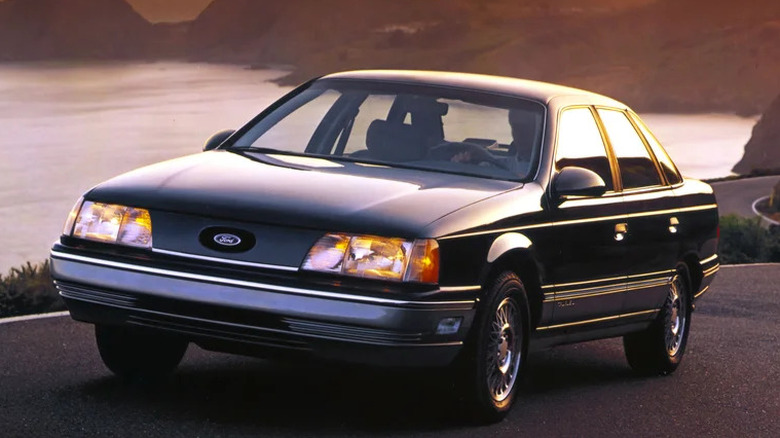
For 33 years, the Taurus was Ford's bread and butter sedan. A mid-sized people carrier, the Taurus was held in high regard in the U.S. market until Japanese sedans eventually drove it to extinction. The Taurus went through six generations before the nameplate died in 2019, but its inaugural first generation remains something special. To understand why the original 1986 Taurus was so important, we must first think of the automotive landscape of the day. Most cars on the road were heavy and boxy, so when the Taurus came onto the scene with a fresh, streamlined take on what a family sedan could be, it made waves.
Under the skin, the Taurus was well ahead of much of the competition at the time, with a smooth suspension and rack-and-pinion steering praised for its communicative operation. The 1986 Taurus was powered by a V6, producing 140 horsepower, all of which was sent to the front wheels. Outside, though, is where all the aerodynamic subtleties came into play. The Taurus was smaller than most American sedans at the time, and much smoother, almost European in fashion, which helped it glide through the air with little resistance. The front fascia was where much of the magic happened, as the Taurus featured headlamps that were flush with the bodywork and a grilleless design. These advancements and design choices helped the Taurus achieve its impressive 0.32 drag coefficient.
1970 Plymouth Superbird
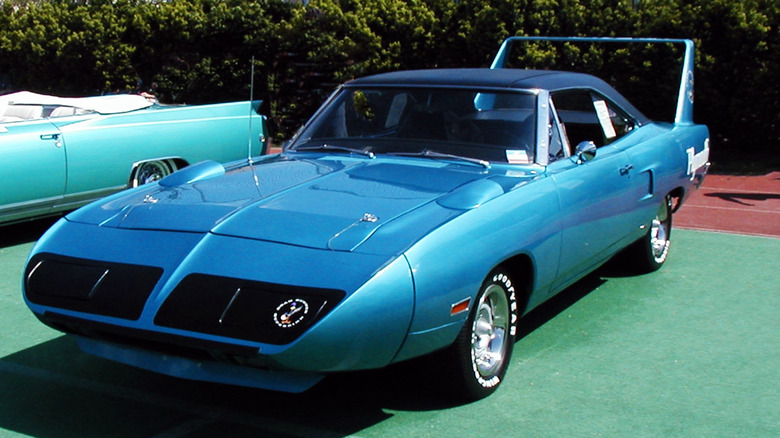
A couple of decades before the Taurus came out, the American car scene was at its peak of colossal cars. Muscle cars sought performance through displacement, and however powerful they were, most came with hulking bodies that highlighted an affinity to form over function. However, some managed to add some brains to the brawn. One example is the 1970 Plymouth Superbird.
While the Superbird and its sister car, the 1969 Dodge Daytona, are looked back upon now as some of the coolest muscle cars of the time, the American consumer was so used to the bulky and blocky status quo that the Superbird seemed a sort of newfangled ugly duckling. However, hindsight looks upon the Superbird with favor, as it is now recognized as one of the first muscle cars to incorporate aerodynamics into its arsenal.
The Superbird was homologated for NASCAR, and extremely powerful for the time, thanks to its three V8 options being a 7.2-liter with 375 horsepower, a 7.2-liter with 390 horsepower, and a rare Hemi 7-liter with 425 horsepower. You'd be able to tell the Superbird had origins on the track just by looking at its aggressive aero elements like the nose cone, which turned its usual horizontal plow into a sharp blade, and the towering rear wing, which provided stability at high speeds. With a drag coefficient of 0.31, this missile could chase high triple-digit numbers with confidence and competence.
1984 Pontiac Firebird Trans Am Aero Package
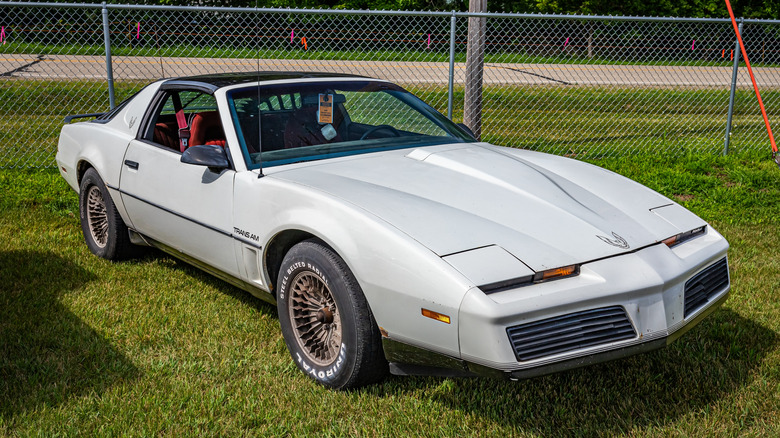
The now-defunct American marque Pontiac used to be one of the United States' most prominent automakers. It produced many models during its tenure, but there are none more representative of the brand or more iconic than the Trans Am. After the success of the Mustang, Pontiac wanted to build its own muscle car, and so was born the Firebird in 1967, with the performance Trans Am option arriving in 1969. The Firebird's final generation ended in 2002. The Trans Am was produced in four generations during its production run, and in 1984, two years after the introduction of the third generation, Pontiac released the Trans Am Aero Package.
The third-generation Trans Am was already a slicker muscle car compared to its boxy older brother. It featured a heavily sloped nose that blended into a similarly sloped windshield, making for a true wedge side profile. Where the second generation had exaggerated fenders, the third reeled in the front and rear haunches, making for smoother sides while still retaining a muscular look. The Aero Package then tacked on additional aero elements to make this sleek muscle car even sleeker. These included side skirts to help channel air past the underbody and a smaller grille opening for smoother first contact. This made this V8-powered muscle car a lot smarter than many of its competitors, and gave Trans Ams with the Aero Package a drag coefficient of just 0.299.
2024 Rivian R1T
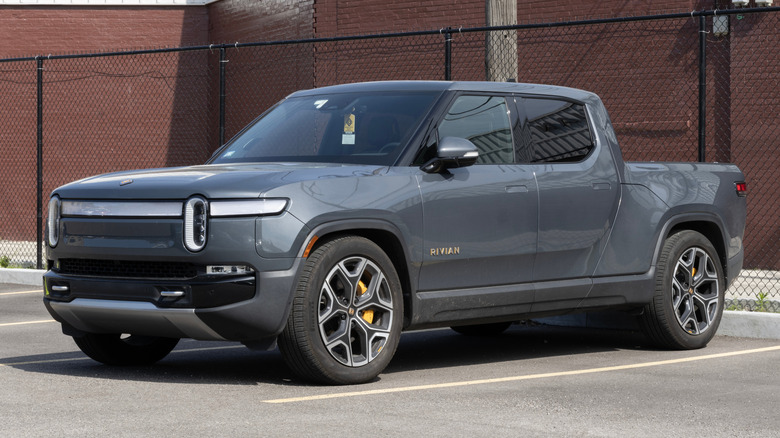
In our modern day, words like aerodynamics and drag coefficient usually come up in conversation about electric cars. While aerodynamics are important for all cars, this science is particularly important for EVs. Since battery tech is relatively new (though advancing rapidly), an EV with a full charge is often at a range disadvantage compared to a gas-powered car on a full tank. Since many EVs can also regain energy from braking, much of their relatively limited power is lost at sustained high speeds, meaning aerodynamic efficiency is key.
The Rivian R1T might not be what you imagine an aerodynamic car to look like, given its weight, size, and pickup truck shape. The design is classy, with smooth surfaces and balanced proportions. The R1T is so visually clean that you might not expect it to be so adept at manipulating the air it drives through. The R1T makes use of a smooth underbody, flush door handles, and smooth wheels as its first line of defense. Then, there are clever elements like a small spoiler at the rear of the cab that helps waft air over the open bed, and front bumper vents that smooth airflow over the moving wheels. The car itself battles drag, as it can be set to lower its ride height at high speeds to reduce turbulent underbody airflow. These innovations help make this truck more aerodynamically sound than it might appear, as the R1T has a drag coefficient of 0.297.
1948 Tucker Torpedo
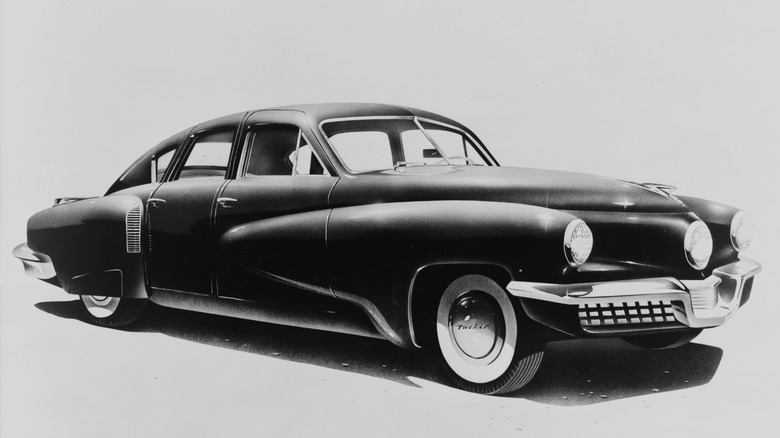
Long before electric pickups and sharp muscle cars tried their hands at the black magic that is aerodynamics, American automaker Tucker built a car with abilities ahead of its time. Preston Tucker, the founder and namesake of the Tucker company, envisioned a new sedan that would usher in the next era of American carmaking. His ideas for the Torpedo were lofty for the time, such as the inclusion of disc brakes and fuel injectors, and while many of the car's internals were impressive, its exterior aerodynamics are what make it germane to this list.
The Tucker 49, also known as the Torpedo, was a sleek car with artfully sculpted rear haunches and bubbling front fenders that ran down the sides of the car. It featured a fastback roof and a central front headlamp that served as a focal point for the curved hood. Taking inspiration from its name, these elements made the Torpedo a streamlined car that embodied Tucker's vision of his vehicle as a car of the future. The Torpedo was unique for its time and handsome as well, and it can still compete with modern cars in the wind tunnel, with its impressive 0.27 drag coefficient.
2025 Lucid Gravity
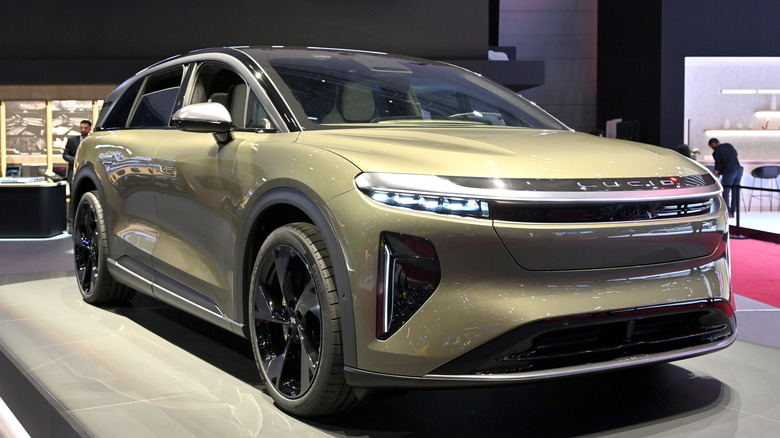
Lucid came into the automotive industry fast and loud, with visions of cars that brought new ideas without compromise. Lucid has succeeded in its ventures thus far and has delivered on its promises, solidifying its position as an EV brand. The Air sedan (which will make its own appearance on this list) gave Lucid its footing, and its success has served as a launchpad for Lucid's second-ever model, the Gravity. However, where the Air had a more focused mission in being an electric luxury sedan, the Gravity seeks to be a master of all trades in SUV form.
The Gravity wants to do it all. High horsepower, enjoyable driving dynamics, ample storage space, long range, good looks, and aerodynamic efficiency are all key goals the Gravity aims to achieve, which makes for a tall order in the hands of one car. The Gravity somehow does it, though, and while all of these areas are worth exploring, we of course must focus on the aerodynamics. The Gravity uses the usual trickery, such as door handles that recess flush into the bodywork when locked or in motion, and a smooth underbody without exposed drivetrain parts to minimize turbulent underbody flow. Its sweeping roofline creeps subtly downward as it spans the large cabin, ending with a shelf that helps air leave the Gravity with grace. Working together, these elements help the Gravity achieve its 0.24 drag coefficient.
2024 Tesla Model 3

Lucid is a new player on the American EV scene, but the staple brand in that sector has always been Tesla. Tesla was founded all the way back in 2003, and it wasn't until 2008 that Tesla released its first production car, the Lotus-based Tesla Roadster. Then, in 2012, Tesla released the Model S, which would go on to serve as a launchpad for its future models as it transitioned away from the Roadster sports car into more four-seater models. Then, in 2016, Tesla unveiled the Model 3 as a cheaper, entry-level sedan sitting just below the more premium Model S.
Teslas have always been aerodynamic, but after its 2024 refresh, the Model 3 has become one of the top performers in the wind tunnel. The new Model 3 features a full facelift, with a completely redesigned front fascia that enhances aesthetics and efficiency. The facelift gives the Model 3 a cleaner look overall, with the front vents removed from the bumper and smaller headlamps. A redesigned rear also incorporates a new diffuser as well, and updated wheel covers to help smooth airflow down the sides of the car. The hood has also been flattened slightly, and when compared to the previous design, these new elements all come together to give the 2024 Model 3 an 8% increase in efficiency thanks to its 0.22 drag coefficient.
Lucid Air
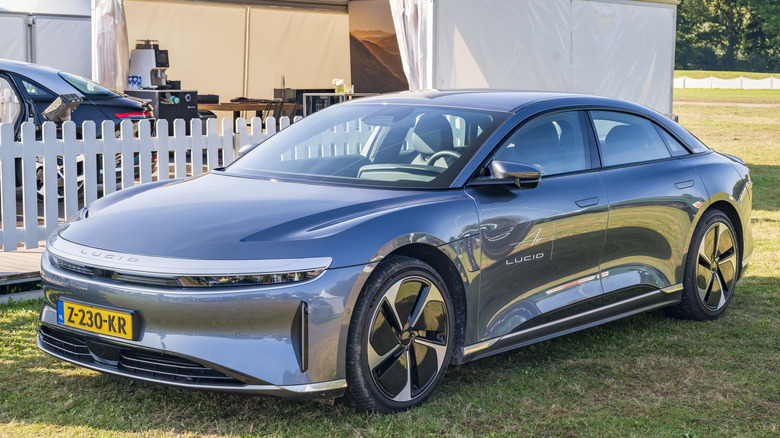
The Lucid Air is the California brand's inaugural model, and when customer deliveries started in 2021, it had a lot of promises to keep. For a new carmaker's first try, the Air was a fantastic success. It matched the expectations it set for itself in being the representative of a new class of luxury EVs with its looks, construction, and capabilities. Even some of the first editions, like the Dream Edition, came packing up to 520 miles of range, and while some of that long reach was thanks to battery tech, much of it came courtesy of aerodynamics.
Being a sedan, the Air is already at an advantage compared to the Gravity or any other electric SUV. The Air's design is clearly informed by long hours in the wind tunnel's artificial breeze. Its proportions and curves remain stylish, looking intentional and avoiding the blob-like shape many hyper-efficient designs create. The Air's front fascia is flat and smooth, with two vents that help funnel air across the front wheels without fuss. The Air also uses what Lucid calls a vortex air intake system. This system manipulates airflow behind the front bumper and channels it into heat exchange areas and air intakes. The system's accuracy allows for smaller intakes, which further decrease drag. When said and done, the Air has a drag coefficient of 0.197, making it among the most aerodynamically efficient production cars in the world.
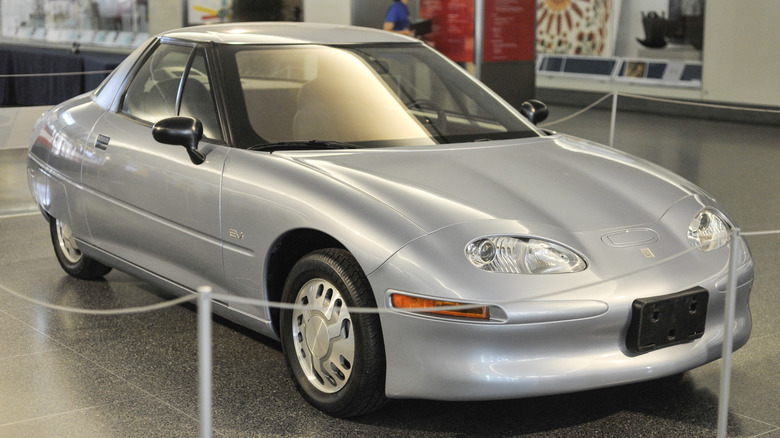
1996 GM EV1
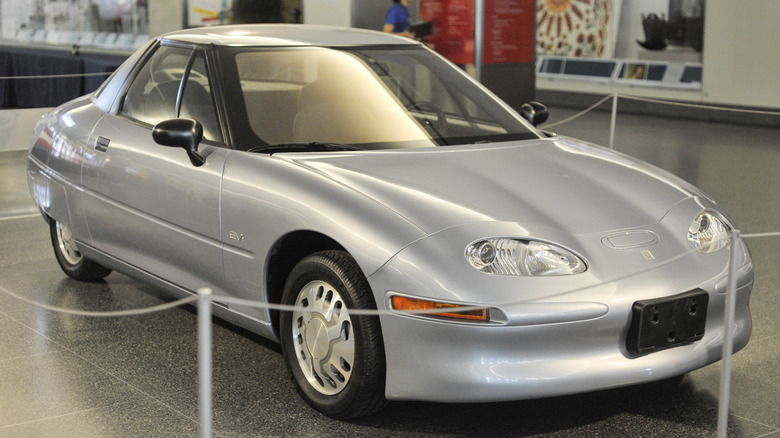
Although the GM EV1 never made it to production, its aerodynamic capabilities are some of the most impressive we've seen from any American carmaker. With the concept car unveiled in 1990, GM had its sights set on turning this forward-thinking EV into a production model. Impressive for the time, the prototype boasted a 125-mile range and could launch to 60 mph in 8 seconds. You could tell the EV1 was something different just by looking at it. Its long, rounded shape was reminiscent of a water droplet falling horizontally, and though it certainly helps highlight the futuristic aura of the car, it had functional purposes as well.
At the time, lithium-ion battery tech wasn't advanced enough to power anything beyond a video camera or a TV remote, and the EV1 used lead-acid batteries instead. These 27 battery cells were stowed in a T-shape in the car's underbody, and as the batteries were the life source, their shape could not be compromised. The body had to be sculpted around them, but luckily for GM, the resulting shape was incredibly aerodynamic as well. The designers produced a flat front fascia because there was no need for a traditional grille, and the bodywork covered half of the rear wheels, giving the car a sort of tail. Although the EV1 never took off, becoming one of the rarest cars in the world, it was truly ahead of its time for many reasons, including its incredible drag coefficient of just 0.19.