

5 Cars That Outlived Their Replacements
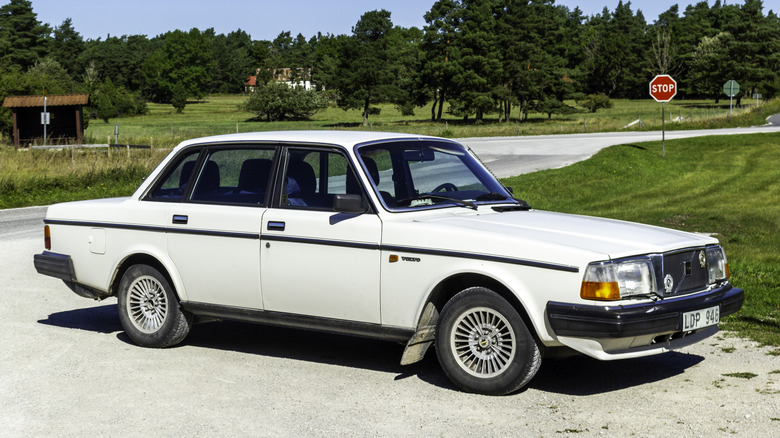
Typically, when manufacturers introduce a particular vehicle, they do it with a certain context in mind. A time, region, target audience, and so on — cars are made, first and foremost, to sell. Sometimes they sell a little too well for their own good, growing from humble singular models to juggernauts spanning multiple decades; it's cars like these which, as we'll see, hold no equal, not even among their successors.
One would assume that an automaker would actively try to improve, or at least iterate, upon their previous work. But when one of these vehicles comes along, it's often the case that they're simply trying to improve upon perfection, or reinventing the wheel and missing the point entirely.
First thing's first, though, we need to define precisely what a "replacement" is, in this context. A replacement is, in-short, one of two things: a new generation, or a new vehicle entirely, designed to replace an existing one. Most cars have a natural lifespan, governed by various factors such as technological progress, styling trends, and evolving government policies.
Two vehicles can share the same name but serve entirely different purposes for these reasons — take, for example, the classic versus modern Mitsubishi Eclipse and Eclipse Cross, respectively; in these cases, they are two different cars and won't be counted. This list is for a car that only ever had facelifts, if indeed it changed at all, over its lifespan.
Virtually all of these cars are iconic, albeit for different reasons, and they had to be to outlive their successors. Sometimes they were simply better at the job they were meant to do, other times they were too big to fail. Let's explore these perennial models and the failed attempts to usurp them.
Fox platform Ford Mustang and Ford Probe
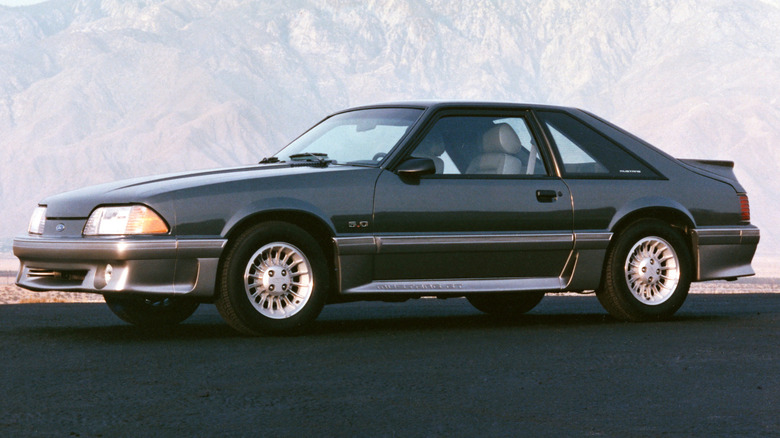
Rewind back to the venerable Fox platform Mustang, introduced in 1979 following the Malaise Era Mustang II. At the time, this was a thoroughly modern car, featuring a brand-new platform designed around maximizing fuel economy while retaining the sports car's signature V8 and sleek silhouette.
The second Oil Crisis was in full-swing, coloring much of the 1980s vehicle lineup with a characteristic boxy wedge-shape form as manufacturers searched for aerodynamic efficiency to make up for piddling power figures. However, this trend wasn't going to last forever; the 1990s, by contrast, was largely filled with form-fitting, CAD-dominated styling cues.
One of the most ubiquitous of these designs was the Ford Probe, a car meant to be the replacement to the Mustang. In short, the Probe was a Mazda-based front-wheel drive liftback introduced in 1988 alongside the traditional (and rapidly aging) Fox body Mustang. At this point, Ford's design team fully intended for the vehicle to become the next Mustang, equipped with a choice of two inline-four engines or a V6, but no V8. That fact, coupled with the lack of RWD and other crucial design features, left Mustang enthusiasts up in arms, and Ford scrambled to course-correct.
The Fox body lasted until 1993, with the new SN95 (also utilizing the Fox platform) representing the next iteration of the Mustang name. The Probe, meanwhile, wasn't a particularly bad car in its own right, but it certainly was no muscle car. It was discontinued in 1997, whereas the Mustang continues to this day. The Fox-platform SN95, meanwhile, continued until 2004, outliving its proposed replacement by seven years.
Volvo 200-series and Volvo 700-series
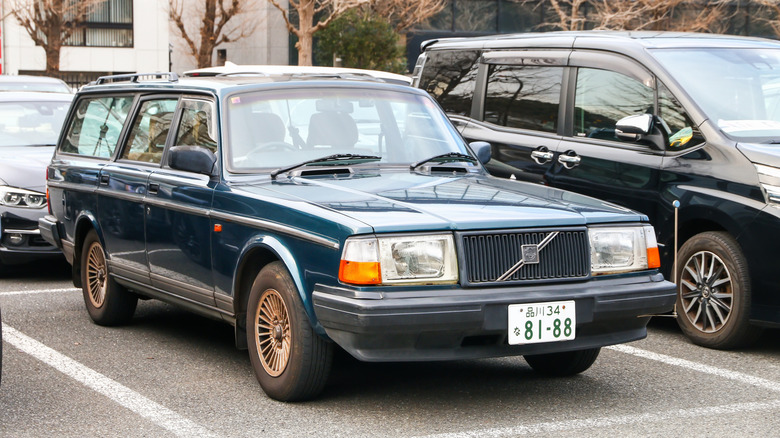
It's difficult to improve upon the design of a perfect rectangle, but Volvo made a fair attempt at it with the 700-series. The 200-series is what most people envision when they think of a classic Volvo: The long 245 wagon, the 242 coupe, and so on. These vehicles were produced in the millions between 1974 and 1993, achieving what many argue to be an iconic status. They were barebones, spacious, full of innovations, mechanically incapable of going fast, and carried a reputation for absolute, utter reliability.
The classic "Swedish Brick" is basically the anti-stylish car, with people collecting these things for various reasons, though not because they're particularly outstanding, apart from the aforementioned reliability. These Volvos were simply built to carry people from point A to B, but they did it with such a characteristically quirky style that they quickly endeared themselves to the automotive world, what with their seats with holes in the headrests and headlights with wipers on them. It's the automotive equivalent of a punk rock band going popular, and Volvo tried upstaging the act with the 700-series in 1984, right when the 200-series was in its prime.
Ultimately, both models were successful in their own rights, with the 700-series selling more than 1,200,000 units over its lifetime. But these numbers paled in comparison to the 200's 2.8 million vehicles built, not just outselling its successor by almost 3 to 1, but also outlasting it by a year — the 700 ended production in 1992, whereas the 200 went to 1993.
Jeep Cherokee (XJ) and Jeep Grand Cherokee (ZJ)
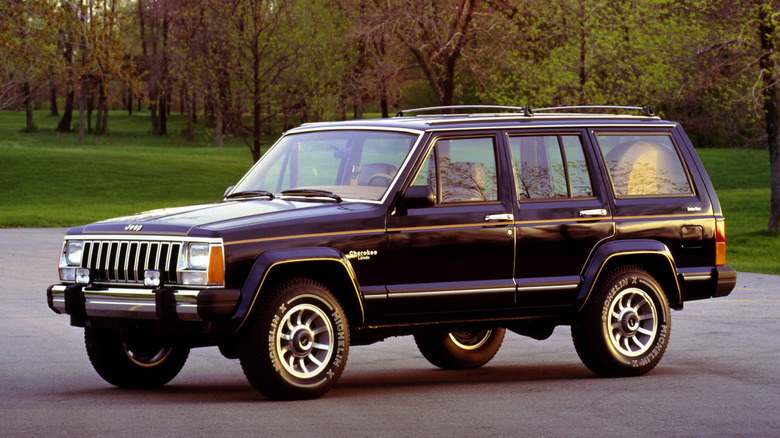
The original Jeep Cherokee is an icon of the 1980s and 1990s, representing one of the first ever small SUVs of its kind. Unlike other 4x4s of the era, including the CJ and Wrangler, the XJ Cherokee was a unibody construction, meaning the body itself was the stressed member of the chassis. This helped to drastically lower the Cherokee's center of gravity while retaining its ground clearance and off-road capability, creating what was ostensibly a practical wagon with the pedigree of a Wrangler.
This formula, combined with the XJ Cherokee's absolutely epic reliability stemming from the venerable engine selection, made it a perennial favorite among off-road enthusiasts. Jeep passed through multiple sets of hands, going from AMC to Chrysler to Daimler-Chrysler, yet the XJ remained. A little-known fact, though, is that during that timeframe, Chrysler had hopes that the ZJ Grand Cherokee would supplement and ultimately replace the Cherokee.
The ZJ was, effectively, a more opulent variant of the Cherokee, equipped with more luxurious amenities, an optional V8 engine which the Cherokee never offered, and a more refined platform. Much like the XJ, the ZJ represented a landmark — namely, being among the first modern American luxury compact SUVs to hit the market, competing with the likes of the Range Rover.
However, while it, too, was an arguably timeless design, it never truly replaced the XJ, likely because these vehicles ultimately could coexist in different market segments. Moreover, while the ZJ evolved into the WJ in 1999, the original XJ continued with only a single facelift from 1984 all the way until 2001, a run of some 27 years.
Citroën 2CV and Citroen Dyane
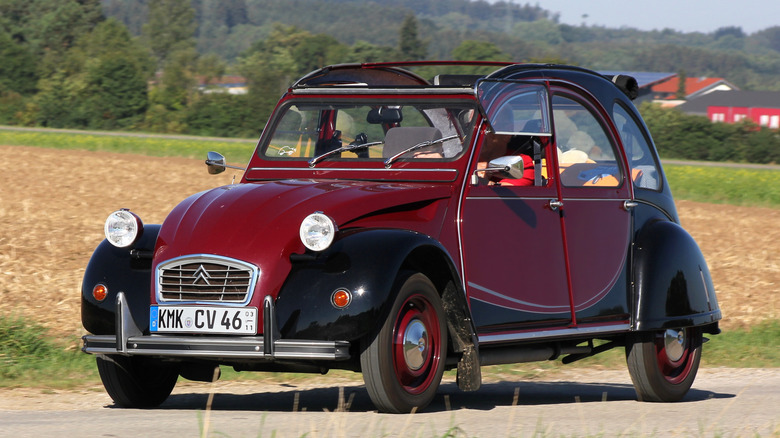
Citroën is one of the most storied automotive manufacturers in history, though it almost ended during World War II. Suffice it to say, the company wouldn't exist today if it wasn't for one of the most forward-thinking designs of its era, a car people love to hate: the 2CV. This car is almost single-handedly responsible for motorizing the French countryside, enabling farmers to transport their crops and businesses move goods across the Medieval-style streets of late 1940s Europe. It's a landmark design serving a specific function: A basic form of transport to be used like an appliance — a four-seat quadricycle, in a phrase.
The original 2CV first went into production in 1948, lasting all the way until 1990 while remaining relatively unchanged. Much like the Volkswagen Beetle, this was, fundamentally, a 1930s design that was still serving its purpose as cheap transportation for the masses, though it wasn't left idle. In fact, Citroën planned to replace the 2CV with the Dyane, which at first glance looks pretty much the same, just more square. And, for the most part, it was — the Dyane was, like the 2CV, basic and affordable, but it didn't really provide any marked improvements over the 2CV.
Much like the 2CV, the Dyane relied on momentum to go anywhere, thanks to its underpowered engine. It wasn't particularly refined, and its suspension was soft to the point of comedy. Basically, it was just a more ergonomic 2CV, and never fully moved out of its predecessor's shadow, nor did it have the staying power. The Dyane only made it from 1967 to 1983, lasting a fraction of the 2CV's production run despite being an objectively better design with similar characteristics.
Mini (multiple marques) and Austin Metro
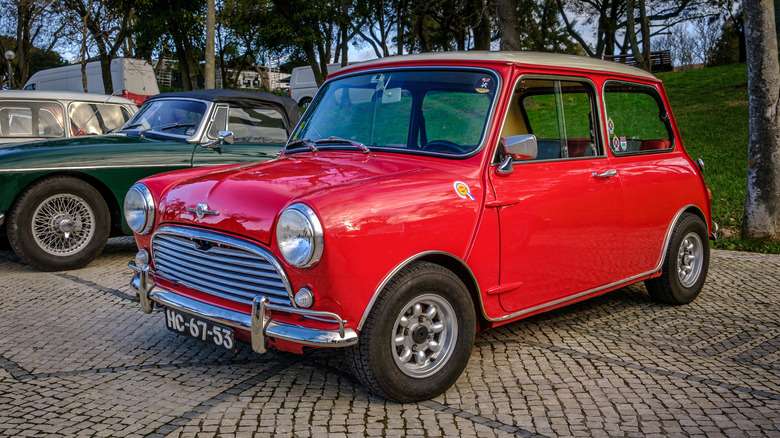
The original Mini was both a product of its time and one of the most accidentally timeless cars in history. It was built for a recovering British economy with tight roads and tighter fuel budgets, a compact family car that used an innovative and powerful transverse engine and FWD configuration to save space.
The original Mini debuted in 1959 with this philosophy in mind, cramming as much car into as little space as humanly possible, and the formula worked. In fact, it worked so well that it quickly became one of the most universally-beloved cars, with a number of variations, badge-engineering takes, and body styles debuting, from utility panel vans to the legendary Mini Cooper.
The Mini name was featured alongside numerous badges such as the original Morris, Austin, and Rover, generally falling under either the British Motor Corporation or British Leyland umbrella. One million Minis were produced by 1965, two million by 1969, effectively defining the British popular automotive culture at the time; as such, numerous attempts were made to capitalize on this with direct replacements. Austin made one particularly earnest attempt in 1980 with the Austin Mini Metro, a car arguably just as responsible for saving British Leyland.
The Metro was, effectively, a more modern take on the original Mini concept: A simple, small, 2-door liftback. Of course, it was more modernized than the aging Mini, even winning over hearts despite early quality issues. However, with fierce competition in its segment picking up from the likes of Peugeot and Volkswagen, along with the demise of Austin, the original Metro was left without a manufacturer in 1988 before being redesigned by Rover in 1990, whereas the Mini continued almost unchanged until 2000.