

The Most Advanced Military Vehicles In America's Arsenal By Branch
The United States military is the most powerful fighting force on the planet. Its spending outpaces every other nation by a wide margin, and the tools that American servicemembers have at their disposal often cast a long shadow over the comparable weapons of war other nations deploy. Americans serving in the military enjoy a legacy of highly technical and nuanced training, and they utilize some of the most advanced equipment ever conceived. Some of the most unbelievable weapons used by the military include a DARPA project to create self-steering bullets and of course the legendary rail gun.
Vehicles are a key part of the military's readiness and capabilities, both in planning and logistics and during real time combat missions. Across the six branches of America's military hierarchy, there are numerous, high-tech vehicles that help turn the tide of warfare. Some of these are brand new entrants into the field, while others have been with the military for a while but still provide unique technical advantages that aren't easy to counter or copy. These are the most advanced tools in each branch's inventory and what roles they perform to help Americans retain high performance standards and combat effectiveness.
Army: AbramsX and AMPV
Modern servicemembers in the Army are continuing a tradition started by the Continental Army in 1775, and they still utilize some of the same tools of warfare that have long underpinned the military's ground combat wing though, albeit with plenty of fresh enhancements. The battle tank is one such technology, introduced in 1918 to American soldiers. Since that time, tank technology has made huge leaps forward.
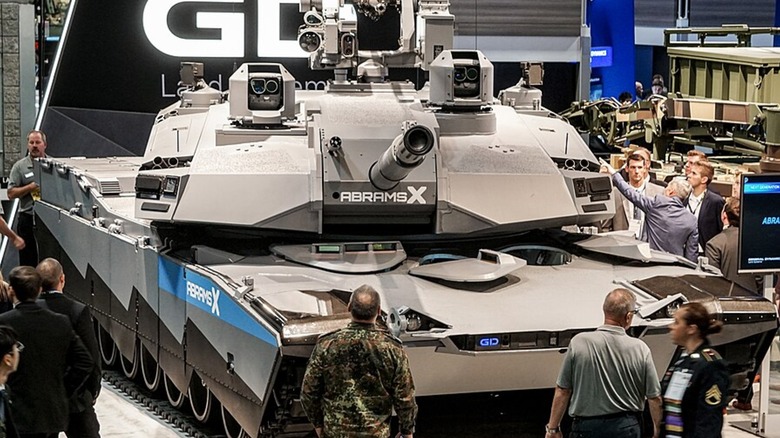
Today's AbramsX tank is aimed at supporting a brand new way of waging war, one that relies on cheap and immensely efficient suicide drones. Drones do a lot, from surveillance to active aggression. The AbramsX features an unmanned turret that mitigates the threat of drone strikes to the crew within. The tank itself utilizes integrated AI networking capabilities to better assess the path forward and deliver lethality without sacrificing crew safety. An automatic loading system, lighter build, and more underpin the tactical shift.
Another critical tool used by the Army is the Armored Multi-Purpose Vehicle (AMPV). This heavily armored troop transport vehicle is replacing the M-113s that have been in service since the Vietnam War. The first of these vehicles were delivered in March 2023, and almost 3,000 in total will be rolled into the Army's inventory over the following two decades. The tool will serve in tactical assault operations, medical evacuation roles, and as a mobile mission command unit among others, providing the Army with plenty of versatility.
Navy: Zumwalt-class destroyer, Ford-class aircraft carrier, and Virginia-class attack submarine
America's Navy is overwhelmingly powerful, and a hive of technological advancement. In 2025, the U.S. possessed 11 aircraft carriers and nine helicopter carriers, amounting to more carrier sea power than the next five largest fleets combined (China is second with seven total carriers). The aircraft carrier is a technological marvel, and the Ford-class carrier stands at the forefront of this projection of naval might. Ford-class carriers, which the Navy calls the "most capable, adaptable, and lethal" combat platform in the world. The carrier can accommodate 90 aircraft, and has the ability to fly 160 sorties per day thanks to improvements like an electromagnetic launch system (EMALS) and digitally controlled tools like an Advanced Arresting Gear.
The aircraft carrier is a domineering force, but alternatives to the aircraft carrier are still crucial to maintaining an agile and flexible maritime fighting force. The Virginia-class attack submarine can carry a barrage of torpedoes, missiles, and other strike elements. These subs also feature sensitive sonar equipment and other threat tracking tools to find and counter emerging undersea and surface threats of all types.
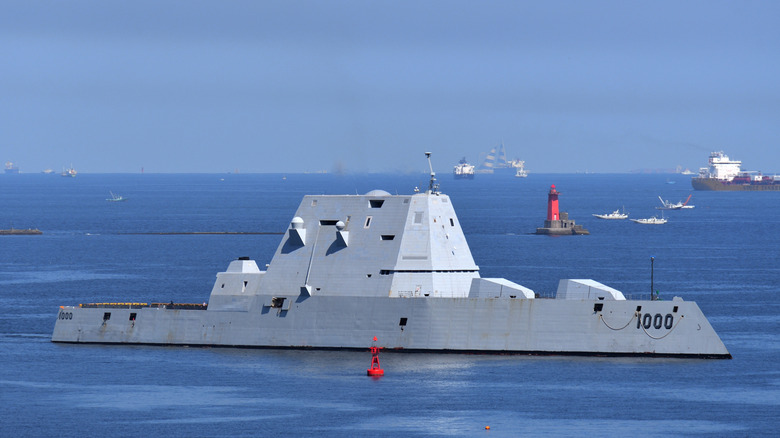
Finally, the Zumwalt-class destroyer demands a call out. This is a stealth warship with odd physical dimensions but immense firepower and speed. It's the Navy's newest warship, and hailed by the branch as the largest and most technologically advanced surface combatant in the world.
Marine Corps: VH-92A (Marine One) and AV-8 Harrier II
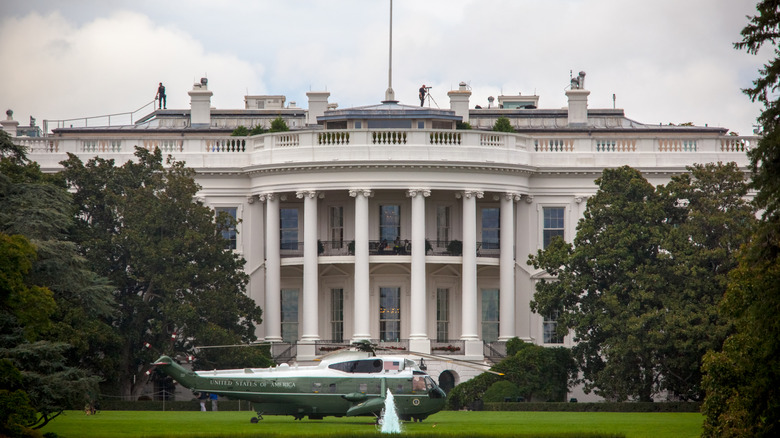
Marines are the tip of the spear, as the saying goes. They fight through some of the hardest conditions the military asks its servicemembers to operate in, and take pride in the challenge. In addition to their role as a direct action leader, one of the most iconic pieces of military hardware you'll ever see is a Marine Corps helicopter. The VH-92A operates under the umbrella of the Marine Corps, but this tool is better known as "Marine One" when the president steps aboard. Technically, numerous helicopters can take on this callsign when the president boards the vessel, and a few options exist within the fleet for this purpose. But this particular model is the newest addition to the rotation and is a next-generation helicopter with advanced communications systems and enhanced crashworthiness integrations like a self-contained fuel system. These features are designed to protect the passengers in the event of an accident.
Marines are also often called upon to fly combat missions. They strap into cockpits of varying aerial tools, but one of the most interesting and technically advanced options has to be the AV-8B Harrier II. Harriers have the amazing ability to perform short takeoff, vertical landing maneuvers (STOVL). In fact, it's the only jet possessing this capability across the entirety of the U.S. military's inventory of equipment. This makes them capable of operating from difficult landscapes to support ground forces wherever they might be engaged.
Coast Guard: HC-130J Super Hercules, MQ-9 Guardian, and Legend-class National Security Cutter
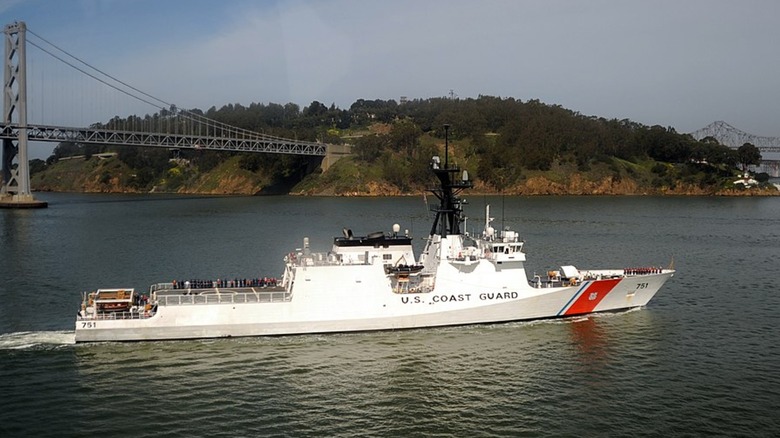
Ships aren't the only tools that Coast Guard servicemembers have at their disposal, but it would feel wrong to begin any discussion of the branch without highlighting its Legend-class National Security Cutter. The branch reports considers the NSC the "centerpiece" of its fleet. These cutters have been rotating into the fleet to replace aging high endurance cutters that have served since the 1960s. They deliver enhanced speed, improved range, and superior launch and pickup capabilities while underway. This makes them capable of a greater range of interception and recovery missions with additional seafaring vessels onboard and support for helicopters and UAV systems.
Speaking of the Coast Guard's UAV profile, the service has operated MQ-9 Guardian drones since 2008. These flying tools are launched from its cutter fleet in support of search and rescue missions, and as a tool to assist in defensive, national security operations. They can provide long range surveillance and intelligence gathering capabilities and have the ability to launch from anywhere a Coast Guard NSC operates.
When it comes to large scale intelligence gathering needs, however, an additional aerial tool is called upon. The Coast Guard also maintains a collection of HC-130J Super Hercules aircraft. 22 new aircraft are being rolled into the Coast Guard's active fleet to replace the service's aging HC-130Hs. The changeover will deliver a 20% increase in the flight team's altitude and speed capabilities, and a 40% boost to total range.
Air Force: F-35 Lightning II and the B-21 Raider
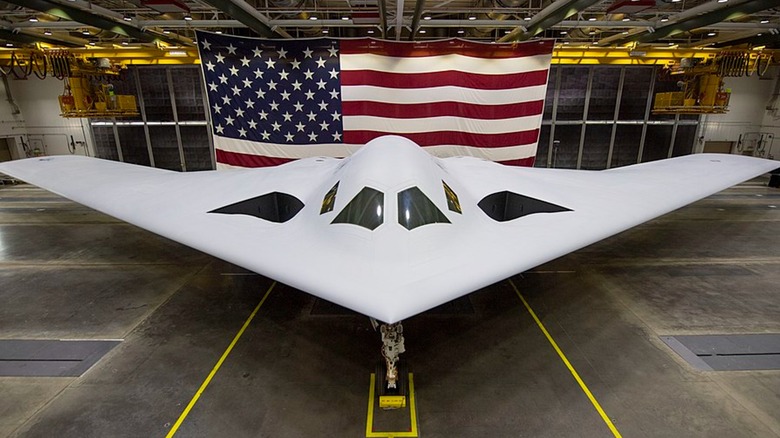
The U.S. Air Force's most technologically advanced offerings are the F-35 Lightning II, America's preeminent fifth-generation fighter jet, and the B-21 Raider, a plane that's making test flights today, but will soon come to replace the B-1 and B-2 bombers that serve as the U.S.'s most capable heavy strike tools.
Designer Northrop Grumman calls the B-21 Raider the "world's first sixth-generation aircraft to reach the skies." B-21 Raiders are designed to carry significant payloads of both conventional weapons and nuclear armaments if necessary. They're underpinned by immense technological leaps forward in stealth capability and onboard navigation and threat assessment tools. The aircraft is being hailed as a "digital bomber," with integrated cloud computing capabilities and advanced networking that allows crews to seamlessly interact with both their mission control handlers and other planes engaged in the same arena.
The F-35 Lightning II is a different beast. Three build types exist at present, with the F-35A the most common. It can carry up to 18,000 pounds of weaponry and reach a maximum G-force rating of 9.0 with a top speed of Mach 1.6 (around 1,200 mph). Over 1,100 F-35s are already in the field, and Lockheed Martin's dedicated F-35 site calls the aircraft "the most lethal, survivable, and connected fighter aircraft in production today." For its part, the Air Force calls the fighter jet a high performance multirole fighter designed to "gather, fuse and distribute more information than any fighter in history."
Space Force: The X-37B robotic space plane
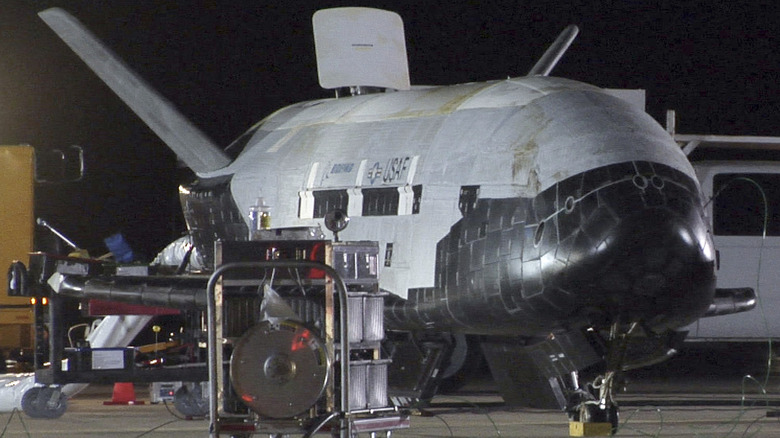
Only coming into being in 2019, the United States Space Force is still in its infancy, but it's already started to utilize one immensely capable vessel for its missions. Launched from a SpaceX Falcon Heavy Rocket, the X-37B Orbital Test Vehicle is an unmanned spaceplane first flown under the control of the Air Force (while it retained space command duties). The aircraft sits within the Space Force arsenal now, and its seventh mission concluded in March 2025 when the vessel successfully touched down at Vandenburg Space Force Base after spending more than 434 days in orbit. The previous mission concluded after 908 days in space. According to designer Boeing, an eighth mission is also already underway, having launched in August 2025.
The vessel utilizes a small cargo bay that's capable of carrying satellites and other small tools into orbit. In its current role, the vessel has been utilized to experiment with technological enhancements, space maneuvering practice, and other similar tasks. Its missions are frequently heavily secretive, and there's no evidence thus far to suggest that the plane has been deployed for the purposes of weapons testing or use, interactions with other vessels or objects in orbit, or any other offensive-minded operations.