

7 Of The Worst-Selling Sports Cars Of All Time
Car companies have to get it right, and usually they do. When your product needs to be able to transport, take care of, and impress your buyer, the stakes are high. Auto conglomerates pour millions upon millions of dollars into the development of their cars, trying to make something that can appeal to a wide audience of prospective buyers, while at the same time being unique and offering something special. The average car buyer is already picky, as buying a new car is no small investment, but the average sports car buyer is an even harder case.
One person might die on the manual transmission hill and refuse to buy anything else, while another insists that the speed of an automatic gearbox is more in line with the mission of performance. Usually, if you can win over this crowd, you can be sure that what you've built is something special. Cars like the Porsche 911 or Dodge's Hellcat family are widely beloved for various reasons, and this appreciation is reflected in sales numbers. But, these hits don't come without flops. For every sports car that lives on bedroom wall posters and in front of fancy hotels, there's a forgotten, disliked, or underappreciated relative that never won over the enthusiast. Some of these cars sold poorly because they were simply poor cars, but some just happened to be in the wrong place at the wrong time. Here are seven of the worst selling sports cars of all time.
Chevrolet SSR
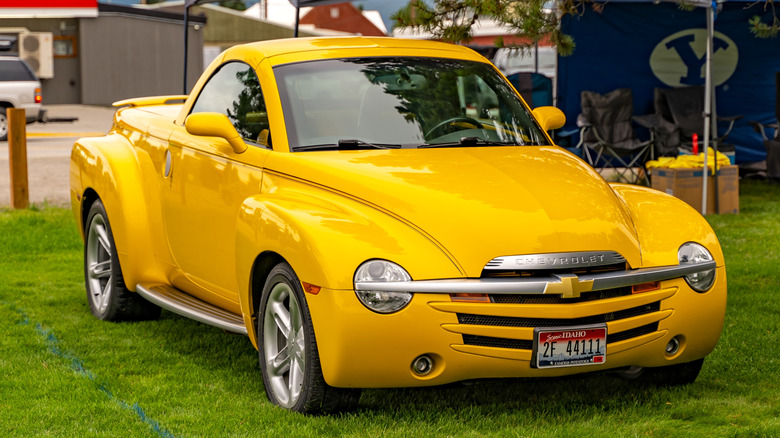
One look at the Frankensteinian creation that is the Chevrolet SSR, and you might wonder if it's proper to call it a sports car. Once you read that SSR stands for Super Sport Roadster, you might be even more confused, as this pickup truck-looking thing seems unlikely to properly represent any of those words. In the early 2000s, Chevrolet believed that people wanted pickup trucks, hard-top convertibles, and retro hot rods. Rather than focus on these groups separately, it decided to kill three birds with one very strange stone.
So, how did it do in these categories? To start, the SSR has a retractable hardtop, but its housing cuts into the truckbed space behind it. That brings us to the next category being a pickup truck, which the SSR technically is, but perhaps only technically, as much of the car's engineering choices were more focused on performance than practicality. As for being a retro hot rod, the SSR looks the part in the most ungraceful way possible. Its curves and proportions are reminiscent of 1930s sports cars, but when sketched up by people not of the time, its design feels disingenuous and cheap. Its saving grace should have been its performance then, as it was powered by a 5.3 liter V8 with a manual transmission, but it was lacking here too, making it no wonder why the SSR only sold 12,156 units.
Plymouth Prowler
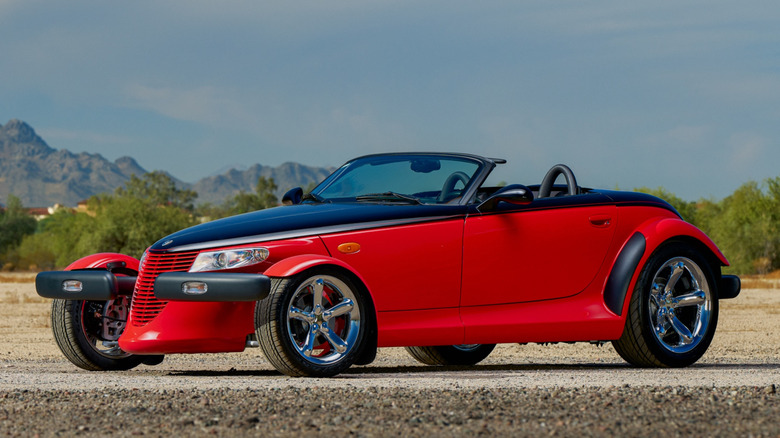
While GM and Chevrolet was attempting to make a modern day hot rod with the SSR, the folks over at Chrysler and Plymouth wanted to give it a shot as well. Looking back on these cars now, it's hard to understand why these American conglomerates thought they were a good idea — a lot of the charm of the hot rod lies in the fact that it comes from a different time, after all. Nonetheless, Plymouth decided to go forward with the Prowler, its own modernized hot rod, which came out in 1996. The Prowler took the hot rod inspiration to heart, with an open wheel design in the front, and a sharp front fascia that widened towards the rear.
This look was proportionally true to its source material, but the necessity of things like bumpers and headlights remind any onlookers that the Prowler is significantly newer than it tries to pass for. Under the very narrow hood, the Prowler was powered by a 3.5 liter V6 that produced 214 hp. Its low redline (5,850 RPM) combined with a four speed automatic transmission wasn't the most exciting powertrain in the world. As for speed, the Prowler could reach 60 mph in 7 seconds, and topped out at 117 mph. Much of the interior components were carried over from other models in the Chrysler family, which further muted what could have made the Prowler special. An interesting idea, but not well executed, the Prowler only sold 10,741 units.
DMC DeLorean
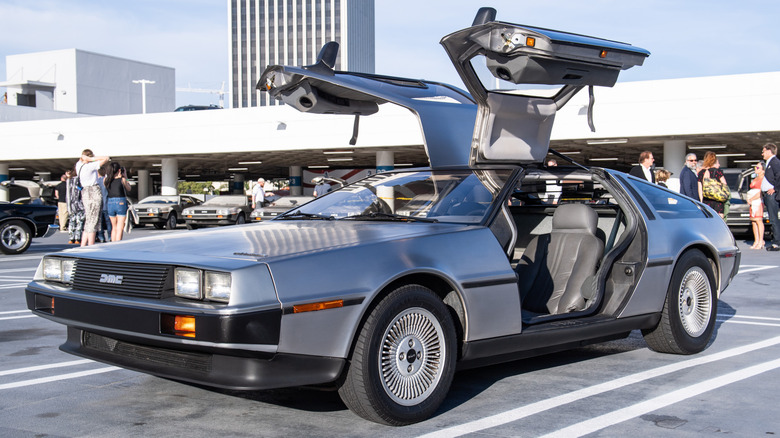
The average moviegoer might expect the DMC DeLorean to be a highly desirable sports car, given its starring role in "Back to the Future." However, the average car nerd knows this American sports car was all bark and no bite. The DeLorean certainly looked the part of a movie star and a performance car. Its iconic brushed steel finish gives it an unquestionably futuristic look, suitable for time travel or highway travel. Its low slung silhouette, and wedge-like proportions also suggest a supremely fast car, especially when stationary with its gullwing doors up. However, under the skin, the DeLorean was lacking.
The DeLorean features a rear-engined setup to help weight distribution, though it features a rather uninspiring V6 sourced from Renault-Peugot-Volvo that makes just 130 hp. That might not seem too bad, but you might start to wonder if that 130 hp is enough to athletically move all 2,700 pounds of the DeLorean's steel body. For those wondering, the answer is glum, as it takes all of 9 seconds for the DeLorean to reach 60 mph. The DeLorean was offered with both a five-speed manual, and a three-speed automatic, both of which suffered from poor gearing ratios, making the midrange power band feel lackluster and hesitant. The DeLorean has remained an iconic car for its Hollywood stardom and futuristic ideas, but its poor execution and lacking performance made it fall short, as it only sold 6,681 units.
Bricklin SV1
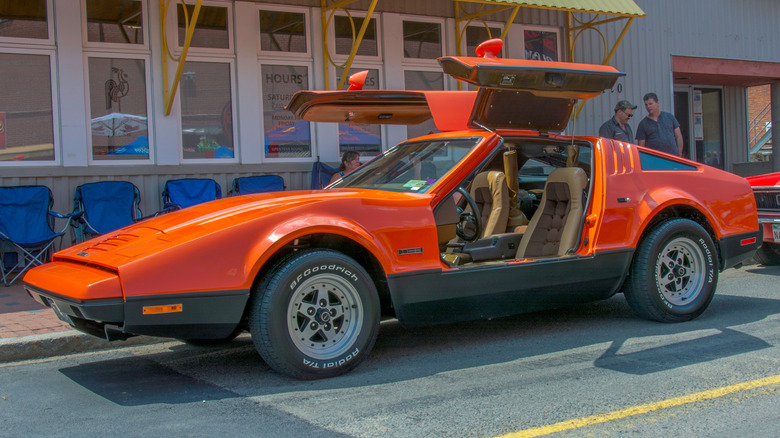
While John DeLorean attempted to realize his vision of a sports car in America, up north, a Canadian man named Malcolm Bricklin attempted to do the same. The entrepreneur gained experience and a fortune turning his family's hardware supply company into a nationwide franchise raking in millions. After this success, Bricklin wanted a new challenge, and decided he would build a car. Bricklin reasoned that the market for everyday family cars was oversaturated, and the market for sports cars was undertapped. This led to the Bricklin SV1 project, where he envisioned a fun, yet economic and reasonable sports car for the masses.
The project was exciting in theory, but challenging in practice. The SV1 was originally powered by an AMC-sourced V8 which produced nearly 300 hp, but had to be muzzled down to 220 thanks to emissions regulations. The SV1 was a small car, but in order to keep production costs reasonable, Bricklin opted for steel construction rather than lightweight aluminium, which meant the SV1 weighed in at 3,470 pounds. This weight slowed things down everywhere, including the opening of the gull-wing doors, which each weighed 100 pounds. The project was simply too complicated for a new car manufacturer to pull off. This difficulty was compounded by encroaching safety and emissions regulations in the U.S., which ended the Bricklin name after just three years. The sights were high, but the shot was low, and Bricklin only ever produced 2,854 SV1s.
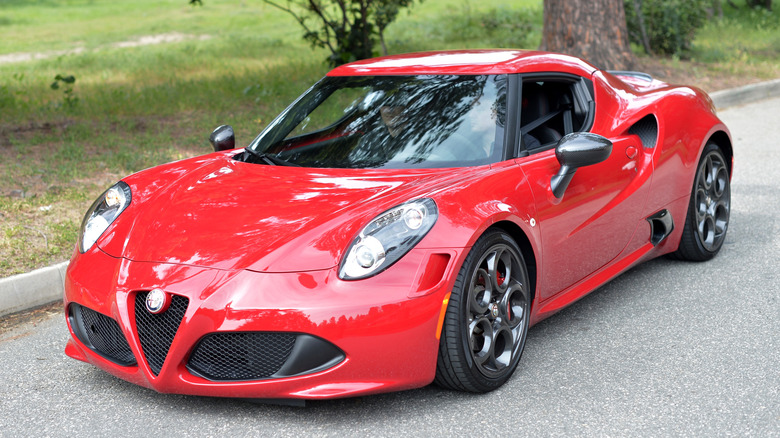
Alfa Romeo 4C
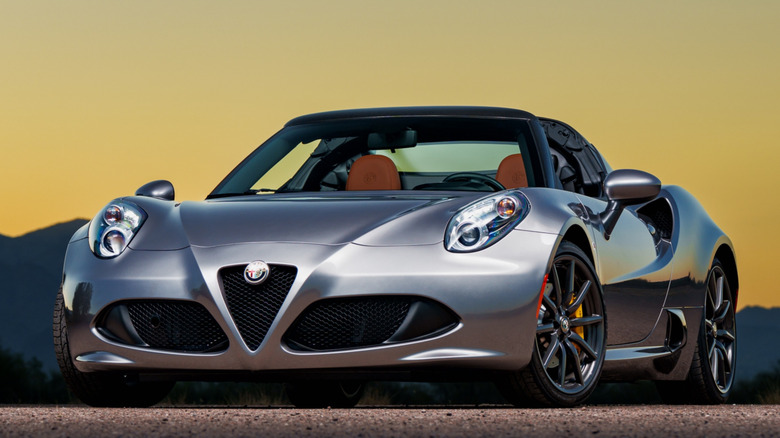
In 2011, and the car industry had become a very different place. SUVs now ruled the roads, and the market for sports cars was an increasingly quaint and shrinking place. However, 2011 saw the debut of a concept car from beloved Italian automaker Alfa Romeo, dubbed the 4C. By 2011, Alfa Romeo was a shadow of its former self. Aside from the 8C, the company was producing cars that carried the Alfa Romeo spirit only in name. Trying to find its roots again, Alfa revealed the 4C. The 4C was a sports car in the purest sense.
The main imperative of the 4C, and the source of its greatness was its light weight. It was small, nearly miniature, with a 93-inch wheelbase and a 73-inch width, sitting on a carbon fiber tub meaning the 4C weighs in at just 2,504 pounds. Outside, the 4C looked like a shrunken, almost cutesy supercar. Inside, it was powered by, surprise, a turbocharged four-cylinder that produced 237 hp. The 4C was so thorough with its affinity to being a sports car, that things like comfort, and space were compromised to the point where daily driving it seems like a Top Gear challenge. The only thing that veered away from the 4C's puritan sports car identity was the lack of a manual transmission, as it used a six-speed automatic instead. Unfortunately for this special sports car, the 4C only sold 2,188 units.
Acura NSX (2nd Generation)
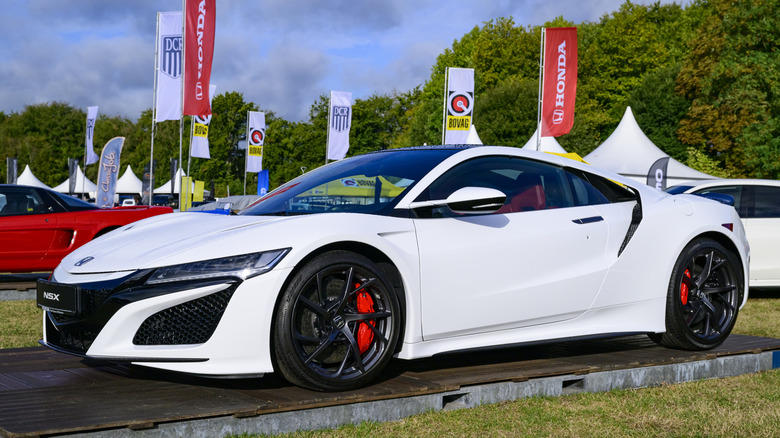
The case of the second generation Acura NSX is a curious one. The original model was groundbreaking in so many ways. It offered the DNA of a fancy supercar at a fraction of the price, with its mid-engined architecture, sleek looks, and impressive performance. Ayrton Senna himself helped with the original NSX, insisting that its chassis be stiffened, and since its release in 1990, it has gone on to be one of Japan's best automotive creations.
When the second generation NSX arrived in 2016, it had big, very specifically shaped shoes to fill, and while it was an objectively great car, it failed to properly live up to its nameplate. The biggest elephant in the NSX-shaped room is its powertrain. The second generation NSX was a hybrid, and while we're quite used to the idea of the hybrid supercar today, in 2016, this was still something many gearheads awkwardly averted their gaze from. With 500 hp on tap, the NSX wasn't exactly weak, but it suffered from the weight gain of the battery that manufacturers are still trying to figure out ten years later. The NSX weighed 3,686 pounds and although its hybridized V6 could still shoot it to 60 mph in 3.1 seconds before topping out at 191 mph, it felt like too far a departure from the cut and clean DNA of the original. This combined with the time's aversion to hybrid supercars meant the second generation NSX only sold 1,813 units.
Aston Martin Virage
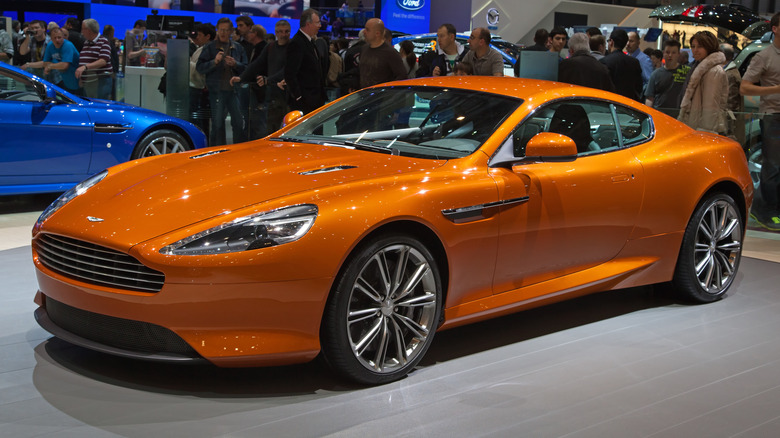
If you're confused as to why you've never heard of the Aston Martin Virage, wait just a moment before you start to question your car knowledge. The Virage itself wasn't an inherently bad car. It was classically Aston in shape and form, with a long and muscular hood, a swooping roofline, and a sporty but executive look. It wasn't slow either, as underneath that big hood lived a 5.9 liter V12 that produced 490 hp, capable of launching the Virage to 60 mph in just 4.5 seconds. The interior was lavish to the max, clothed in leathers, heavy metals, and analogue switches.
So why did it fail? The Virage itself is not to be blamed, but its place in the Aston Martin family was confusing. At the time Aston was offering a handful of models, but the ones most germane to the Virage's demise being the DBS and the DB9. The DB9 was the most Bond of the lineup, sophisticated and stylish and meant to live outside of Michelin star restaurants, or in the valet garage of palace-like hotels. The DBS was the sportier brother, with more aggressive looks, and a rowdier personality that scoffed at high society snobbery (as much as is possible with an Aston Martin). However, these two weren't all that different, and when the Virage joined the lineup between them, it was seen as an unnecessary middle ground, which led to its quick retirement after just 454 units sold.