

5 WD-40 Substitutes That You May Already Have In Your Home
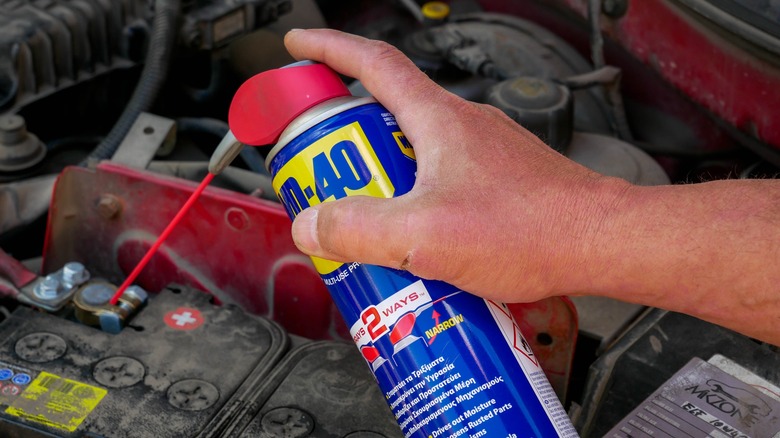
WD-40 is well known as one of the most versatile products in any garage. Whether you're a hobbyist or professional, you probably have some at the ready, and it typically comes in handy with plenty of unexpected ways to use WD-40 that you may have never thought of. This isn't to say, though, that it's always the thing to reach for in any situation you might encounter. In fact, there are some cases when it's the very last thing you should use.
Among the things that WD-40 should never be used on or near, ignition sources are potentially the most dangerous. A WD-40 Company Safety Data Sheet notes that, as an extremely flammable aerosol, it should be used only in well-ventilated areas. The good news is that a well-stocked garage or workshop, or even the home of the less DIY-oriented, may already have some items that will work brilliantly as WD-40 substitutes. Here are five such options you may already have in your home — keeping in mind that, while the WD-40 product listings have grown significantly since the first iteration's introduction, we are focusing primarily on the original WD-40 formula rather than any products in the expanded range.
Silicon spray
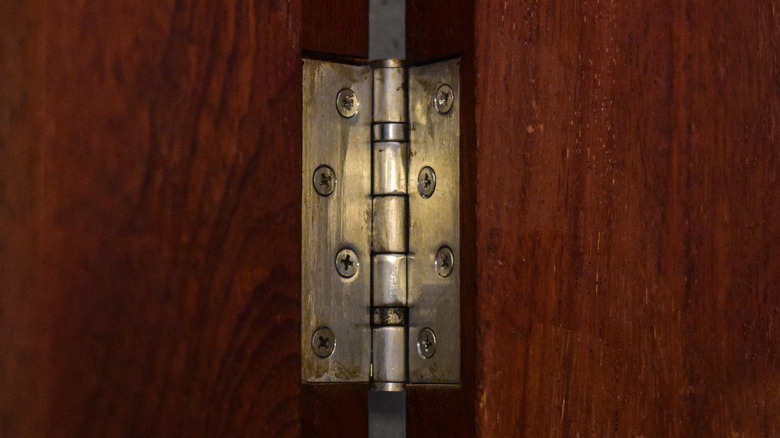
Our homes, garages, and workshops are full of a lot of moving parts. Typically, we don't give a lot of thought to door hinges, window latches, and other miscellaneous handles, but their squeaks can make us pay attention to them. Standard WD-40 is widely used as a lubricant for all manner of household squeaks, but this isn't to say that it's best employed in that way. The "WD" in the product's name stands for "water displacement," indicating it is not a lubricant.
However, the WD-40 website says that's a myth, stating that "WD-40 Multi-Use Product is a unique, special blend of lubricants." Still, it is primarily a water-displacement product, meaning results from using it in this manner might differ. It could even potentially harm surfaces if used without due care. As a substitute for using WD-40 specifically as a lubricant, you could consider using a product primarily designed for that purpose instead.
Silicon spray is a particularly effective means of lubricating the likes of door hinges. Oil-based WD-40 can potentially damage plastic components or more delicate elements of a door or other hinge. Plus, it could attract dust and grime. Silicon spray can be applied more readily to affected areas. The benefit of this is that, as Hiatt Hardware notes, you can safely apply silicon spray to the hinge pins themselves if the issue warrants this approach. WD-40 does make a specialist silicon version of its classic formula, but you can also pick up regular silicon spray from the hardware store.
White lithium grease
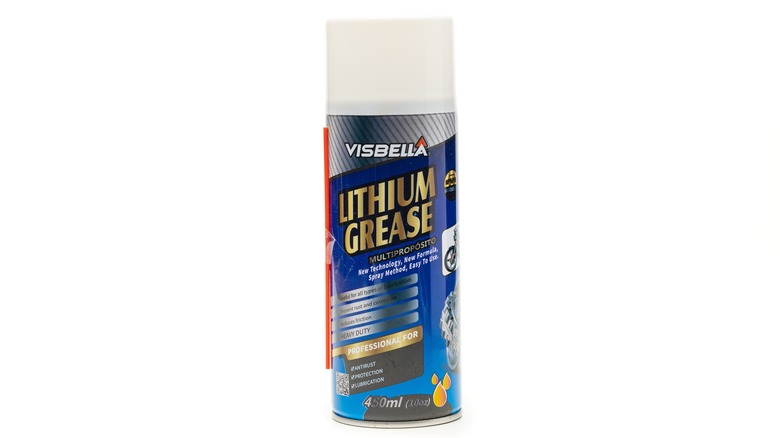
Perhaps you own some white lithium grease from a previous project but have rarely or never used it because WD-40 has been a more convenient or manageable answer to your issue. With some jobs, though, it's worth finding a product that will make less of a mess with a better and longer-lasting end result. White lithium grease is an excellent example of this. It is specifically designed to lubricate, and it will typically be long-lasting when used in that capacity.
One major caveat with the use of white lithium grease is that, as the name suggests, it's a hardy and thick grease. As a result, it can potentially damage certain substances like plastic or rubber because it contains petroleum oils. It works better to lubricate two metal surfaces that work in constant contact with each other. Again, the WD-40 family also includes a white lithium grease as one of its specialist products, but you can use any standard white lithium grease.
The WD-40 Technical Data Sheet for the white lithium grease product notes that it's "an aerosol grease that sprays on evenly as a liquid, sets dry and leaves behind a rust-inhibiting barrier for protection against corrosion that won't run off." It's designed for extreme conditions and long-lasting effects, such as securing a vehicle in a garage during the winter months. On that note, WD-40 Specialist White Lithium Grease can do an excellent job on garage doors.
Penetrating oil
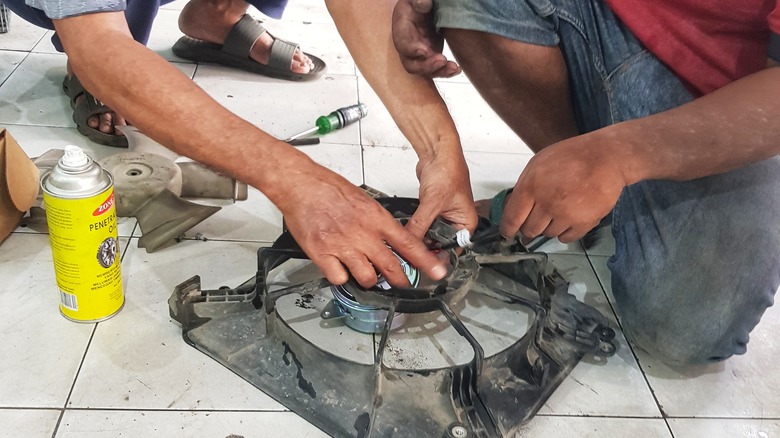
Those who are accustomed to finishing and revamping older vehicles and machinery will be familiar with another handy application of WD-40: tackling troublesome rust. However, just because it's one of many different applications that this excellent substance is used for doesn't necessarily mean that it's great at it. The product is designed to be able to perform all kinds of roles, but as we've seen, it isn't necessarily as effective as one that is more specialized for a particular task.
Another example is penetrating oil, a mechanic's staple that is used to treat severe rusting. This could occur with a car that has been stored incorrectly, for example, or tools that have been exposed to the elements for too long and seem all but irredeemable. The parts of a tool or vehicle component, when rusted together, can be a nightmare to separate, which is exactly where penetrating oil excels over standard WD-40.
WD-40 is a specific product, officially known as WD-40 Multi-Use. Its effectiveness on a given job depends on exactly how strong the rust you're dealing with is. While the Multi-Use variant of WD-40 has some rust-busting properties that will enable it to handle a less extreme case of rust, there will always be larger-scale jobs (farming equipment, for instance) or more dire cases of rust that standard WD-40 will struggle to shift effectively. The low viscosity of penetrating oil allows it to perform this role more effectively. This is further evidence that while WD-40 Multi-Purpose is undoubtedly of tremendous value in any toolkit, it probably shouldn't be used in place of a varied selection of more specialized products.
Electrical contact cleaner
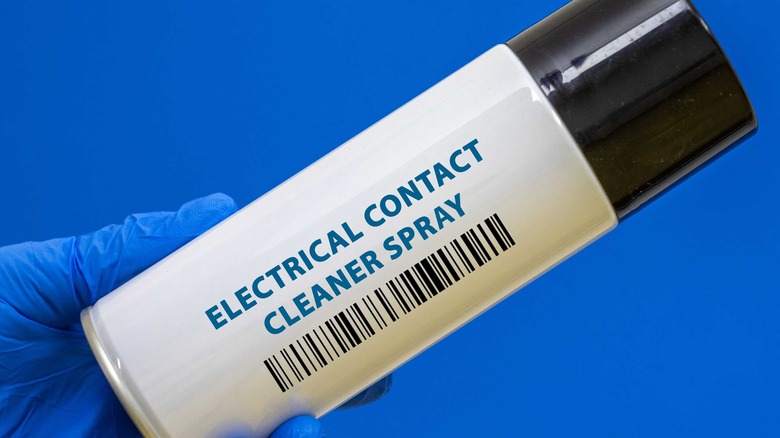
An inexpert hand with anything electrical can be a recipe for tragedy, particularly if you don't have the right tools for the task at hand. Delicate electrical components like circuit boards require regular cleaning to continue to perform at their best (just like any device). In administering this care, it's crucial to bear in mind that a product such as WD-40 can leave residue that may harm electronics and that applying it where it is inappropriate could be dangerous.
Rather than relying on standard WD-40 or a homemade solution — either of which could contain elements unsafe for the particular electrical surface in need of cleaning — the safest approach will often be to ensure you only use a product specifically designed for this purpose. Depending on what you are trying to clean, you might use a water-based, solvent-based, or non-flammable electrical contact cleaner. The distinction is important because solvent-based versions, for example, shouldn't be used on some surfaces because they can be flammable. WD-40, like so many other hardware brands, has developed an electrical contact cleaner in its specialty catalogue. Using a standard contact cleaner or an electric parts cleaner might be the most suitable option, though.
Rust inhibitor
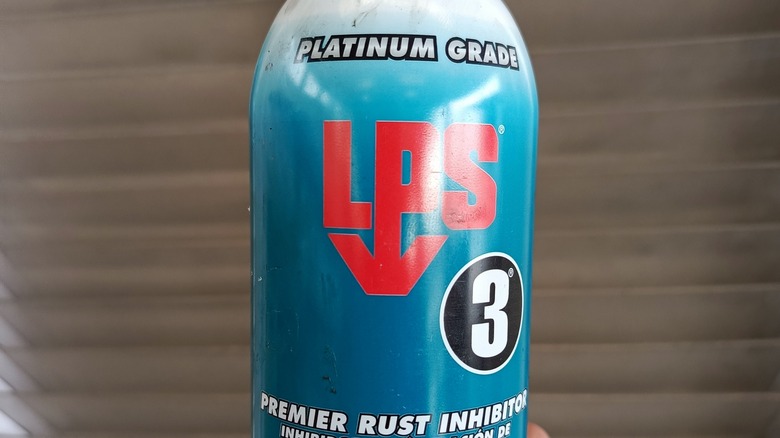
There are a lot of common WD-40 substitutes that will work in a pinch, but dedicated products will typically have the best results. WD-40 and similar products aren't necessarily just about resolving an issue that has arisen, but, hopefully, preventing it from happening in the first place. Rust is the bane of many a drivers' existence, and preventing it is a lifelong struggle. There are effective rust inhibitors, though, and if you've been neglecting one that you have in your garage in favor of a quick dose of WD-40, it might be worthwhile to bring out the big guns.
While the standard WD-40 formulation may have a limited capacity to help prevent rust from forming, it was not designed specifically for this purpose. Standard WD-40 helps these issues by limiting moisture buildup, but it's not a one-stop solution to any and all rust problems you may encounter. A rust inhibitor, then, might be another product in your garage that you haven't made use of before.
As we've already seen, penetrating oil is designed to break through existing rust, and it can do so very easily in a lot of cases because of its low viscosity, which allows it to literally penetrate its way through machinery. This is why, WD-40 explains, it should be allowed significant time to infiltrate the problem area after being applied. After trial and reapplication, the affected part should become loose enough to move freely again. Similarly, a rust inhibitor can also be used to try to prevent the formation of rust before it becomes a problem in the first place. Once again, the WD-40's specialist line offers a dedicated corrosion inhibitor. However, other brands like Fluid Film may better suit your project.