

5 Aviation Companies You Didn't Realize Are Owned By Boeing
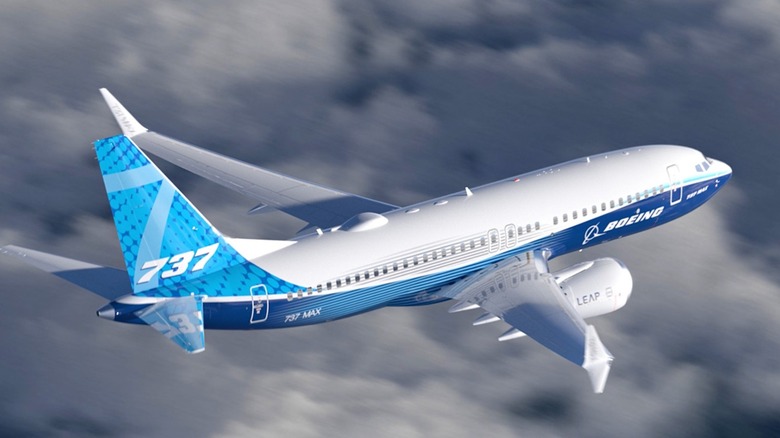
Over more than a century in the aerospace industry, Boeing has gone through many iterations. It began building primitive seaplanes in the early 20th century under the moniker Pacific Aero Products Co. — later redubbed Boeing Airplane Co. In 1961, the company ditched the qualifiers and changed its name to simply Boeing, partly because it had expanded into other arenas outside of aerospace.
Today, Boeing builds military aircraft, helicopters, spacecraft, missiles, and more. Boeing also built the Lunar Roving Vehicles (the Moon buggies) which were driven by astronauts on the lunar surface during the last three Apollo missions. Boeing is also, and long has been, the world's largest manufacturer of commercial jets.
Boeing is most well known for designing and manufacturing aircraft, it's a name which is almost synonymous with airplanes, but it's also a massive company with hundreds of subsidiaries. Some are research and development operations, others build parts or craft software for navigation or defense, and others create rockets and spaceships. Of course, some of Boeing's subsidiaries are precisely what you'd expect, aerospace companies doing aerospace things. Here are five aviation companies you might not know are owned by Boeing.
Insitu
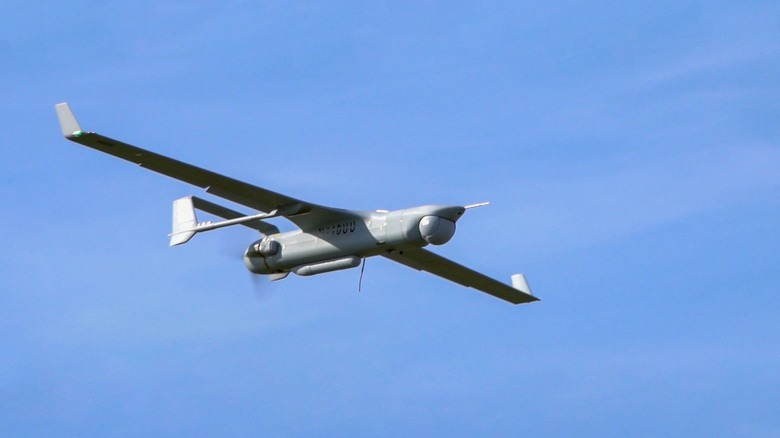
Autonomous or remotely operated aircraft, commonly called drones or UAVs (short for uncrewed aerial vehicles), have become common in toy stores and hobby shops. You can get simple and affordable drones to fly around your backyard or more complex ones for racing, filmmaking, and other activities. Meanwhile, there's another class of drone used for scientific research and military applications. Those are the sorts of drones Insitu makes.
The company was founded in 1994, with the goal of developing small robotic aircraft, and achieved early milestones like the first uncrewed transatlantic flight in 1998. Insitu was acquired by Boeing in 2008 and, today, it's a wholly owned subsidiary of Boeing, headquartered in Bingen, Washington.
While Boeing is mostly known for passenger airplanes, Insitu offers a range of UAVs including the Integrator VTOL (vertical takeoff and landing), Integrator extended range, Integrator, ScanEagle VTOL, ScanEagle, and RQ-21A. These can also be supplemented with payloads including cameras, laser guidance, wide-area search instruments, and more.
Spirit AeroSystems
Spirit AeroSystems (not to be confused with Spirit Airlines) began as the Stearman Aircraft Company, founded by Lloyd Stearman, back in the early 20th century. It was later purchased by The United Aircraft and Transport Company (later Boeing) in 1929.
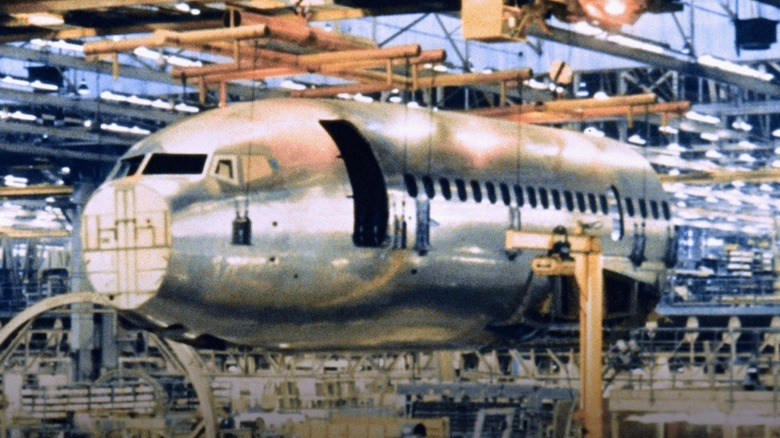
The company manufactures fuselages and other structures for passenger airplanes, including the Boeing 737 and 787. Spirit has a complicated history with Boeing, beginning as part of the company, later splintering off, and then coming back together. Spirit AeroSystems was formed in 2005 when Boeing sold facilities in Wichita, Tulsa, and McAlester to the Onex Corporation.
After splitting from Boeing in 2005, the company acquired parts of BAE Systems and supplied parts to Airbus, Mitsubishi, Rolls-Royce, Boeing, Northrop Grumman, and more. In 2024, Boeing reacquired the company, folding it back under the Boeing umbrella. Since its inception, Spirit has expanded well out of Kansas, to Europe, Asia, and other parts of the world. Meanwhile, Spirit's operations in Northern Ireland were spun off into a separate subsidiary known as Short Brothers, also owned by Boeing.
Wisk Aero
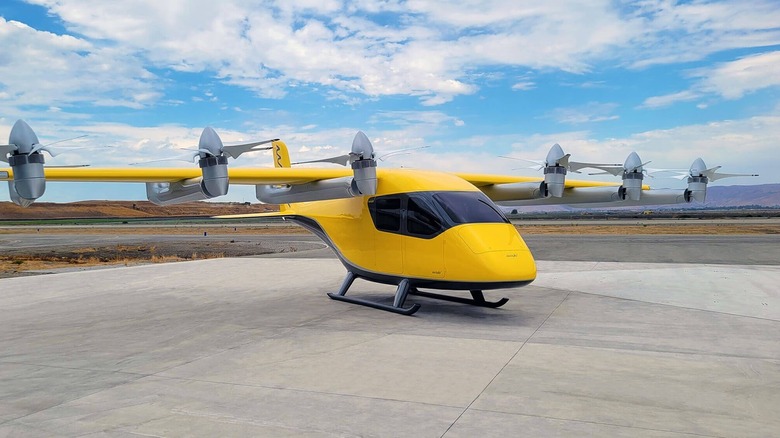
Wisk began as Zee Aero in 2010, with the goal of developing air taxis capable of flying autonomously with support from the ground. In 2019, Zee Aero merged with Boeing and was rechristened Wisk Aero, though the company's goal remained the same. "We're building the foundation for aviation to become even safer than it is today." Wisk CEO Sébastien Vigneron in a promotional video. "By developing, testing, and certifying an entirely new type of aircraft and system, we truly believe that autonomy will make aviation safer, more efficient, and more accessible to everyone."
The company's vision is a fleet of four-passenger air taxis which function like an air-based rideshare. Using an app, you'll book a flight on one of Wisk's four-person air taxis. Your information then gets sent to a central facility, where you're added to the passenger list for a scheduled flight.
Once at the airport, a ground crew completes a safety inspection of your aircraft, secures passengers and baggage, and you're off. Ground crews monitor flights from takeoff to landing, to ensure everything goes smoothly. Wisk's Generation 6 aircraft cruises at or above 2,500 feet and has a range of 90 miles. Wisk is also combining sensors, cameras, radar, software, and more to automate air traffic management, which could benefit conventional air travel alongside Wisk's air taxis.
Aurora Flight Sciences
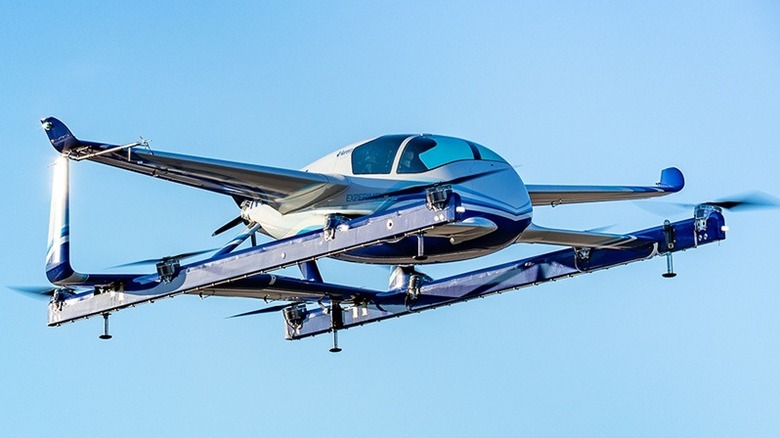
Aurora Flight Sciences (AFS) was founded by John S. Langford, a graduate of MIT and manager of the university's Daedalus project. Daedalus was an experimental human-powered aircraft propelled by pedaling. Since then, the company has developed a range of crafts, both experimental and practical.
AFS' first aircraft following Daedalus was the Perseus Proof-of-Concept, which took its first flight in 1991. It was remotely piloted and designed to conduct atmospheric research with a number of scientific payloads. A later iteration, known as the Perseus B, set the record for highest altitude flown by a single-engine, propeller-driven aircraft, flying to a maximum altitude of 60,620 feet.
Aurora also developed DARPA's Very-high altitude, Ultra-endurance, Loitering Theater Unmanned Reconnaissance Element (VULTURE). VULTURE was intended to be a solar-powered aircraft capable of staying aloft for up to five years at a stretch, with an articulable Z-shaped wing structure that could keep the solar cells constantly pointed toward the Sun. AFS has also designed and built experimental crafts intended for use in space and on Mars. Boeing acquired AFS in 2017, and the company is now under Boeing's Engineering, Test & Technology division.
McDonnell Douglas
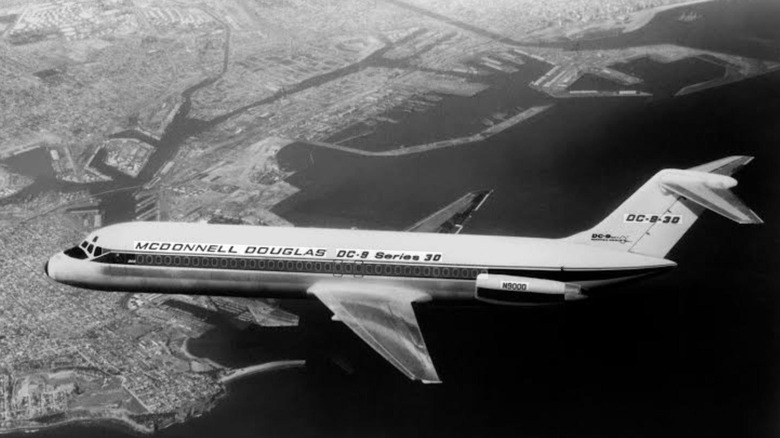
As a company, McDonnell Douglas is the result of various mergers and adaptations over the course of more than a century. Before Boeing, what would eventually become McDonnell Douglas began as two separate aircraft companies, McDonnell Aircraft and Douglas Aircraft Company.
Douglas was formed in 1921 and began by building a number of commercial airliners and military aircraft, ultimately delivering roughly a sixth of the United States' airborne fleet during WWII. Following the end of the war and a shift toward commercial airplanes, Douglas struggled financially and merged with McDonnell. Meanwhile, McDonnell Aircraft was founded in 1939 and developed early fighter jets like the F-4 Phantom and A-4 Skyhawk, among others.
The two companies merged in 1967 to become McDonnell Douglas, a company with combined expertise in manufacturing airplanes, launch vehicles, missiles, and more. Ultimately, as the Cold War ended and the appetite for defense aircraft decreased, McDonnell Douglas was acquired and folded into Boeing in 1997.