

5 Of The Worst-Looking Cars From The 1990s We Wouldn't Be Caught Driving Today
Looking back, the 1990s were an interesting time for the auto industry. U.S. carmakers were heading into the decade on the back of a notable slump in auto manufacturing and sales, a downturn that, barring some exceptions, has continued to this day — at least, on the manufacturing side of the equation. It was also a decade that saw some massive changes to the sorts of vehicles we buy. SUVs came of age in the '90s, as did the modern-day luxury pickup, and both of those trends continue to this day, doubtless to the chagrin of some of you reading this.
It was also a decade of great cars, especially for those of a performance-oriented persuasion. Some of the most recognizable generations of the Mitsubishi Lancer Evolution hit the scene during the '90s. The decade also saw the Nissan Skyline GT-R evolve into the JDM icon it's now known as, with the R32, R33, and R34 all debuting and becoming the stuff of dreams for "Gran Turismo" obsessives. North America had its share of heroes, too, like the Dodge Viper and a selection of reasonably high-powered '90s muscle cars.
For every Chevrolet Corvette ZR1 or Nissan Skyline R-34, though, there was also a quirky, perhaps misguided, and ugly experiment that graced — and we use that word somewhat wrongly — the scene during the decade. They weren't necessarily bad cars (although a few of them certainly are), but they sure weren't great to look at. Here are an unfortunate handful from the likes of Buick, Chrysler, and Fiat.
Fiat Multipla
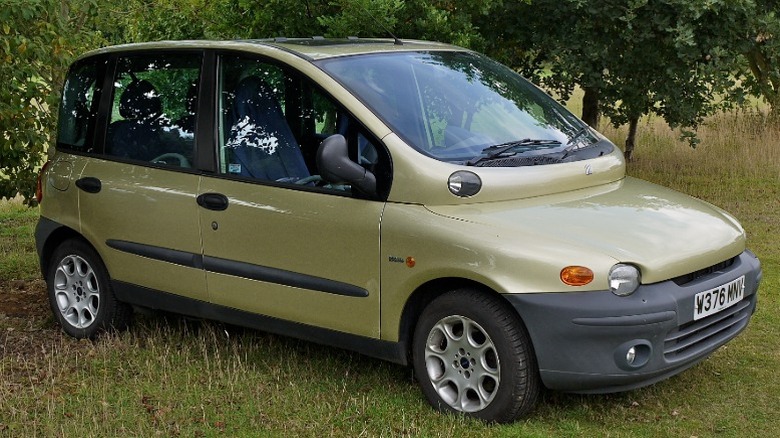
There's a lot to appreciate about the Fiat Multipla. It was a forward-looking and genuinely innovative vehicle for 1998, primarily because it could fit six people in just two rows, with a healthy amount of luggage space as well. Fiat ensconced this clever interior — and, admittedly, one of the weirdest dashboards ever — in a whole lot of glass, including notably tall windows (thanks to a relatively low belt line) for a roomier feel. The Italian automaker even managed to make the Multipla quite enjoyable to drive, surprisingly.
Even the famously divisive front fascia was born from practical reasons, with Fiat trying to give drivers the best possible coverage of the road ahead through a tiered arrangement of lights. Fiat also cleverly used a spaceframe construction on top of a Fiat Bravia platform, which helped keep costs down. There's legitimately a lot that Fiat got right here, as proven by the many awards the Multipla received in the early 2000s.
The first-generation Multipla is the one that often gets all the hate, and arguably deservingly so: the somewhat bug-eyed, awkward front is one that only a mother could love, and the rear isn't that much better. Even the side profile, with its large windows, is a bit hard to love in the cold light of the 2020s. But we also have to mention the facelifted Multipla from 2004, which — while out of the bounds of this list — is even worse simply due to how bland it is. Thus, the dilemma: characterful and ugly, or dull and soulless? You probably can't win.
Chrysler Imperial
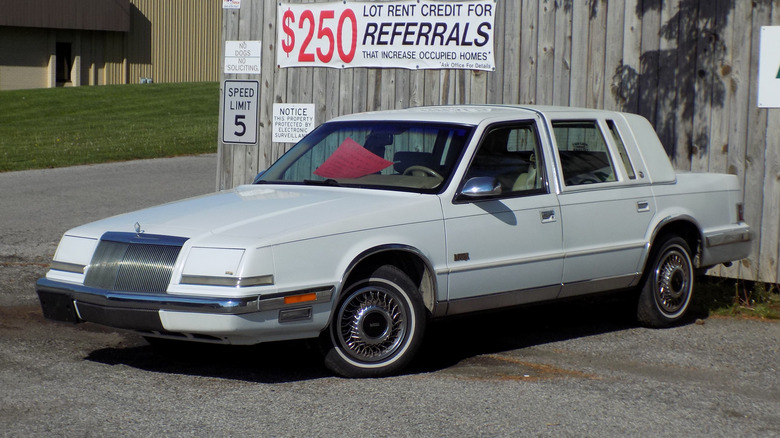
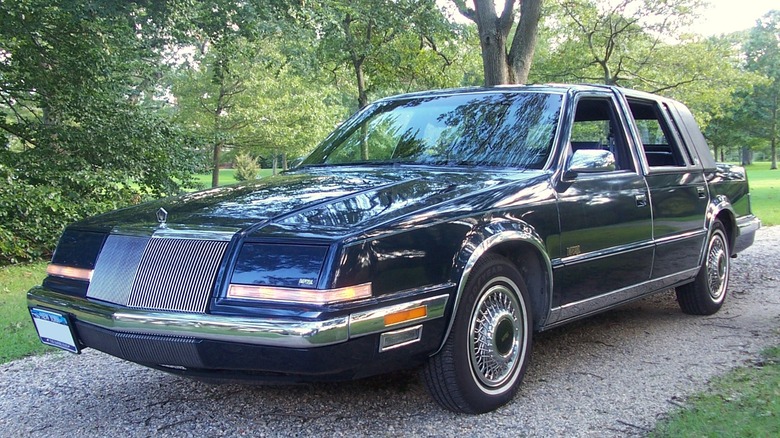
It's hard not to view the 1990s Chrysler Imperial as an example of the Big Three's decline during the decade. First debuting in 1990, the last iteration of the storied Imperial nameplate has all the trappings of a somewhat sad attempt to cling on to (or even revive) former, desperately faded glory.
A key aspect of this was the platform. The 1990 Imperial rode on a lengthened version of the Chrysler K-platform that had debuted in 1981, making for a car that was fundamentally dated. It was also, as some would have it, incredibly cynical, due to how it little it offered over the nearly-identical New York Fifth Avenue that Chrysler was also selling. Beyond that, though, it was (and remains) a gaudy, ugly slice of faux-luxury we'd argue is almost impossible to love.
Incredibly dated, covered front headlights? A somewhat awkward side profile ruined by an overabundance of chrome trim? Oh, but of course. The wire wheels are also plenty ugly, even as far as wire wheels go. But what kills it is the fact that the Imperial's range-topping size (the sheet metal measured 203 inches, about 4.5 inches longer than the New York Fifth Avenue) was made up entirely of useless bodywork fripperies: it didn't need to be that long, but it was, just so it was top dog. Sure, previous Imperials, like the Imperial LeBaron, were some of the longest classic cars ever made, but this forced length just makes an ugly car even uglier in spirit.
Oldsmobile Silhouette
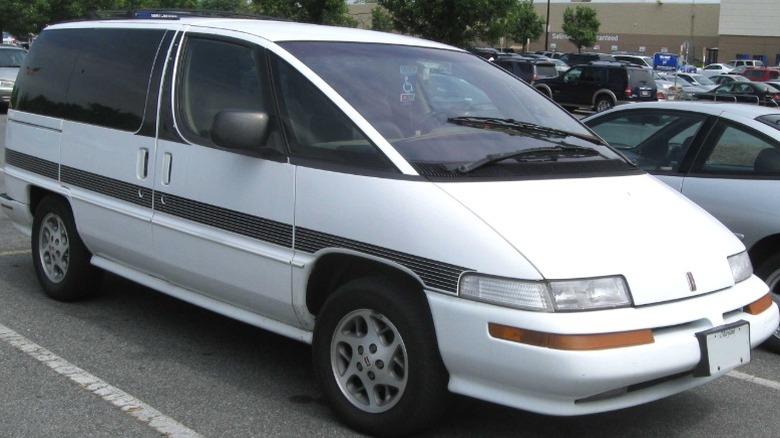
The Oldsmobile Silhouette is, of course, the Cadillac of minivans, as '90s classic "Get Shorty" would have it. That alone would probably earn it the status of an icon in some households, and while we're not necessarily here to debate that (icons come in all shapes and sizes, after all), we're decidedly not fans of its oh-so-'90s styling.
In its day, the Silhouette's aerodynamic front was very much par for the course, reflecting the aero obsession that had taken hold of American carmakers since the mid-1980s or so. If the wind tunnel and a focus on creating a low drag coefficient were good for the '80s Pontiac Firebird, then it would undoubtedly have been good for a people-carrier too, right? Unfortunately for the Silhouette (and its lower-grade GM counterparts), this came with a downside: it is not a looker by any stretch.
While it's not ungainly like the Fiat Multipla, nothing dates quite as quickly (and, arguably, badly) as designs like the Silhouette's that attempt a "futuristic" air but don't quite go all the way — especially when it lets the side down with somewhat gaudy rims. Slapping a sloping, aero front onto a big box does not make for a pretty vehicle. Now, of course, it's not hard to imagine why the Silhouette feels a bit stuck in the middle: it is a product of 1990s Corporate America, after all. But we would love the Silhouette so much more had it been even more out there; as it is, though, we wouldn't blame you if you'd forgotten about Olds' strange luxury minivan until reading this.
Suzuki X-90
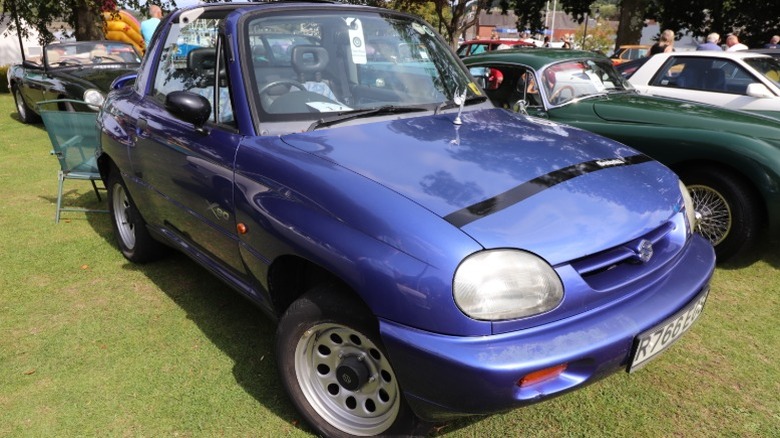
While we're admirers of quirky, classic Japanese kei cars like the Autozam AZ-1 and Suzuki Cappuccino here at SlashGear, we still maintain that there is such a thing as too much quirkiness. Case in point, the Suzuki X-90, the Japanese automaker's strange (and, admittedly, memorable) attempt to mash up several car archetypes into one. Without much success, it has to be said.
Suzuki proudly proclaims that the X-90 was the world's first "two-seater SUV coupe," which is fair enough. The thing is, though, while there's nothing wrong with taking pride in one's achievements, it's hard not to question why Suzuki ever thought that combination was a good idea in the first place. While the interior was indeed considered on par with coupés of the time, the X-90 was slow and rode like a truck, throwing any sporting pretensions out the window. It wasn't great as a truck, either: It had road tires, low ground clearance, and little in the way of utility, so it wasn't really much use for the rough stuff.
To top it all off, the X-90's unique design philosophy — including its stubby wheelbase and neither here-nor-there ride height — resulted in something of a unique look, and not in a good sense. For one, it had a targa top, which is already something of a disadvantage given how rarely cars can pull those off well. Combine that with a silly rear spoiler, somewhat-generic curvy 1990s bodywork, a dull front, and proportions that just didn't look right, and you get a car that it's probably impossible to look good (let alone dignified) in.
Buick Riviera
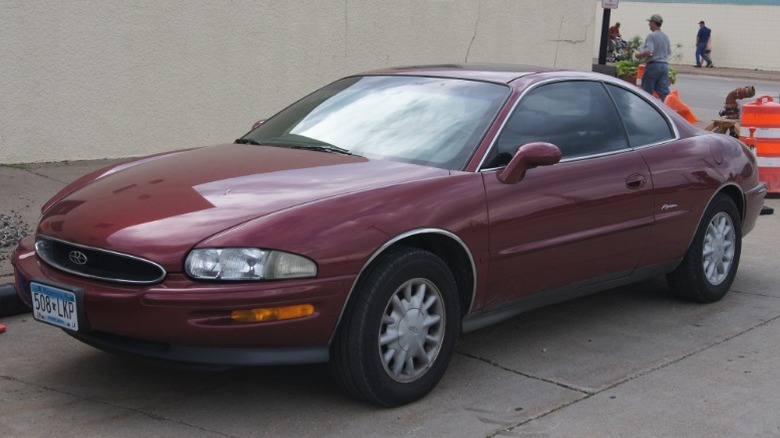
The Buick Riviera, GM's rival to the Ford Thunderbird, was the conglomerate's leading name in the personal luxury segment throughout its long life. From its early days as a Cadillac concept car through to its pioneering mid '80s years as one of the handful of production cars to sport a digital dashboard before they became mainstream, the Riviera was always associated with four-wheeled luxury — and, really, justifiably so.
By the 1990s, though, the Riviera was no longer the sales behemoth that it had been in its earlier decades, and so GM decided to take a break for the 1994 model year before returning with a brand-new Riviera for 1995. This new Riviera was both a reimagining of the nameplate and a return to old glories, with a supercharged V6 making up to 240 hp and a bold new visual direction that abandoned the boxy stylings of previous generations.
The 1995 Riviera was long and incredibly curvaceous, with radically sloping front and rear sections. It is, by every metric one can think of, quite eye-catching. However, time has not been kind: what may have seemed daring in the 1990s now looks bulbous, ungainly, and surprisingly lacking in grace. The sloping front and rear we pointed out earlier, while certainly characterful, also make the lights and grille look oddly squashed, making it look even more awkward. Sure, we'll commend Buick's designers for not overloading it with tacky trim, but that's not much relief when the fundamentals are just so hard to like in the first place.