

5 Of The Best Sedans For Families In 2026
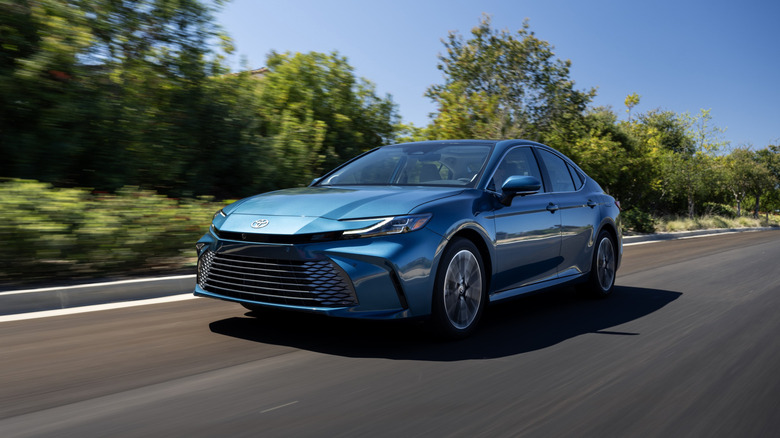
The sedan segment has been dwindling faster than most of us like to see in recent years, largely thanks to the rapid growth of crossovers and SUVs. While the latter segment has some of the best vehicles on the road within it, the inherent feel of a sedan behind the wheel is very difficult to achieve in an SUV, with the looks, of course, being impossible to replicate. However, there are still a few key manufacturers that are keeping the sedan segment alive, moving into 2026.
SUVs are certainly practical if you're in the market for a new family car, but they simply aren't for everyone. Also, depending on where you live, opting for a frugal sedan may be a better choice. For a family car, elements like interior space, safety ratings, and efficiency are crucial. KBB reports that the average price for a new car is $49,814 as of November 2025, but these five mid-size sedans all come in way below that, ticking all those boxes and making a strong case for why you should consider them as your next family vehicle.
2025 Honda Accord
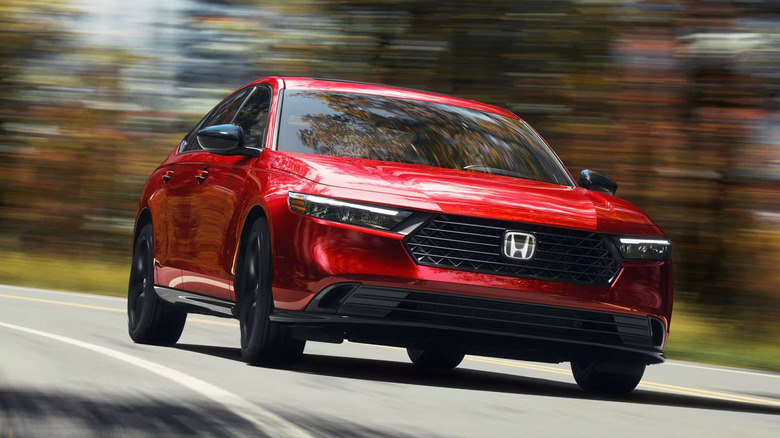
Currently in its eleventh generation, the Honda Accord is one of the most capable mid-size sedans for the money, with a strong focus on practical technology that gives it a slight edge over its rivals. While the top-spec Touring Hybrid trim is the only one with all Honda Sensing features, even the base trim is one of the most competitive for driver safety tech, with features like traffic jam assist, collision mitigation braking, and traffic sign recognition. As for structural safety, the 2025 Accord received a five-star rating from the NHTSA.
Inside the cabin, there is plenty of room for all passengers, particularly if you have smaller children in the back seats. Headroom measures in at 39.5 inches up front and 37.3 inches in the rear, with legroom at 42.3 inches and 40.8 inches, and a total passenger volume of 105.7 cubic feet. The Accord comes with a competitive MSRP of $28,295 for the base trim (with a $1,195 destination charge), and you should also be able to keep the costs down in the long run with its 32 mpg combined rating for the 192-horsepower 1.5L turbocharged inline-four. If you go for the hybrid powertrain, you can bump the rating up to 39 mpg, but pay $33,655 for the Sport Hybrid. The 2026 Accord is expected to be released soon with a mid-cycle refresh, but as of now, the 2025 model is the newest.
2026 Toyota Camry
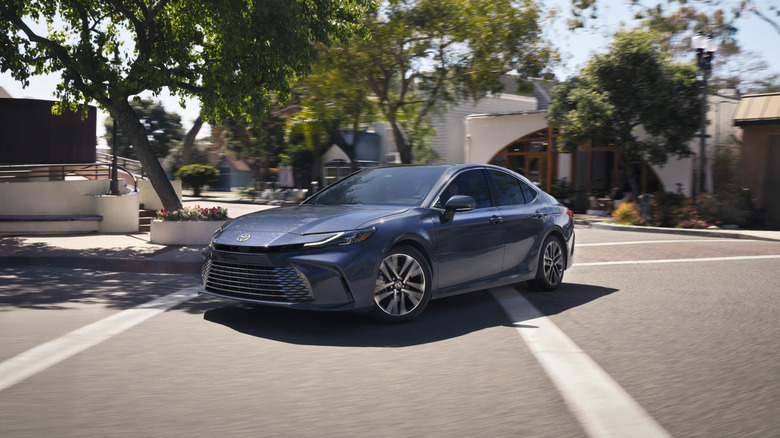
One of the Accord's main rivals over the decades, the Toyota Camry is one of the more unique entries on this list, offering value that very few cars can match across the board. The 2025 model year redesign's biggest and boldest change was switching to a hybrid powertrain exclusively, while remaining competitively priced with each trim. Under the hood of every model is a 2.5L four-cylinder hybrid engine, producing about 230 horsepower. The best part, though, is the base LE trim's efficiency rating of 51 MPG combined. Aside from the new Nightshade trim, the 2026 model doesn't see any major changes.
Looking at the standard driver assistance features, the Camry keeps things like traffic jam assist and lane change assist reserved for the higher trims, but the standard Toyota Safety Sense 3.0 package covers essentials like lane departure alert, road sign assist, and the pre-collision system. It's also another sedan to score five out of five from the NHSTA in crash tests. There isn't quite as much space inside the 2026 Camry compared to some rivals, with its maximum 99.9 cubic feet rating, but it makes up for it with convenience additions like dual zone automatic climate control. Heated seats can be added on for $610 as part of the Cold Weather package, to add to the $29,000 base price for the entry LE trim. Essentials like rear child locks for both doors and windows are also included across the lineup.
2026 Kia K5
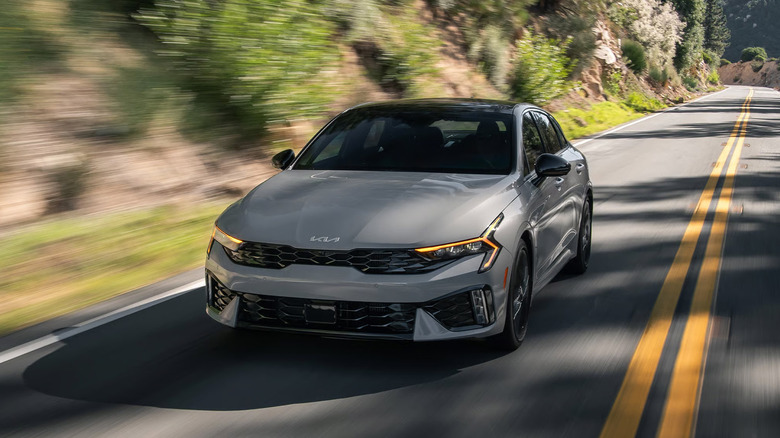
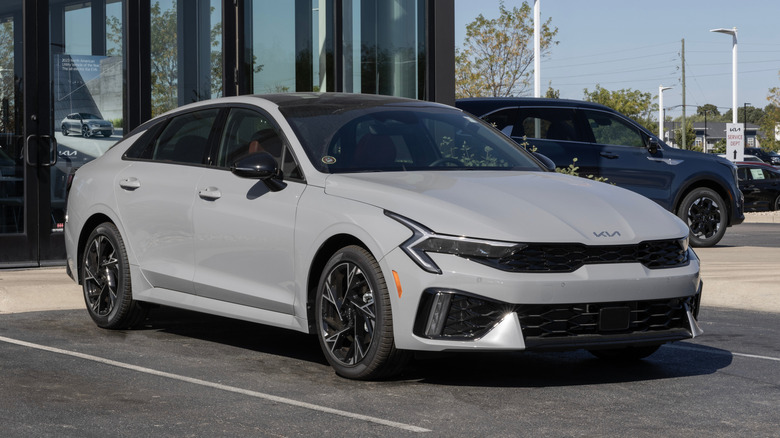
The Kia K5's highlight features are unsurprisingly reserved for the trims that cost the most money, but that doesn't mean the base trim should be written off if you want a family sedan that competes with the best, while looking pretty neat, too. Priced at $27,390 for the LXS trim (with a $1,175 destination charge), technology is where Kia puts a lot of attention, more so on the infotainment side. The base trim comes with a generous 12.3-inch center touchscreen, something that's not available on higher trims for some competitors. For safety, the base K5 doesn't miss out on too much compared to the higher trims, getting things like rear cross-traffic collision avoidance and forward collision avoidance assist.
For all-round comfort, the K5 is another model in the segment to offer dual-zone automatic climate control as standard. Heated or ventilated seats become standard with the GT-Line, which starts at $28,390. Something that's consistent across all trims, however, is the space inside the cabin. You get a competitive passenger volume of 105.3 cubic feet, one of the highest in the segment for the money. We mentioned that the highlights for the K5 require you to spend more, with the $33,490 GT trim getting the turbocharged version of the 2.5L four-cylinder, producing 290 horsepower. The base trims come with a non-turbocharged engine putting down 191 horsepower, but you'll get better efficiency ratings, at 30 MPG.
2026 Hyundai Sonata
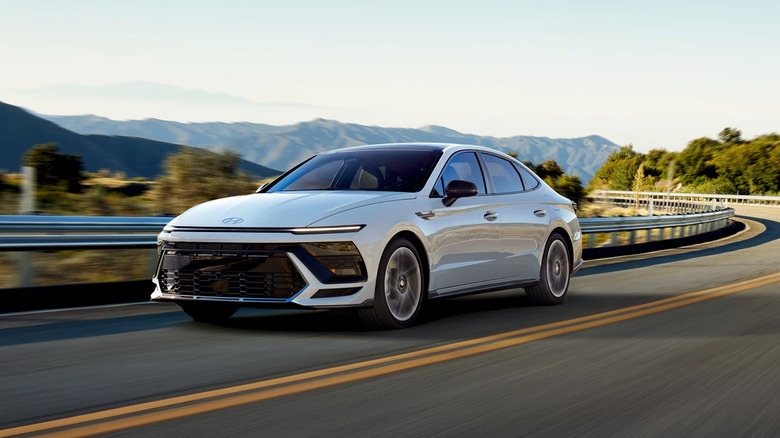
With Hyundai owning Kia, it's no surprise to see just how many similarities the K5 shares with the Sonata. Hyundai's cars are generally more understated compared to the sportier Kia alternatives, and that's certainly the case with the Sonata and the K5 when putting them next to each other. Underneath the bodywork, though, the two are incredibly similar. Both vehicles use a 2.5L engine, depending on what trim you go for, but it does also come with a hybrid option that we tested at the start of 2025, which the K5 doesn't have in the U.S. at the moment. This 2.0L hybrid setup produces a close 192 horsepower, but the 51 MPG combined rating for the Blue trim separates it from the Kia in this area.
Pricing for the base combustion-engined trim sits at $27,300, whereas the Hybrid Blue comes in at $29,050. Inside, the Sonata has a sleeker design style up front, but the same 12.3-inch touchscreen comes standard with the base trim. The safety tech available is also similar to the K5, with the NHTSA's crash tests also giving it five stars across the board. Despite being built on the same platform, the different styles mean different interior measurements, but the 2026 Sonata still offers 104.4 cubic feet of space inside, only just behind what the K5 offers.
2025 Nissan Altima
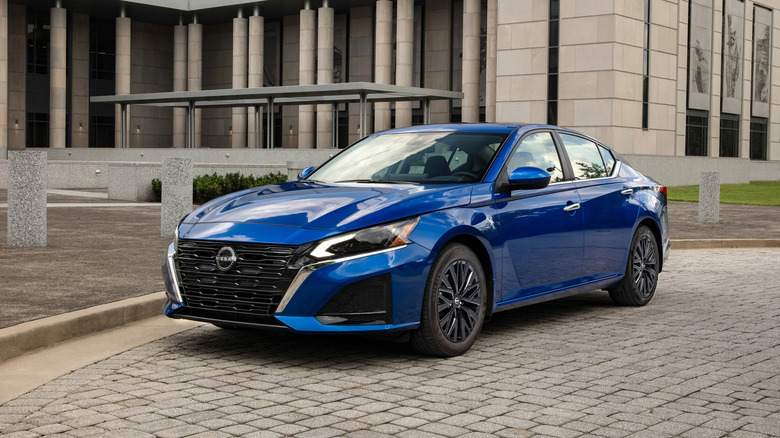
Countless major manufacturers have been turning their attention to the SUV segment in recent years, and Nissan is one of them. After the 2025 model year, the Nissan Altima will be discontinued, as will the smaller Versa. While it's a shame to lose another great car, the 2025 model year for the Altima still manages to compete with the best on the market, ticking every box you need it to for a family sedan. During our review of the car, it didn't blow us away with any standout features, but it's still a great, practical all-rounder for its price tag of $27,000 (with a $1,245 destination charge).
Starting with the safety and driver assists, the 2025 Altima comes with what you'd expect on the market, such as forward and rear collision avoidance, blind spot warning, driver attention alerts, and lane departure warning, to name a few. Things like traffic sign recognition and the 360-degree surround-view camera are kept exclusively for the top-spec trim, starting at $33,330. This will also get you leather seats, though, instead of the base trim's cloth finish. Staying inside, the Altima is as spacious as you'd want for a family sedan, with 43.8 inches of legroom in the front and 35.2 inches in the back. Headroom for the front and rear seats comes in at 39.1 inches and 36.9 inches. Its 188-horsepower output from the 2.5L engine also remains competitive, as is the 32 MPG combined efficiency rating.
Methodology
In order to select the cars for this list, we looked at key factors such as safety ratings and technology, interior space, fuel efficiency, and optional features to find the sedans that would be the most effective for families overall. We have also used a mixture of in-house reviews as well as consumer feedback to select these models, as well as additional professional reviews for further verification.