

5 Cars To Consider Instead Of The Lexus GX550

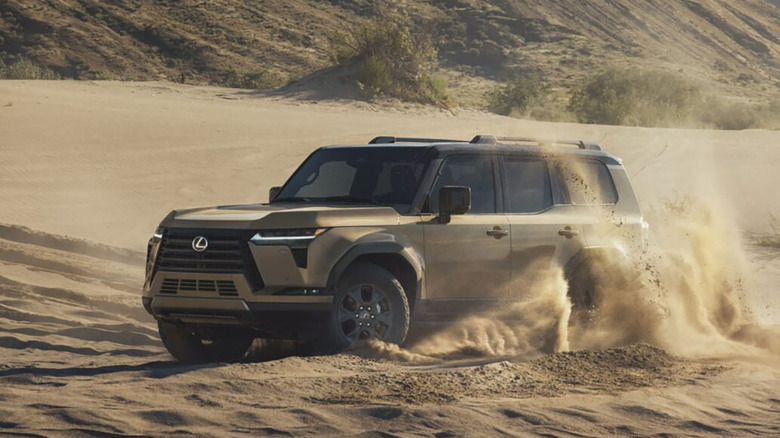
the Lexus GX has become one of the most interesting SUVs on the market since its introduction back in 2003. It combines Toyota's impressive off-road DNA with contemporary Lexus refinement and is sized in a sweet spot for many SUV buyers. It's been this way since the original GX 470, and the legacy lives on via the third-generation GX 550 that debuted for the 2024 model year. Lexus currently offers six different variants of the GX550: Premium, Luxury, and Overtrail trims as well as 'plus' variants of each. The base-level Premium version starts at $66,935 plus the standard array of tax, title, and dealership fees and the flagship Overtrail+ sets you back $82,045 plus those same bumps.
All GX550 variants come with a twin-turbo 3.4-liter V6 engine mated to a 10-speed automatic transmission and four-wheel drive system and SlashGear's review of the 2024 Lexus GX550 concluded that its 349 horsepower and 479 pound-feet of torque help make it "the best of old-school and new-school SUVs in one capable package." There are plenty of other enticing SUVs in its price range, but a GX comparison shopper will want off-road capability, up-to-date features, and refinement and reliability that challenge those of Lexus' luxury SUV. Here are the most formidable challengers to the Lexus GX 550 we could find, including a couple of its Toyota cousins.
Toyota Land Cruiser
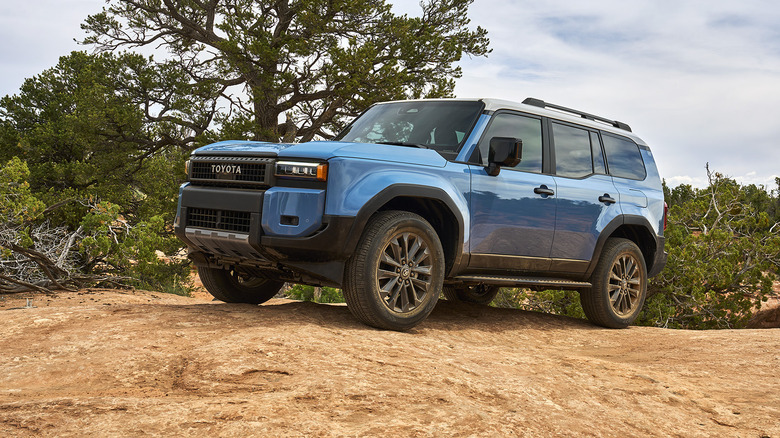
A quick glance might be all it takes to see the similarities between the Lexus GX550 and Toyota Land Cruiser, but there are a few key differences once you look past their shared TNGA-F platform. The 2026 Land Cruiser comes in two trims: the entry-level Land Cruiser 1958 costs $57,200 plus options, fees, and a $1,495 destination charge and the better-equipped but blandly named Land Cruiser is $63,275 plus extras. So if you like the looks and the off-road capability of the GX but prefer a less expensive SUV without the Lexus logo on the grille, the Land Cruiser is worth a look.
The badges aren't the only thing different about these two SUVs, though. Since the 2024 model year, The Land Cruiser has come with Toyota's i-Force Max hybrid powertrain. The 2.4-liter turbocharged I4 and electric motor in the transmission combine to generate 326 horsepower and 465 pound-feet of torque, both good but not great numbers. On paper the two engines might seem on par with one another, but there is a noticeable difference in their performance. The GX550 can tow up to 9,600 pounds to the Land Cruiser's 6,000 and the V6 makes it more than a second quicker to 60mph.There's a lot to like about the Land Cruiser's rugged, heritage-oriented design, but buyers will have to decide if these compromises are acceptable. And if you add the $4,695 premium option package to your Land Cruiser, it's almost as expensive as a Lexus GX550 in its most affordable form.
Toyota 4Runner
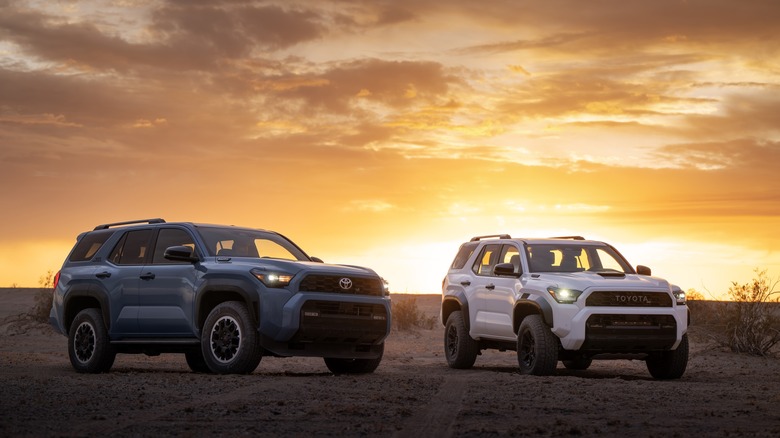
There's another Lexus GX550 alternative from within the family worth considering; the Toyota 4Runner. It's more affordable than its GX550 or Land Cruiser cousins, with half of its 12 variants starting at under $56,000. The base-trim SR5 costs just $41,570 plus options, tax, title, and registration. The fully-equipped TRD Pro trim is $67,900 plus those same add-ons, making it comparable to the base GX550.
In between are 10 other variants of the 4Runner with the conventional i-Force and hybrid i-Force Max powertrains. Here's where the biggest compromise between a 4Runner and GX550 can be found, with the standard i-Force 2.4-liter four only capable of 278 horsepower without help from the Max version's electric motor. But if power is a concern, the hybrid and upper-trim versions of the 4Runner still come in cheaper than the Lexus GX550. With the hybrid i-Force Max powertrain, 2025 4Runner drivers get the same 326 horsepower as GX550 owners and just 9 fewer pound-feet of torque. While we found the loaded 2025 4Runner Trailhunter pretty impressive, the sweet spot in the lineup is among less fancy i-Force trims that are tens of thousands of dollars cheaper.
Land Rover Defender 110
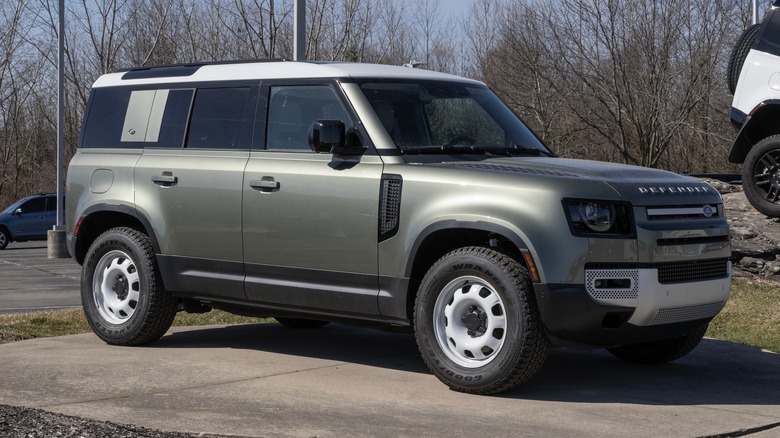
The Land Rover Defender is one of the few European SUVs that competes directly with the Lexus GX550. The Defender does a good job of blending 4x4 capability with luxury and refinement, and head-to-head comparisons between it and the Lexus have shown them to be similar in terms of performance. One big difference is that the Defender has a unibody construction, making it a little smoother on-road than the body-on-frame GX550. The Defender 110 comes with your choice of a gasoline, diesel, or plug-in hybrid powertrain and starts at $84,590 plus tax, fees, and a $1,695 destination charge.
That makes the stripped-down version pricier than a fully-loaded Lexus GX550, and a Defender Trophy Edition will cost you a hefty $115,850 before line items are added. Land Rover's reputation for building luxurious and capable off-road machines has been dinged by long-term reliability, although our review of the Defender 110 found it superior to the GX550 "in both economy and — arguably — renown." The new GX has its own issues, including a November 2025 recall for metal debris in some non-hybrid engines. As such, the GX550 and Defender 110 both appeal to upscale buyers and offer similar measures of comfort, performance, and headaches.
Jeep Grand Cherokee
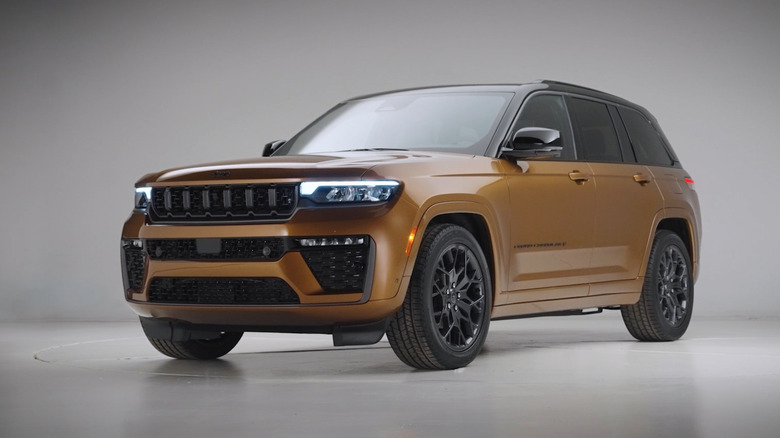
Most serious conversations about modern SUV offerings should include a Jeep of some sort, and the brand's best Lexus GX alternative is the Grand Cherokee. The Grand Cherokee has a car-like unibody construction, but it's still one of the most capable midsized SUVs around. It has plenty of premium features but isn't marketed as a luxury model; three of the nine available variants have a base price under $40,000 plus destination charge of $1,795. The top-trip Summit Reserve variant starts at a still-reasonable $63,040 plus line items, and the Grand Cherokee only gets into Lexus pricing territory when you consider opting for the 4xe hybrid powertrain. You'll get 25 miles of electric-only range, although a Grand Cherokee 4xe will cost between roughly $63,000 and $90,000 depending on options and fees.
The gas-only Pentastar V6 produces less than 300 horsepower but provides for up to 6,200 pounds of towing capacity, and the current Grand Cherokee has its share of detractors even among brand-loyal owners. Consumer Reports named it the least satisfying SUV to own in its 2025 model year survey, and RepairPal ranked it 15th out of 26 midsized SUVs for cost of repairs and maintenance. These impressions have already impacted the Grand Cherokee's resale value, and that's a big factor for anyone prepaing to drop tens of thousands of dollars on a vehicle. Most new Jeep models are covered by a three-year, 36,000-mile warranty and owners benefit from the brand's large dealership network, so there's some comfort in that.
Lexus GX 460 (previous generation)
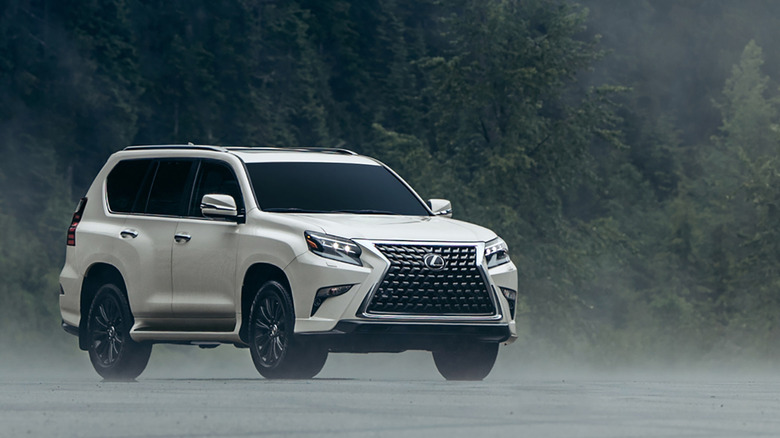
Given the reliability issues with and cost of many competing models, it's not surprising that the best GX 550 substitutes come from Toyota. Another good alternative to a new GX is a gently used one, particularly the previous generation GX460. It debuted way back in 2010 and stayed relatively unchanged until it was bumped in favor of the GX550. Some devotees actually prefer the GX460's 4.6-liter V8 that allow it to tow up to 6,500 pounds and in our testing of the 2021 GX 460 we found it to have a "quiet that belies the GX's age and abilities."
And though its naturally aspirated engine's 301 horsepower and 329 pound-feet don't quite match up to the GX550's twin-turbo V6, the prior generation's reputation for reliability is strong. While Toyota has issued two separate recalls for the GX550's engine debris issue, many GX460 owners are still happily making do with their original motors.The added performance and modern design of the GX 550 are tempting, but you can probably find a used GX460 in the neighborhood of $25,000 or less.
Our methodology
How did we choose this handful of models from all the SUVs that might appeal to potential Lexus GX 550 buyers? We identified the most similar ones in terms of price and capabilities, and began by ranking them based on first-hand impressions. To make further distinctions we consulted reviews, reliability surveys, used car listings, and recall notices for each model. Owner impressions and ratings were given more weight than third-party reports, but not as much as SlashGear's own experience.