

Do Diesel Pickups Burn Through Tires Faster Than Gas Trucks?
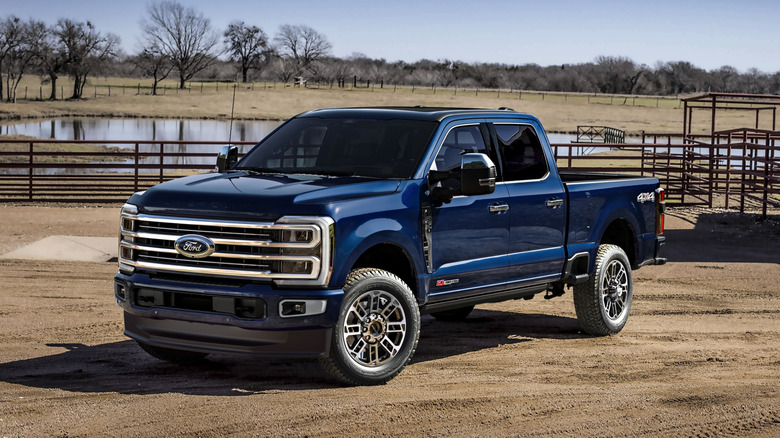
There are many differences between gasoline and diesel-powered trucks beyond the fuel they use. Diesel engines tend to be larger with a longer stroke (the distance the pistons travel within each cylinder), thicker blocks, and heavier internals to handle higher compression ratios. Thanks to diesel's higher energy density, those engines typically produce more torque and weigh more than their gasoline equivalents. There are some myths about tires that might mislead you, but the added torque and weight of diesel trucks means their tires will wear out faster than the ones on gas-fueled trucks. Tire wear is dependent on a few key factors: the tire's composition and geometry, road surface conditions, and vehicle physics. It's in this last respect that a diesel truck's added weight and torque have an effect on tire life.
For example, let's look at the 2025 Ford F-250 Super Duty pickup. Buyers have four engine choices: 6.8 and 7.3 liter gas-fueled V8s and regular and high-output versions of the 6.7-liter Powerstroke turbodiesel V8. While the high-output diesel has a modest 500 to 405 horsepower advantage over the smaller gas engine, their torque numbers are wildly different. The gas-powered 6.8 produces 485 lb/ft of torque, but the regular output Powerstroke more than doubles that to 1,050 lb/ft using 100 fewer ccs. While it's the smallest Super Duty engine by displacement, the 6.7-liter Powerstroke engine weighs just over 1,100 pounds fully dressed and filled with fluids. As for the 7.3-liter gas powerplant, the new Godzilla version tips the scales at a svelte 540 pounds. A diesel truck's high torque production and heavy weight make it good for hauling cargo or towing; here's how those factors also lead to increased tire wear.
The physics of tire degradation
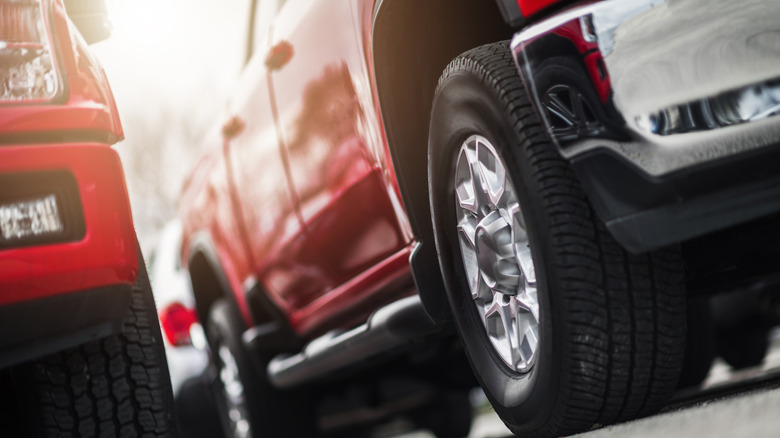
Except in case of a major accident or mishap, your tires are the only part of your truck that touches the road. They constantly bear the stress of acceleration, turns, and braking and they're made of fungible material. Rubber dries out and cracks over time, tread gets worn down, and tires face road hazards like nails, jagged rocks, and curb impacts. All of these factors are exacerbated when you put additional weight on them, and poor alignment or worn suspension components might also make your tires wear unevenly.
Not only does the Super Duty's diesel engine outweigh the gas one by over 500 pounds, but diesel fuel weighs more than gas as well. Super and Crew cab trucks come with up to 48-gallon fuel tanks, and the difference of about a pound per gallon adds the weight of a couple of tool bags to the diesel version's load. All Super Duty F-250s — regardless of engine, cab, or bed type — come on 245mm wide light truck tires, meaning the extra weight creates more friction with the ground. The additional torque of the diesel engines can also lead to wheelspin in some circumstances; that will degrade your tires even faster.
How to prevent tire wear
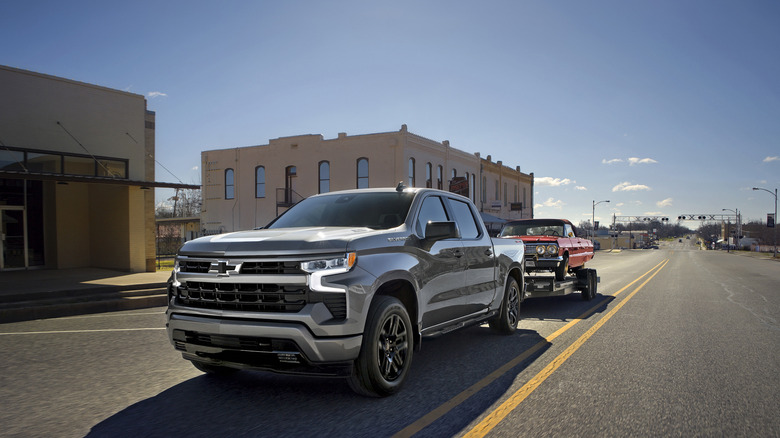
The difference should be fairly negligible for most drivers, and even a head-to-head-comparison over time might not reveal much. Ford offers no specific warnings related to diesel truck tire wear in the Super Duty owner's manual, with the guidance for all engine types being that tires should be replaced every six years or when a tire tread depth gauge marks 3/32 of an inch or less. Other factors that can increase tire wear are high ambient temperatures, improper air pressure, and aggressive driving. Heavier diesel engines also put more weight on the front of a truck, especially if there's not much in the bed to offset it. This might mean faster front tire wear as opposed to a gasoline-powered truck, but rotating your tires at the manufacturer-suggested interval will help mitigate this.
The tips for making your tires last longer are the same for diesel or gas-fueled trucks: use tires with a sufficient load rating, inflate them properly and evenly, don't drive your truck like a sports car, and keep up with its regular maintenance. Pay attention for signs that your tires need replacing, and if you suspect something is wrong get to a tire shop or garage immediately.