

10 More Common Hot Rod Terms And What They Mean
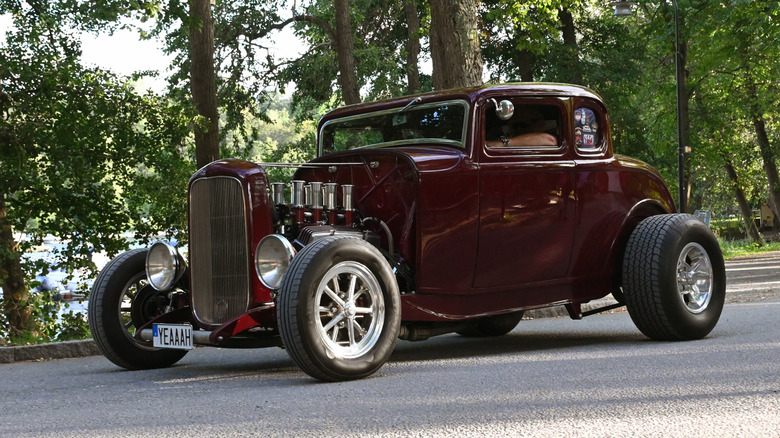
Building custom cars to a certain aesthetic and performance has been a favored pastime since not long after Karl Benz puttered out of his garage on the Motorwagen. Ever since that fateful day, tinkerers, engineers, mechanics, and dreamers have pondered and puttered about modifying cars, and nowhere is that culture as pronounced as in the United States of America.
Hot-rodding is a uniquely American art form that emerged in the 1920s and 1930s, when enterprising gearheads took factory cars and chopped them up in every imaginable way to increase speed and style. Since then, the hobby has grown from a weekend pastime to a full-blown economy. With such a passionate following, it was only a matter of time before it started gaining slang and technical terms that can be baffling to the outside. Some of the terms are baffling, others delightfully rudimentary, and others tongue-in-cheek. And in case you missed it, check out our first instalment of common hot rod terms and what they mean.
Boiling the hides and channeling
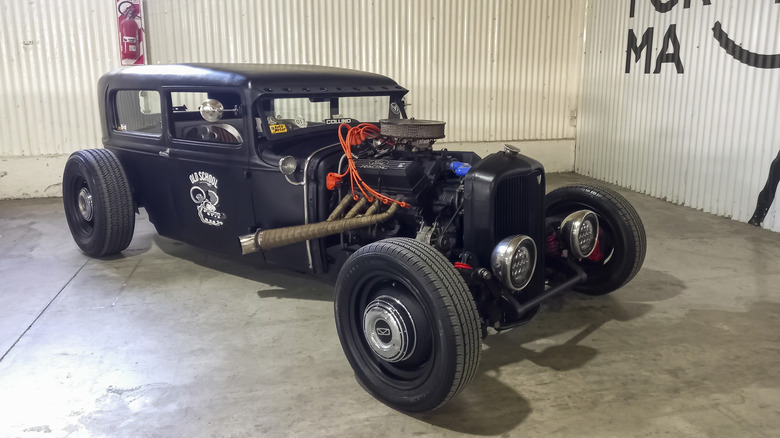
Boiling The Hides:
There is a poetic lilt that arises from terms born of passion, and "boiling the hides" seems to have it. After all, what are car people more passionate about than good, rip-roaring burnout? Forget the money you just dropped on new shoes for your ride. Tires were made to be melted.
If someone asks you to boil the hides, don't worry; they aren't offering you a job at the family tannery. Though tire development is high-tech these days, early wheels were made of leather wrapped around wooden or metal spokes. And one way to get tires nice and hot is to attach them to the business end of a drivetrain and smash that accelerator. Just try to resist the urge to do it anywhere but a race track.
Channeling:
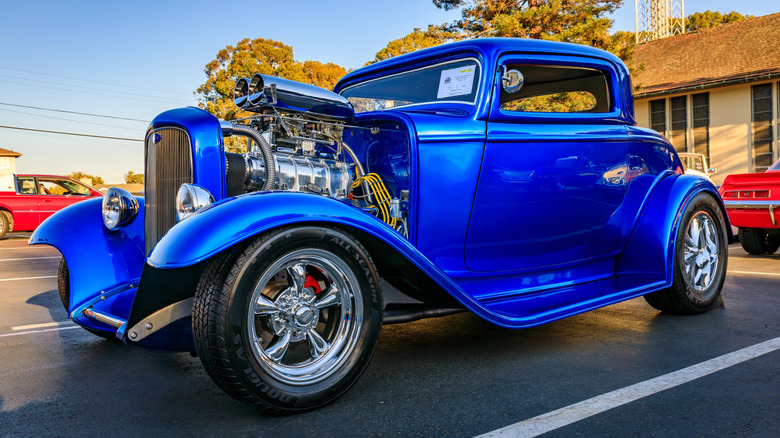
Hot rods often lose the stance and profile of the factory car on which they are based. Many cars in the '30s were shaped like cinderblocks, and rodders realized that reducing surface area decreased wind resistance, which increased speed.
One way to lower the height was to channel the vehicle. That meant cutting out the floor, lowering the body down over the frame, and then reinstalling the floor at a higher level. The result was a body that sat lower, caught less wind, and looked downright malicious. On the West Coast, it was common to chop the windscreen in addition to channeling the car for the ultra in rodding rudeness, while East Coast rodders preferred to channel the car while retaining the stock windshield height. Either way, channeling remains a popular method of adding some custom pizzazz to your ride.
Frenching and gassers
Frenching:
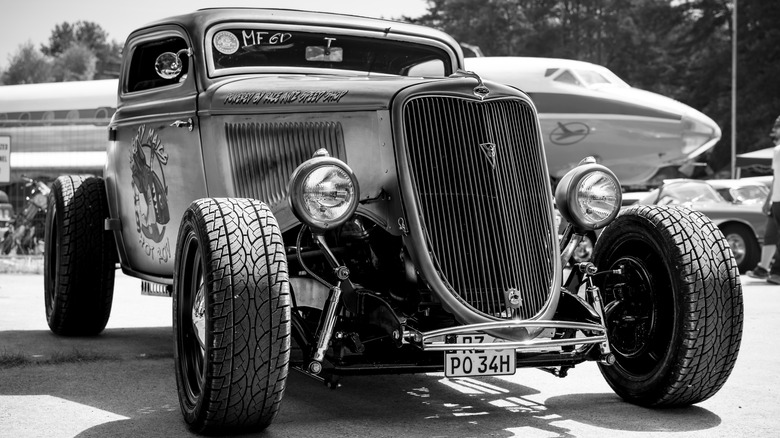
While rat rodders aren't shy about attaching chunky and funky modifications to their projects, for many, smoother is better. After all, who doesn't like a sleek and seductive work of art with a V8 engine? Many rodders achieve this look by frenching their cars, which involves incorporating an individual component into the vehicle's body.
Frenching first emerged in the 1930s and grew in popularity through the '40s and '50s, when skilled body shapers began to create custom recesses to countersink light assemblies and other accoutrements, eliminating unwanted bezels and creating a smoother, more streamlined look for their rods. The technique remains popular today, and every car show will feature a host of lovingly frenched hot rods.
Popular candidates for frenching include headlights, taillights, and license plates. While some might imagine the technique, also known as tunneling, aids aerodynamic performance, it's primarily an aesthetic customization.
Gasser:
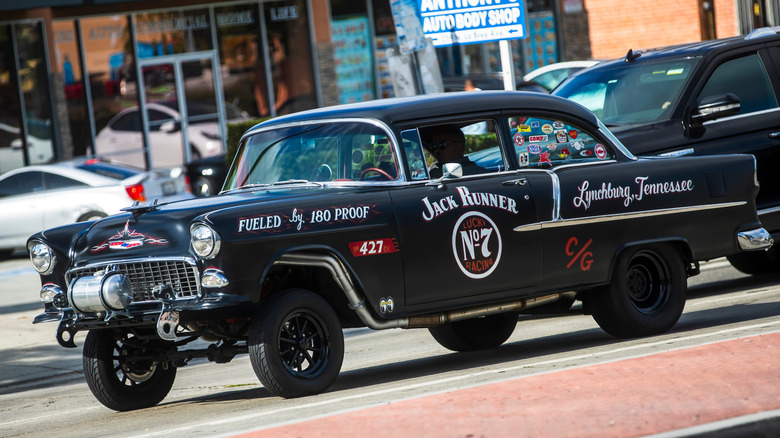
All cars are gassers, aren't they? The first electric car is probably older than you realize, but for most of its existence, the automobile has run primarily on gasoline. The term gasser, as it refers to a hot rod, originated in the 1950s and 1960s, at — where else? — the drag strip.
The "gas" class was once an official segment of the National Hot Rod Association's rule book. Through the '50s and '60s, garage tinkerers could bring their gasoline-powered street cars to the strip and let 'em rip. Of course, mechanics and racers are always looking to push the limits, and gassers went from daily drivers to highly modified race machines. Popular gasser modifications included setting the engine further back, removing or replacing heavy components with fiberglass, wild induction systems, and flame-throwing exhausts.
Lead sleds and one-leggers
Lead sled:
The lead sled is the rare hot rod that isn't built solely for blistering speed and ear-splitting exhaust notes. It's the definition of cruiser cool, a slinky, low-slung sculpture that oozes across the pavement. True lead sleds start life as '49, '50, or '51 Mercury models (though there are non-Mercury sleds). An exhaustive customization process that could include chopping the roof, shaving and lowering the body, dulling or replacing the chrome, resulted in a long, low, and mean machine that drips with style.
Unlike many rodding trends, the lead sled has a definitive birth. Legendary builder Sam Barris debuted a Mercury Club Coupe at the Oakland Roadster Show in 1950. He even coined the term, which some believe is a reference to its weight or the lead that was once a common component in body shaping.
One-legger:
If "My Cousin Vinnie" is amongst your frequent film rewatches, you're already familiar with one-leggers, even if you don't know it. In the film, Joe Pesci's out-of-depth lawyer Vinny Gambini wins his court case on the basis of Mona Lisa Vito's (Marisa Tomei) knowledge of positraction rear ends. Positraction is the marketing name General Motors gave to the technology, though it is more commonly known as a limited-slip differential. It works by sending power from the driveshaft to both rear wheels of a car. Prior to positraction, open differentials only sent power to one wheel during a burnout.
Alternately referred to as peg-legs or dog-legs, rodders also call non-positraction vehicles one-leggers to denote the single power-receiving wheel. So if your arch-rival at the track is rocking a one-legger while you have positraction, maybe racing for pinks is in your favor.
Snails, hair dryers, and slamming
Snail/hair dryer:
Turbochargers have been around since 1905, when Swiss inventor Alfred Buchi patented an exhaust-driven compressor that rammed more air into a diesel engine. Though popular in aviation, they didn't crack the automobile world until the Oldsmobile F-85 Jetfire and Chevrolet Corvair Monza Spyder, which employed the turbo-air 6 engine.
Power-boosting compressors have since made their way into the rodding world. And, of course, hot rodders have their preferred nomenclature for them. The term snail comes from the turbocharger's shape. A rounded casing contains a compressor wheel that moves the air through an exhaust port. From the side, the unit resembles a snail. It also somewhat resembles a hair dryer, which gives the slang term an extra level, as, fundamentally, a turbocharger's entire job is to blow air.
Slammed:
There is a particular menace about a low-rider. Certainly, a driver or builder who doesn't care how many curbs they crack is a menace to society, not fit to be behind in control of a TIG welder, let alone a steering wheel. Yet these maniacs exhaust, and we're glad they do, because a slammed hot rod has a certain appeal that eschews sensibility, and that's what hot rodding is all about.
Slammed cars are so named because they are slammed as low to the ground as possible. They may also be called that for how often drivers slam into potholes, or slam their fist against the wall when they crack their oil pan. Properly slamming a car can be tricky. While some don't mind hacking through coils and pulling out bump stops, the best way to achieve that slammed look is with a coilover system. Coilovers allow adjustments that lower the vehicle's ride height while maintaining safety and operating within the law.
Zoomies and double pumpers
Zoomies:
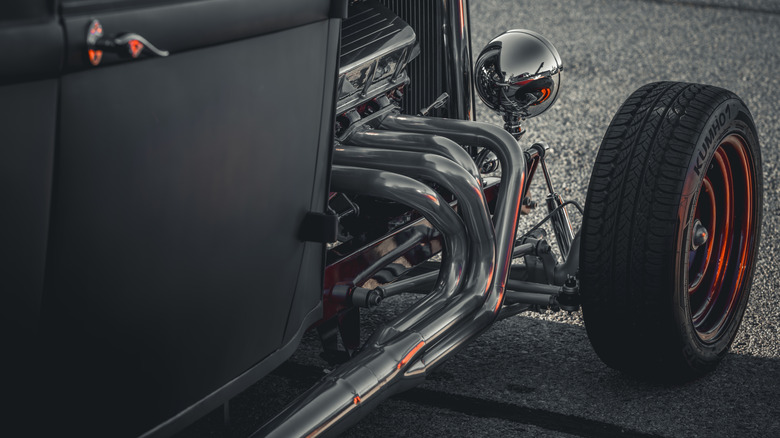
On social media, "zoomie" refers to a burst of energy in a pet that causes it to zoom around the living room. In a car, however, it is something quite different. On polite automobiles, the exhaust system runs beneath the vehicle, through a catalytic converter and a muffler or two before sedately exiting at the rear. But hot rods are meant to be loud and smelly, and zoomie exhausts are one way to achieve that effect.
Rather than running beneath the vehicle, zoomies stick directly out of the engine, often at crazy angles. They are essentially open headers with some flair. Don't try to run a zoomie setup on the street, though. Most municipalities strictly prohibit them and other open-header systems on the basis of environmental protection and noise ordinances. Some race organizations even ban their use.
Double pumper:
In the bygone days of yesteryear, the ancients used a mysterious and little-understood induction system known as carburation. The carb mixed the gas and air before sending it off for detonation in the days before fuel injection. You won't find many brand-new carbureted vehicles, but the system remains popular in vintage builds like hot rods.
Double pumpers gained popularity during the 1960s, when Holley developed the 4150 carb. It used not one, but two accelerator pumps. One worked the carb's primary barrels to deliver fuel on acceleration, but there was also a pump for the secondary barrels, providing another jolt when the engine's rotation climbed. The result was a fuel-sucking monster that rodders and racers couldn't resist. The double-pumper design wasn't limited to custom aftermarket parts, either. Some of the most legendary muscle cars in history came from the factory sporting a double pumper, including the Camaro Z/28, the Boss Mustang, and high-power Chevelles.