

4 Of The Worst Engines Ever Made By Subaru
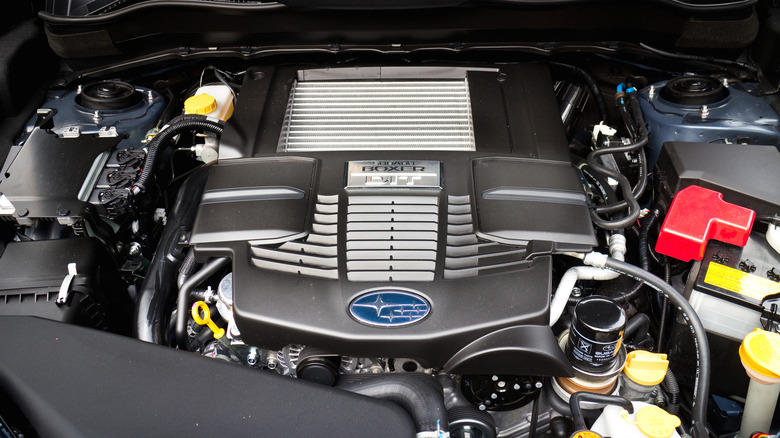
The Subaru brand is known for many things — from its rally-bred heritage to historic Subaru boxer engines. Over the past several decades of making engines, Subaru has earned a loyal following among both everyday commuters and die-hard Japanese car enthusiasts. That said, while the company has produced plenty of memorable engines, not every design has been a success.
Whether it be head gasket problems, coolant losses, chronic oil starvation, or ringland failures, there were times when Subaru's long-term engine reliablity came under close scrutiny from enthusiasts, owners, and mechanics. Some believe early EJ-series engines are some of the worst four-cylinder engines ever. On the other hand, Subaru is also one of those brands known for making reliable engines, such as the EF12, the EJ20, or the EJ22.
Regardless, many factors can cause an engine to go wrong, and due to how complex engines inherently are, almost all are bound to break at some point. Even so, some experiences are bound to be worse than others, and these Subaru engines stand out as higher-risk compared to others. As someone who has seen a fair share of gasket problems in a Subaru-centric community, here is what kept me up at night.
EJ25 Phase I (1996 – 1999)
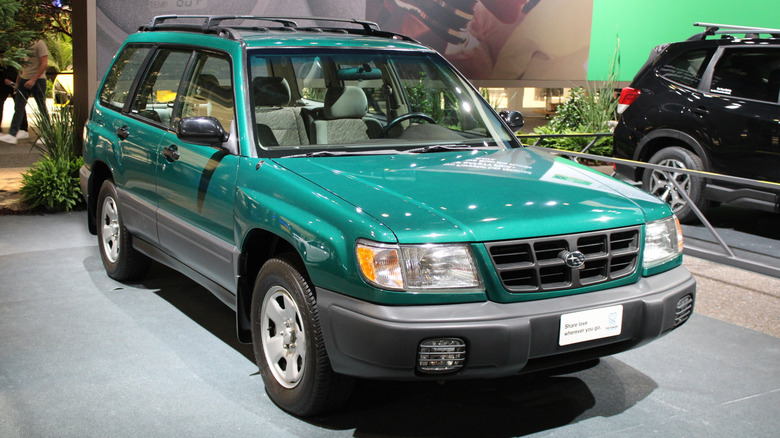
First introduced in 1989, the Subaru EJ family of engines has been tasked with powering some of Subaru's most iconic vehicles. Subaru discontinued the EJ and has shifted focus on the replacement FA engine. Although the EJ is iconic, it isn't without its faults. Many sources report that its head gasket failures and oil and coolant leaks made it very problematic, especially for EJ25s made between 1996 and 1999.
According to MartiniWorks on YouTube, "the head gaskets for these engines were made from a multi-layered composite material that was prone to failure pretty easily and pretty early on". This can result in coolant leaking from the engine and overheating it, but also the gasket could leak internally and mix water and oil." These concerns were so prevalent, they triggered a class-action lawsuit against Subaru.
These issues can also lead to warped heads, lift under load, and potentially destroy the engine. To make sure your Phase I EJ25 does not suffer from these issues, be sure to maintain regular coolant and oil changes, don't overheat it, upgrade the gaskets with modern multi-layer steel (MLS) gaskets, and avoid high-stress modifications.
EJ25 Phase II (1999 – 2004)

As previously mentioned, swapping your stock gaskets for a set of MLS items is a good way to lower the chances of experiencing gasket problems. This is exactly what Subaru did, but only with the very last Phase II EJ25s that ran from 2005, not Phase II engines that ran from 1999 to 2004. Therefore, 1999 to 2004 examples also suffered from head gasket problems. Moreover, the Phase II EJ25 suffered from widespread coolant and oil leaks, so much so that even after repairs, you weren't completely safe.
Besides oil and coolant issues, the Phase II has also problems with the piston ringlands fracturing and failing due to excessive heat and pressure. These issues were prevalent across multiple generations of the Subaru 2.5-liter engine, and some believe it mostly has to do with poor design and material choices. Although the Subaru EJ25s head gasket problems became a running joke because of both internal and external issues, the Phase II EJ25 primarily suffered from external head gasket leaks.
Subaru attempted to solve this problem by sending out the WWP-99 Subaru Owner Notification Notice. More precisely, Subaru thought that a cooling system conditioner and an extended warranty would do the trick. However, since the problems were inherent to the very initial designs of this engine, and the solution was maintenance-based, there were no guarantees that these solutions would actually solve the problem.
Early EJ257 (2004 – 2007)
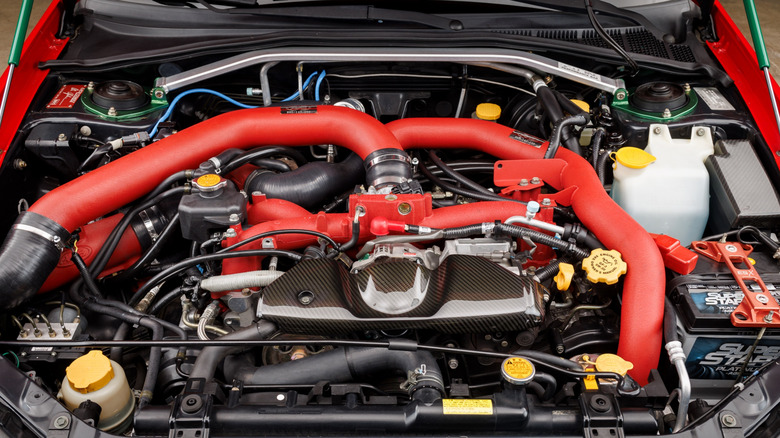
The Subaru EJ257 was tasked with powering the WRX STI, one of the most successful Subaru models in history. Although the EJ257 is not necessarily as unreliable as some of its EJ family members, the biggest issues with the EJ257s came from tuning the earliest variants. According to 8020 Automotive on YouTube, the main EJ257 problems include oil starvation of the second and third bearing, ultimately leading to their failure.
This problem can further be compounded by heat that can lead to piston ringlands wearing. Moreover, it can let oil seep through and cause further oil starvation. As a lot of you know, an engine makes power by mixing the air and fuel inside the chamber. This mixture is ignited by the spark plug, which creates an explosion that sends the piston downward. The problem with ringlands wearing out is that another explosion can occur in the weakened area, causing excessive pressure that can crack the piston and reduce compression.
One way to fix this is to upgrade the pistons and keep oil quality and replacement schedules frequent. Lastly, the EJ257 can also experience head gasket failures, although not as frequently, especially if the engine is running a higher boost tune. These can be mitigated by upgrading the gasket and using beefier head studs.
Turbocharged EJ20 (pre-2005)
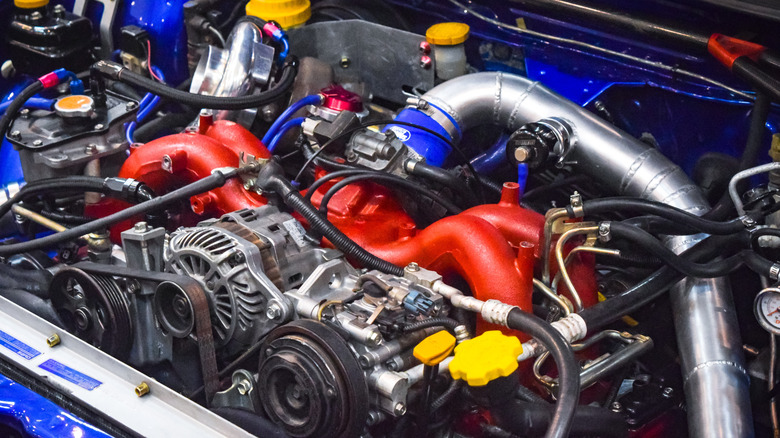
Although the Subaru EJ20 has its pros and cons, and can be fairly reliable, not all EJ20s are the same. For instance, earliest turbocharged versions of the EJ20 have fairly well-documented instances of head gasket failures, usually caused by poor maintenance and overheating. Open-deck block design issues stem from how the EJ20 manages heat, and when paired with oil consumption issues, the EJ20 can become quite a handful.
Piston wear was also reported with early EJ20s, and so were turbocharger issues. Moreover, the EJ20 was also linked with prematurely worn seals. Another fairly big problem with the EJ20 is rod knock, and it can be extremely costly and difficult to repair it. Since the EJ20 also uses a belt instead of a timing chain, these can also fail if neglected or if the timing marks are incorrectly aligned during service.
Lastly, the Subaru EJ20 was also associated with fuel injector problems that can lead to both poor performance and poor economy. Ultimately, if you take proper care of your EJ20, don't push it too hard, and keep tabs on general maintenance, you are in a good position to avoid the brunt of these problems.