

Common Problems You May Experience With The BMW X5 (According To Owners)

The X5 represented BMW's very first venture into the premium SUV space, and it really helped to kickstart the movement. While the Range Rover had been doing the rounds for some time, the X5 represented something a little sportier, and it sold well in addition to the likes of Porsche's Cayenne, which arrived just a couple of years later.
We're now 25 years and four generations deep into the BMW X5's story, and it shows no signs of slowing down, with sales still coming in thick and fast each year. A new X5 will set buyers back a cool $67,600 in entry-level guise, plus dealer and destination charges, which is clearly unaffordable for many. Not to worry, though, as used BMW X5s have depreciated, and can now be picked up for relatively cheap. The older you go, and the higher mileage you can tolerate, the cheaper they get, but of course, used luxury cars like this do come with certain risks.
That's not to say that an older BMW X5 isn't worth pursuing, and it also isn't to say that a newer and low-mileage example will be trouble-free. From across all generations, the X5 can prove to be a dependable and enjoyable choice, but there are common problems to watch out for that can quickly dampen the ownership experience. Rather than avoid the model altogether, the best thing to do is approach ownership with your eyes wide open and with an awareness of what to look out for.
So, from troublesome software to engine issues and airbag concerns, this article shines a spotlight on some of the issues you'd best know about before diving headfirst into X5 ownership.
Common problems with first-generation BMW X5s
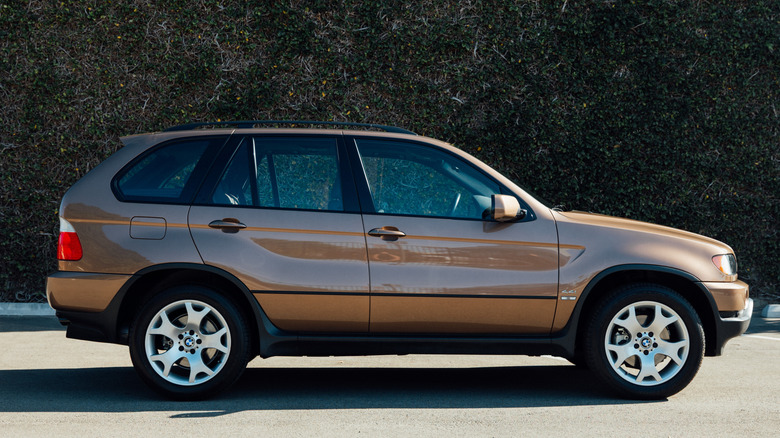
These are the oldest models around, so it stands to reason that they will likely suffer from more problems simply due to their age. The E53-generation X5 was available with a wide range of engines, and while they are largely dependable and capable of high mileage, they can suffer from oil leaks. Unfortunately, these oil leaks can spring up from numerous places, which can make diagnosing them particularly tricky. If in the market for an E53 X5, be sure to check thoroughly under the hood for signs of recent leaks, and watch for any active leaks when running it up to temperature.
Another issue which frequently afflicts these older cars is problems with the suspension. These are heavy cars, and being BMWs, they were also developed to handle as sweetly as possible. Naturally, this puts a fair amount of stress on the suspension bushes, so it's not as if there's an actual design flaw to tackle here; it's just that the components — specifically the control arm bushes — wear out due to the task at hand.
The bushes themselves aren't all that expensive, around $80 to $90 for quality parts, but some technicians may prefer to replace the entire control arm itself, which is more expensive, at around $400 to $500. Stripping the suspension down and rebuilding it back up can also be quite laborious, so the final bill might end up being quite high. When test-driving a potential purchase, listen out for noises beneath, and check for a tight and connected drive.
This generation of X5 also fell victim to the Takata airbag recall, and so many owners have complained about these issues over the years. It's absolutely worth ensuring that this recall has been carried out before making a purchase.
The second-gen X5 is perhaps the most troublesome of them all

BMW's X5 has always been marketed as a sports and luxury SUV, and so it made sense for BMW to add more advanced features for the second-gen model to entice buyers into leveling up with the new release. That's all well and good for first owners with a fancy warranty package, but for buyers in 2025, all it means is that these X5 model years are more complex and potentially even more troublesome than their predecessors.
Some of the same issues apply, namely the control arm concerns, but there is more to worry about on the chassis side of things now, too. The E70-gen X5 suffers from costly air suspension issues. The idea of air suspension is to offer a smooth and luxurious ride, but when it fails, the ride height will slump, lights will appear on the dashboard, and the cost to set all this right can often spiral into the thousands. Owners experience sagging suspension as the first sign of trouble, often accompanied by a ride-height malfunction warning.
Fortunately, there is a permanent fix that many owners opt to take on, and that's deleting the air suspension system altogether. Air to spring conversion kits are available for around $300, which, with fitting, can prove to be quite a significant bill, but suppliers claim it's cheaper than replacing with new air suspension components, and at least you won't have the same issue crop up again. Be sure that the kit you choose has a 'light out module,' to ensure the ride-height malfunction doesn't become a permanent fixture on the dashboard.
BMW's third-gen X5 suffers from numerous drivetrain faults

BMW introduced the third-generation X5 — the F15 — as a 2013 model year, and it ran for five years. As was the fashion at the time, bigger naturally aspirated engines were being phased out in favor of turbocharged mills instead. So, for the F15, this meant boosted six- and eight-cylinder engines arriving for propulsion. Great for horsepower, not so great for long-term reliability.
Some of the more commonly reported issues with the F15-gen X5 include oil leaks, high oil consumption, and failure of the turbochargers. The latter is really quite common on European diesel models, and owners' sites are full of unfortunate owners whose drives home have been cut short by the presence of check engine lights and plumes of white smoke from the exhaust. Some had been quoted repair bills north of $7,000.
Fortunately, turbo failure is less common on the gas models, but sadly, oil-related problems are just as prevalent. Whether you drive a flagship xDrive50i model or something lower down the trim ladder, like a 35i model, these issues can be pretty widespread. In addition to leaks, F15 X5 owners also experience high oil consumption. Opting for regular changes and topping it up when required is the best approach to take, as letting the oil level drop too low can, of course, lead to serious engine troubles. Keep an eye on how quickly the engine burns through oil, and consult with a mechanic who knows these cars well if you're ever concerned about excessive oil consumption rates.
Fourth-gen models aren't too new to escape common problems

The fourth and current generation of X5, dubbed the G05, only hit the roads for the 2019 model year, so there really hasn't been an awful lot of time for common problems to develop and become widespread. That being said, owners have been noticing a few niggles and little frustrations that have been detracting from the overall ownership experience.
A few owners have complained in the past about iDrive issues, but thankfully, it's also reported that updates along the way have largely corrected these. Perhaps more alarmingly, there have also been reports about issues with the X5's transfer case — a part which is responsible for directing power from the transmission to all four wheels.
The first signs of trouble usually come in the way of a shudder at low speeds, and some owners say they struggled to access reverse gear, too. Thankfully, due to how new these cars are, it's likely the warranty will be doing its job for owners, but as they age, the bill for replacement will increasingly lie with the owners. A service information bulletin was issued earlier by BMW, as it turns out, the wrong spec of oil may have been used in the transfer case from the factory; the bulletin also notes that unevenly worn or incorrect tires could also cause the same problem.
On the bright side of things, the G05 X5 uses the B58 engine, which is largely regarded as fairly bulletproof. So, for now, aside from the possibility of smaller electric annoyances, your real concern would be that pesky transfer case.
Methodology
This article is not intended to cast an unjust shadow over the BMW X5. Rather, it looks to inform owners and prospective buyers of the common problems that typically afflict such models. In order to get an owner's perspective, we have consulted a number of owners' forums and enthusiast pages, in addition to taking information from third-party sites, such as the NHTSA, CarSurvey, and CarComplaints.
The BMW X5 has been in production for over 25 years now and is currently in its fourth generation, and so, in order to build up a complete picture, we have looked to highlight common issues from all models within this timespan. Not all owners will have experienced the issues listed, and they may well be avoidable with a strict servicing regime and preventative maintenance.