

Why Did Honda Stop Making Diesel Engines?
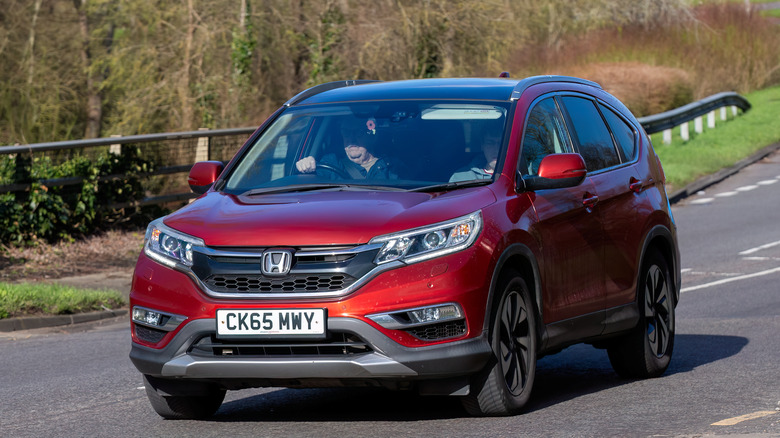
When you hear the name "Honda," you probably think about the company's history of producing motorcycles, as well as numerous powerful Honda-branded sports cars and SUVs. Either that or the sumo character from "Street Fighter II." However, the Honda name was once synonymous with diesel engines in Europe, but then the company decided to go green. Well, more like it had to go green.
In 2019, Honda announced that it would stop selling diesel cars and sunset diesel engine production to accommodate ever-increasingly strict global emissions regulations. Since the vehicles were primarily sold in Europe, Honda targeted standards set forth by the European Union (95 grams of CO2 per kilometer) and stated it would switch to electric engines, specifically for SUVs, by 2021. Although, Honda originally planned to meet the EU's requirements by 2025. The company also cited a declining interest in diesel engines as yet another reason for the change.
Unfortunately, when Honda decided to wipe its diesel engines from the market, the company also decided to cut back on the number of car models and, more importantly, active car factories. Several months before Honda announced it would phase out diesel cars, the company stated it would close its only car factory in the UK. While all these cutbacks reduced the amount of money Honda spent on manufacturing, which was then funneled into R&D, it did cost the jobs of around 3,500 automotive workers.
Honda wasn't the only one

Ever since the infamous Volkswagen Dieselgate scandal (the Environmental Protection Agency discovered that VW cars used "defeat devices" that could make it seem like their emissions were more environmentally friendly than they actually were), many people have turned on diesel power. And the fewer people who want diesel engines, the fewer companies will make them.
Many car manufacturers have stopped manufacturing diesel engines. Each had their own underlying reasons, but they all have one factor in common: They all followed market trends, and market trends said customers weren't interested in diesel engines. These included companies such as Porsche, Suzuki, and Volvo. In fact, shortly after Dieselgate was exposed, certain cities across Germany outright banned all diesel cars, with the only exceptions being vehicles that had been manufactured within a certain timeframe — likely because more recent diesel engines are more efficient and less polluting than older models. And the more time passes, the more car manufacturers join the diesel boycott.
Most of the diesel engine discontinuation used to focus on European countries, and while the U.S. still relies heavily on diesel fuel (estimated at around 123 million gallons every day), the country is slowly coming around. Although, that may have more to do with the recent skyrocketing prices for diesel more than anything else. Still, given how few manufacturers make diesel engines these days, it might be only a matter of time before the U.S. gives up on the technology as well.