

2027 Audi Q7 Is A German Luxury SUV That Gives Americans What They Want
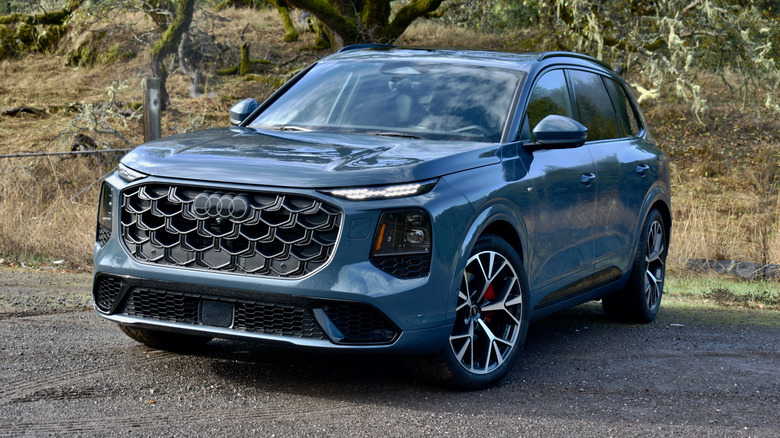
The 2027 Audi Q7 is the third generation of the German luxury brand's original SUV. What does it have in common with the previous two generations, besides a name and basic format? The fact that Audi took its time launching it.
By the time the first-generation Q7 arrived as a 2006 model, Audi was pretty late to the SUV game. SUVs hadn't become obligatory yet, but key rivals like BMW and Mercedes-Benz had been selling them for years at that point. As a brand known primarily for all-wheel drive and station wagons, there was no need for Audi to rush in.
That first Q7 lasted about a decade, and so did its successor, which has been around since the 2016 model year. Both generations were pretty well regarded by critics when new, and consumers seem willing to overlook a lot as long as they get a tall driving position and more space than a sedan. The redesigned Q7 offers a lot more than that.
Light show distracts from predictable styling
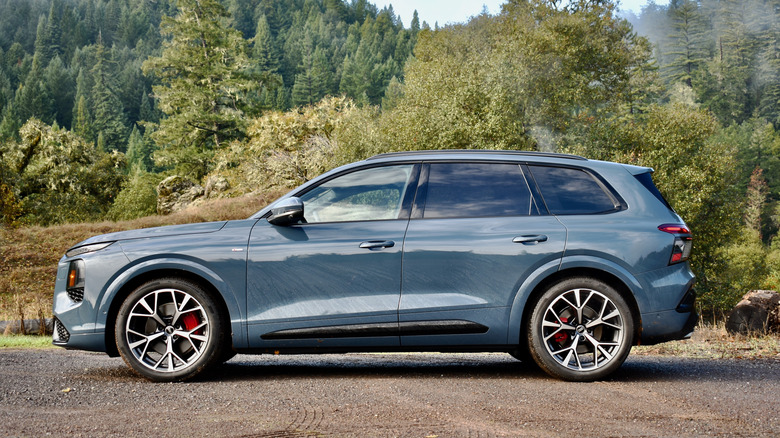
Bold styling has become a theme for the Q7. The first generation adopted just-beyond-the-moment styling from 2003's Pikes Peak Quattro concept. The second generation ruggedized Audi's then-current design theme to create something more SUV-worthy, but recognizably part of the brand. But the third-generation 2027 Q7 shows that less effort can still be more than adequate.
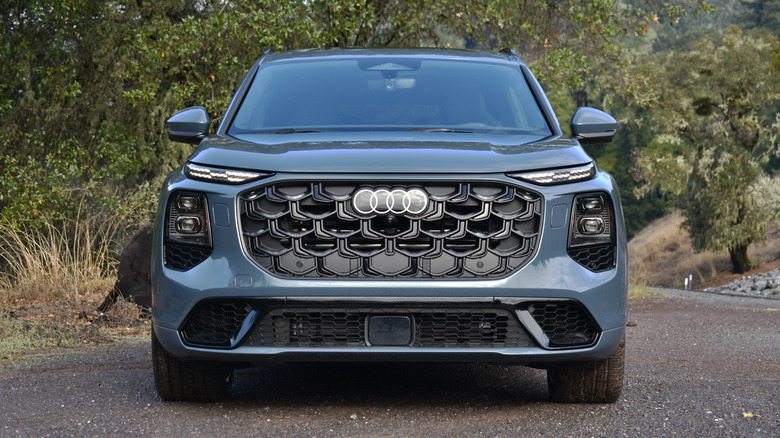
Stylistically, the new Q7 checks all the boxes for a luxury SUV. The roof and rear pillar are comprised almost entirely of straight lines, and the body sides and hood are tall, the latter giving the Q7 a locomotive-like prow that leaves plenty of real estate for an oversized grille. The Q7 wears its size with pride, and it has a presence that telegraphs that it's not for the proles. However, it feels like a paint-by-numbers job, without much to distinguish it as an Audi.
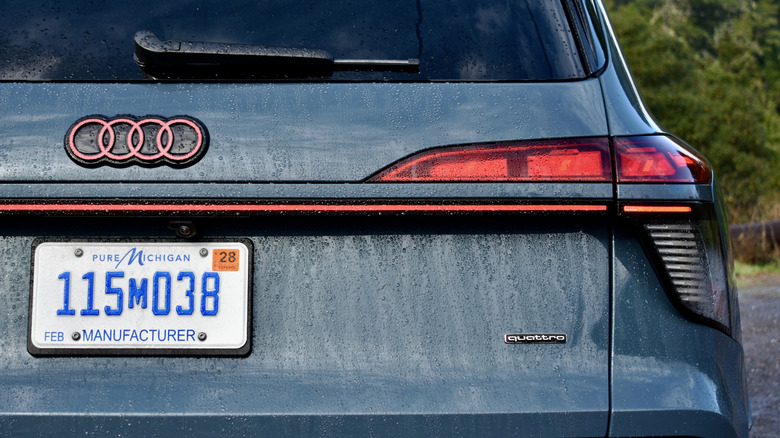
For that, Audi relies on high-tech lighting. The Q7 features the matrix headlights that Audi unveiled for the European market in 2012, but that have been kept out of the U.S. until now due to regulatory issues. They can be aimed to avoid blinding other road users at night while still providing adequate light for the driver. Programmable LED daytime running lights and OLED taillights are also available, along with "Advanced Turn Signals" that project arrows onto the road surface when signaling. The grille and badges can light up as well, but that's becoming a common feature among German luxury brands.
The V8-powered SQ7 returns, but the base Q7 is more than quick enough
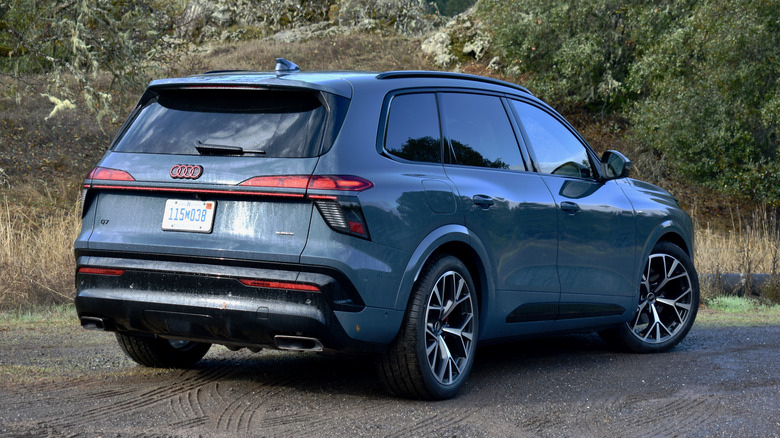
Powertrains aren't wholly new, but Audi made some important changes. It dropped the base turbocharged 2.0-liter four-cylinder engine, and replaced the turbocharged 3.0-liter V6 with a turbo 2.9-liter V6 derived from the engine in the new RS 5. It makes 429 horsepower and 442 pound-feet of torque, which is 94 hp and 73 lb-ft more than last year's V6. An eight-speed automatic transmission and all-wheel drive are still standard.
Audi quotes a zero to 60 mph time of 4.8 seconds that used to be the stuff of sports cars, not three-row SUVs. That makes the base Q7 quicker than a Mercedes-Benz GLE 580 4Matic, which boasts a twin-turbo 4.0-liter V8. The Q7 feels as quick as the specs suggest, but accelerates in a smooth and refined way.
The SQ7 also returns for 2027, again packing a twin-turbo 4.0-liter V8. But Audi increased output by 91 hp and 22 lb-ft, to 591 hp and 590 lb-ft. Audi estimates zero to 60 mph in 3.7 seconds, which is 0.3 second quicker than the 2026 model and beats the Porsche Cayenne GTS. To be perfectly honest, the base Q7 is plenty quick. Unless you have some unrestricted autobahn at your disposal, the main attraction here is the lovely V8 soundtrack.
What's missing is a more fuel-efficient option. EPA ratings of 19 mpg and 17 mpg combined, for the Q7 and SQ7 respectively, demonstrate the need for that.
Feels sportier than it looks, without compromising comfort
Steel-spring suspension is standard, but air suspension is optional, along with four-wheel steering. The SQ7 gets both features as standard equipment, along with bigger brakes. SQ7 customers also have comfort and sport suspension options depending on whether they want a more relaxed V8 cruiser or the full performance experience.
Audi invited me to spend a day driving a Q7 with air suspension and an SQ7 with sport air suspension on the twisty, technical roads winding from California's Napa Valley out to the Pacific Coast. This isn't the ideal environment for a large SUV—even a sporty one—but the Q7 maintained its composure. Both body control and damping were impressive, providing a truly luxurious experience. Handling was sharper than expected, and while the steering wasn't very lively, it was precise enough for the conditions. Having steerable rear wheels definitely helped as well, so I'm curious what a lower-spec car without that option would feel like.
The SQ7 dials things up a bit, of course, but it really needs a more open environment to thrive. The last SQ7 was a blast on roads with long straightaways and faster sweepers, and I imagine this one would be too. On more technical roads that require a slower pace, you get competence but not drama. The suspension was a bit too harsh on older, bumpier pavement, in the sportiest Dynamic drive mode, but was fine the rest of the time.
Luxurious and functional interior
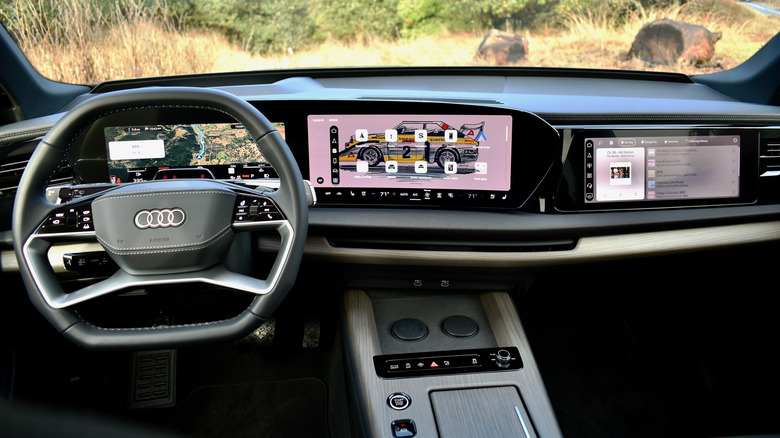
The Q7 is one of the best executions of Audi's current interior design theme to date. All of the materials have a high-quality feel, and there's thankfully little piano black plastic. Audi made a point of using matte-finish materials that don't create glare or show fingerprints and dust. They also give the Q7 a modern feel that you just can't get with heavily-lacquered wood trim. The SQ7's woven "carbon basalt structure" trim has less of a quality feel, however, and there's precious little to distinguish the performance model's cabin from the base Q7.
The Q7 is also as practical as you'd expect of a midsize SUV, especially because Audi once again made a genuine commitment to the third row. The BMW X5 (also redesigned for 2027) isn't available with one, while the Mercedes GLE (refreshed but not redesigned) can be equipped with one for occasional use only. Some dedicated three-row SUVs offer more legroom, but the Q7 has unmatched third-row headroom, and there's enough overall space for it to be used regularly. Cargo space is also generous, and a 7,700-pound towing capacity means this luxury SUV can not only accelerate like a sports car, but tow like a midsize pickup.
Power-folding second- and third-row seats are standard, and the second row can have either a bench seat or captain's chairs. The standard panoramic glass sunroof features optional dimmable panels. And Audi offers power-operated doors like on the flagship Q9.
Big screens, big bass
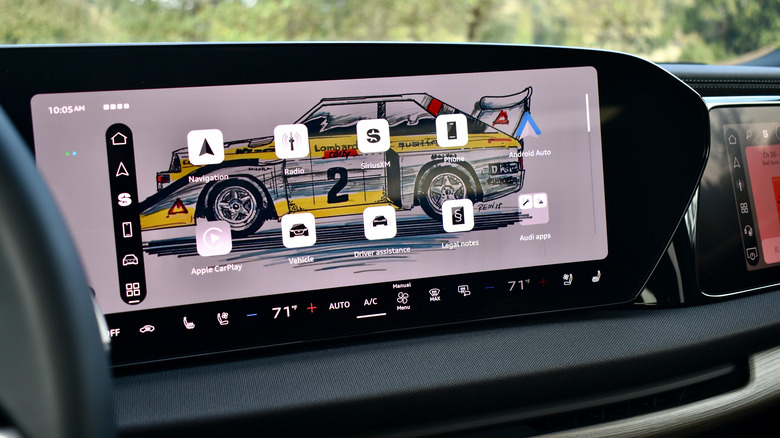
The redesign brings a tri-screen setup called the Audi Digital Stage, which has been rolling out across the automaker's lineup for the past two years, to the Q7. It includes an 11.9-inch digital instrument cluster and 14.5-inch touchscreen in a single curved housing. The Q7 also comes standard with the 12.3-inch front passenger touchscreen that's optional in some other models. A head-up display and dashcam are also available.
Audi kept wireless Apple CarPlay and Android Auto, as well as Google Earth satellite maps for the navigation system, a standout tech feature going back to the automaker's first Virtual Cockpit digital instrument clusters of roughly a decade ago. I have no complaints about the interface, and even finally found a use for a front-passenger screen. When the navigation system inexplicably stopped navigating, my co-driver was able to reset it from his side of the cockpit.
Another big update is the 22-speaker, 1,360-watt, Bang & Olufsen 4D audio system, a standalone option on higher trim levels of the Q7 and on the SQ7. It has useful headrest speakers that can route phone calls and navigation directions to the driver's ears, and in-seat actuators that are less so. They make the front seats vibrate like you're in a ratty Corolla with a subwoofer that's worth more than the car.
Hands-free highway driving also comes to the Q7 for 2027, although Audi doesn't offer the point-to-point navigation capability some other brands are rolling out.
2027 Audi Q7 verdict
Pricing starts at $72,295 for the base Q7 Premium. The Q7 is also available in Premium Plus and Prestige trim levels starting at $76,695 and $86,295, respectively, while the SQ7 comes in a single trim priced from $100,095. Audi claims base prices are $1,400 more for the Q7 and $1,100 for the SQ7 compared to equivalent 2026 models. But a long options list means it's easy to spend a lot more. The Q7 I drove cost about $94,000, while the SQ7 tester was pushing $120,000.
Audi got a lot right with the Q7. It's much more normal than its updated rivals from BMW and Mercedes, perfect for someone who just wants an upscale SUV without having to be "challenged" by new design and tech features. And it feels more luxurious than three-row rivals like the Acura MDX, Lexus TX, and Volvo XC90.
Where the Q7 falls short is character. From the traditional SUV shape to the thumping optional audio system, this car was clearly designed for American tastes. There's less to mark the new Q7 as an Audi. Clever lights just don't hit like innovative all-wheel drive systems, five-cylinder engines, or the daring styling that defined Audis of the past. But this approach should sell more cars, and ensure that, like its predecessors, this Q7 will be here for the long haul.