

2027 Audi Q9 & SQ9 First Drive: You'll Love The Space And Tech, Just Not The Price
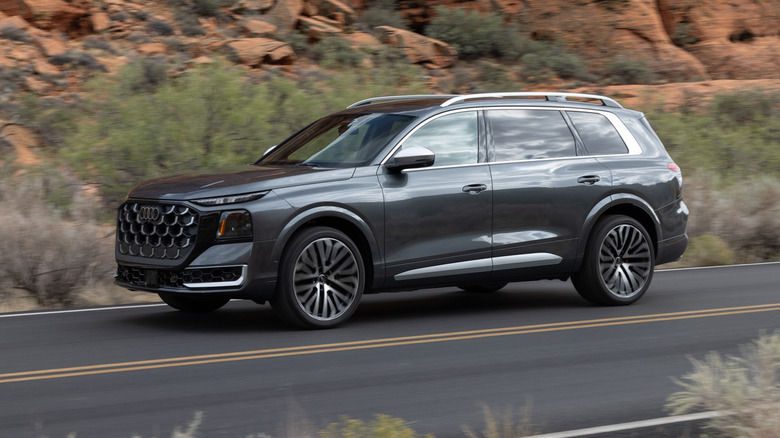
For model year 2027, Audi's first-ever full-size three-row SUV finally hits the market. As perhaps expected, Audi predicts that fully 65% of global sales will happen on these shores and so designed both the Q9 and SQ9 to cater perfectly to the American market. Fittingly, then, the global media drive took place in the gorgeous deserts of southwestern Utah, where wide open roads make almost any car seem small.
The new SUV's size alone will make headlines, but both the base Q9 and top-spec SQ9 also pack a ton of luxury and tech into one affordable—relatively speaking—SUV. And each debuts a range of firsts for Audi, the larger Volkswagen AG conglomerate, and even the automotive industry as a whole: two new Quattro all-wheel-drive systems, the first application of Digital Matrix Lights in the United States, and Volkswagen's first implementation of Level 2+ hands-free driving software.
Clearly, this three-row represent major moves for Audi while leaping headlong into a new segment. And even if all the space, luxury, tech, and performance doesn't come cheap, both the Q9 and SQ9 take all-rounder capability to a whole new level.
First up: the base Q9
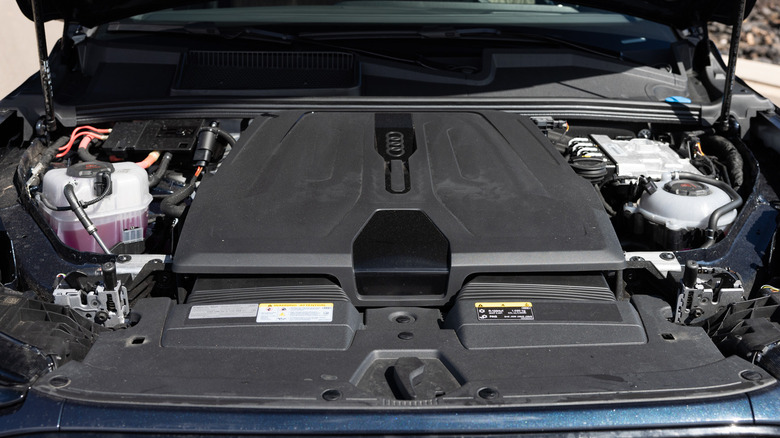
My day hopping between the two started in a Q9 Prestige, fully loaded as usual for media consumption. Every Q9 comes with a twin-turbocharged 2.9-liter V6 rated for 429 horsepower and 442 lb-ft of torque, which sends power to all four wheels through an eight-speed ZF transmission and that new Quattro system. Effectively, the Q9's AWD adds four springs to the center Torsen differential to help maintain coupling between the front and rear axles even in conditions with zero load, which typically causes the main issues with gear-based automatic torque-biasing diffs (versus clutch-based engagement).
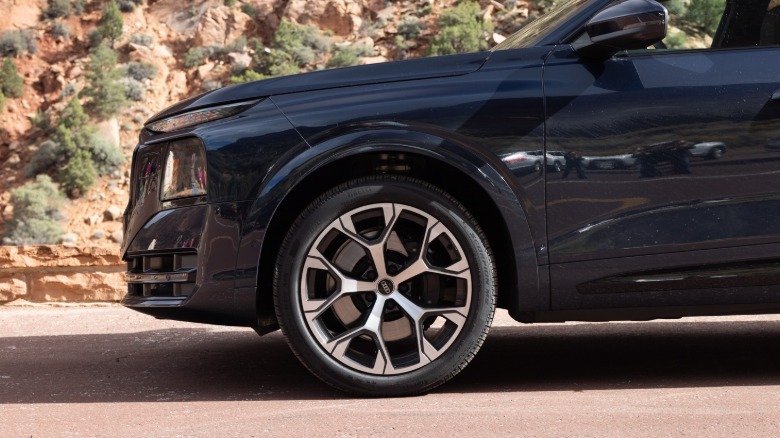
The little rev-happy V6 makes getting up into boost nice and quick, so even the lower-spec three-row can put out some serious punch. As usual, the ZF eight-speed rips off fairly snappy shifts, which play well with nimble handling and light yet precise steering. All as the traditional suspension setup of air springs and electronically adjustable shock dampers helps the large 22-inch wheels gobble up impacts, even with no active sway bars or hydraulic roll control despite a curb weight just over 5,300 pounds.
 Michael Teo Van Runkle/SlashGear
Audi believes that retaining passive sway bars and allowing a bit of body roll actually enhances the feeling of a vehicle's solidity, and therefore quality. In this case, though, I'd argue for the smallest 20-inch wheels and tallest tire sidewalls possible to help soften just the last few percentage points of shock damping.
So much room for activities!
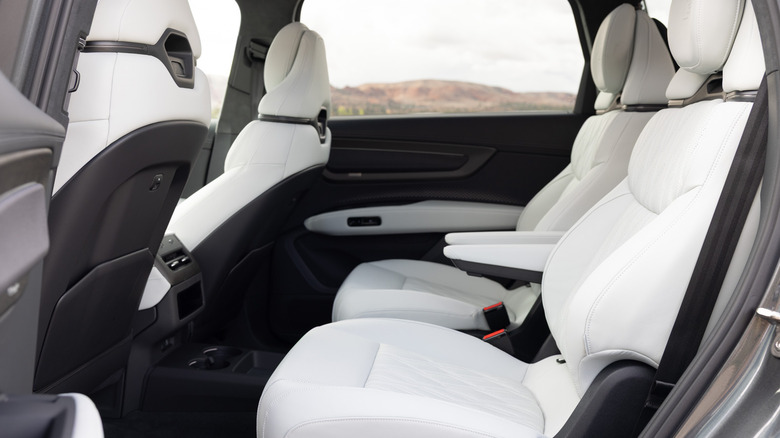
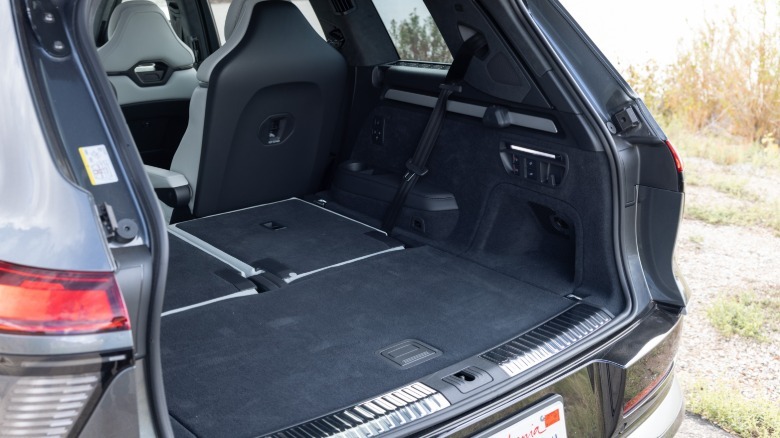
Even if the suspension and wheel/tire package lean slightly toward the sportier side of the equation, the rest of the base Q9 goes whole-hog on luxury. I fit just fine in the second row captain's chairs, at six-foot-one with long limbs behind a six-foot-four passenger in the front seat. With the third row of seats up, Audi can boast best-in-class 19.3 cubic feet of cargo volume, and then with the optional second-row bench also folded down, an absolutely cavernous interior opens up.
 Michael Teo Van Runkle/SlashGear
Critically, though, such a large vehicle never drives nearly as large as either the exterior design or interior volume suggests. Rear-axle steering up to five degrees made negotiating lines of traffic and tight turnouts among jam-packed tourists in Zion National Park no problem, and at higher speeds while battling through borderline monsoon storms in the desert, the stability of all four wheels turning in phase along mountain passes no doubt helped that Quattro system, as well.
Confirmed: 591 hp and Quattro AWD make a three-row suprisingly fun in the wet
When the weather cleared up momentarily in the afternoon, I swapped into an SQ9 to get a taste of some more serious power. In this case, the familiar twin-turbo 4.0-liter V8 that Volkswagen AG drops into everything from the RS6 Avant to the Lamborghini Urus. In the SQ9, the mill pumps out 591 horsepower and 590 lb-ft of torque, routed through a similar eight-speed gearbox but then to another new Quattro configuration with full-time rear-wheel drive and a clutch-based center diff that directs torque to the front axle when necessary.
The rear-biased Quattro fittingly lends the SQ9 a sportier dynamic, transforming this 5,500-pound SUV into a real ripper. Massive six-piston fixed calipers on 16.5-inch rotors up front and single-piston floating calipers on 15-inch discs in the rear haul down that speed with minimal effort.
 Michael Teo Van Runkle/SlashGear
As usual, though, the SQ9's power delivery worked best once moving—despite my best efforts to engage launch control a few times, I only achieved minimal yank off the line as traction control intervened despite my fiddling with every available button. Not that too many jam-packed three-row family haulers need hard launches too often, admittedly.
Finally, functioning wireless charge pads!
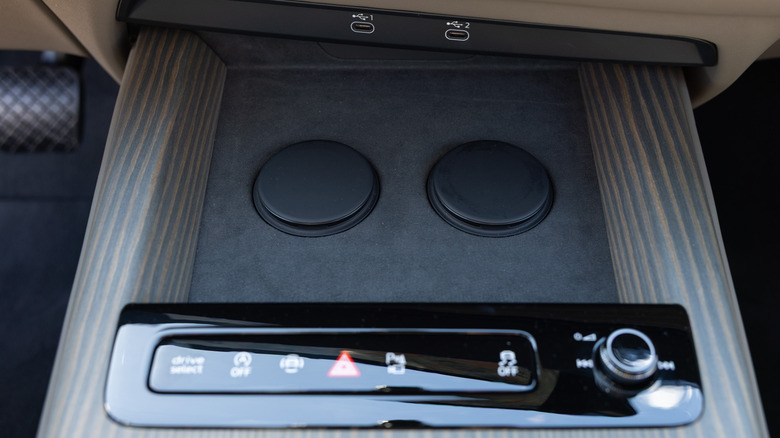
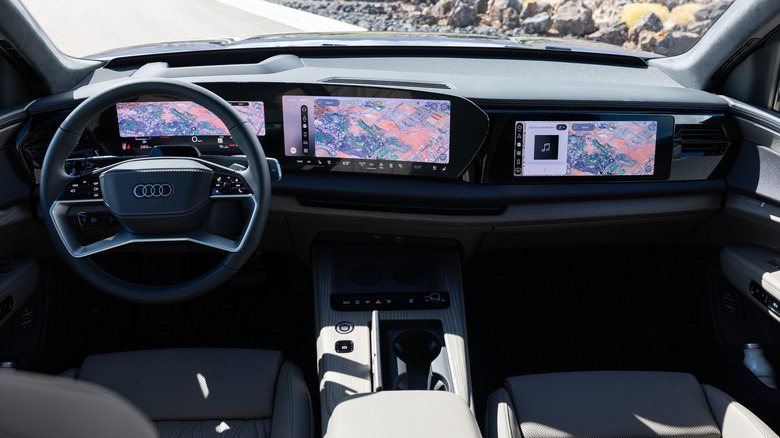
Instead, creature comforts and tech take center state. And in a somewhat hilarious turn of affairs, Vorsprung durch Technik appeared most effectively in a set of wireless smartphone chargers that work—without exaggeration—better than any other in the history of the automobile. That is to say, they actually work. Just below the main touchscreen sit two little leather pads. Rest an iPhone like my 17 there and it stays put, no matter the rough roads, hard cornering, or snappy acceleration. No sliding around at all, and the phone started charging quickly every time, while cooling capabilities only brought the body up to medium temps, not toasty to the touch as per usual.
 Michael Teo Van Runkle/SlashGear
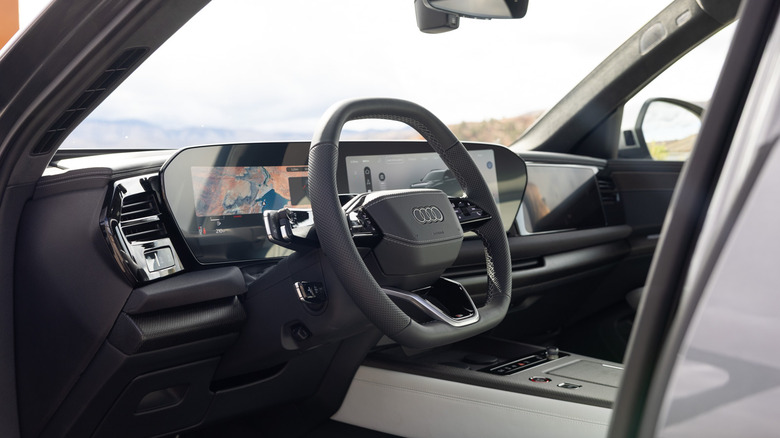
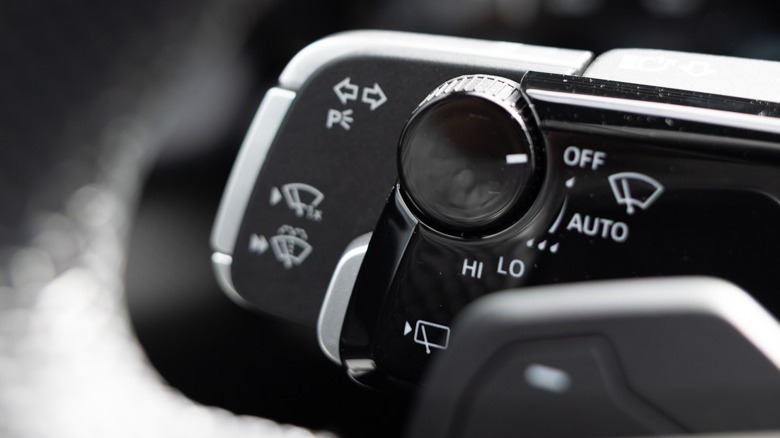
The Q9 and SQ9 interior design affords room for a spacious pair of charging pads because the gearshifter lives on the steering column, with an admittedly unusual design for selecting park, drive, neutral, and reverse. A similar stalk on the other side then controls the turn signals and windshield wipers; a rigid arm for both with toggles, knobs, and switches on the end that at first left me somewhat discombobulated—especially the wiper controls on a day with intermittent spurts of serious inclement weather. But I eventually adjusted to the new layout and began to appreciate how much the feeling of solidity emphasizes the tactile luxury and impeccable build quality typical of expensive Audis.
Luxury and tech for all, in all three rows too
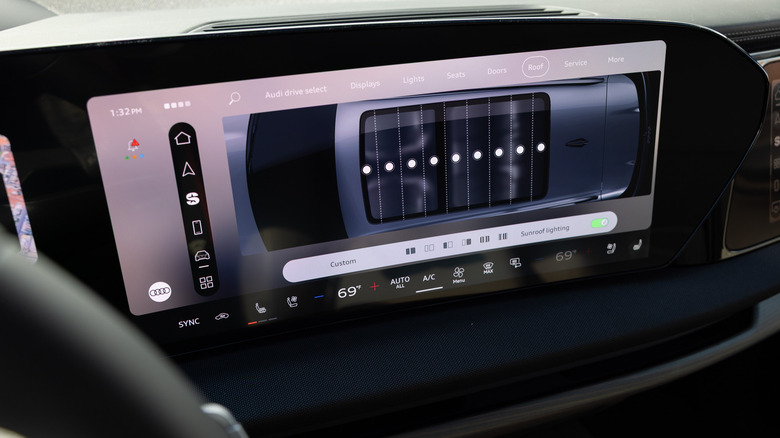
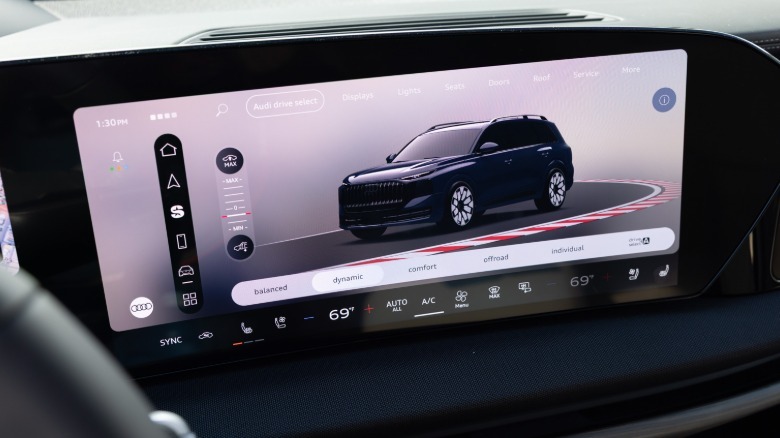
Premium materials throughout, from coarsely woven fabrics to sumptuous leathers, wood trim, and metals, only further up the luxury ante. Audi clearly hopes to jump back from the edge on piano black plastic, though no automaker other than perhaps Bugatti so far seems willing to entirely abandon the horrific materials. I still wished for metal piano keys at least to play with the climate controls beneath the crisp OLED touchscreen, rather than the digital selections which seem to inspire a set-it-and-forget-it mindset rather than easy adjustability.
 Michael Teo Van Runkle/SlashGear
The second row of seats also gets dual-zone climate controls, which makes the most sense when equipped with optional captain's chairs rather than the bench seat. And a true fifth climate zone for the third row with controls on the roof helps to make up for an egregiously large sunroof—again, the largest ever on any Audi at 16 square feet—with no available shade to retract. The nifty electrochromatic tinting with pre-programmed patterns at least helps to prevent too much heat and glare from ruining long stints in the rear passenger rows, but I still always prefer a true sunshade or even a slicktop.
Audi's game-changing Digital Matrix Lights: now legal for the USA
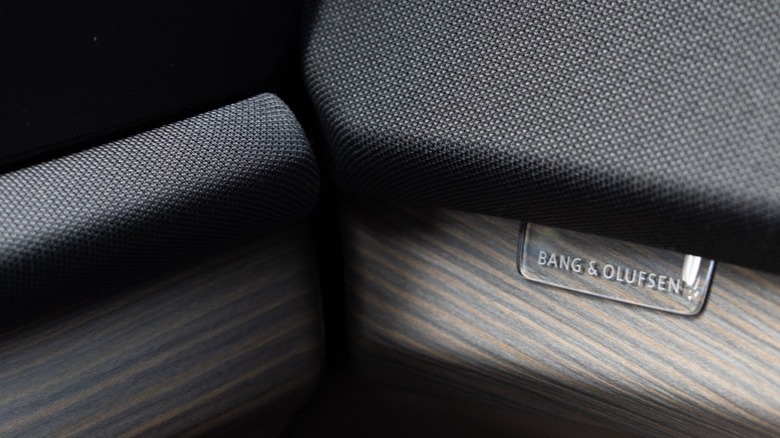
A few other tech debuts also bear mentioning, to varying levels of success. I personally never enjoy so-called "4D" sound with exciters in the seat, and hope for more bass from the rest of the 22 speakers to let all 1,360 watts do more work for my ears, not my haunches. And the Level 2+ hands-free driving, which uses radar and cameras, probably requires a more dedicated day (or a few days) for real testing and a more solid conclusion. Rural Utah in gnarly weather may deserves some blame for balking, but a long road trip and urban environments both fit more refined versions from other automakers anyhow.
More importantly, the Q9 and SQ9 also bring Audi's spectacular Digital Matrix Lights to the USA for the first time. I first witnessed this breakthrough in headlight technology in 2024, and truly spent the last two-plus years wondering when—if ever—American regulators might come to their senses and allow something so obviously superior to hit the market. On either the Q9 or SQ9, Matrix lighting employs no fewer than 25,600 micro-LEDs and a high-resolution projector glass forward of the vehicle, with the ability to track other drivers, traffic signs, and anything that moves ahead to reduce glare for all involved.
Seriously competitive, if not entirely approachable
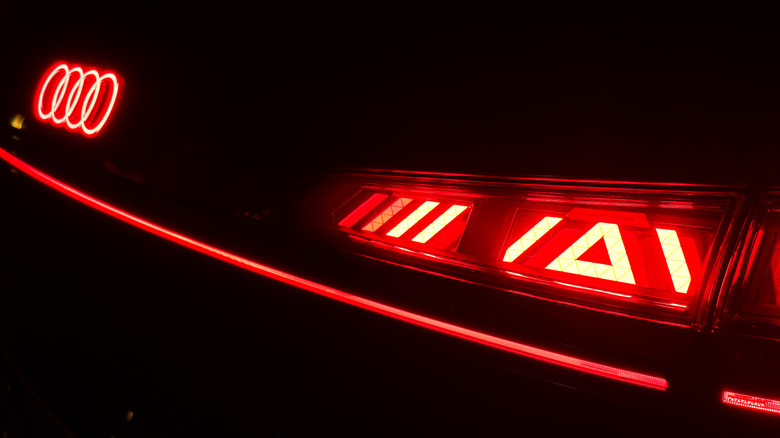
Out back, OLED taillights provide uniform light distribution regardless of viewing angle, and can even project turn signal graphics onto the ground for other drivers to catch despite potentially blocked viewing angles. Audi spent over a decade trying to overcome legal hurdles after debuting Matrix lights in Europe back in 2013, and I expect similar systems to proliferate quickly from other automakers as well. (Now if only an Audi could broadcast for the turn signals that BMW drivers aren't using...)
For now, Matrix lighting will only be available on the Q9 and SQ9, but I don't struggle to imagine I'll start seeing plenty of both around LA in the very near future. Especially given the competitive pricing against three-row competitors from BMW and Mercedes. The base Q9 starts at $87,700 while an SQ9 steps up to $118,000. However, because the SQ9 comes with plenty of options baked in, my Q9 in Prestige Plus spec ramped up significantly to $110,095 while the SQ9 I drove "only" tacked on another 10 grand or so to "just" $128,045.
2027 Audi Q9 and SQ9 verdict
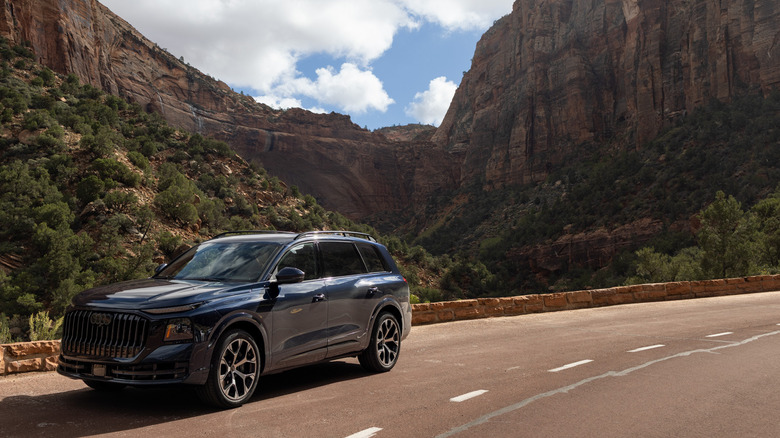
Not cheap, by any means, but given the combination of space, performance, all-weather confidence, and tech, both the Q9 and SQ9 start to look pretty appealing from almost any perspective. The styling at least stands out as dignified and inoffensive, not that the Nuvolari supercar's design language would work particularly well here. And if my only major complaint for the Audi's latest and greatest is that it doesn't particularly stand out immediately as an Audi from a design perspective per se, then it's probably safe to say Audi nailed the company's first ever full-size three-row right from the jump.