

5 Times When It's Better To Use DeWalt 20V Max Tools Rather Than 12V Max
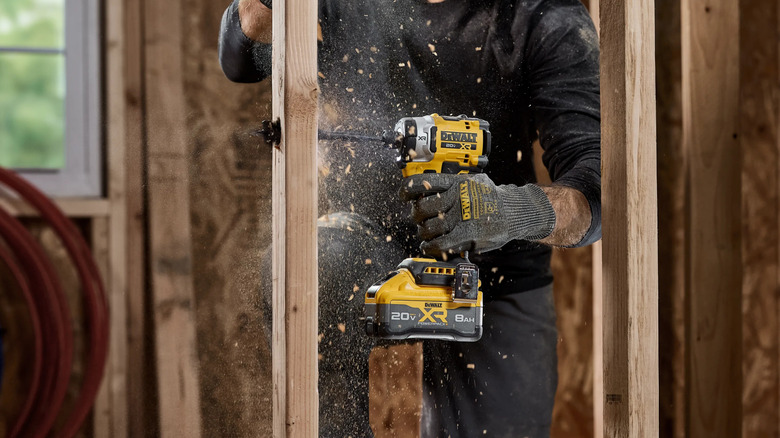
For occasional jobs in your house, a DeWalt 12V Max tool may be enough, which can make the 20V Max line an unnecessary expense. You don't need the extra power these products provide to put furniture together or tighten screws. So it makes sense to save and use the smaller tools, which can handle those tasks for less money.
But there are specific scenarios where a DeWalt 20V Max is a better fit than a 12V Max. The larger saw can take on a piece that would make you reposition the smaller saw, and the wrench with more torque can help with that stubborn fastener. Whether these DeWalt 20V tools are worth the price depends on the job you do and whether you can use that extra power.
Some models can make your work easier, but not every tool in this line is automatically better for you, since size, batteries and accessories also come into play. So, we've chosen a few scenarios where a 20V Max tool could be a good choice.
Cutting thicker wood in a single pass
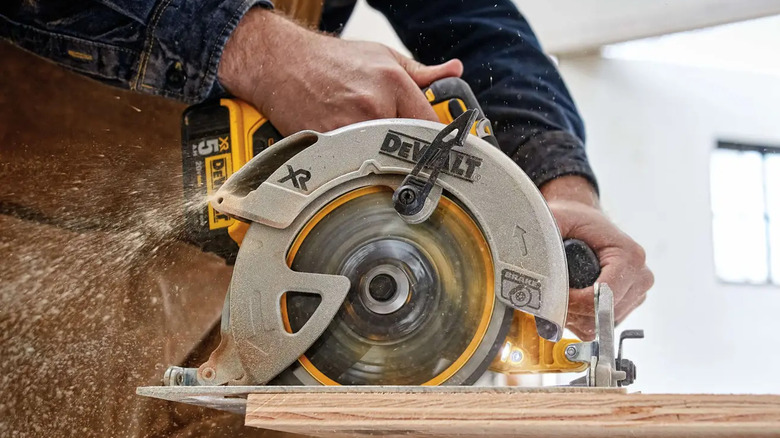
If you're trying to cut thicker boards for a renovation, the depth of cut you need can make buying a 20V Max saw worth it. The DeWalt DCS570B has a 7-1/4-inch blade and cuts to a depth of 2 9/16 inches at 90°. Meanwhile, the 12V Max DCS512B cuts to 1 3/4 inches with a 5-3/8-inch blade.
In practice, the 20V Max DeWalt could handle a thicker piece of wood. The 12V cutting depth would just barely cut through a standard two-by-four piece of lumber. If you needed to cut anything thicker, you'd end up needing to reposition the saw. It might not be that big of a deal on one piece, but when you have several pieces, the time you save can add up.
Whichever saw you choose, you have to check the blade and adjust the depth for the material. The cutting capacity is the main selling point of this 20V Max model, but if you're cutting smaller or thinner pieces, the compact saw is still an option.
Stubborn nuts and bolts call for more torque
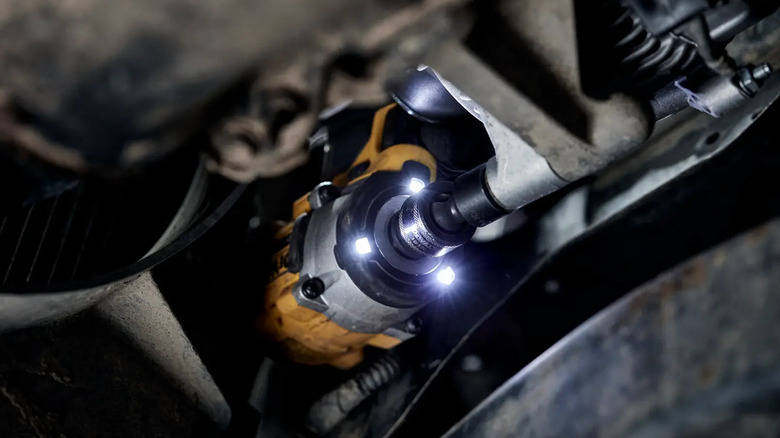
If you do any home repairs, it's possible to run into a nut that just won't budge, turning what should've been an easy job into a lot of work. If you're in this situation, a 20V Max impact wrench has more torque, which is better than a compact 12V tool for this kind of work. For example, the DeWalt DCF923B has breakaway torque of up to 450 lb-ft, compared to the DCF902B's 200 lb-ft, while both have the same 3/8-inch square drive.
Breakaway torque is each tool's ability to overcome the initial resistance of a tightened bolt. When a fastener requires more force to loosen, a wrench with more torque can help get the job done when the smaller one isn't enough. However, that extra power doesn't mean that every bolt, even a rusty one, will come out easily.
Also, you need to distinguish loosening from tightening, because the DCF923B has a maximum fastening torque of 300 lb-ft, compared to the advertised 125 lb-ft of the 12V tool. Its Precision Wrench mode helps prevent overtightening, but it doesn't replace using a torque wrench to check that each fastener is tightened to its required specification. Then you can apply the extra force when you're taking things apart.
Driving long screws through thick lumber
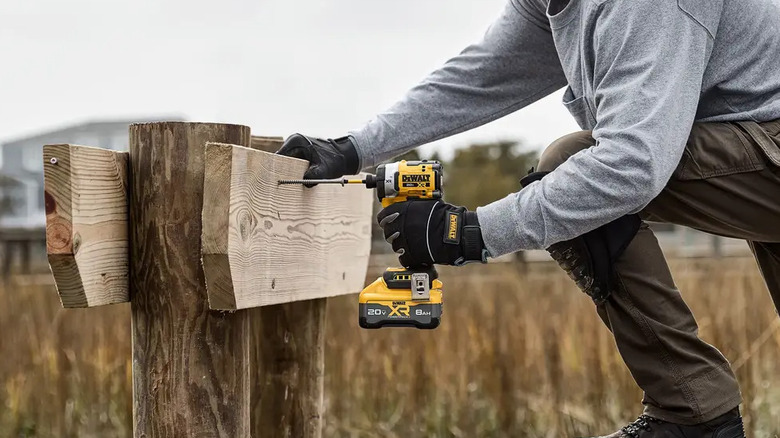
Assembling furniture is much easier on your impact driver than building or fixing a fence or backyard deck. If your project calls for long screws through these thicker pieces of wood, the higher torque helps you overcome resistance as you drive them in. The DeWalt 20V Max DCF860B is rated at up to 2,500 lb-in with the DCB2108 battery, while the 12V Max DCF801B is rated at 1,450 lb-in. Here, the 20V model is the better choice.
Both tools have the same 1/4-inch hex chuck, so selecting bits for a DeWalt impact driver depends on the screw head and whether the bits are impact rated. The DCF860B also has three speeds and a variable speed trigger so you can start slow and control how you drive the screw. However, this doesn't mean that it's good for every job, as you'll need to be careful with smaller screws. Still, on a project with the many demanding fasteners, the added torque gives you plenty of reason to think about the 20V Max.
Larger concrete holes favor the 20V Max
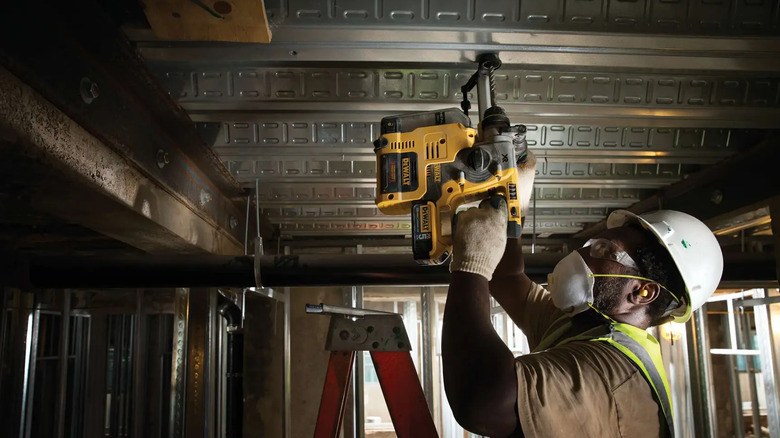
A compact tool might not have the performance needed for mounting brackets and anchors in concrete. In that case, you'll want to consider the 20V Max DCH273B SDS-Plus rotary hammer instead of the 12V Max DCH072. The first one offers an impact energy of 2.1 joules, while the second offers a little over half that at 1.1, so each blow delivers more energy when drilling.
DeWalt says the optimal drilling range for the 12-Volt DCH072 is a hole diameter of 5/32 to 3/8 inch, whereas the 20-Volt DCH273 can go from 5/32 to 1/2 inch for the DCH273. If your job calls for half-inch holes, you'll want to go for the 20V model.
The DCH273B also has the Shocks system, which reduces vibration at the handles compared with rotary hammers without this feature, something that can be helpful when you're drilling a bunch of holes during installation. It also has drilling, hammer drilling and chiseling modes so you can use the same tool for other parts of the renovation.
Taking on demolition during a renovation
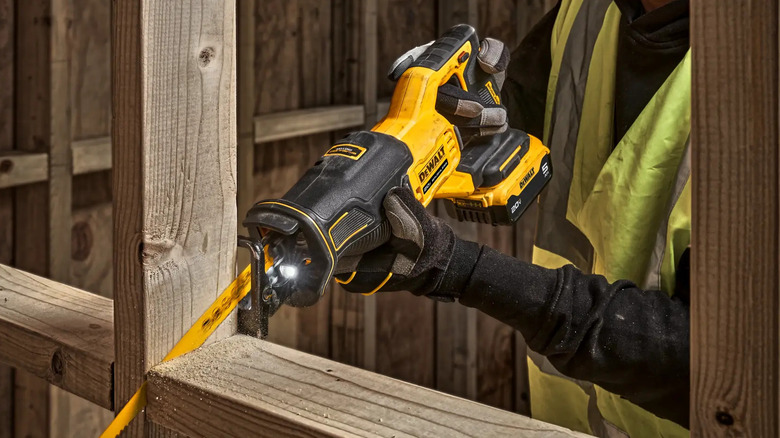
Before putting a new structure in place, sometimes you need to make some more drastic changes, like cutting up and removing the old one. For this kind of work, which usually involves cutting wood and metal, the 20V Max DeWalt DCS382B is a good option. This model is made for this type of job, while its 12V counterpart puts more emphasis on a compact design for one-handed use.
During demolition, you might move from a piece of wood to a metal pipe, which can also mean changing the blade depending on the material. With an DCS382B, you don't need tools for that change, and the pivoting shoe helps keep the saw supported against the workpiece. Its 1-1/8-inch stroke is also longer than the DCS312's 5/8-inch stroke, which translates to faster cutting and less time spent per cut. Demolition work can be long and rigorous, so anything that makes the job go faster is welcome.
How we chose when to use DeWalt 20V Max tools
We picked these tools and situations based on where a 20V max is better than a 12V max by looking for jobs where the extra power could make the job easier, like cutting thicker boards, loosening stubborn fasteners and drilling larger holes in concrete. After that, we compared cutting depth, torque, impact energy and recommended drilling ranges using DeWalt's specifications, manuals and product guides to understand when the 20V models offer an advantage over their 12V counterpart.