

Every Honda Model Ever Sold As An Acura In The US
Honda has a long and prosperous history in North America, existing as one of the largest car brands in the country. While it began mainly as a motorcycle manufacturer, by the late 1980s it had firmly established itself as a staunch competitor to American car manufacturers with a swath of affordable and economical models. To keep expanding, though, it realized that it needed to expand its lineup.
In 1986, Honda launched Acura as its luxury division in North America. This was before other Japanese luxury automakers like Lexus and Infiniti even existed. Honda wanted to sell sportier and more luxurious models in the region, but it knew that Honda had a reputation for affordability, and that luxury buyers wouldn't necessarily be willing to spend more for something with a Honda badge. Acura was the solution.
Today, Acura and Honda products share a lot of DNA, but Acura has grown into a standalone brand that develops its own cars. Over the years, however, several models were sold as Hondas in other markets, particularly in Japan, and then rebadged as Acuras for the North American market.
1986-2001 Honda Integra
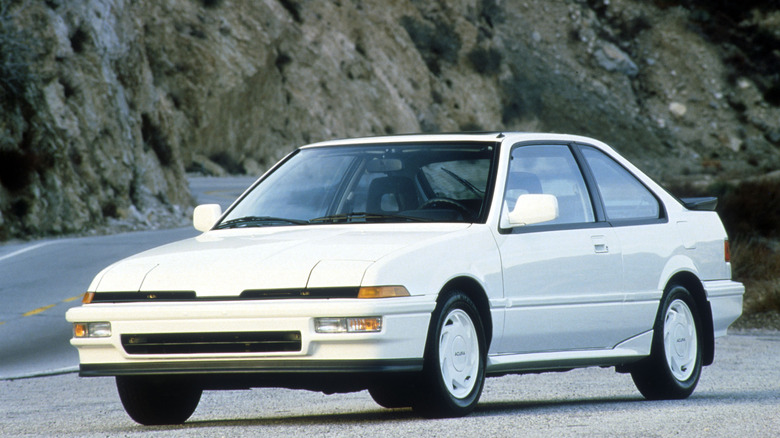
To successfully break into the luxury market in the United States, Honda had to make sure it picked the right models to rebadge as Acuras. On the more affordable end of the spectrum, they decided on the Integra, a newly developed model that aimed to be a sportier and slightly more luxurious spin-off of the Civic.
The 1986 Acura Integra was one of two models that launched the brand in North America. The quirky front-wheel-drive pocket rocket won over critics pretty quickly, with its rev-happy 1.6-liter 16-valve four-pot bringing a lot of character to the table. In 1990, Acura launched the second generation of the Integra, which brought about a number of improvements, including a new double-wishbone suspension setup. Most importantly, though, in 1992 Acura used a four-cylinder VTEC engine in North America in the Integra GS-R, putting down a whopping 160 horsepower.
While the first and second generations of the Integra were superb, the third generation remains the most desirable to enthusiasts. It came in a number of different trims, but the Type R stood at the top. The star of the show in this range-topping model was the 1.8-liter naturally aspirated inline-four under the hood, producing 195 hp and making a fantastic noise on its journey up to redline. Today, the Integra Type-R is a tuner favorite.
1986-1995 Honda Legend
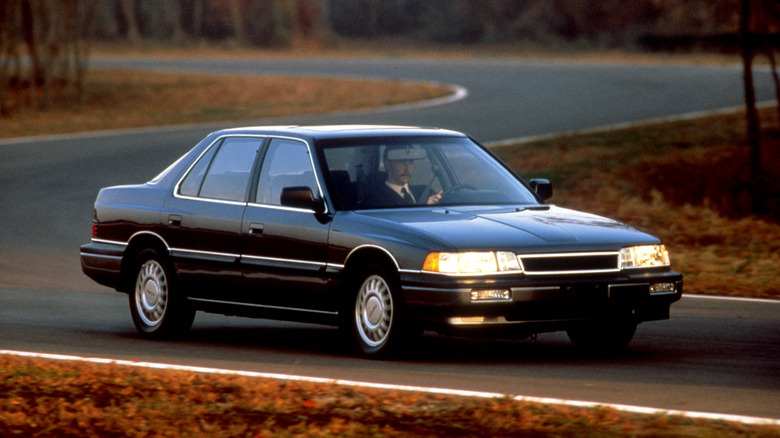
While the Integra was a fantastic vehicle, it served as the entry point for buyers when Acura launched back in 1986. If you were looking for a real luxury sedan that could truly go head-to-head with flagships from the likes of BMW, Mercedes, and Volvo, then it was the Legend that you wanted. The nameplate launched in 1985 in Japan and was rebadged as part of the launch of Acura in 1986.
The first generation of the Legend represented something totally different from what North Americans had come to expect from Japanese cars. It was quite a bit larger than other Honda products at the time and powered by the first production V6 engine made by Honda. It quickly rose to critical acclaim, winning a number of awards, including the coupe variant claiming MotorTrend's Import Car of the Year in 1987. It remains one of the most luxurious Acura models ever made.
For the 1991 model year, the Acura Legend entered its second generation, still based on its Honda counterpart. Honda wanted to lean even further into its directive of building a sporty yet luxury flagship, coming with a larger and more powerful V-6 under the hood alongside a host of other upgrades. By 1995, the Legend had some stiff competition from other emerging Japanese luxury automakers, such as Lexus and Infiniti, and changes needed to be made to keep up.
1992-2005 Honda NSX
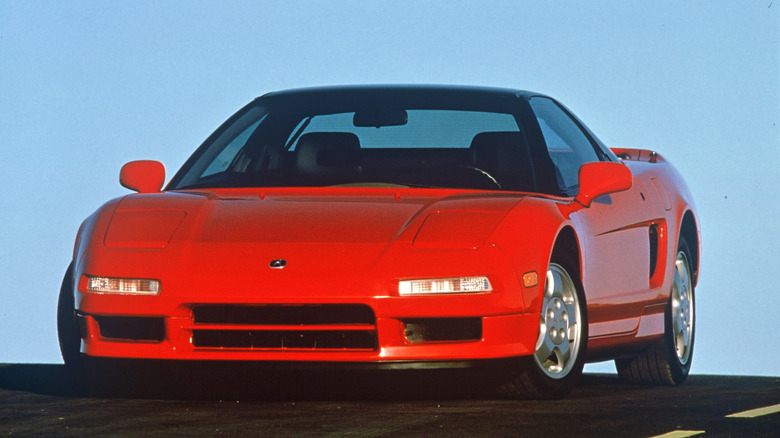
Honda has always put enjoyment at the forefront of their vehicles, even back in the 1980s. As the brand continued to move more upmarket globally, the clear goal of developing an exotic sports car that could compete with the likes of Ferrari and Porsche became its focus. Thus, the NSX was born. With Acura's expansion in the United States now in full swing, it made sense to introduce the NSX to America as an Acura for the 1991 model year.
To many, Honda's goal of competing with high-end sports car brands from Europe seemed ambitious. The first generation of the NSX proved naysayers wrong. It was a lightweight machine that quickly became loved by critics. It also debuted the Japanese brand's Variable Valve Timing and Lift Electronic Control (VTEC) system in its 270 hp V6, though models with the automatic transmission were derated to 252 hp. Part of its success can even be attributed to the involvement of famed Formula 1 driver Ayrton Senna, who was brought in to help fine-tune the final version of the car.
While performance was one half of the directive, everyday usability was the other. This meant that the Japanese brand wanted it to be just as comfortable and reliable as it was quick. This is something many critics agree it achieved, with the NSX famously becoming known as the supercar that you could drive every day. It is still considered one of the best vehicles that the Honda group has ever produced in its long history.
1992-1994 Honda Vigor
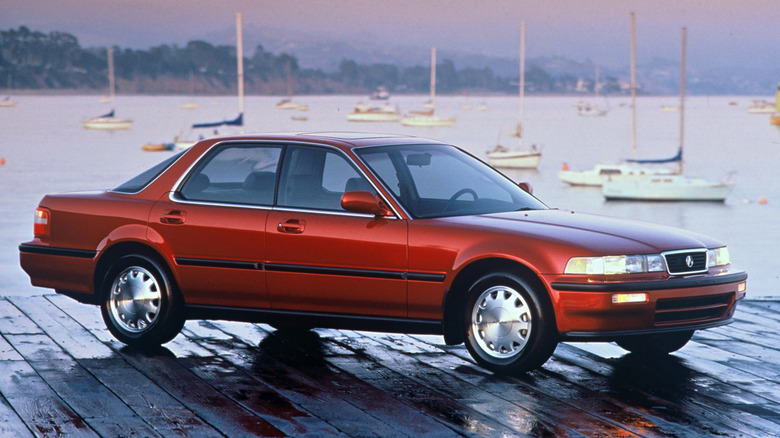
The Honda Vigor was a sedan that had existed in Honda's lineup since 1981, though it was originally made specifically for the Japanese market. By the time Acura was looking to expand its lineup in the early '90s, the premium sedan had just entered its third generation. The Acura Vigor was introduced to the North American market as a 1992 model year.
Where the first generations of the Honda Vigor were based on the Accord, the third generation (along with the first-generation Acura Vigor) broke away from those roots. It found itself between the Acura Integra and Legend at the time, being more refined than the former and sportier than the latter. The most interesting thing about it, though, was its unique inline-five engine, which was something the brand hadn't attempted before this nameplate.
Unfortunately, the Vigor layout and positioning were a bit too unusual for the market, and it turned out to be one of Honda's biggest car flops of all time. Despite reviewers enjoying its driving dynamics at the time, it was also priced higher than many of its competitors. Due to low sales, the Acura Vigor only ran for three model years, being discontinued after the 1994 model and replaced with the TL.
1996-2012 Honda Legend
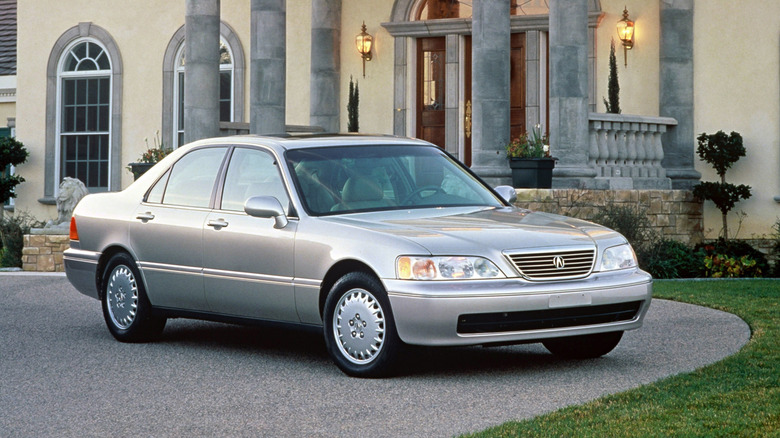
The Honda Legend was one of the first cars that was brought to America as an Acura. While the first- and second-generation Honda and Acura models shared a name, research conducted by the Japanese automaker uncovered that buyers were associating Acura cars more with the nameplate than the badge. In an effort to change this, the Acura Legend underwent a name change for its third generation, being referred to instead as the RL.
The first-generation Acura RL ran from 1996 to 2004. While Acura got to market before other Japanese luxury automakers, by this point Lexus and Infiniti were becoming well established. Acura's refusal to adopt a rear-wheel drive layout or a V8 in its flagship was beginning to hurt the brand in the market. Its particularly subdued styling didn't help either.
The fourth-generation Honda Legend, sold as the second-generation Acura RL in the U.S., addressed a lot of the issues people had with the sedan. It earned a number of accolades in its early years, including a place on Car and Driver's 10 Best list, and plenty of praise for its technologically advanced SH-AWD system. Despite a number of changes over the years, the RL continued to struggle to stand out against its rivals and was eventually discontinued.
1996-2002 Honda Inspire/Saber
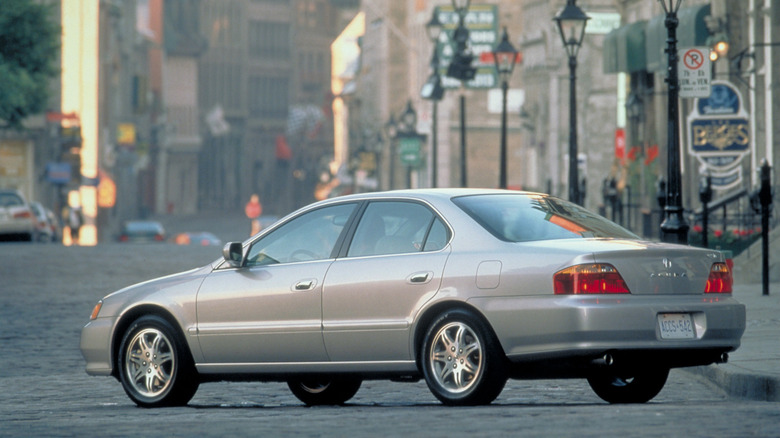
The Honda Inspire and Saber showcased how certain models were sold under different nameplates in Japan depending on the dealer network through which they were sold. Other than their names, they were nearly identical. Going along with Acura's new alphanumeric naming system, the same car was rebadged in the States as the Acura TL. This was essentially the successor to the Vigor.
The first generation of the Acura TL could be had with two very different engines. It carried on the Vigor's legacy by maintaining its 2.5-liter inline-five engine. It could, however, also be had with the 3.2-liter V6 offered in the Legend. Some reviewers felt that this was the model where Acura started to show cracks.
In 1998, the TL was redesigned, now coming exclusively with a V6 under the hood, which was sad news for fans of the inline-five. Interestingly, this generation was developed and built in the United States, and then rebadged as the Honda Inspire and Saber for the Japanese market, rather than the other way around. The TL carried on for a number of generations, only being discontinued after the 2014 model year, but the second-generation model was the last time it had a Honda twin in Japan.
2002-2006 Honda Integra
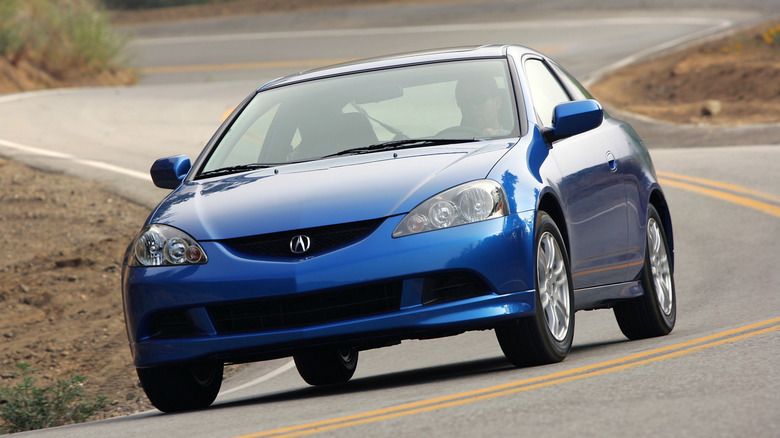
The Honda Integra entered its fourth generation in 2001 for the 2002 model year. To follow Acura's new naming scheme, it was brought to market as the Acura RSX rather than holding on to the Integra nameplate. The update meant sleek new modern sheet metal and a number of performance upgrades.
The most impressive of all the RSX models was the Type S, which came with a 200hp i-VTEC inline-four when it launched. It had some tough rivals to go up against, positioned against the likes of the Toyota Celica GTS and Mitsubishi Eclipse GTS, but a number of reviewers felt that it was more composed and more engaging to drive.
Something all RSX fans should know is that it unfortunately launched at the wrong time. Part of the reason it may have struggled is that in the early 2000s, American buyers were shifting to bigger and more practical SUVs, leaving compact cars like the RSX struggling to gain momentum in the market. Its sales fell off quickly, and Acura couldn't justify keeping the sporty compact car around after 2006.
2004-2014 Honda Accord (Europe)
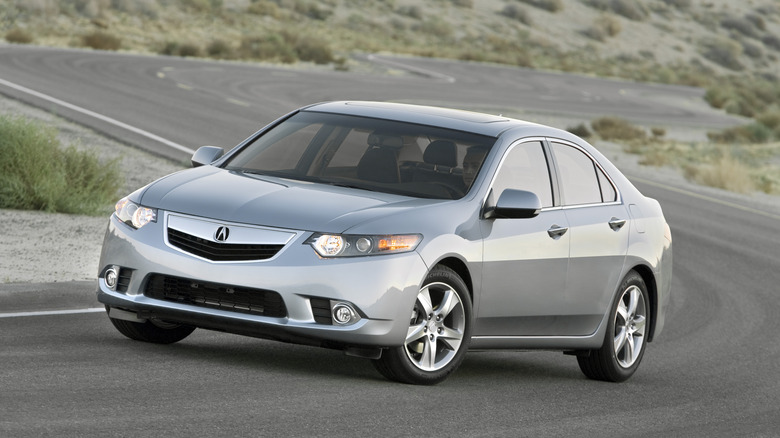
Despite having a solid lineup of options in its stable in the mid-2000s, Acura felt like it was missing out on a key demographic. Younger, single buyers were opting for the sporty RSX coupe and older, more family-focused people had the TL. To fill that gap, they made use of the European Honda Accord Type S, decking it out with top-trim options and badging it as an Acura for the North American market.
Despite being a fancied-up Accord, the first-generation TSX filled the gap quite well. It was made to be a sports sedan that could comfortably haul a family around while simultaneously keeping things exciting. Reviewers noted that the high-revving i-VTEC inline-four, satisfying manual shifter, and lithe chassis helped it achieve this goal. It was a car as comfortable as it was fun.
The second-generation TSX was based on the eighth-generation European Accord, launching with the 2009 model year. It kept the ball rolling in the right direction. The sporty sedan might have gained some weight, but it had a punchier engine that helped make up for it. A V6 engine was also now offered as an option, as was a station wagon body style. The downside was that it wasn't exactly a looker. Acura, however, eventually replaced the car with the TLX, with the TSX ending its run after the 2014 model year.
2014-2020 Honda Legend
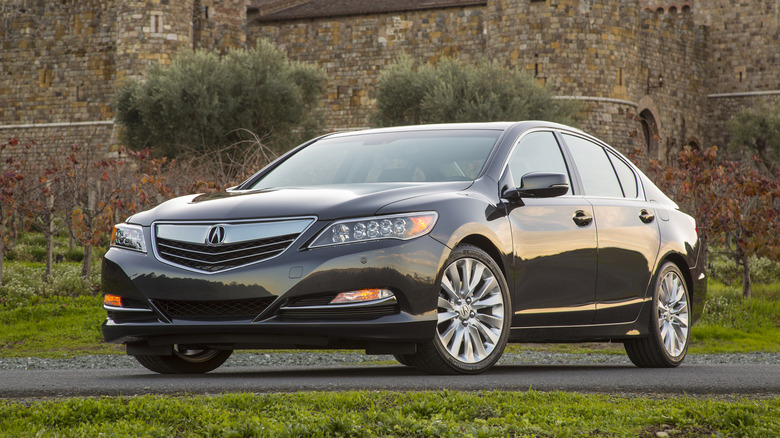
Before the global financial crisis of 2008, Acura had big plans. Things shifted when the economy took a dip, and Acura entered a low-growth period. It is in this context that the brand returned to a formula that had been working well, once again rebadging the Japanese-market Honda Legend. This time it would return to the Acura brand as the RLX.
Compared to the outgoing Honda Legend and Acura RL, the replacement sedan was larger and much more comfortable, according to reviews. It was also more efficient and tech-focused than the outgoing model. It featured a 3.5-liter V6 under the hood, which came with or without hybrid assistance. Front-wheel drive models also came equipped with a pretty clever four-wheel steering system, dubbed Precision-All Wheel Steer. Hybrid all-wheel drive models got the Sport Hybrid SH-AWD system instead.
The RLX ran for a single generation, starting with the 2014 model year and ending after the 2020 model year. It received a facelift in 2018, but that wasn't enough to help it compete with its fresher and more advanced rivals by then.
2017-2022 Honda NSX
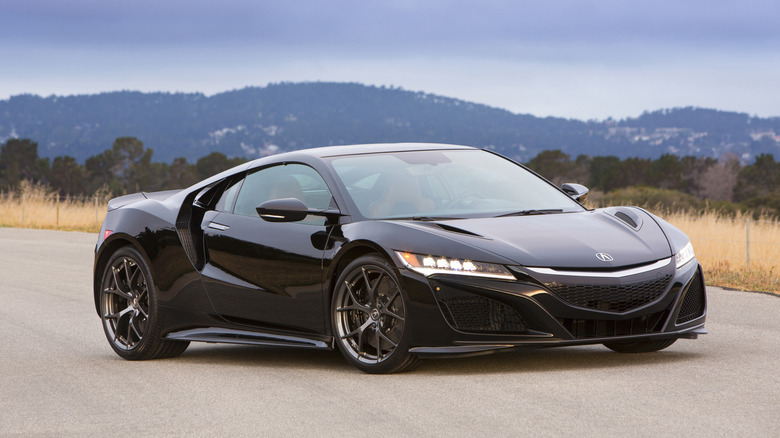
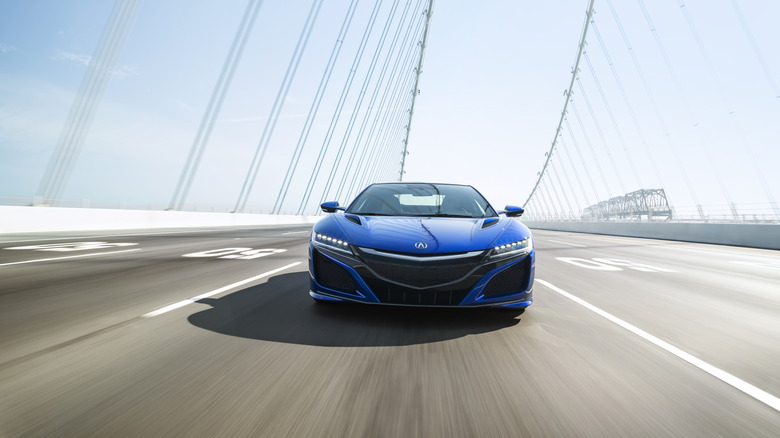
The original NSX has undoubtedly achieved legendary status and continues to be lauded as one of the best cars that Honda has ever built. When the showcased concepts for a revival of the nameplate were revealed, the automotive world was set ablaze with excitement. When it finally came time for the supercar to hit the market, it only made sense that it would return to North America as an Acura.
The launch of the second-generation NSX was more than a tad controversial. Early concepts showcased a V10 monster, but the final product was a hybrid powered by a twin-turbocharged V6 and three electric motors. Some early reviews were critical, claiming it was too restrained and lacked the raucous personality supercars should embody.
Retrospectively, the Acura NSX makes a lot more sense. In an age where hybrid supercars have become the norm, the second generation of the NSX doesn't look so out of place. The first generation of Honda's supercar was designed to be a sporty exotic that was sharp enough for the track but easy enough to live with that you could drive it every day. There is a strong argument that the second-generation NSX achieves those goals just as well.